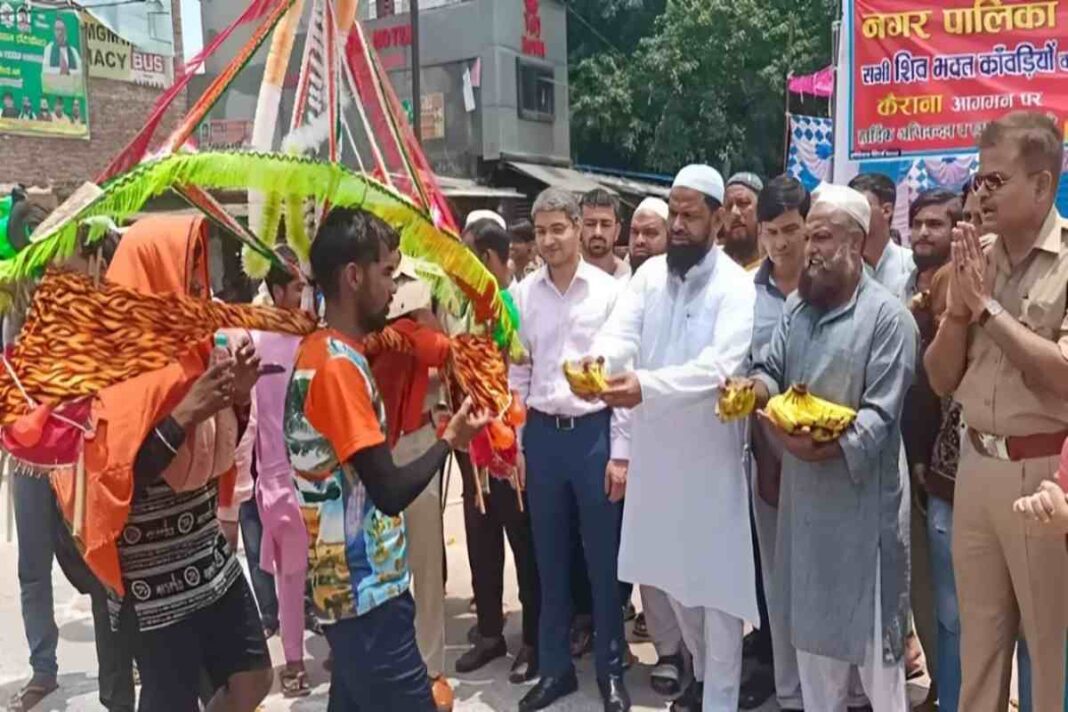

Kanwar Yatra is a major Hindu pilgrimage during the month of Sawan (July-August). Millions of devotees, known as Kanwariyas, walk barefoot to collect holy water from the River Ganga and offer it to Lord Shiva temples. This journey is seen as a test of devotion and a path to spiritual growth.
The pilgrimage is rooted in Hindu mythology, specifically the story of Samudra Manthan (churning of the ocean). According to legend, Lord Shiva drank poison to save the world, and Kanwar Yatra recreates the act of bringing Ganga water to relieve him.
The Modern-Day Pilgrimage
Today, the Kanwar Yatra has grown into a massive event. Devotees, dressed in saffron, come from various states like Uttar Pradesh, Bihar, Haryana, and Madhya Pradesh. They carry water in special containers called Kanwars, walking long distances to reach important Shiva temples.
Popular starting points include Haridwar, Gomukh, and Gangotri. The pilgrims walk day and night, resting in camps or by the roadside. They chant slogans praising Lord Shiva throughout their journey.
A Symbol of Religious Harmony
While Kanwar Yatra is a Hindu festival, it has become a symbol of religious harmony in India. People from other faiths, especially Muslims, often contribute to making the pilgrimage successful and comfortable for the participants.
Muslim carpenters craft the Kanwar used by pilgrims. In areas with large Muslim populations, residents welcome the pilgrims, clean streets, set up rest camps, and offer food and water. During this time, many meat shops closed, and restaurants served only vegetarian food out of respect for the pilgrims.
This cooperation between Hindus and Muslims during Kanwar Yatra reflects a long-standing tradition of religious harmony in India. It shows how people of different faiths can come together to support and celebrate each other’s traditions, fostering unity in diversity.
For detailed story, please visit: Awaz the voice
Also Read: The Sacred Pause: Lord Jagannath’s Rath Yatra and the Mazar of Salabega
You can connect with DNN24 on Facebook, Twitter, and Instagram and subscribe to our YouTube channel.