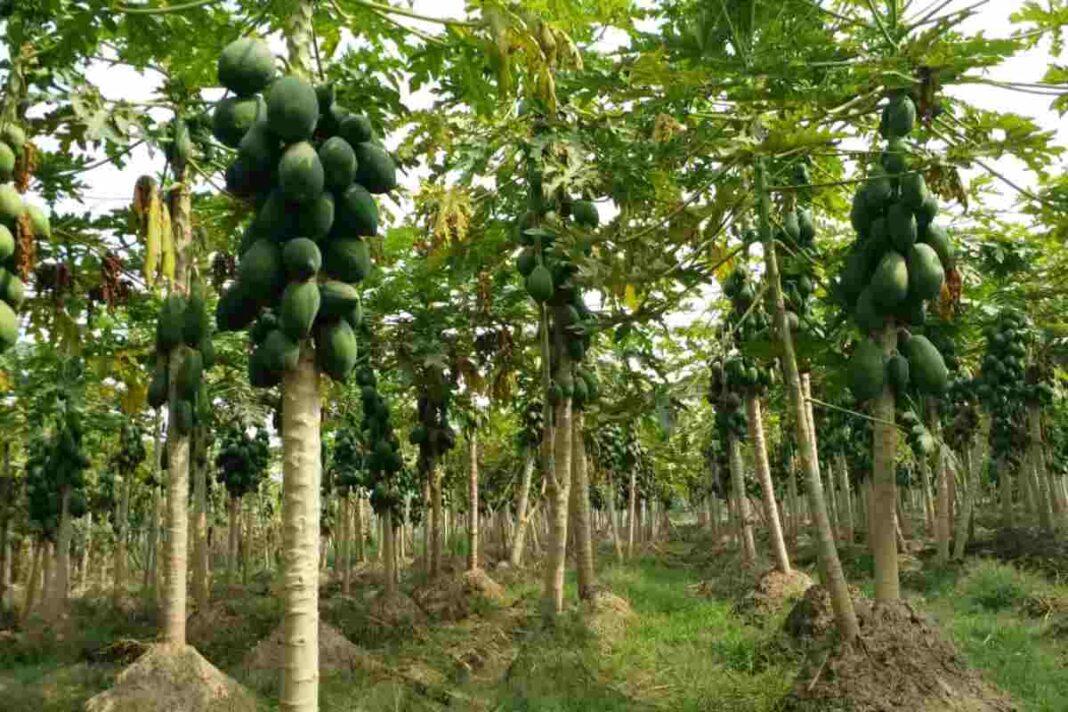

Bhadeja, a Muslim-majority village in Bihar’s Gaya district, has embraced the clarion call for self-reliance by Prime Minister Narendra Modi, experiencing an economic upswing through the cultivation of papaya. The success of papaya farming has not only elevated the status of the humble fruit but has also triggered a reverse migration trend, drawing back educated youth from cities to their villages.
Papaya’s Economic Impact:
Papaya has emerged as the economic backbone of Bhadeja, with each farmer witnessing substantial turnovers from papaya sales, reaching into lakhs. This economic boom has prompted a notable shift in agricultural focus, with more farmers transitioning from traditional crops like paddy and wheat to the lucrative papaya cultivation.
Drivers of Papaya’s Popularity:
Farmers in Bhadeja attribute the popularity of papaya cultivation to its low input costs and high yields. The crop has transformed into a cash crop, comparable to rubber, cashews, and spices. The success stories of initial farmers who experimented with papaya on the edges of their fields have motivated others to follow suit.
Reverse Migration Phenomenon:
The allure of profitable papaya farming has led to a reverse migration trend, with educated individuals returning to their villages to actively participate in this burgeoning agricultural sector. This shift underscores the economic viability and attractiveness of papaya cultivation as a means of livelihood.
Challenges and Care Requirements:
While papaya farming has brought prosperity to Bhadeja, farmers face challenges in safeguarding their crops. Unseasonal rains, storms, hailstorms, and the threat of wild animals and thieves pose persistent challenges. Additionally, caring for papaya saplings demands attention to issues like Mealybug infestation, regular weeding every three days, and cautious watering to prevent root rot.
Success Stories and Scale of Cultivation:
Local farmer Mohammad Irfan, who cultivates papaya on 23 katha of land, describes the crop as “like gold.” More than 70,000 papaya trees have been planted in the village, and over 50 farmers actively engage in papaya cultivation. Irfan’s farm alone produces around 1500 quintals of papaya, contributing significantly to the overall success of the village.
Conclusion:
Bhadeja’s transformation into a hub of papaya farming not only underscores the economic potential of this crop but also serves as an inspiring example of how agriculture can drive positive changes, including reverse migration, in rural communities. The success of papaya cultivation in Bhadeja stands as a testament to the village’s resilience and commitment to self-reliance.
For a detailed story, please visit: Awaz the voice
Also Read: NTCA and Sankala Foundation’s Artistic Celebration of Tribal-Wildlife Harmony
You can connect with DNN24 on Facebook, Twitter, and Instagram and subscribe to our YouTube channel.