

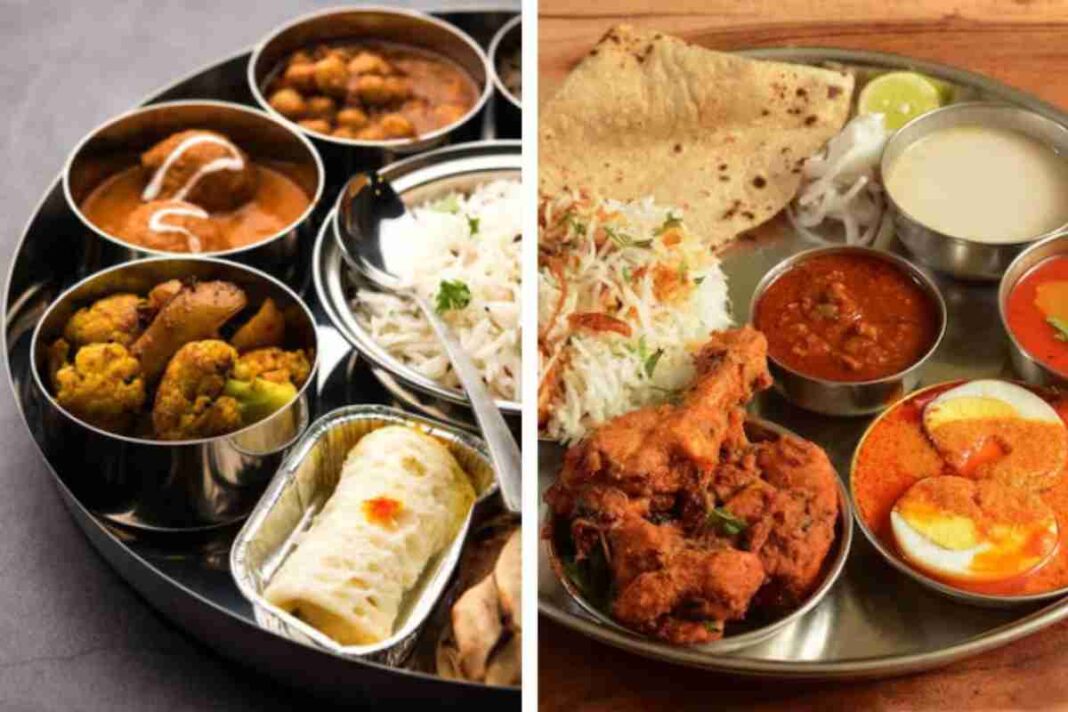

India, a land of rich cultural diversity, is known for its varied dietary preferences. In this article, we delve into the intriguing fact that approximately 71% of Indians follow a non-vegetarian diet, while 30% adhere to a strict vegetarian lifestyle. This dichotomy has given rise to unique customs and controversies surrounding food choices.
The IIT-Bombay Incident
In recent news, the Indian Institute of Technology Bombay (IIT-Bombay) sparked a heated debate by designating six tables in a standard canteen exclusively for vegetarian diners. Their reasoning behind this move was to promote inclusivity, citing health concerns raised by some students.
Public Reaction
This decision raised eyebrows and fueled discussions among the public. Many questioned the necessity of such a move and viewed it as an infringement on personal food choices. The mess council sent an email warning of “nausea” or “vomiting” among students who see non-vegetarian food. After consulting with hostel wardens and mess councilors, they even hinted at “appropriate penalties” for rule violations. In a common canteen with 80-100 tables, reserving six for vegetarian diners, accommodating seven to eight people per table triggered a wave of reactions.
Dietary Practices
Beyond institutional decisions, India’s dietary practices vary widely. Some individuals go to great lengths to separate vegetarian and non-vegetarian food items.
Separation of Utensils
It’s common for households to use distinct cooking utensils and cutlery for vegetarian and non-vegetarian meals. This practice ensures the avoidance of cross-contamination and adheres to cultural beliefs.
Guest List Etiquette
When hosting guests, especially those with dietary restrictions, some Indians meticulously curate their guest list to exclude non-vegetarians. The goal is to maintain dietary harmony and respect guests’ preferences.
Conclusion
In conclusion, India’s dietary landscape is as diverse as its people. The recent IIT-Bombay incident highlights the ongoing debate about food choices and inclusivity. While some seek to accommodate dietary preferences, it’s essential to strike a balance that respects individual choices and fosters unity.
For a detailed story, please visit: Awaz the voice
Also Read: India’s Global Leadership: G-20 and Development
You can connect with DNN24 on Facebook, Twitter, and Instagram and subscribe to our YouTube channel.