

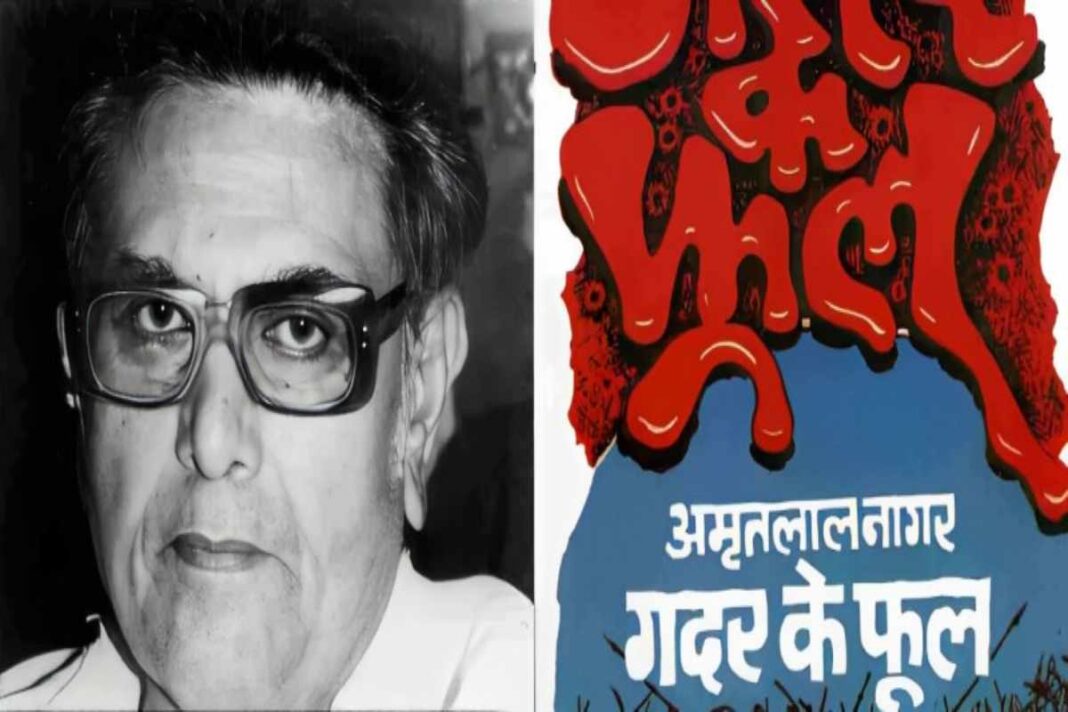

In Ayodhya during 1857, Baba Ramcharan Das and Amir Ali forged a historic alliance, frustrating the British divide-and-rule strategy. Eminent writer Amritlal Nagar documented this in “Gadar ke Phool.”
Nagar’s Pursuit of Untold Stories
As a committed Marxist and an influential figure in the Indian People’s Theatre Association (IPTA), Nagar embarked on a research endeavor in 1857, seeking to unveil the suppressed narratives surrounding the First War of National Independence in the Awadh region of Uttar Pradesh. His goal was to amplify the ‘oral histories’ muted by colonial writers and historians.
Mirza Ilahi Bakhsh’s Betrayal and the Rise of Unity
During Nagar’s exploration, a captivating revelation unfolded about Mirza Ilahi Bakhsh, a Mughal prince, attempting to incite rebellion against revolutionaries at Faizabad. In a dramatic turn of events during a Friday prayer, Achchan Khan courageously exposed Mirza’s betrayal, leading to his expulsion from the mosque.
Amir Ali’s Pivotal Appeal for Unity
Amidst the charged atmosphere, Amir Ali, another leader, seized the moment to advocate for Hindu-Muslim harmony. He proposed returning the Babri Masjid, acknowledged as Shri Ram Janm Bhumi by Hindus, to foster unity. This proposal, supported unanimously in the mosque, established a powerful alliance against the British.
The Frustration of Colonial Designs
The accord between Hanuman Garhi head Baba Ramcharan Das and Amir Ali proved to be a significant obstacle to the colonial government’s strategy of divide and rule. Hindus and Muslims, bound by this historic agreement, fought bravely against the British, frustrating their attempts to quell the uprising.
The Tragic Repercussions of Defeat
Following the defeat of the revolutionaries, the colonial regime unleashed brutal reprisals. Achchan Khan and Shambhu Prasad Shukla, symbolic figures of Hindu-Muslim solidarity, were publicly beheaded, underscoring the consequences of challenging the colonial order.
In the annals of 1857, Ayodhya emerged not only as a symbol of resistance but as a testament to the indomitable spirit of Hindu-Muslim unity against colonial oppression.
For a detailed story, please visit: Awaz the voice
Also Read: Embracing Eternity: The Heartfelt Story of the Mini Taj Mahal in Guwahati, Assam
You can connect with DNN24 on Facebook, Twitter, and Instagram and subscribe to our YouTube channel.