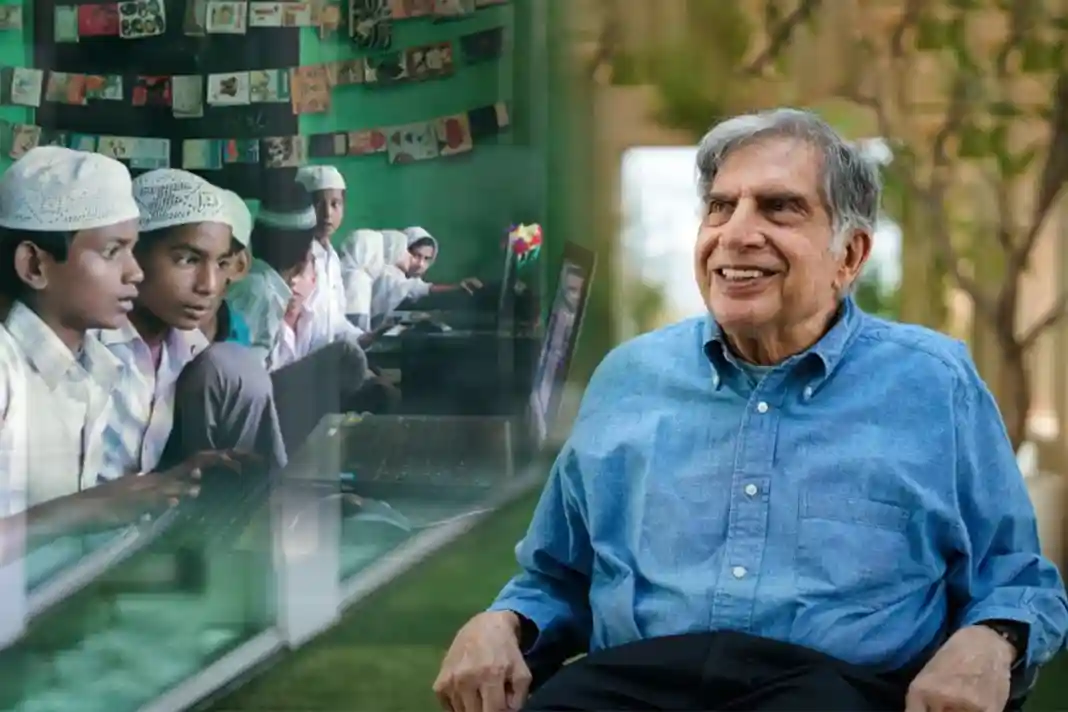

Ratan Tata, a prominent industrialist and philanthropist, took action to improve madrasa education in India after the Sachar Committee report highlighted serious issues. The report showed that the literacy rate among Muslims, the largest minority community in India, was only 59.1%. It also revealed that many children aged 6-14 were not attending school, and only 23.9% of Muslim students completed their matriculation, which is much lower than the national average of 42.5%. Recognizing these challenges, Tata Trust began its efforts in 2006 to reform madrasa education, focusing on the needs of poor children.
Comprehensive Reform Plan
Tata Trust developed a detailed plan to modernize madrasa education. The goal was to connect traditional Islamic teachings with subjects like science, math, and social studies. This approach helps students understand that Islamic teachings are relevant to the modern world. For example, students learn about Muslim scientists, study Islamic architecture, and relate their lessons to everyday life, such as understanding human anatomy in relation to prayer postures. The program started in four madrasas in West Bengal and later expanded to areas in Uttar Pradesh, Bihar, and Mumbai.
To make learning more engaging, the Trust trained madrasa teachers in innovative teaching methods. They learned how to use interactive and creative approaches to teach students. In Uttar Pradesh, the Trust worked with about 10,000 children in 50 madrasas to test the effectiveness of these new methods.
Promoting Inclusivity and Success Stories
One notable success is Madrasa Jamia Darul Uloom Hanafia in Teghra village, which has 119 students, including 50 Hindus. This mix of students promotes communal harmony. A 14-year-old boy named Vishnu Prajapati, who switched from a government school to this madrasa, became the best Urdu student, showing how quality education can transform lives. Overall, Tata Trust has improved education in around 400 madrasas, with 75 becoming ‘model madrasas.’ Their efforts have reached over 100,000 students, demonstrating that integrating religious and modern education can have a positive impact on society.
For detailed story, please visit: Awaz the voice
Also Read: Sunil Jaglan: Change Maker of Gender Equality in Rural India
You can connect with DNN24 on Facebook, Twitter, and Instagram and subscribe to our YouTube channel.