

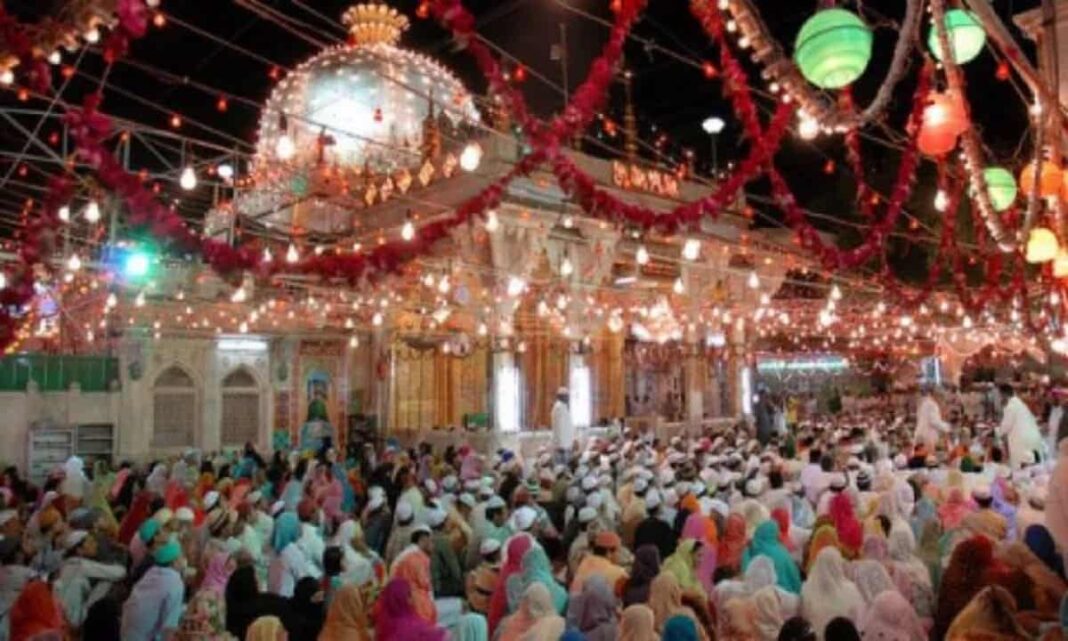

Celebrating 811th Annual Urs: We are celebrating the 811th annual Urs of Khwaja Gharib Nawaz of Ajmer Sharif, born on February 1, 1143 AD, in Sijz, Sistan, Iran. He was brought up in Khurasan, Iran and studied in Isfahan, Samarqand, and Bukhara, and went to Baghdad in search of a spiritual mentor. He eventually came to Ajmer in India via Lahore, where he lived for the rest of his life and passed away on March 15, 1236 AD.
Fulfilling Huqooq Ullah and Huqooqul Ibad
Unlike Muslim kings and rulers who ruled India for around 800 years and built many historical monuments, Khwaja Gharib Nawaz won the hearts of millions of people from different backgrounds by fulfilling Huqooq Ullah (God’s rights) and Huqooqul Ibad (human rights). He served the weak, poor, and underprivileged without discrimination based on caste, creed, gender, and religion. He was respected and loved by all and thus was known as “Sultan ul Hind” (king of the Indian subcontinent).
Respect for Local Traditions and Culture
He developed the Chishti Sufi order in the subcontinent and became the Sufi mystic with the highest following in the world. He respected and accommodated the local traditions and made them part of his Sufi order. It was why his hospices became the center of spreading universal love and fraternity among people from all walks of life.
Khwaja Gharib Nawaz – A Sufi Saint who won hearts
It is what Khwaja Gharib Nawaz of Ajmer Sharif and Hazrat Nizamuddin Auliya of Delhi taught us – love for all and malice towards none. They respected and adopted the local customs and culture, and even many became vegetarians out of respect for their non-Muslim brothers.
A Journey into the World of Sufi Poets
I was fortunate to attend a 3-day Sufi music festival in Delhi, organized by renowned composer and film director Muzaffar Ali and named “Jahan-e-Khusrau,” which took place in the Humayun Tomb. Renowned Sufi musicians and vocalists from various countries attended the event, including India, Pakistan, Afghanistan, Iran, and Turkey. The most memorable performer was Abida Parveen from Pakistan, who recited the mystical poems of Sufi poets such as Rumi, Jami, Khusro, Shah Niaz be Niaz, Baba Bulle Shah, Shah Zaheen Taji, and Shah Niaz Bareilvi. Her selection of poems was so moving and touching.
Cleaning the Heart and Adopting Local Traditions
The performance of devotional music had a captivating effect on the entire audience. This was a transformative experience that inspired me to offer reverence at the shrine of Shah Niaz Barelvi, constructed approximately 300 years ago in Bareilly.
The Chishty Sufi order established by Khwaja Gharib Nawaz believes in loving the unloved and reaching out to the maximum number of people. Thus, the love, fraternity, and affection the Sufi saints show have won people’s hearts from all creeds and castes. The basic philosophy of Chishty Sufis is to clean the heart instead of cleaning the apparent body and clothes and following the local customs and traditions to win people’s hearts.
Muslims in India Must Follow the Teachings of Khwaja Gharib Nawaz and Hazrat Nizamuddin Auliya
Today, Muslims in India must not forget the teachings of Khwaja Gharib Nawaz and Hazrat Nizamuddin Auliya and strive to create a society based on love and brotherhood.
You can connect with DNN24 on Facebook, Instagram, Twitter and subscribe to our YouTube channel.