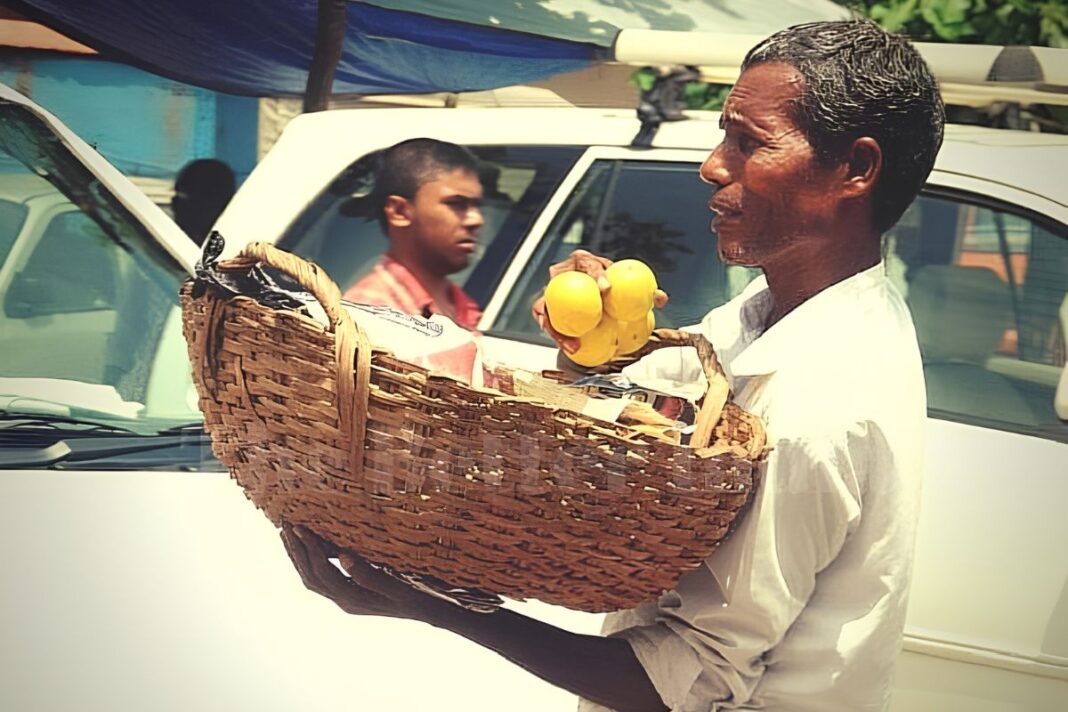

A foreign tourist once asked a Mangaluru fruit vendor the price of an orange, and the question he could not answer in English would go on to build a school. Harekala Hajabba sold oranges at the Mangaluru bus stand for decades, and somewhere in the sting of that small humiliation, he found the resolve that would change his village forever.
A Childhood Without a Classroom
Hajabba was born and raised in Harekala Newpadapu, a small settlement in the Dakshina Kannada district of Karnataka. He never sat in a classroom as a child. Poverty pulled him into work early, and instead of textbooks, his mornings were filled with baskets of oranges carried to the Mangaluru bus stand for sale. He grew into adulthood without the ability to read or write, a fact that shaped everything he would later choose to do.
That gap in his own life became the starting point of his mission. He often said, in later interviews, that he did not want the children of his village to grow up the way he had, denied the basic chance to learn. The thought stayed with him long before he had any means of acting on it.
The Question That Changed Everything
The turning point, as Hajabba has recounted it over the years, came when a tourist stopped at his stall and asked the price of his oranges in English. He could not understand the question, let alone answer it, and the moment left him with a sharp awareness of what illiteracy had cost him. Rather than treat that moment as proof that his situation was fixed, he treated it as a warning about what his village’s children might also lose.
From that point, Hajabba began setting aside money from his daily earnings, which by some accounts amounted to as little as 150 rupees a day. It was not a large sum, and it did not promise quick results, but he kept at it with a kind of discipline that rarely makes headlines until decades later.
Building a School One Rupee at a Time
The school did not appear all at once. Hajabba’s progress through the late 1990s was slow and often improvised. He used his modest savings to arrange a small teaching space, at first borrowing rooms attached to a local mosque to hold the earliest classes. The first batch of students numbered only in the dozens.
He negotiated for land, sought out small loans, and persuaded neighbours and local figures to support what many at the time must have seen as an unlikely venture for a man who could not read. Around 2000, a local legislator helped him secure a proper classroom, and a teacher arrived through a rural development scheme not long after. What began as a handful of children learning in borrowed space gradually became a recognised primary school in Newpadapu, growing year by year as more support arrived.
From a Few Dozen Children to a Government School
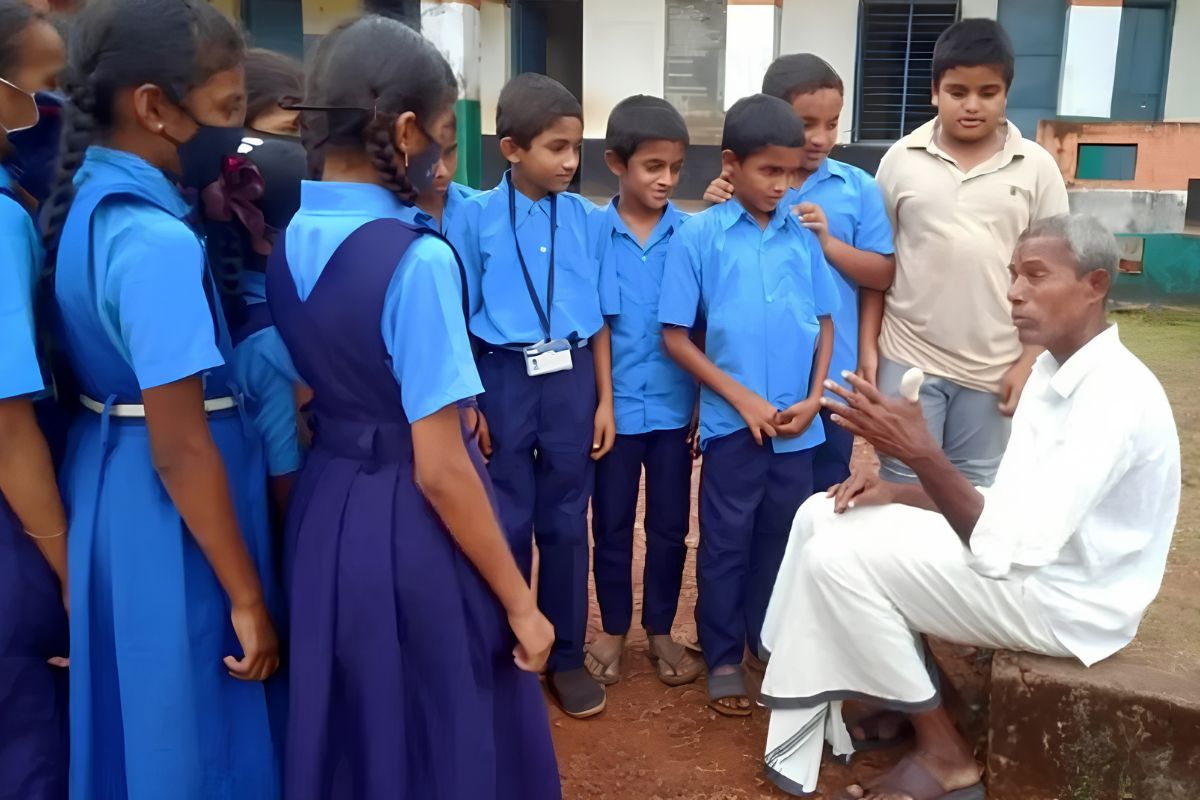
The school’s expansion tells its own story about what sustained effort can produce. Early records describe around 28 students in its first years. Over time, enrolment climbed past 100, and the school eventually extended its classes to the tenth standard, with reports suggesting that 150 to 175 students were studying there at various points. Taken across the decades, thousands of children are believed to have passed through its classrooms.
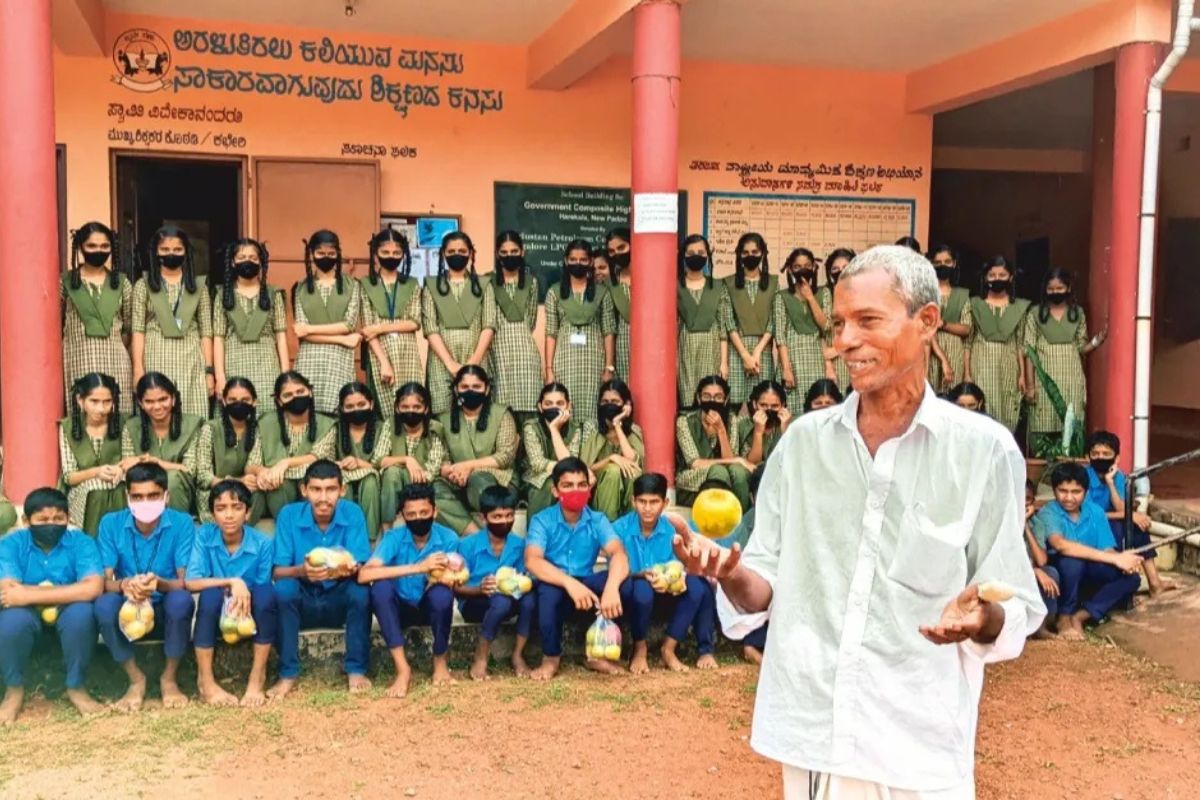
What changed for those children was not only literacy. Many had previously spent their days rolling beedis, helping with farm work, or simply idling because there was no school within reach. A classroom offered them an alternative path, one that led to higher education and work beyond manual labour. The shift from no school to a functioning institution altered the trajectory of an entire generation in that corner of Dakshina Kannada.
Local Effort Meets Government Support
Hajabba’s story also illustrates how individual persistence can eventually draw in institutional backing. His private efforts, sustained almost entirely through personal savings in the early years, attracted donations and volunteers as word of the school spread. The Dakshina Kannada Zilla Panchayat later recognised and supported the institution, and over time it became a full government primary and high school, with public funding covering classrooms and additional staff.
In this account, the government did not replace what Hajabba had started. It built upon it. His savings and stubbornness created the foundation, and official recognition, land allotments, teachers, and infrastructure funding turned that foundation into a lasting public institution.
A Title Earned Through Decades, Not Headlines
Hajabba came to be known in his region as Akshara Santa, roughly translated as the saint of letters, a title that reflects how the community came to see him. He continued selling oranges at the bus stand even after the school was established and growing, a detail that says as much about his character as any award could.
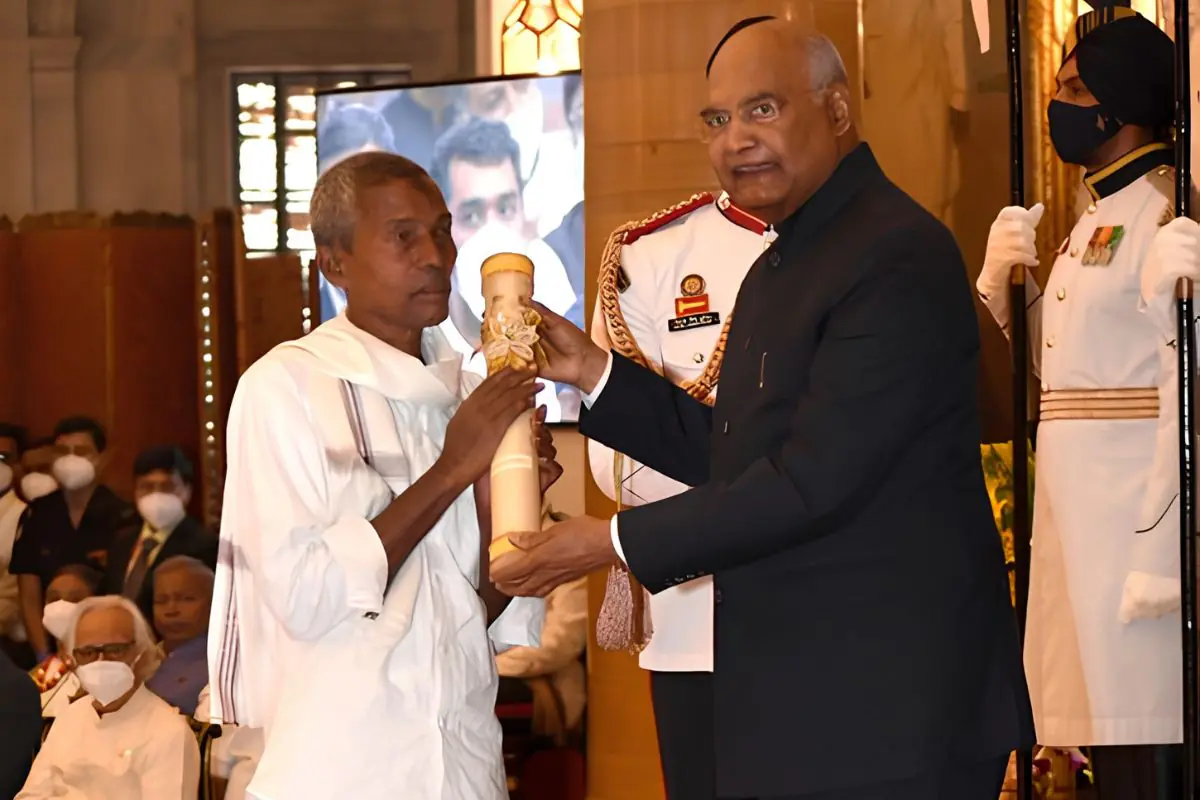
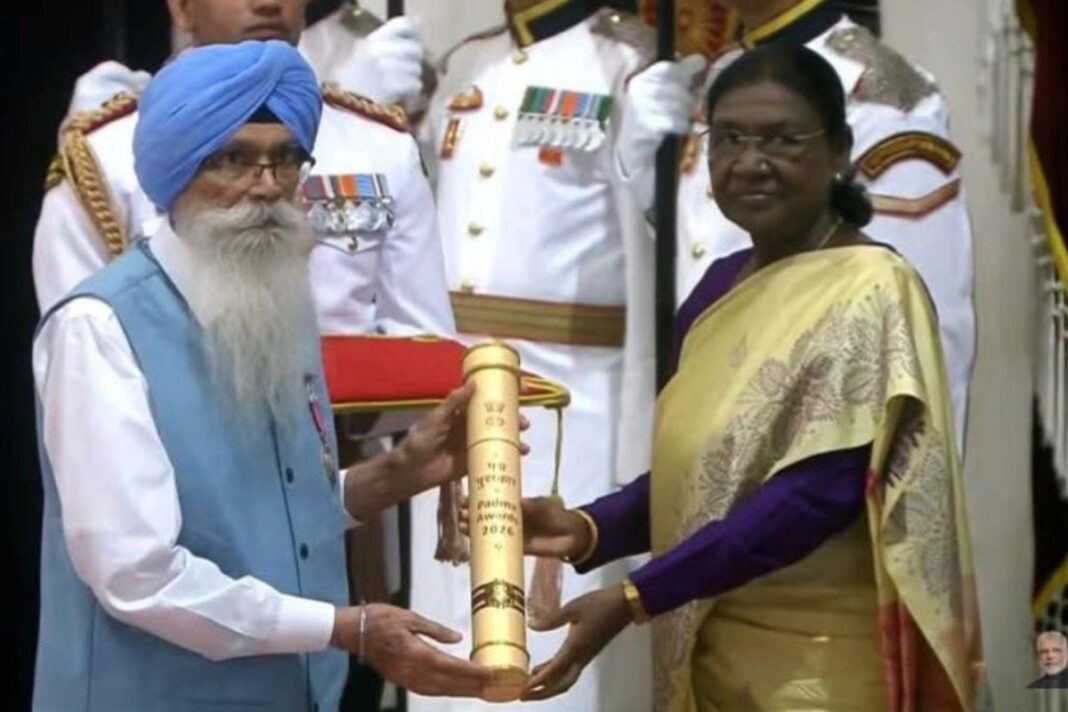
National recognition followed in 2020, when Hajabba was awarded the Padma Shri, one of India’s highest civilian honours, for his contribution to social work in education. The award was formally presented by President Ram Nath Kovind at Rashtrapati Bhavan in 2021. He has also received Karnataka’s Rajyotsava Prashasti and other state-level honours, as well as coverage in national media that introduced his story to audiences well beyond Dakshina Kannada.
What His Life Suggests About Change at the Ground Level
Hajabba’s example carries a certain moral clarity that is easy to admire and harder to imitate. He did not wait for a government scheme or an outside donor to address what he saw as an injustice. He started with the little he had, an orange basket and a handful of coins set aside each day, and built outward from there.
That approach, a mix of personal sacrifice, patient organising, and a refusal to be limited by his own lack of schooling, offers something instructive well beyond his village. Small, consistent choices, repeated over many years, produced a school, jobs for teachers, and a different future for children who might otherwise never have entered a classroom.
A Quiet Architecture of Change
Picture a child in Newpadapu fifty years ago, kept home to help with chores because there was no school nearby. Picture that same child, grown decades later, either teaching in the school Hajabba built or attending college because that first classroom opened the door. That chain, from humiliation to resolve, from saving to a school, from a school to careers, forms the quiet architecture behind Hajabba’s transformation of his village.
His school today stands as more than brick and mortar. It stands as evidence that one person’s refusal to accept things as they are can, given enough time and persistence, alter the course of many lives at once.
Also Read: Tamil Nadu Engineer Burns Portraits With Sunlight Only
You can connect with DNN24 on Facebook, Twitter, and Instagram and subscribe to our YouTube channel.