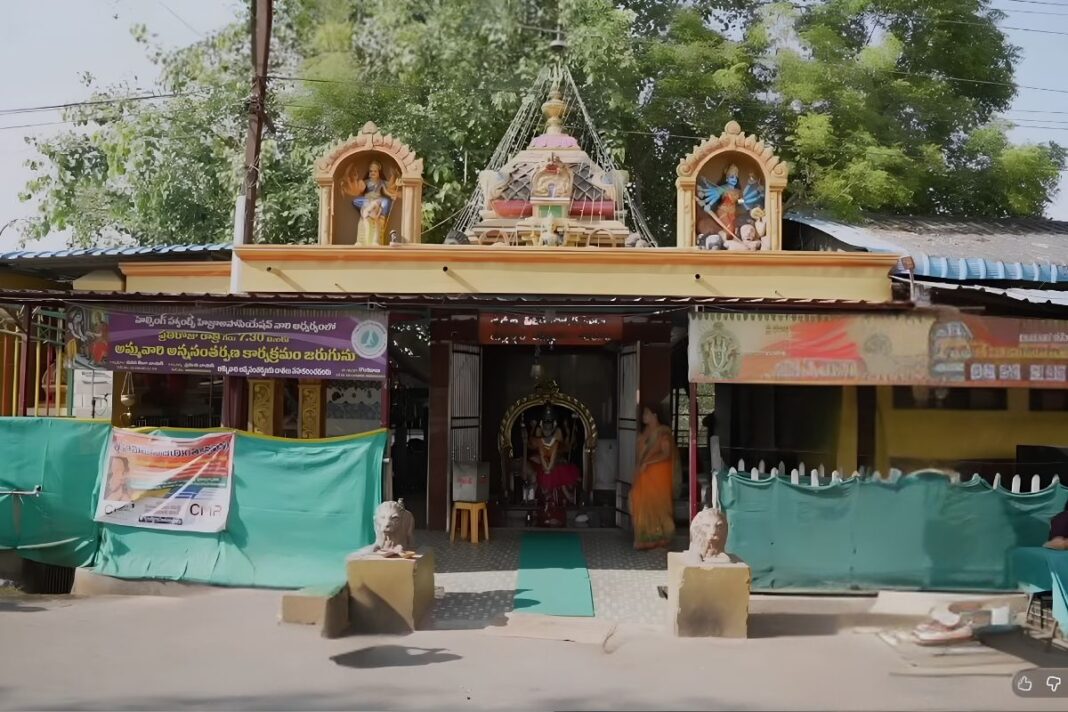

The river does not discriminate. On the banks of Pedda Cheruvu in Vizianagaram, Andhra Pradesh, it simply flows past a neighbourhood where, in 2012, twenty transgender women knelt before a small photograph of a deity and prayed because no temple in the town would let them through the door. What grew from that riverside vigil is now one of the more quietly remarkable stories in contemporary India: a working temple, a feeding programme serving 200 people daily, and a free school enrolling 70 students, all built and run by the women the rest of the world once turned away.
The Door That Never Opened
For transgender persons across India, the temple gate has long been a border. The Transgender Persons (Protection of Rights) Act, passed in 2019, prohibits discrimination in access to public spaces and facilities. On paper, no one can be turned away. In practice, the women of Boggula Dibba in Vizianagaram town found that law and lived experience occupy different territories.
The Act does not name religious spaces. It does not specify temples. It carries no implementation guidelines for enforcing entry rights at a mandir, a dargah, or a church. Courts have occasionally addressed who may enter a place of worship, most notably in the 2018 Sabarimala judgment, which opened temple gates to women of all ages. However, that ruling addressed women, not transgender persons, and the distinction has mattered. Article 17 of the Constitution abolished untouchability. Article 25 guarantees freedom of religion. Neither provision has translated, in any reliable way, into a transgender woman being welcomed at a temple sanctum with the same ease as anyone else.
The twenty women of Vizianagaram did not wait for a court order. They chose a different path.
A Photograph, Two Saplings, and a Decision
The founding of the Sri Vijaya Sagara Durga Malleswari Temple was not dramatic. In 2012, the group began gathering under the leadership of Pedda Cheruvu with a photograph of their chosen deity. Devotion was the only architecture they had. On 4 June 2012, they planted a neem tree and a peepal sapling on the riverbank, two species regarded as sacred in Hindu tradition, and marked that ground as theirs.
Over the following years, the informal gathering became a formal temple. The women of Boggula Dibba, who earn their living through the customary practices of their community, collectively decided to dedicate ninety percent of their daily income to the temple’s construction, maintenance, and social work. This figure is not symbolic. It is the actual proportion of earnings they channel away from personal use toward a shared institution. The temple was built solely on this contribution.
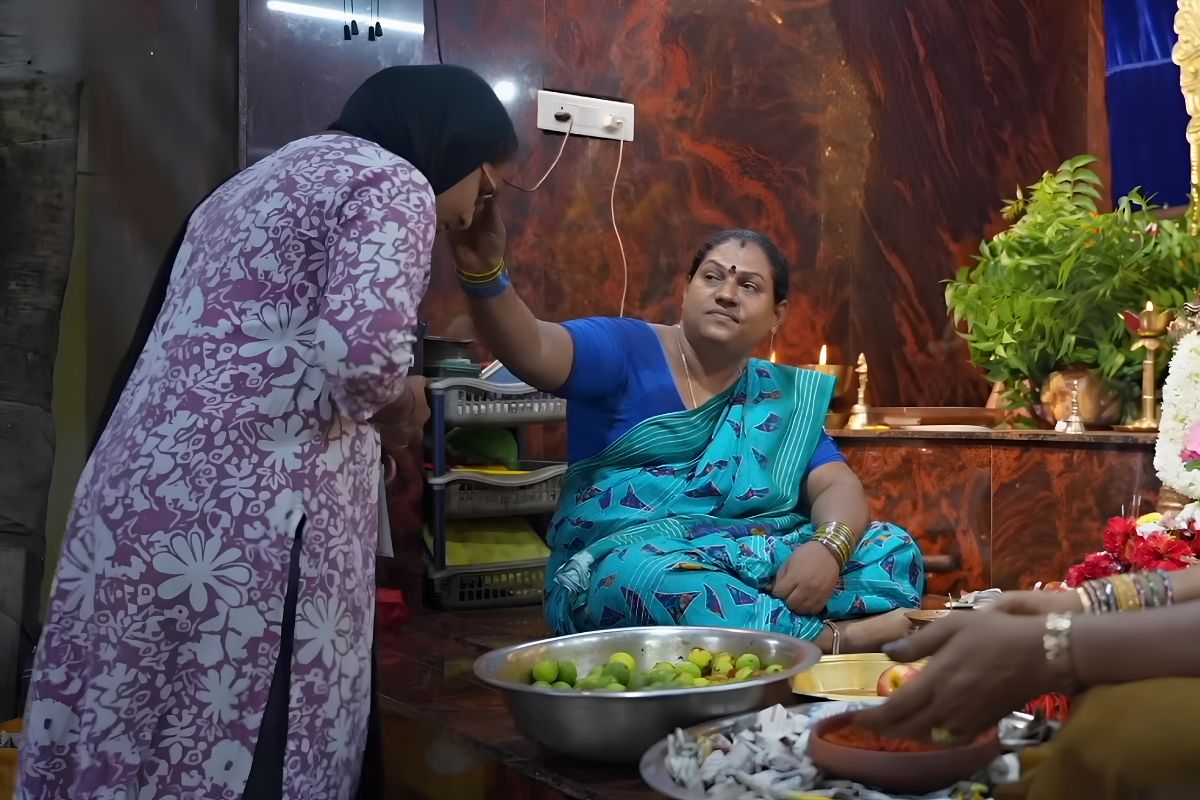
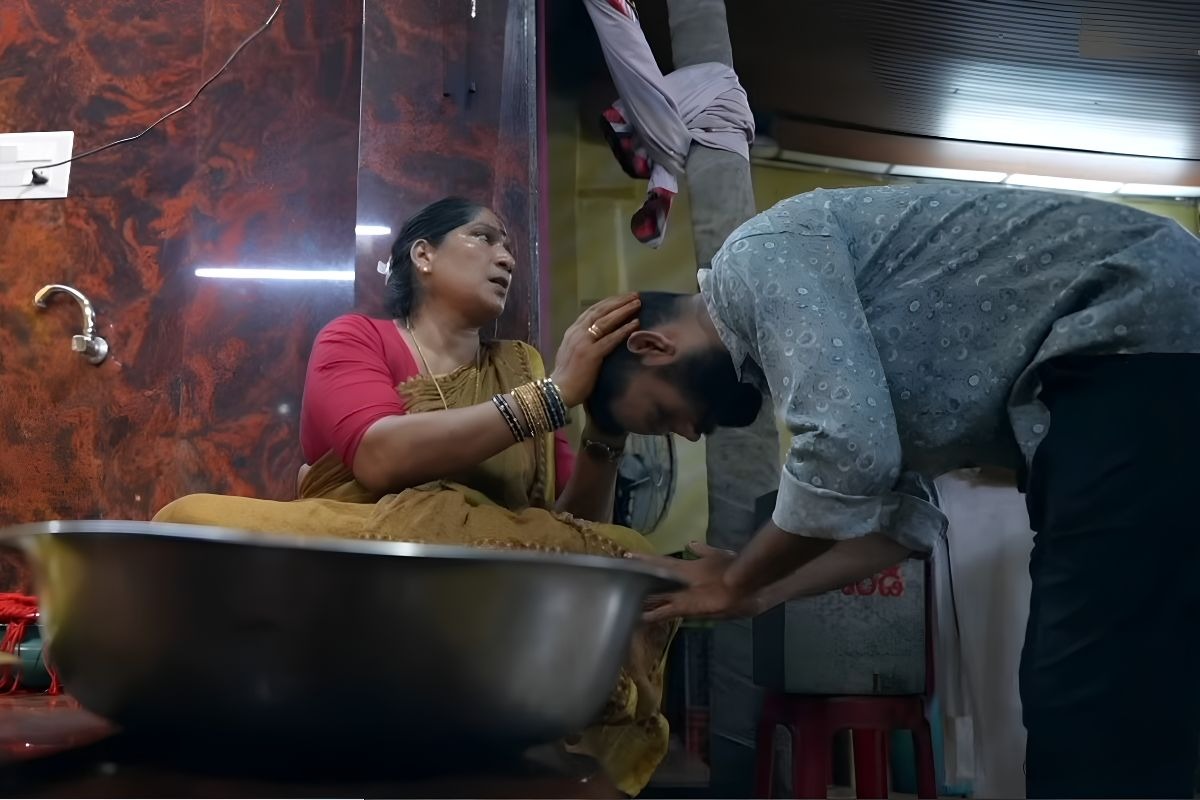
Today, the women serve as its priests. They conduct daily rituals, manage the premises, and administer a growing institution. The reversal is almost deliberate in its completeness: those who were shut out of every temple now stand at the altar of one they built themselves.
Two Hundred Plates a Day
The temple’s most visible service is its Annadanam programme, run under the banner of the Helping Hands Hijra Association. Every day, between a hundred and fifty and two hundred orphaned and destitute individuals eat a meal at the temple premises. The food is first offered to the deity, as is traditional in Annadanam practice, before being served to those who come. In Hindu religious thought, this offering carries particular weight; donors are considered to accrue spiritual merit, and the Act of feeding is classified among the highest forms of service.
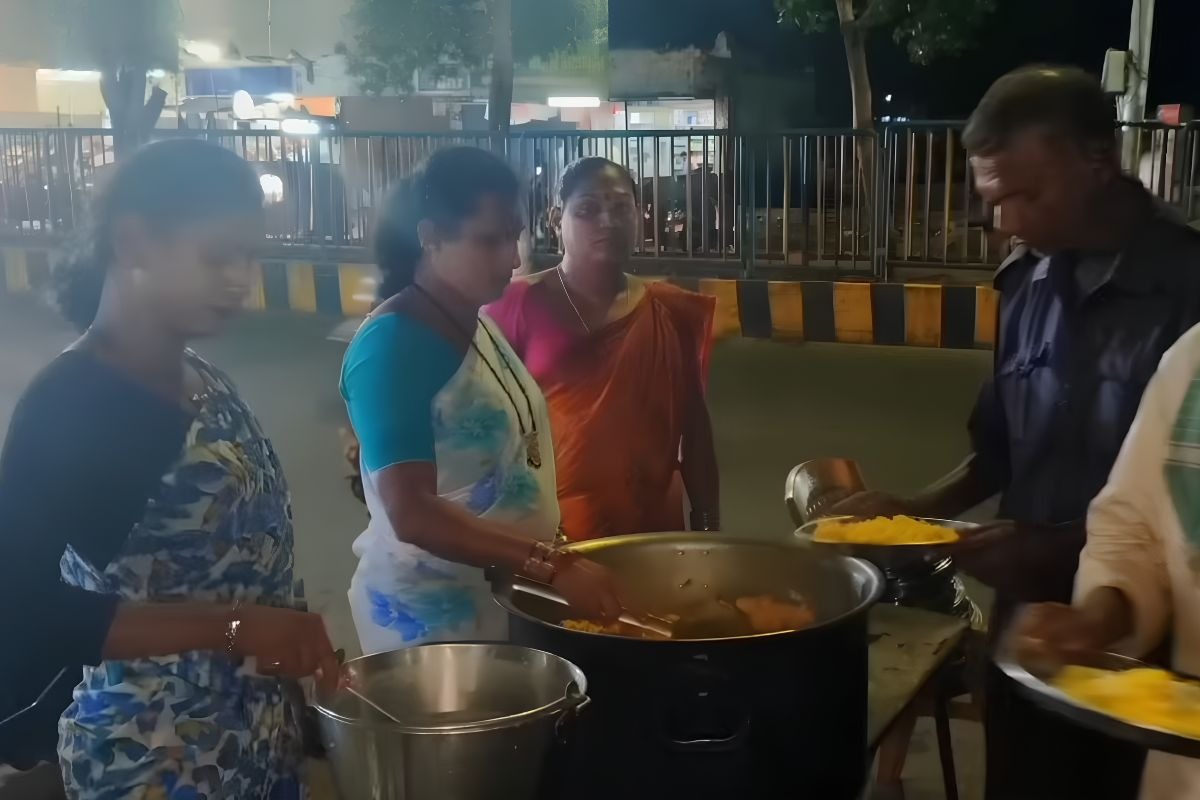
On Tuesdays, Fridays, and major festival days, the numbers climb to three hundred. The temple draws around two hundred devotees on ordinary days, while Tuesdays and Fridays bring upwards of two thousand. The women manage this without government subsidy or institutional sponsorship. The money comes from their earnings. The labour is their own.
Seventy Students Across Two Mandals
The educational programme the community has built is less visible than the Annadanam kitchen, but possibly more consequential. Across Kurupam and Gummalaxmipuram mandals in Parvathipuram Manyam district, the temple community provides free education to seventy transgender persons. Both mandals are rural, geographically remote from urban services, and the individuals enrolled come from circumstances in which formal education has historically been out of reach.
The Ministry of Social Justice and Empowerment operates a scholarship scheme for transgender students from class nine onwards, intended to reduce dropout rates. It is a government programme with reasonable intentions. The women of Vizianagaram were not waiting for it. They built their own outreach, identified their own students, and created a parallel system because the official one was not reaching the people who needed it.
Six Children and Six Weddings
Beyond feeding and education, the community has adopted six orphaned children and, in time, arranged and funded their marriages. This is the kind of support that belongs in a family, not in a welfare category. The women of Boggula Dibba have constructed a community structure that takes in the most vulnerable people and keeps them not as cases to be managed but as members to be provided for.
What the Law Has Not Yet Managed
The Andhra Pradesh High Court issued a notable ruling in 2025, affirming that trans women are women under the law. It was a meaningful development in the long legal argument over gender recognition. It did not change what happens at temple doors.
The constitutional framework governing religious spaces in India is genuinely complicated. Article 26 gives religious denominations the right to manage their own affairs. Article 25 protects freedom of conscience. The courts use the Essential Religious Practices doctrine to determine what falls within the protected core of a religion, but this requires judges to make theological determinations that no legal training quite prepares them for, and the results have been inconsistent. State control over temples varies sharply by religion: thousands of Hindu temples are administered under government Endowment Acts; mosques and churches operate with no such oversight. The question of whether a private denominational temple qualifies as a “public place” under anti-discrimination law remains unresolved.
None of this is an argument against legal reform. Explicit coverage of religious spaces in the Transgender Persons Act, combined with workable enforcement guidelines, would represent genuine progress. The current framework, which leaves religious discrimination in a grey zone, has not served the people it was written to protect.
However, the women of Vizianagaram did not require that reform before they acted.
The Temple on Pedda Cheruvu
There is a temptation to frame this story as a triumph of the human spirit, and it is that, but it is also something more specific. It is evidence of what communities do when institutions fail them. These twenty women did not storm the gates of temples that rejected them. They acquired land, pooled money, planted trees, built walls, hired no priests because they became their own priests, cooked food for two hundred strangers, educated seventy students in two rural mandals, and adopted six children.
The Sri Vijaya Sagara Durga Malleswari Temple now draws thousands of devotees. People who might never sit beside a transgender woman in another context come to receive prasad from her hands at this temple. That, too, is part of what these women have built.
Faith that waited by a river long enough eventually found a roof, a kitchen, and a school. The twenty women of Boggula Dibba did not receive sanctuary. They made one.
Also Read: Kerala Duo Converts Household Waste Into Thriving Garden
You can connect with DNN24 on Facebook, Twitter, and Instagram and subscribe to our YouTube channel.