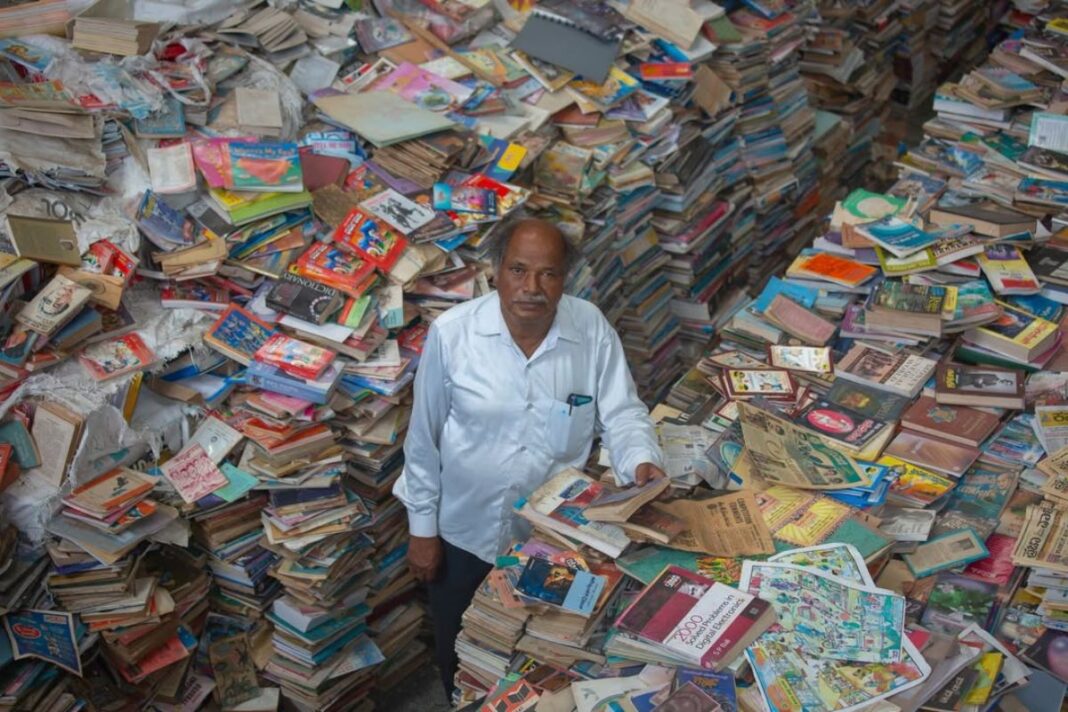

On the outskirts of Haralahalli, a village most maps forget, there stands a building that holds two million books. No entry fees. No membership cards. No questions asked. Just shelves upon shelves of knowledge, free to anyone who walks through the door. The man who built it spent fifty years buying books instead of food, sold his house to fund the collection, and is only now, at seventy-five, receiving the recognition the country owes him.
Anke Gowda, a former bus conductor with the Karnataka State Road Transport Corporation, was named a Padma Shri awardee in 2026 under the “Unsung Heroes” category. He received the honour in the field of Literature and Education. For a man who never sought publicity, who raised cows for extra income so he could afford another stack of volumes, the award is less a surprise than a long-overdue confirmation.
The Suggestion That Changed Everything
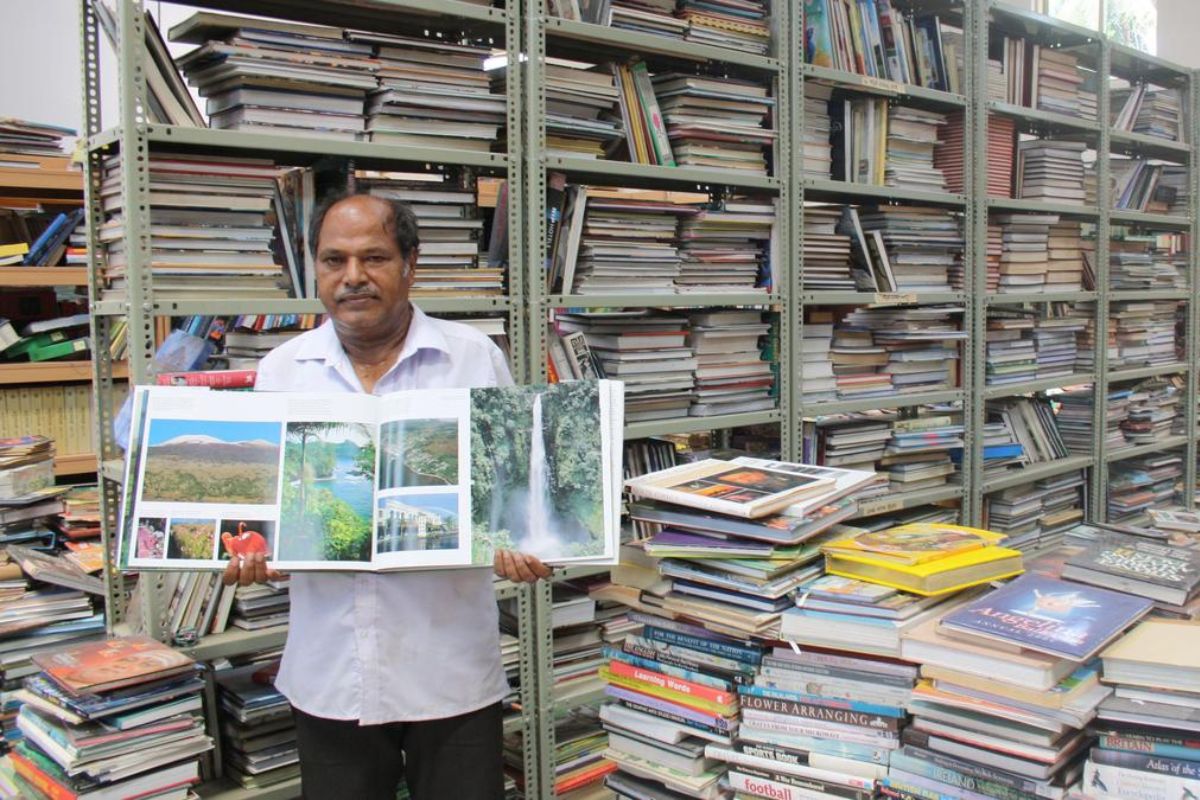
Gowda was twenty years old when a Kannada professor named K. Anantaramu offered him some casual advice: develop a good hobby, perhaps a book collection. Most people receive such suggestions and forget them by evening. Gowda never forgot.
He had grown up in Mandya district, in a farming household where books were not available. The scarcity did not dull his appetite. It sharpened it. When he joined KSRTC as a bus conductor, he began setting aside the greater share of his salary for books. At first, it was a trickle of purchases. Gradually, it became something his family noticed, and not always with approval. He asked relatives for money to buy books. He skipped meals. He devoted, by his own account, nearly eighty percent of his earnings to the collection.
For thirty-three years, he also worked as a timekeeper at the Pandavapura Cooperative Sugar factory. The Kannada Sahitya Parishat conferences became a fixture in his calendar because they offered discounted books. He attended as many as he could manage, loading himself down each time.
When salaries and savings proved insufficient, he sold his house in Mysuru for six lakh rupees and spent five lakh more on books. He supplemented his income by raising cows and working as an insurance agent. Every spare rupee fed the collection.
Pustaka Mane: Two Million Books in Rural Karnataka
The library that Gowda built is called Pustaka Mane, Kannada for “House of Books.” It now occupies a purpose-built structure in the Pandavapura municipality, Mandya district, spanning roughly 1,500 square metres. The building was not constructed with public money. Businessman Hari Khoday, who visited after friends told him about the collection, was so astonished by what he saw that he donated eighty lakh rupees for the construction. A local legislator later brought then Chief Minister H. D. Kumaraswamy to the library, which led to funding for two additional structures.
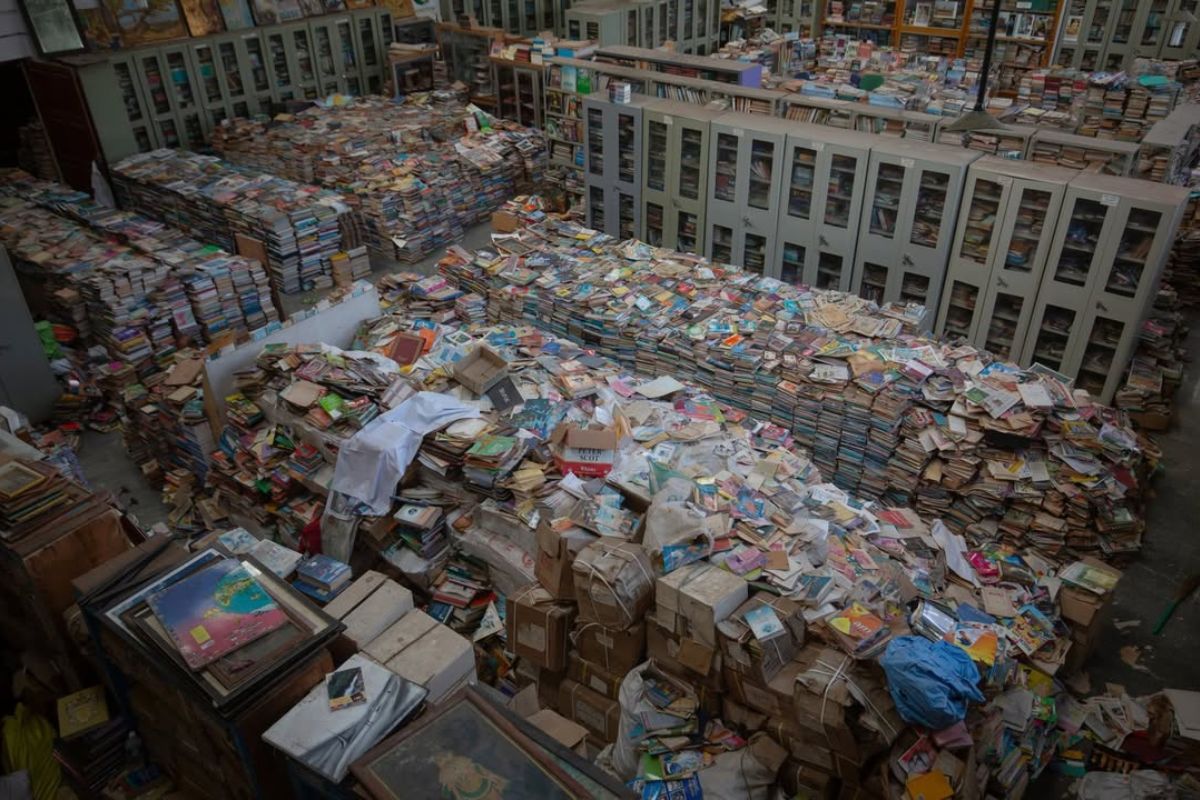
Inside, the holdings are formidable by any standard. The collection comprises over 20 lakh volumes across more than 20 Indian and foreign languages. There are works in science, philosophy, history, mythology, competitive examination preparation, and classical literature among the more extraordinary holdings: rare manuscripts dating to 1832, nearly five thousand dictionaries, twenty-five hundred books connected to Mahatma Gandhi, thirty-five thousand international magazines, two thousand five hundred Kannada periodicals, and thousands of publications related to the Bhagavadgita, Mahabharata, Jainism, Buddhism, and the Bible.
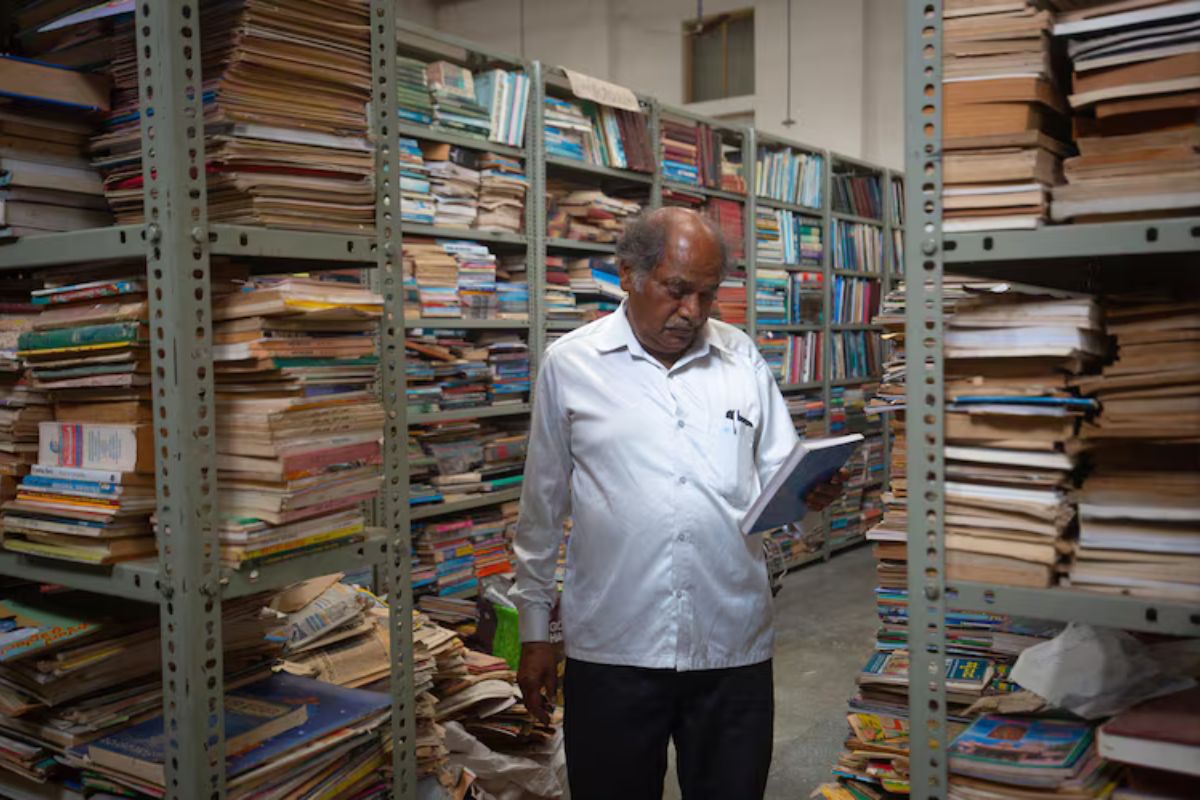
The library has no professional librarian. Books are arranged in ways that casual observers might describe as disorganised. Gowda himself, however, knows exactly where each volume sits. Ask him for any book, and he will tell you precisely where to find it.
The Weight of Fifty Quiet Years
The difficulties Gowda endured in building this collection were not dramatic enough to make for clean storytelling. They were the slow, grinding kind.
There were years when he had almost no room left. Books filled trunks, then shelves, then floors. By the time the collection approached fifty thousand volumes, the space in his home had collapsed entirely under the weight of paper and binding. There was no wealthy patron yet, no government scheme, no coverage in national newspapers. There was only a man and his books and the persistent lack of space to keep them.
He raised cows. He sold insurance. He counted hours at a sugar factory. Through all of it, the books kept arriving.
He never expected a reward. He pursued the collection for over fifty years without public acknowledgement, operating on the straightforward belief that knowledge ought to be available to the people who needed it but could not afford to seek it elsewhere.
When asked about his motivation, his answer was simple: “My wish was to collect all the knowledge of the world in one place and make it accessible to the common man.”
Open Doors, No Conditions
What separates Pustaka Mane from comparable collections is not merely its size. It is the complete absence of conditions attached to its use. There are no fees. There are no registration requirements. Students preparing for competitive examinations, researchers hunting for obscure texts, ordinary readers looking for a quiet afternoon with a book, all of them are equally welcome.
The library’s location in rural Karnataka is itself a political statement of sorts. The assumption in Indian public life has long been that serious libraries belong in cities. Pustaka Mane contradicts that assumption. For communities in Mandya district, it is not a substitute for something better elsewhere. It is the thing itself.
Prominent visitors have included Rahul Gandhi, H. D. Kumaraswamy, and D. V. Sadananda Gowda, along with legislators, writers, and, reportedly, Supreme Court judges seeking specific texts. A man named Avi Bettwami, an assistant at a private college who regularly visits, said that Gowda’s example inspired him to begin collecting books of his own.
Padma Shri at Seventy-Five
The Union government announced Gowda’s Padma Shri on January 24, 2026. The honour came through the “Unsung Heroes” category. This designation carries a particular acknowledgement: that the work was done without expectation of recognition, and that the country is only now recognizing it.
Gowda had already received the Rajyotsava Award and an entry in the Limca Book of Records. He is known in Karnataka as an Akshara Yogi, a term sometimes translated as ‘word warrior,’ though the underlying meaning is closer to ‘one devoted entirely to letters and learning.’
He is seventy-five years old. He spent more than half a century building something that serves thousands of people who will never know his name. The library preserves decades-old newspapers, magazines, and manuscripts that are not found in any other collection in the country.
A Promise Kept in Paper and Ink
There is a kind of person who decides early that one thing matters above all others and then spends a life proving it. Anke Gowda is that kind of person. The thing that mattered was books, and the access to them that most people in rural India have never had.
He sold his house. He skipped meals. He worked three jobs. He did all of this without a grant, without an institution behind him, without any reasonable guarantee that it would amount to anything visible in his own lifetime.
Pustaka Mane is now one of the largest free public libraries in India. It belongs to no university, no government department, no trust. It belongs, in the only sense that matters, to anyone who needs it.
Also Read: India’s Last Manabhatt Master Receives Padma Shri at 94
You can connect with DNN24 on Facebook, Twitter, and Instagram and subscribe to our YouTube channel.