

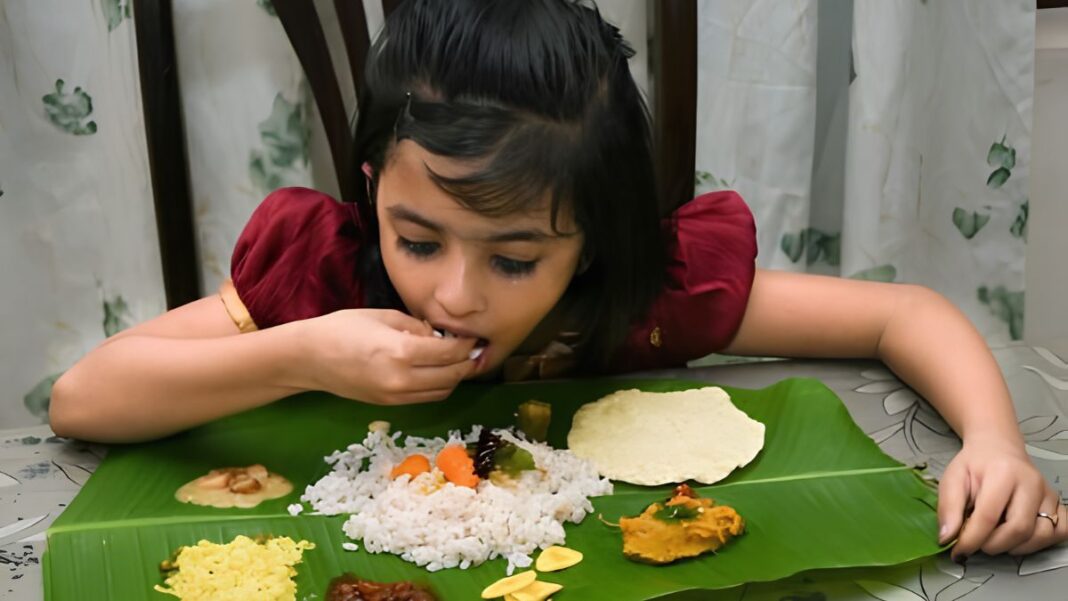

Ask an Indian grandmother why she eats with her hands, and she may tell you a fork can’t tell when the rice is ready. It sounds like a joke, but she means it. In millions of homes, temples, and roadside kitchens, the hand is still the first tool at the table, and the reasons go back a very long way.
A habit older than the fork
Eating with the hands was once the custom nearly everywhere. Ancient Egyptians, Mesopotamians, Greeks, and people across Africa, Southeast Asia, and South Asia all ate this way long before knives and forks became signs of good manners. In India, the practice settled into daily life and stayed. It belongs to the kitchen, the temple, the festival, and the old habit of offering a guest something to eat.
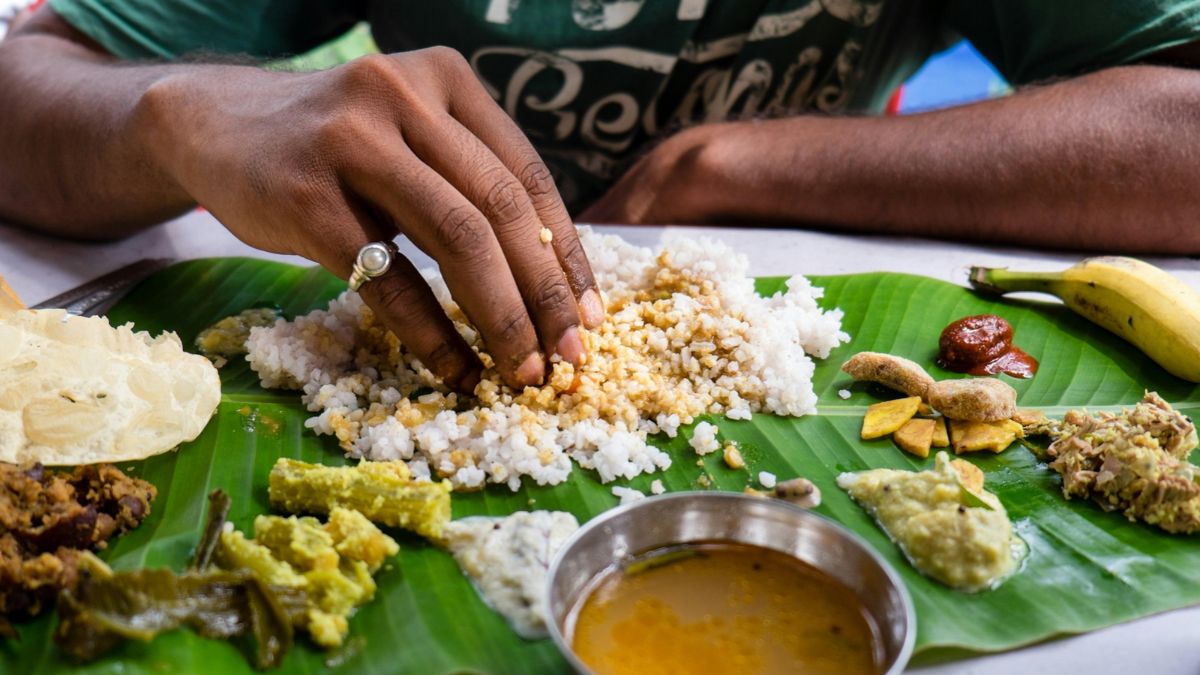
The food itself invites it. Rotis, dosas, parathas, rice, dal, and curries are meant to be torn, scooped, and mixed. A piece of roti carries dal to the mouth. Rice soaks up sambar. A meal on a banana leaf is gathered with the fingertips. Anyone who has sat down to hot roti and dal on a steel plate at a roadside dhaba knows how natural it feels.
Touch is part of taste
In Indian tradition, a meal starts working on the eater before the first bite. The fingers report on temperature, texture, moisture, and how much food is on its way to the mouth. They tell you the roti is too hot, the rice needs more mixing, or the curry wants more bread to calm its heat.
The hand also slows a person down. Each bite has to be shaped, sized, and lifted with some care. Meals taken this way tend to last longer, and the eater notices hunger and fullness more clearly.
The Ayurvedic view
Ayurveda, the ancient Indian system of health, offers the fullest explanation for this habit. It holds that digestion begins with attention. You see the food, smell it, feel its warmth, and taste it slowly. Touch matters a great deal here, since the fingers bring the first and most direct news about the meal.
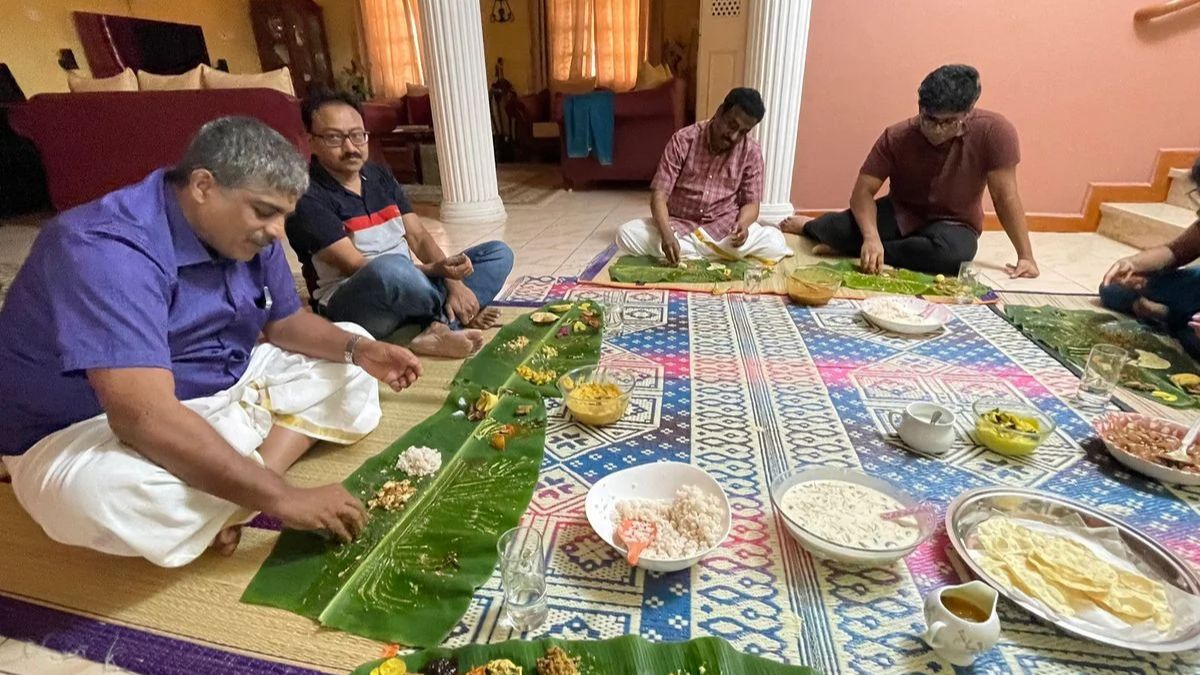
People who feel the food tend to take smaller mouthfuls and chew longer, which is what Ayurveda advises, along with eating calmly and without distraction.
The tradition also links the five fingers to the five great elements, called panchamahabhuta. These are earth, water, fire, air, and space. Gathering the fingers to lift a bite is read as a small act of balance that joins the eater to the elements found in both body and food. Different texts arrange the fingers and elements in slightly different orders, but the idea stays the same. The hand stands for the whole of nature, and food belongs to that same living system.
Then there is agni, usually translated as digestive fire. It describes the body’s power to take in food, transform it, and absorb what it needs. Ayurveda teaches that agni works best when meals come at regular times, in fitting amounts, in a quiet setting, and with full attention. Touching the food first is believed to wake agni, signaling to the body and mind that nourishment is coming. This is a traditional belief, not a physical process. Its value lies in its emphasis on preparation and awareness.
Ayurveda also names six tastes, called shad rasa. They are sweet, sour, salty, pungent, bitter, and astringent, and a good meal includes all six in proportions that suit the person, the season, and the state of health. The thali shows this idea on a plate. Rice or bread brings sweetness and weight.
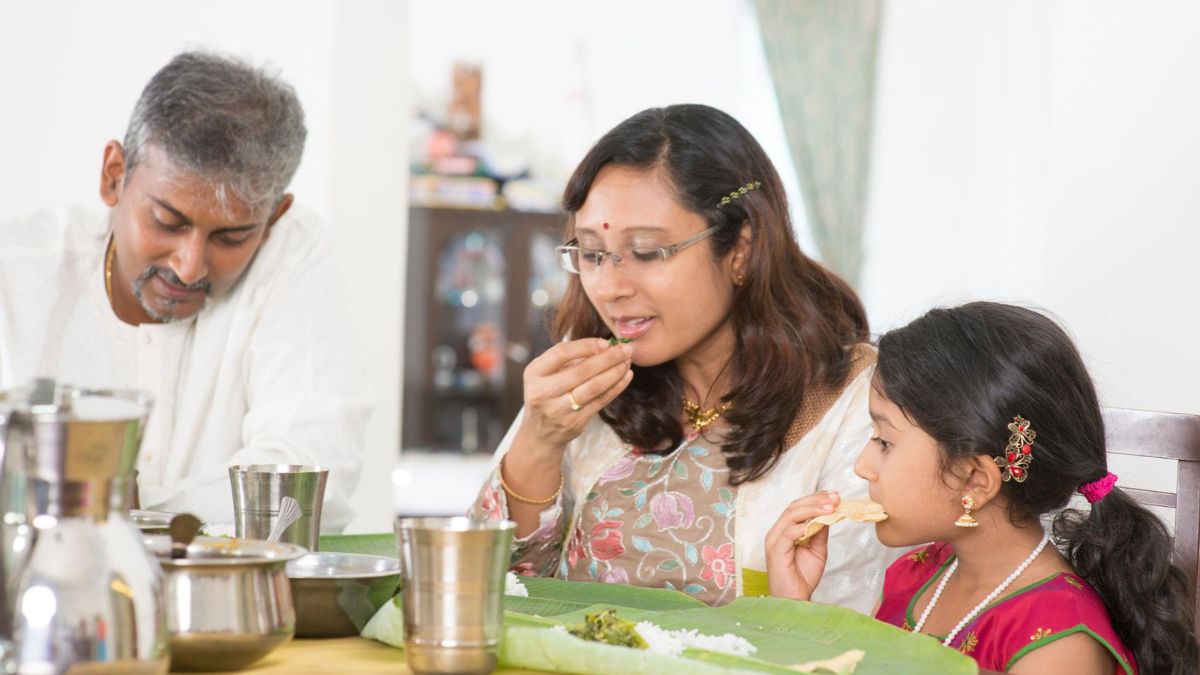
Dal adds protein and a mild astringency. Vegetables give bitterness. Pickle supplies sourness and salt. Spices add pungency, and yogurt or ghee softens the whole. Behind these choices stand the three doshas, Vata, Pitta, and Kapha, which Ayurveda treats as the basic types of constitution. Foods are picked to keep them in balance.
What modern research says
Researchers have studied practices similar to Ayurvedic advice, such as eating slowly and with attention. A review published in PMC describes mindful eating as bringing full awareness to food from the first thought of a meal to the last bite. Of the studies it covered, 13 of 19 reported weight loss, though the evidence did not show that mindful eating caused it.
The two systems are best kept apart. The elements and agni belong to spiritual and traditional thought, while mindful eating has its own research base. They meet in practice, because using the hands can slow a meal and sharpen attention.
The right hand and clean hands
Indian etiquette favors the right hand for eating. The rule applies across faiths, and many Indian Muslims, Christians, and followers of other religions keep it. In earlier times, people used the left hand to clean themselves after using the toilet, while the right was kept for eating, giving, and receiving. Washing is therefore part of the meal. Homes, temples, and restaurants commonly offer a place to rinse before eating, and a finger bowl may follow.
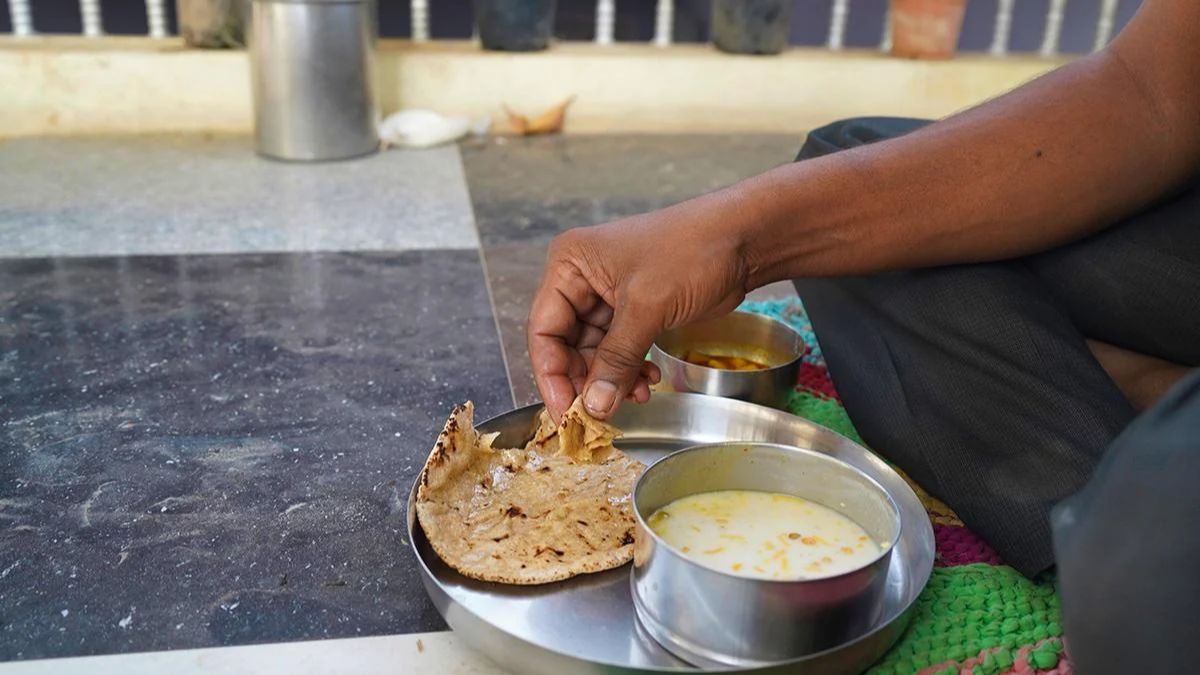
Skill is involved too. A practiced eater works with the fingertips and thumb, keeps the palm clean, and lifts food without spilling or soiling the hand. It is a learned social skill, and regions have their own styles.
Food and belonging
How a person eats can say where they belong. Food marks family, region, religion, caste, class, and community, and a shared meal can signal welcome, affection, rank, celebration, or devotion. Festival meals in South India are often served on fragrant banana leaves that break down naturally and carry associations with auspicious days. Children learn by watching their elders. Guests learn by being welcomed in. The habit passes along at the table more than in any lesson.
An old habit in a modern kitchen
India today uses spoons, forks, chopsticks, and delivery apps. Hand eating continues because it suits the food and carries meaning. Even a delivered biryani is usually opened and eaten by hand. Many people reach for a spoon with thin, liquid dishes or at formal tables, and use their hands for bread, rice, and dry preparations.
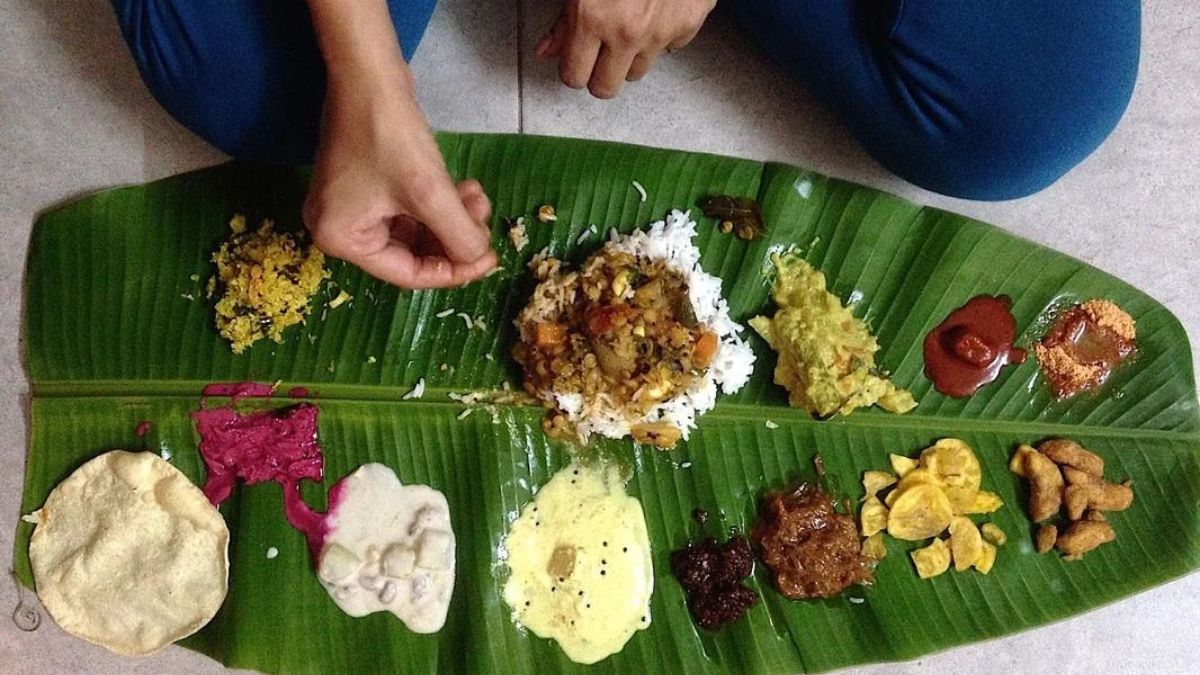
Care still matters. Hand eating is hygienic when hands are washed well with soap and water, nails are kept clean, and food is handled safely. Utensils make sense with very hot dishes, and at a shared buffet the serving spoon should do the touching.
Why it lasts
A meal eaten with clean hands asks the eater to slow down. It draws notice to the warmth of the rice, the softness of the dal, and the smell of the spices, and it turns the mind to the people who grew and cooked the food. In a world of screens and quick meals, that still counts as a small act of presence, and it may be the best reason the grandmother has for passing over the fork.
Also Read: Thekua: The Humble Prasad That Carries the Soul of Chhath Puja
You can connect with DNN24 on Facebook, Twitter, and Instagram and subscribe to our YouTube channel.