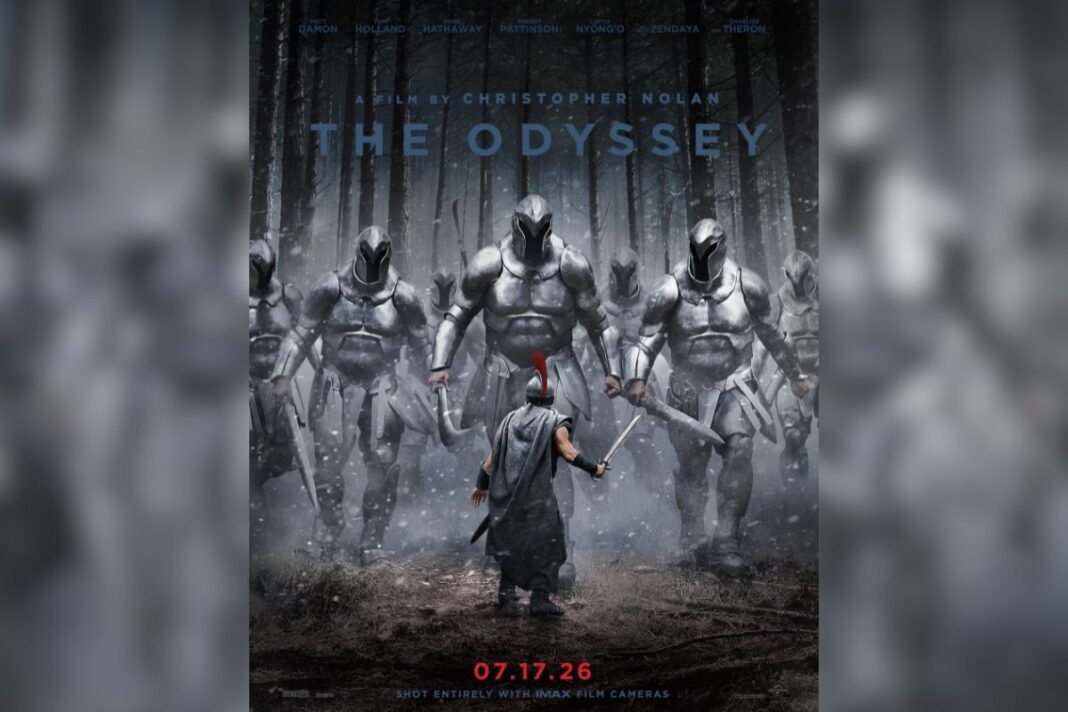

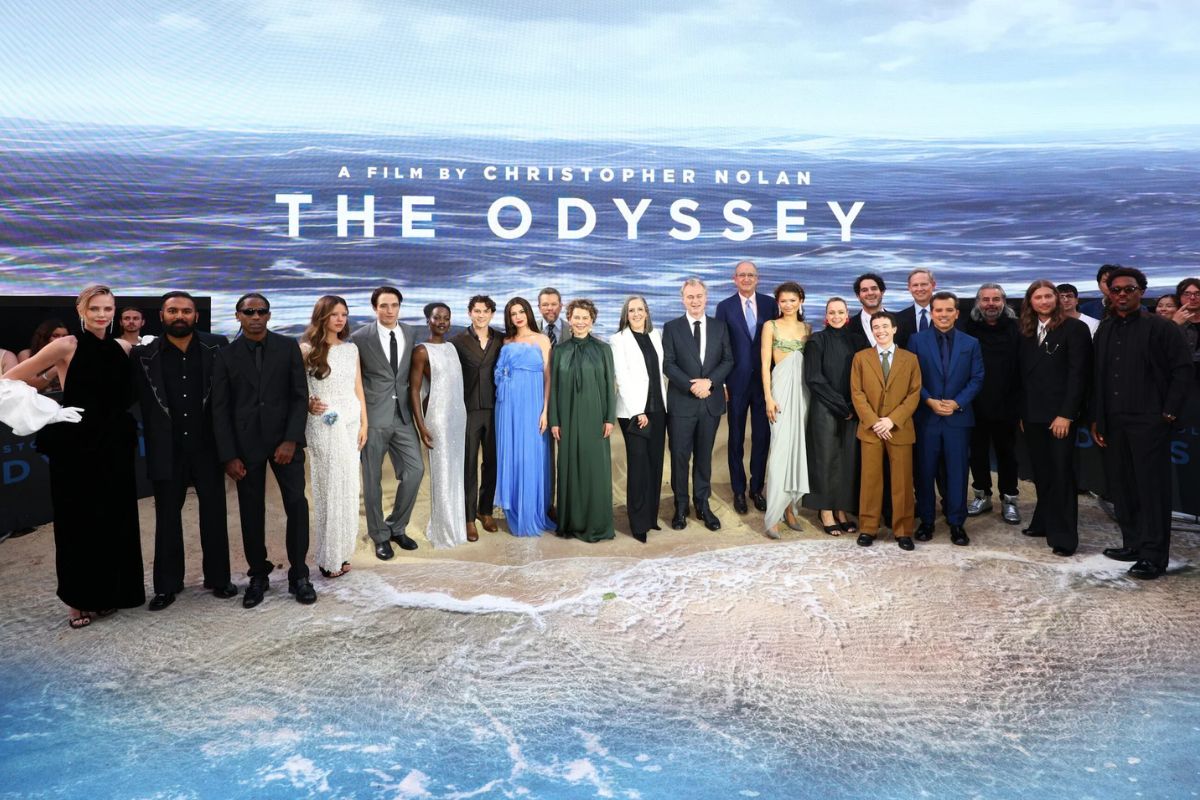
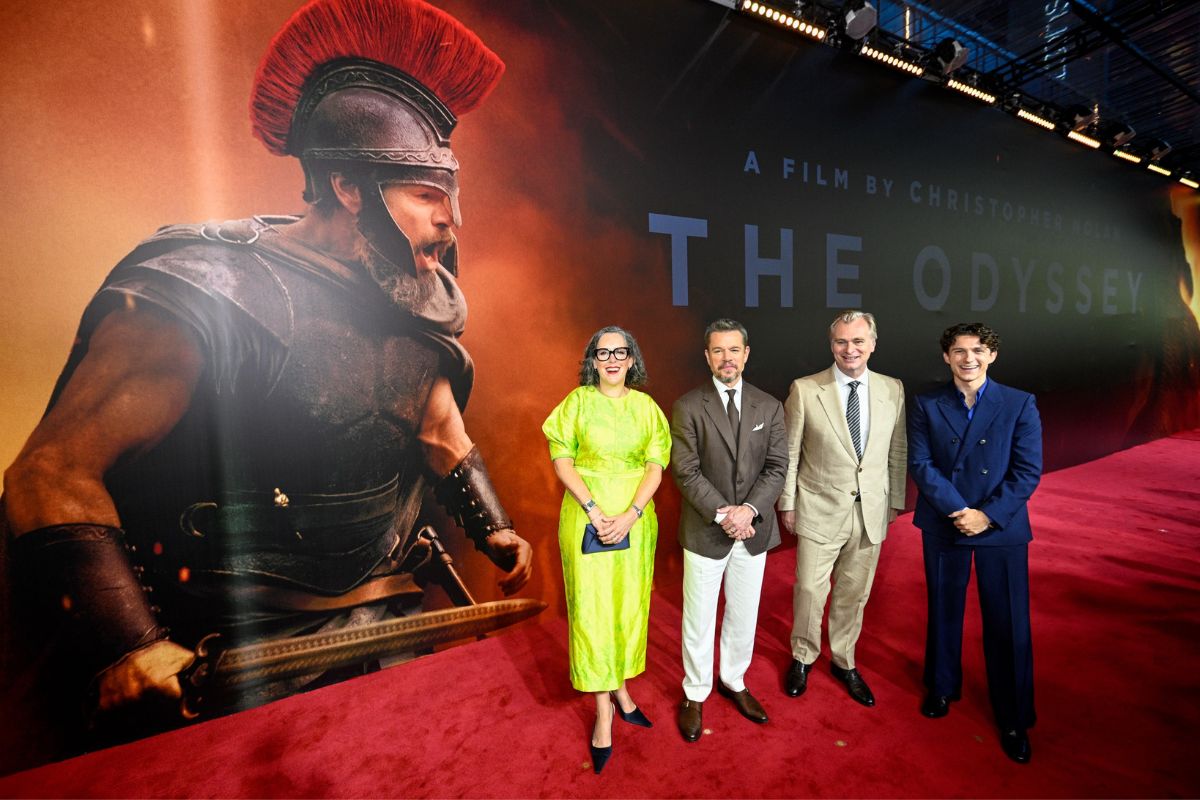
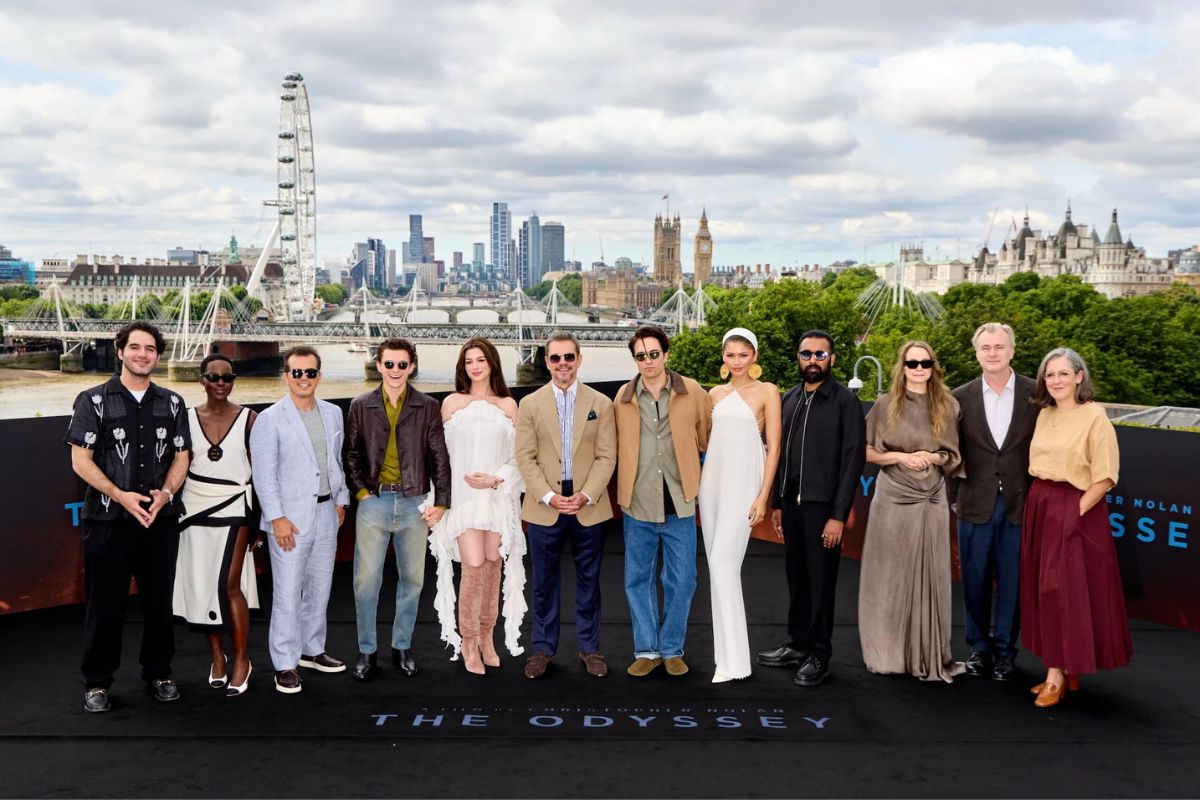
One of Hollywood’s most successful directors, Christopher Nolan chose to premiere his latest epic- The Odyssey – in Mumbai last week in a recognition of the city’s audience and film-making legacy. Flanked by the star cast of Matt Damon and Tom Holland, he praised Indian audiences for being “some of the most enthusiastic and knowledgeable cinematic audiences in the world.”
Somewhere between a burning battlefield and a rain-lashed cliff in Sicily, a camera weighing as much as a grown man was being carried by hand toward the next shot. That camera, and the strange machine built to muffle its roar, may end up being the real star of Christopher Nolan’s The Odyssey.
No director working in Hollywood today has staked this much on a single strip of celluloid. Every frame of the film, from the opening shot to the last, was captured on 70mm IMAX film, a claim no other studio picture currently on release can make. Behind the myth of Homer’s wandering king sits a quieter story about noise, weight and the sheer stubbornness required to finish what Nolan started.
A Dream Nolan Refused to Abandon
For years, Nolan spoke about an idea that sounded almost old-fashioned in a digital age. He wanted to shoot an entire film on IMAX without switching formats for interiors, quiet dialogue or difficult locations. His earlier work on The Dark Knight and Oppenheimer used the format in short bursts, saved for the biggest moments. The Odyssey turned that occasional flirtation into an all-or-nothing commitment, reshaping the workload of every department on the production.
IMAX film runs at 70mm with fifteen perforations moving horizontally through the camera, capturing a negative area far larger than standard formats allow. The resulting image carries a depth and physical presence that digital cameras still struggle to reproduce. In theatres equipped for it, The Odyssey screens in an expanded 1.43:1 ratio, stretching the picture upward rather than outward, so audiences feel planted inside Homeric landscapes rather than seated in front of them.
This was never simply a matter of taste. Filming a whispered conversation with the same seriousness given to a storm battered sea crossing treats intimacy and spectacle as equally deserving of the format’s full resolution.
Building a Camera That Could Survive the Shoot
IMAX cameras carry a difficult reputation among crews. They tend to be heavy and loud, built with short documentary sequences in mind rather than a shoot that stretches past 90 days. To make The Odyssey possible at all, Nolan worked with IMAX and Panavision to build a new generation of cameras, roughly 30% quieter than earlier models and considerably lighter to carry.
The redesigned units featured a new Panavision optical viewfinder, added metadata tools, and a 4K tap for on-set monitoring. Wireless connections through Gigabit Ethernet, Wi Fi and Bluetooth let footage reach editors scattered around the set faster than before, a genuine necessity when a single magazine of film held only about two and a half minutes of usable footage.
Even with those upgrades, the physical demands stayed enormous. Fully rigged camera bodies weighed dozens of kilograms, and dolly tracks needed steel reinforcement to bear the load. Behind-the-scenes footage shows these cameras hauled through burning battlefields, wave-battered beaches, cliff faces, and tightly blocked interior sets, with each location demanding its own custom rigging.
Silencing a Machine Built to Roar
Sound has always been the enemy of IMAX film photography. The mechanism inside a traditional IMAX camera produces a steady whirr, loud enough to ruin a take of spoken dialogue outright. Nolan’s team solved this with a custom-built enclosure, often called a blimp, wrapped around the camera to muffle its noise.
Fully assembled, the blimp reportedly added over three hundred pounds to the rig. The payoff was a camera quiet enough to record a whispered line from a foot away without the mechanism’s whirr bleeding into the audio track. Mobility, though, paid a price. Camera operators had to steer a bulkier silhouette around the set, and in tight quarters, actors sometimes relied on mirrors to see one another past the equipment.
The blimp captures something larger about the production as a whole. Nolan wanted the machinery to fade into the background so performances could take the foreground, and solving the noise problem at its source kept the sound as raw as the images themselves.
Two Million Feet of Film and No Room for Waste
Nolan has said the production burned through more than two million feet of film, a figure that says as much about discipline as it does about scale. With each magazine lasting roughly two and a half minutes, crews were constantly swapping reels, inspecting camera gates and watching exposure levels with real care.
Film stock and processing carry genuine cost, so every roll requires planning well ahead of the camera rolling. The production relied on faster processing methods developed with IMAX so that dailies could reach the crew quickly despite the reels’ size. In an industry built around instant digital playback, The Odyssey moved at the slower pace of film, where every take carries weight.
That constraint sharpened everyone’s focus. Knowing the camera could only run for a couple of minutes at a stretch meant blocking was rehearsed more carefully, lighting was shaped with greater precision, and the crew worked with a shared understanding that every second of exposed film mattered.
Six Countries, One Unforgiving Format
The story of Homer’s wandering king spans seas and shorelines, and the production matched that scope by filming across six countries with a cast and crew numbering in the thousands. The IMAX cameras, heavy and complicated as they were, travelled from rugged coastlines to dense forests, cliffs and elaborate interior builds.
Adapting the format to wet, unpredictable conditions became one of the shoot’s real achievements. Filming at sea or on saturated beaches introduces wind, spray and shifting light that can undo a fragile setup in minutes. The footage shows the cameras working through these conditions anyway, thanks to careful engineering and protective housings built specifically for the job.
Many productions this size would fall back on soundstages and heavy digital work for such scenes. The Odyssey instead leaned on practical locations, a decision that suits IMAX films’ core strength. When the camera records actual light bouncing off real water, rock and armour, the resulting image carries a beauty that digital substitution rarely achieves.
Faces as Large as Landscapes
IMAX carries a reputation for spectacle, but The Odyssey shows what the format can do with a single human face. Cinematographer Hoyte van Hoytema reportedly tested the new camera system by filming a towering close-up of a child reciting a line from a David Bowie song, a shot Nolan later called electrifying.
That test hints at the idea running through the finished film. A large-format camera is not reserved for landscapes alone. In close up, IMAX reveals the smallest shifts in an actor’s expression, a tightened jaw or a flicker of fear that a smaller format might smooth over entirely.
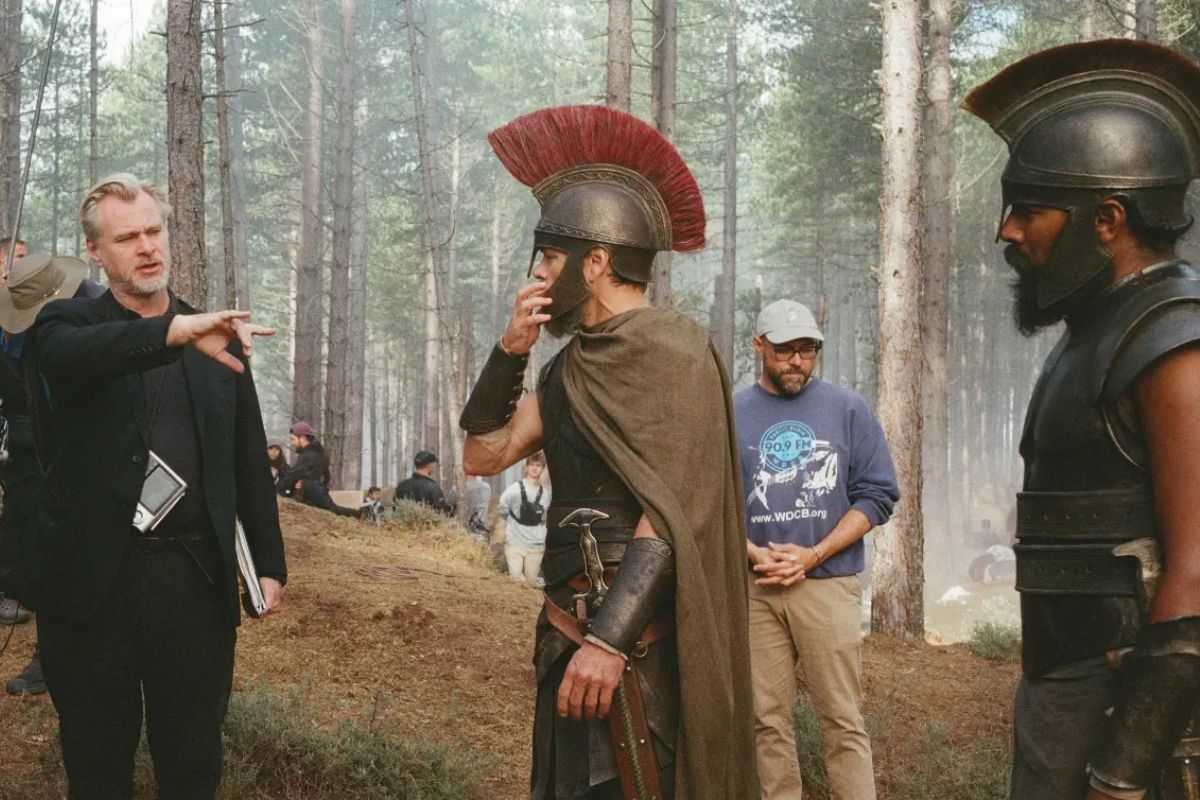
Working around such an imposing rig forced actors to adjust their instincts. The blimped cameras blocked natural eyelines, pushing performers toward mirrors and careful blocking to stay connected with their scene partners. That obstacle, oddly enough, seems to have sharpened the physicality of the performances rather than dulling them.
A Bet on the Largest Possible Screen
Every technical decision behind The Odyssey, the rebuilt cameras, the silent blimp, the reinforced tracks, and the reliance on practical effects points toward one goal. Nolan wants audiences to see more than a digital projection normally allows, down to the grain of a wooden oar or torchlight flickering along a distant cliff.
Watching the film as intended becomes something close to an event, recalling a time when going to the cinema carried its own ceremony. In an age when most people watch films on a phone screen, The Odyssey makes its case for the biggest canvas available through its own construction rather than through argument.
That insistence outlives the film’s three-hour runtime. It tells other filmmakers that an ambitious, analogue-driven project remains possible even now, provided someone is willing to commit fully to it. For audiences, it offers a simple reminder that technology, used well, does not chase novelty. It deepens what we notice, what we feel and what we remember once the lights come back up.
Also Read:Stories Behind the Making of Bollywood Legends
You can connect with DNN24 on Facebook, Twitter, and Instagram and subscribe to our YouTube channel.