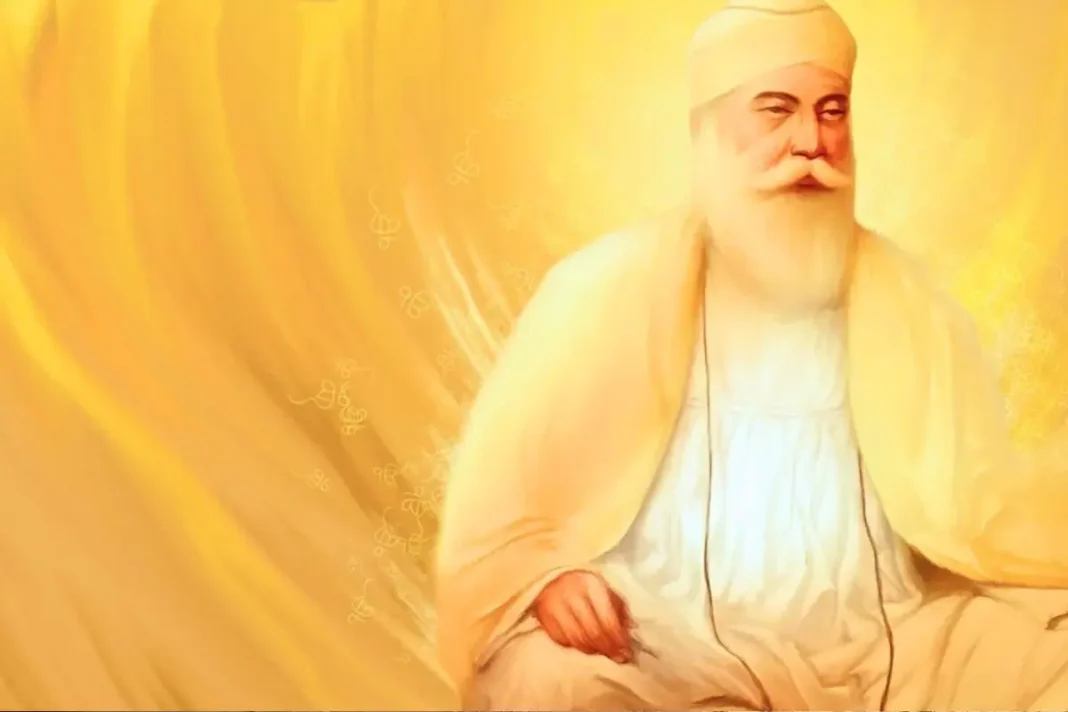

“Satguru Nanak Pragatiya, Miti Dhund Jag Chanan Hoa”
When Guru Nanak appeared, the fog of ignorance vanished, and the world was illuminated.
The Verse That Defined a Spiritual Revolution
Among the earliest and most revered scholars of Sikh tradition, Bhai Gurdas occupies a unique place in history. He is credited with writing the first authorised manuscript of the Guru Granth Sahib under the guidance of Guru Arjan Dev and composing the celebrated Vaaran Bhai Gurdas, a set of 40 poetic compositions regarded as the “key” to understanding Sikh scripture.
Born in 1551, Bhai Gurdas later became the Jathedar of the Akal Takht in 1606 and served until he died in 1636. In one of his most famous verses, he described Guru Nanak’s arrival with words that have echoed across centuries:
“Satguru Nanak Pragatiya, Miti Dhund Jag Chanan Hoa.”
The verse compares Guru Nanak’s birth to the rising sun, which instantly dispels darkness. Just as stars fade before daylight, ignorance, superstition, discrimination, and spiritual confusion disappeared before the light of truth that Guru Nanak brought into the world.
India Before Guru Nanak
Guru Nanak lived between 1469 and 1539, a period when India was passing through profound political and social turmoil. The Lodi Sultanate was weakening, foreign invasions loomed, and society itself had become deeply fragmented. Yet the greatest crisis was not political; it was moral.
Religion had become increasingly associated with ritual, caste divisions, and external symbols rather than compassion and ethical conduct. A person’s worth was measured by birth rather than character.
Guru Nanak described this age in powerful poetic language:
“The rulers have become butchers, righteousness has taken flight, falsehood covers the world like the darkest night.”
His words were not merely a criticism of rulers but a diagnosis of an entire civilisation suffering from spiritual decline.
More Than the Founder of a Religion
History remembers some individuals not simply as founders of religions but as voices of humanity’s wounded conscience.
Like Gautama Buddha, Jesus Christ, and Kabir, Guru Nanak transformed not only religious practice but humanity’s understanding of itself. His greatest contribution was not merely establishing a new faith. He offered India a moral vision where human beings were judged by their actions rather than their birth.
A Childhood Marked by Questions
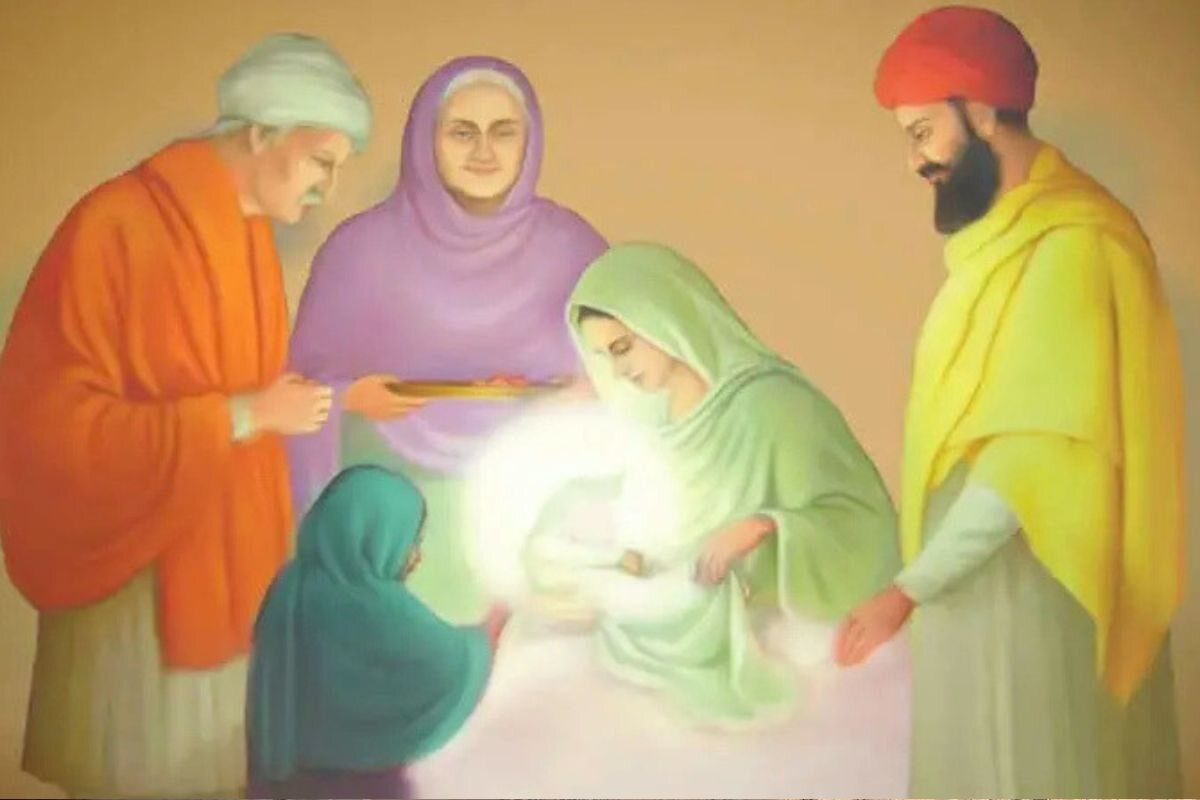
Guru Nanak was born in Rai Bhoi di Talwandi (present-day Nankana Sahib, Pakistan) into a Khatri Bedi family. His father, Mehta Kalu, worked as a village accountant, while his mother, Mata Tripta, was known for her deeply religious nature. Sikh tradition preserves several accounts suggesting that his extraordinary qualities were recognised from birth.
Even as a child, Nanak displayed remarkable curiosity. He studied Sanskrit, Hindu philosophy, Persian, and Arabic under both Hindu and Muslim teachers, demonstrating an openness to learning that would later define his universal message.
The Sacred Thread That He Refused
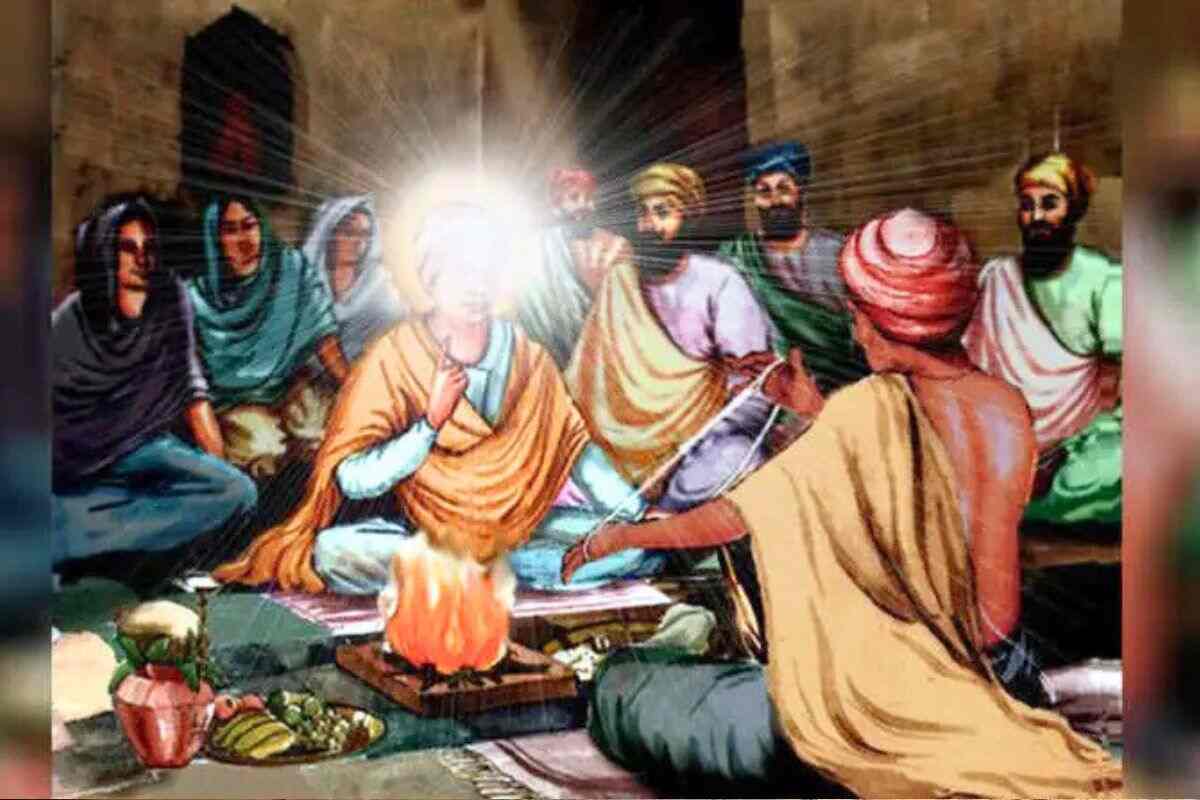
One of the defining moments of Guru Nanak’s childhood came during the Janeu (sacred thread) ceremony. Instead of accepting the ritual unquestioningly, he asked:
“If this thread alone makes a person religious, what about those who do not wear it? Are they separated from God?”
He then offered his own definition of the true sacred thread:
- Compassion should be the cotton.
- Contentment should be its thread.
- Self-restraint should tie its knot.
- Truth should be its twist.
Only such a thread, he declared, deserved to be worn.
Ik Onkar: The Foundation of Equality
At the heart of Guru Nanak’s philosophy lies one simple yet revolutionary idea:
Ik Onkar, There is One Creator.
This was far more than a declaration of monotheism.
It became the philosophical basis for human equality.
If God is One, then humanity is one.
If creation is one, then caste has no moral legitimacy.
This idea finds powerful resonance in the verses of Kabir, later included in the Guru Granth Sahib:
“From the One Divine Light came all creation. Who then is superior, and who inferior?”
Standing With Workers, Not Above Them
Unlike many religious leaders of his era, Guru Nanak naturally gravitated toward farmers, artisans, carpenters, labourers, and others.
He did not merely sympathise with them.
He lived among them.
He regarded honest labour as spiritually meaningful and saw working people as the foundation of society.
The Lesson of Bhai Lalo and Malik Bhago
One of Guru Nanak’s most famous teachings emerged from his stay in Saidpur (now Eminabad in Pakistan).
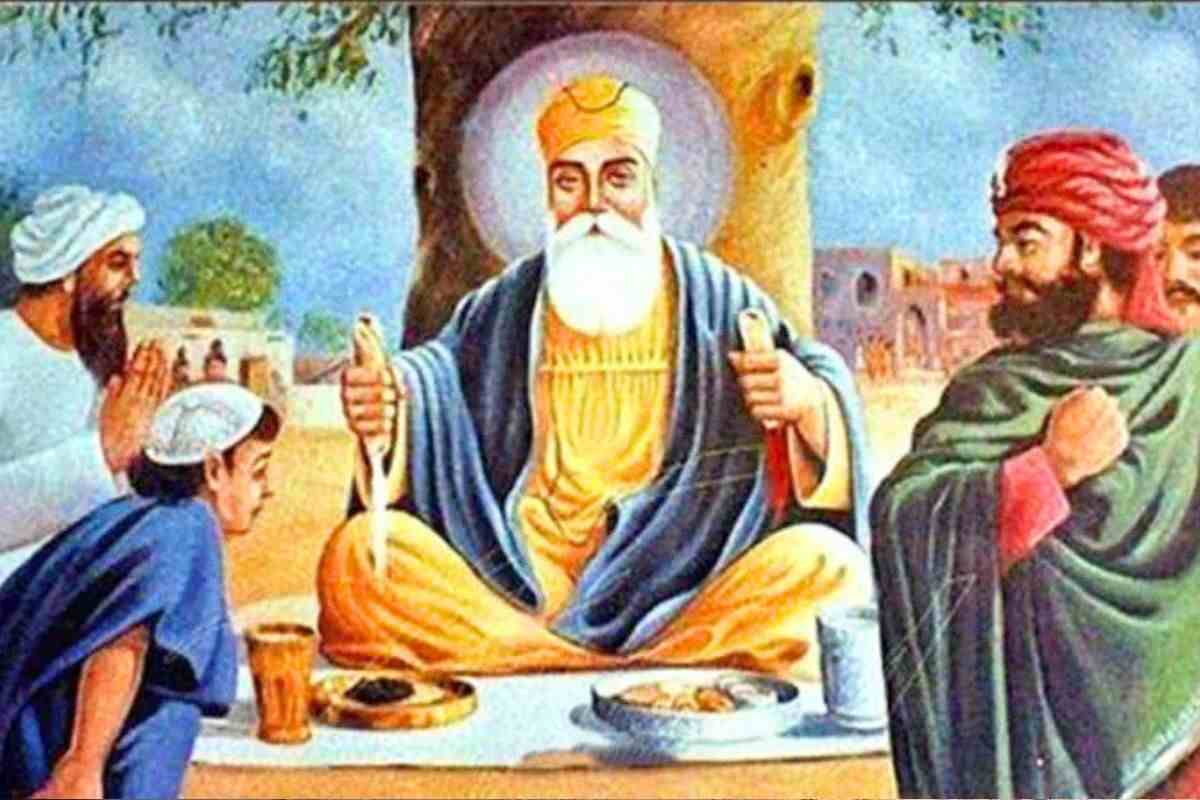
He chose to live with Bhai Lalo, a poor carpenter, rather than accept the hospitality of the wealthy official Malik Bhago.
When questioned, Guru Nanak squeezed Bhai Lalo’s dry bread in one hand and Malik Bhago’s rich feast in the other.
Legend has it that milk flowed from Lalo’s bread while blood dripped from Bhago’s food.
Whether understood literally or symbolically, the message remains timeless:
Food nourished by honest labour is sacred; wealth accumulated through exploitation carries the suffering of others.
Rejecting Caste Without Compromise
Guru Nanak’s opposition to caste was uncompromising.
He declared:
“I stand with those considered the lowest among the low.”
Rather than seeking the company of the powerful, he openly aligned himself with society’s most marginalised communities.
In doing so, he transformed equality from an abstract ideal into a lived ethical commitment.
Honest Labour as Worship
Guru Nanak elevated work itself into a spiritual discipline.
He taught:
“Earn through honest labour and share with others.”
For him, true spirituality was inseparable from integrity, service, and generosity.
Dignity came not through social status but through honest effort.
Journeys That Connected Civilisations
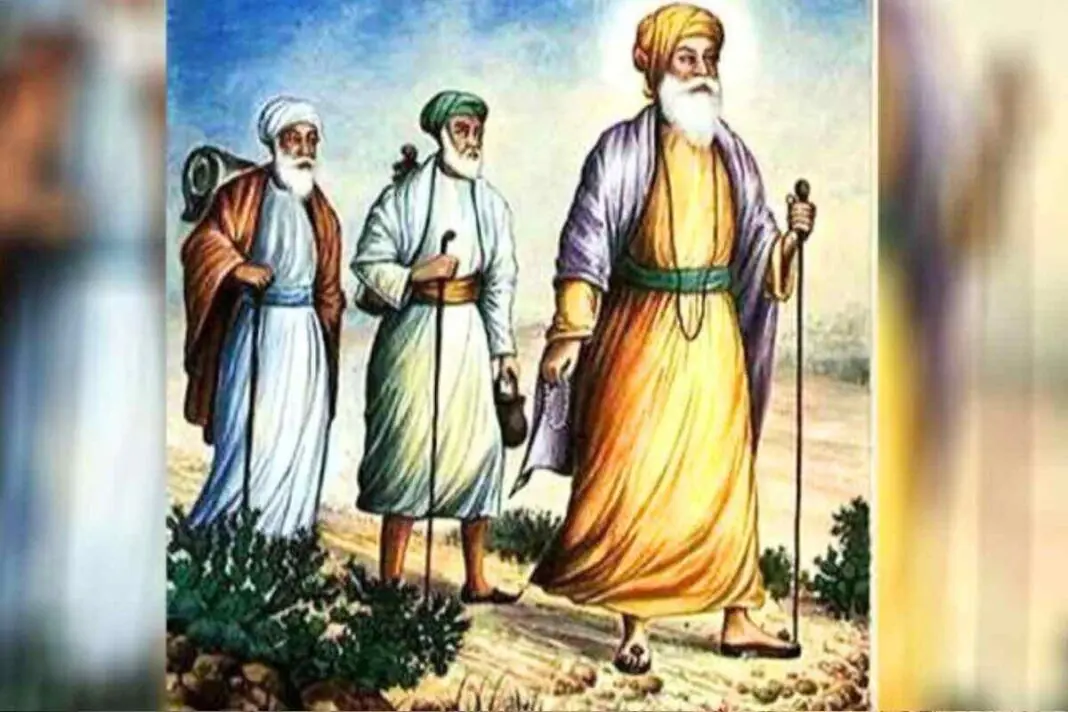
Between 1499 and 1527, Guru Nanak undertook five extraordinary journeys, known as the Udasis, travelling more than 28,000 kilometres across South Asia, Central Asia, and the Middle East.
Walking from village to village, he engaged scholars, saints, rulers, traders, and ordinary people in conversations about truth, justice, and humanity. His travels made dialogue, not conquest, the instrument of transformation.
Neither Hindu Nor Muslim
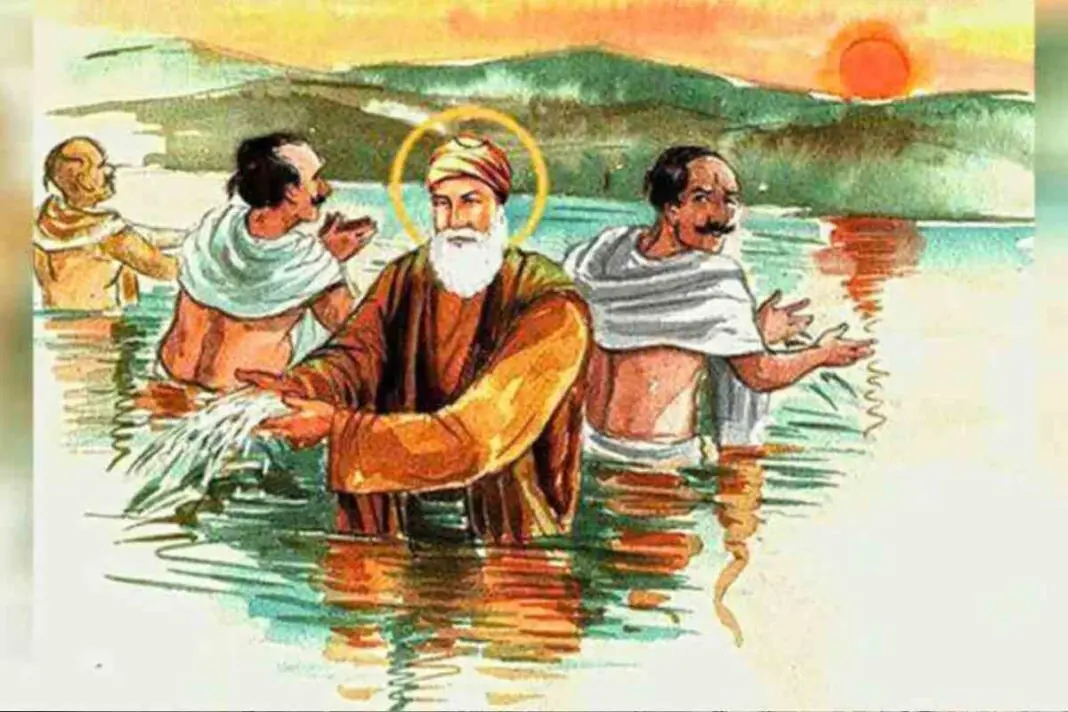
Guru Nanak’s spiritual awakening reached its defining moment at Sultanpur Lodhi.
After disappearing for three days during meditation by the Kali Bein river, he emerged with a profound declaration:
“There is no Hindu; there is no Muslim.”
This was not a rejection of either religion.
Rather, it was a challenge to both communities:
Are you truly living according to the moral teachings of your faith?
Identity without ethical conduct, he argued, has little meaning.
Faith Beyond Ritual
Guru Nanak also redefined what it meant to be religious.
Addressing Muslims, he said:
- Let compassion be your mosque.
- Let faith be your prayer.
- Let honest earnings be your Qur’an.
- Let modesty be your Sunnah.
- Let righteous conduct be your fast.
True religion, he insisted, is measured by character rather than ceremony.
A Revolutionary Voice for Women
Guru Nanak was centuries ahead of his time in defending women’s dignity. He asked a question that continues to resonate today:
“Why call her inferior, from whom even kings are born?”
In an era when women were frequently regarded as spiritually inferior, Guru Nanak affirmed that every human relationship, and indeed every life, begins with a woman. His teachings challenged deeply rooted patriarchal assumptions and restored dignity to women within spiritual discourse.
The Legacy That Continued Beyond Him
Guru Nanak’s ideas did not end with his lifetime.
Each succeeding Sikh Guru expanded his vision:
- Guru Angad developed the Gurmukhi script.
- Guru Amar Das strengthened social equality.
- Guru Ram Das and Guru Arjan institutionalised Sikh traditions.
- Guru Tegh Bahadur sacrificed his life defending religious freedom.
- Guru Gobind Singh transformed these ideals into the Khalsa, challenging hereditary privilege and social inequality.
The famous Panj Pyare represented diverse occupational backgrounds, reflecting Guru Nanak’s lifelong commitment to equality and the dignity of labour. Guru Gobind Singh would later summarise this vision in one enduring principle:
“Recognise the entire human race as one.”
Why Guru Nanak Still Matters
Guru Nanak’s enduring relevance lies in the timelessness of his message. He taught that honest work is sacred, equality is non-negotiable, compassion is the highest form of worship, and humanity transcends caste, religion, and social hierarchy.
More than five centuries later, his vision continues to illuminate a path toward a society rooted not in division but in dignity, justice, and shared humanity. His legacy reminds us that true spirituality begins where compassion, equality, and service become a way of life.
Read this Article in Punjabi
Also Read: From tariffs to trade: A reset of India-US ties
You can connect with DNN24 on Facebook, Twitter, and Instagram and subscribe to our YouTube channel.