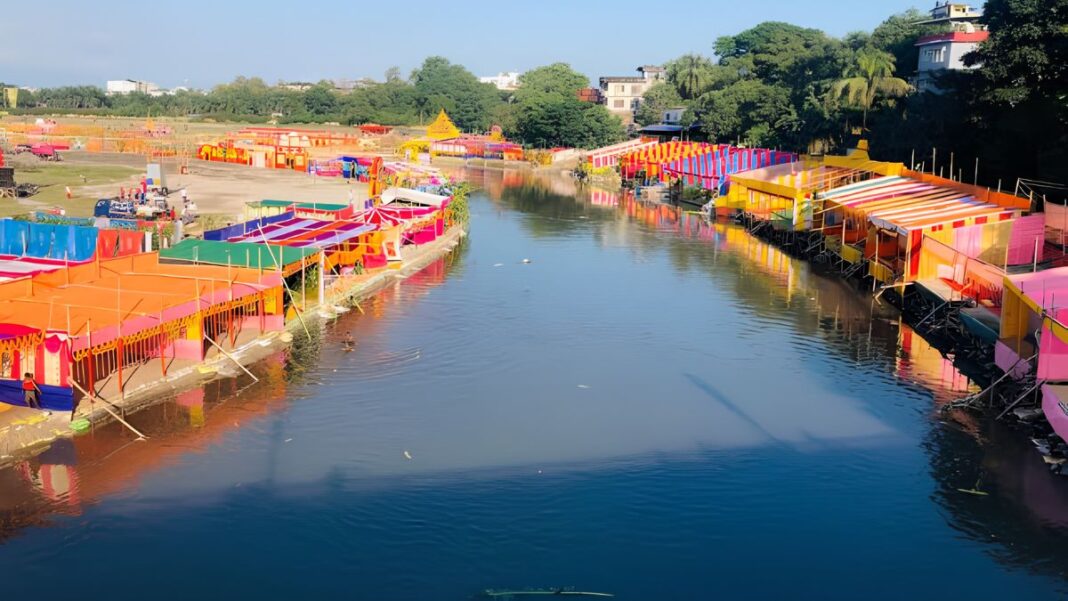

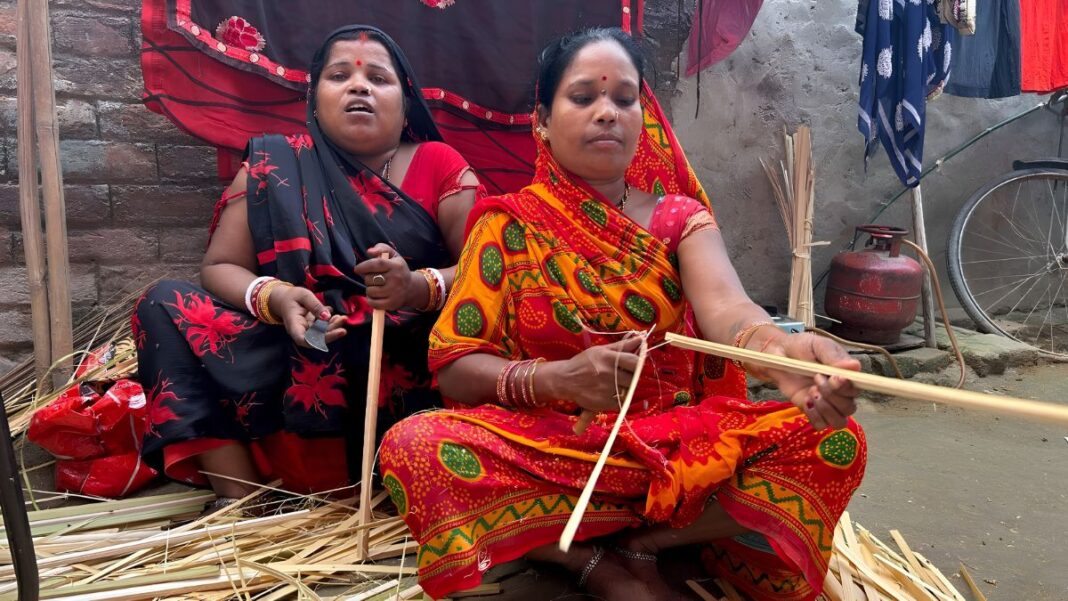

Long before devotees reach the riverbank with folded hands and baskets of offerings, local artisans have already shaped much of Chhath’s form. Bamboo weavers, potters, and makers of ritual accessories prepare the soop, daura, baskets, trays, clay lamps, and earthen stoves that make the festival’s offerings possible. Their work is both livelihood and heritage: it turns bamboo, river clay, sugarcane, and human skill into objects of devotion.
Chhath is celebrated across Bihar, eastern Uttar Pradesh, Jharkhand, and parts of Nepal, with devotees offering arghya to the setting and rising sun. Bihar Tourism describes the third day as the time to prepare prasad for the evening offering, while the fourth day brings the sunrise offering and the distribution of prasad after the fast is broken.
The Bamboo Begins
For many artisan families, preparation begins months before the festival. In parts of Bihar and Nepal’s Mithila region, craftspeople start cutting bamboo as early as Baishakh, storing and processing it to meet the intense Chhath demand later in the year.
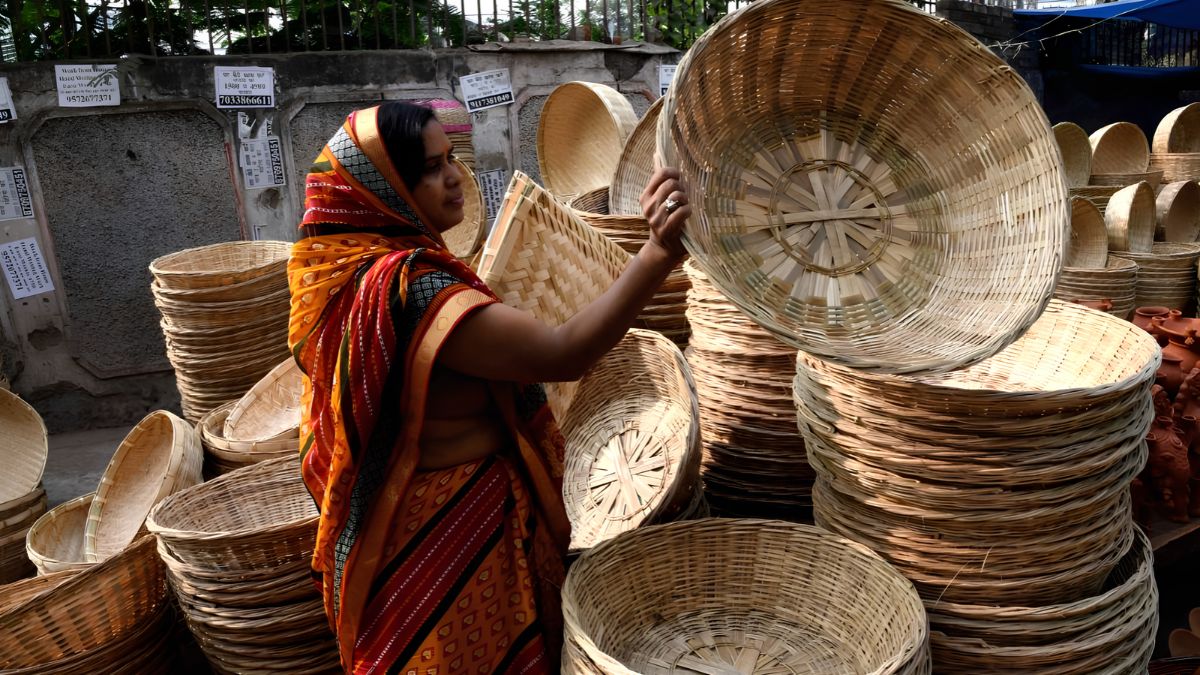
The process is demanding. Artisans cut mature bamboo, remove its outer layer, split it into fine, flexible strips, and dry those strips in sunlight. Only then do they begin weaving the flat soop, a winnowing tray, and the deeper daura, or basket, used to carry offerings. The work requires patience, strong hands, and knowledge passed down through generations.
A reported account from Kishanganj describes more than 500 artisans working during the festival season, collectively producing close to 5,000 baskets daily; individual artisans may make roughly 10 to 15 baskets a day. Women participate alongside men, peeling bamboo, smoothing edges, and adding decorative finishing.
Weaving the Soop
The soop is perhaps the most recognisable Chhath object: a flat, handwoven bamboo tray that carries thekua, fruit, coconut, sugarcane pieces, clay lamps, and other offerings. It is not merely packaging; it is a ritual vessel, held before the Sun during Sandhya Arghya and Usha Arghya.
The daura is larger and deeper. Families use it to carry the complete set of offerings from home to the ghat, often balancing it on their heads as they walk toward the river. In some traditions, a fallen prasad basket is regarded as an omen, reflecting how closely ritual objects are woven into family belief and community memory.
Artisans traditionally avoid nails, synthetic glue, and metal wire in making these baskets. Instead, they rely on tightly interlaced bamboo strips, shaping durable containers entirely by hand. This makes the objects biodegradable and closely connected to local materials.
Clay, Lamps, and Chulhas
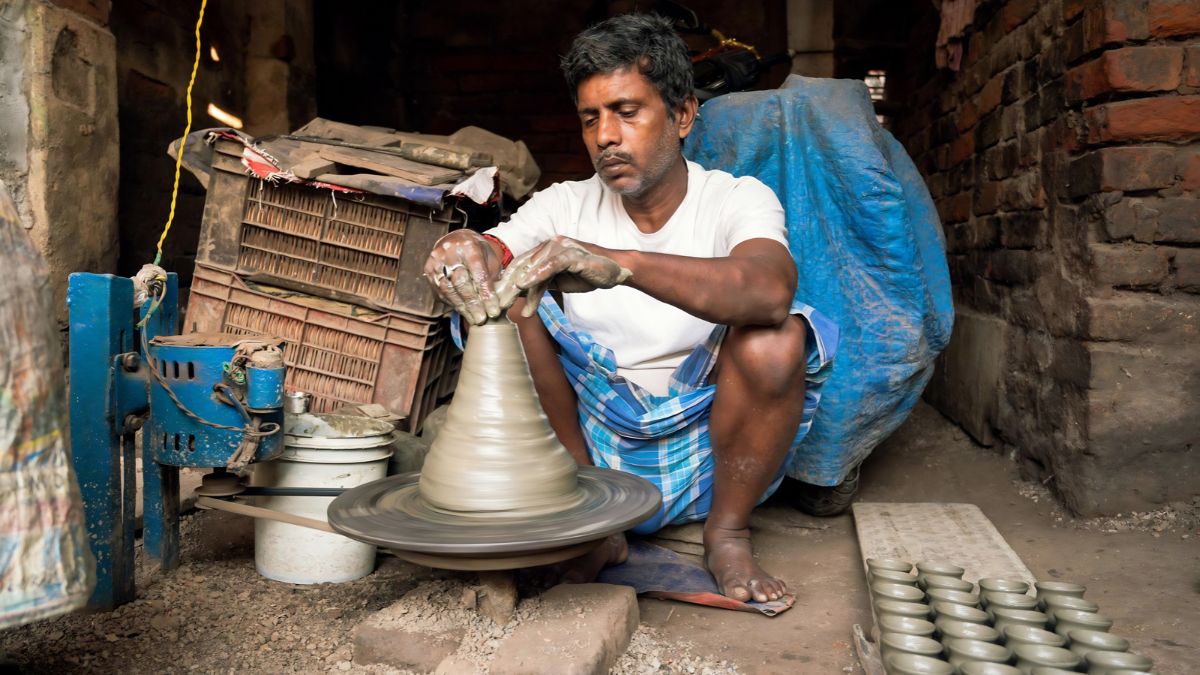
While bamboo weavers shape the containers, potters prepare the festival’s earthen essentials. Potters collect river mud, shape it into lamps, vessels, and cooking stoves, and dry or fire them for use during the rituals. One potter interviewed in a Chhath-season report said he had received 1,000 orders in the festival month, illustrating how central clay craft is to the celebration.
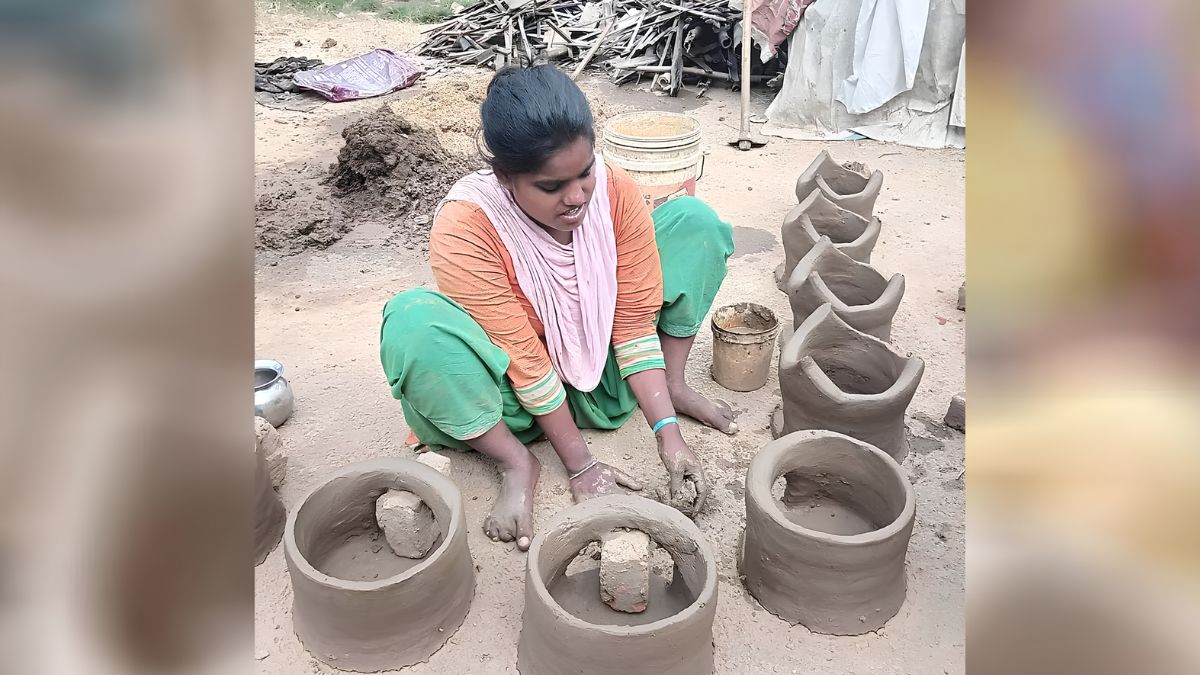
The chulha, a traditional earthen stove, is especially important. Families use it to cook thekua, the wheat-and-jaggery offering associated with Chhath. Reports on the festival describe thekua being prepared on earthen chulhas, often using mango wood as fuel.
Clay lamps, or diyas, also carry the festival’s visual language. During Kosi, a ritual observed on the third night, families build a canopy from sugarcane sticks and place lit earthen lamps and baskets of prasad within it. Bihar Tourism identifies this as a colourful part of the third night’s observance.
The Kosi and Ritual Objects
The Kosi is one of Chhath’s most striking handmade creations. It is a temporary sacred structure made with sugarcane stalks, clay, lamps, and offerings. In some family traditions, it includes a handcrafted clay elephant, painted and decorated, beneath a canopy formed from fresh sugarcane.
These objects are deliberately impermanent. They are made from locally available natural materials, used for the ritual, and then returned to the earth or river environment. That impermanence is part of their meaning: devotion is expressed not through permanent monuments but through careful, seasonal acts of making.
Ritual objects also include small baskets, trays, winnows, and decorative pieces made from sikki grass. Near village ghats, women sell these golden grass products alongside bamboo baskets and trays, linking local craft traditions directly to the festival economy.
From Home to the Ghat
On the day of Sandhya Arghya, families gather their offerings in baskets and soops. Typical items include thekua, rice laddus, fruits, sugarcane, bananas, coconuts, turmeric, cloves, areca nut, cotton thread, sweet potatoes, and ginger. Traditional accounts note that bronze or clay vessels are commonly used, reinforcing the festival’s largely natural and local material culture.
At the riverbank, devotees offer water, milk, and prasad to the setting sun. The following morning, before sunrise, they return to offer arghya to the rising sun. After the final ritual, families break their fast and share prasad with relatives and neighbours.
The artisan’s work therefore travels with the devotee. A basket woven weeks earlier becomes a carrier of a family’s gratitude; a clay lamp becomes a point of light at the water’s edge; a soop becomes the surface where food, faith, and community meet.
Livelihood and Continuity
For artisan communities, Chhath is a major economic season as well as a religious one. In Nepal’s Terai-Madhes region, Dom-community artisans report that bamboo items such as dalo, nanglo, and talutapari are essential for Chhath rituals, with families often needing several types of baskets for different stages of worship.
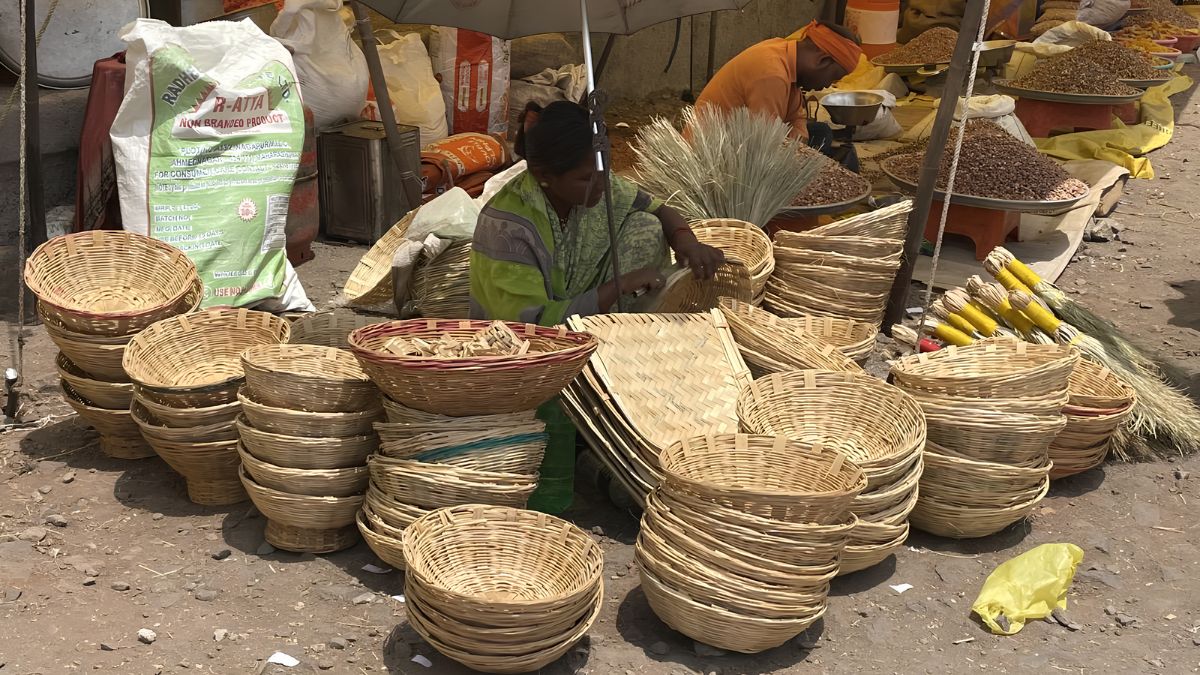
In Sunsari, Nepal, members of the Marik community increase production of dhaki baskets, nanglo winnowing trays, and supali as the festival approaches. For them, the craft is both income and cultural identity, passed from one generation to the next.
Yet the tradition faces pressure. Artisans report competition from cheaper plastic products, limited modernisation, and difficulty attracting younger people to the craft. Community voices cited in reporting argue that training, better market access, and recognition of traditional skills could help sustain the practice.
A Living Heritage
Chhath’s beauty lies not only in its riverside rituals, songs, and fasting; it also lies in the hands that prepare for it. Artisans transform bamboo into baskets, clay into lamps and stoves, and grass into sacred accessories-objects that carry offerings, light, and prayers.
When a devotee lifts a woven soop toward the rising sun, they carry more than fruit and thekua. They carry the labour of a weaver, the skill of a potter, the knowledge of a family, and the continuity of a tradition that turns ordinary natural materials into instruments of devotion.
Also Read: Why Rivers, Ponds and Water Bodies Are Central to Chhath Puja
You can connect with DNN24 on Facebook, Twitter, and Instagram and subscribe to our YouTube channel.