

Among the most fascinating travellers in Indian history is Samaysundar, a sixteenth-century Jain monk whose life was defined by constant movement, learning, and poetry. Unlike ordinary travellers, he journeyed entirely on foot, walking from one town to another to share spiritual teachings. He never stayed in a place for more than a single day, except during the four monsoon months, when travel became impossible.
In Jain tradition, this continuous movement is known as Vihar, a disciplined practice of wandering without attachment. Beginning his journey before dawn each day and never relying on any form of transport, Samaysundar embodied one of the purest forms of spiritual travel.
From a Merchant’s Son to a Jain Scholar
Samaysundar was born into a modest merchant family in Gujarat. His parents, Leeladevi and Rupsingh, dedicated him to a Jain monastery during his early teenage years.
Like other young monks, he immersed himself in the study of Jain scriptures. Yet what distinguished him from his peers was his remarkable literary talent. Even in childhood, he displayed an extraordinary gift for poetry and language.
At the age of twenty-one, his monastery officially permitted him to write. His first major scholarly work was Bhavashtak, a collection of one hundred commentaries on selected aspects of Kavyaprakasha, the celebrated Sanskrit treatise on poetics written by the eleventh-century Kashmiri scholar Mammata.
A Lifetime Spent Walking Across India
After completing his education, Samaysundar began his lifelong practice of Vihar. He travelled mostly alone, walking thousands of kilometres over several decades.
Every year, during Chaturmas, the four monsoon months when monks traditionally suspend travel, he stayed in a town or city and devoted his time to writing. At the end of each manuscript, he carefully recorded the year and the place where it had been completed, leaving behind a remarkable literary map of his journeys.
His surviving works reveal that between 1587 and 1648, the year of his death, he travelled extensively through Khambhat, Lahore, Jaisalmer, Mount Abu, Agra, Ahmedabad, Bikaner, Nagaur, Sindh, Multan, and Merta, among many other places.
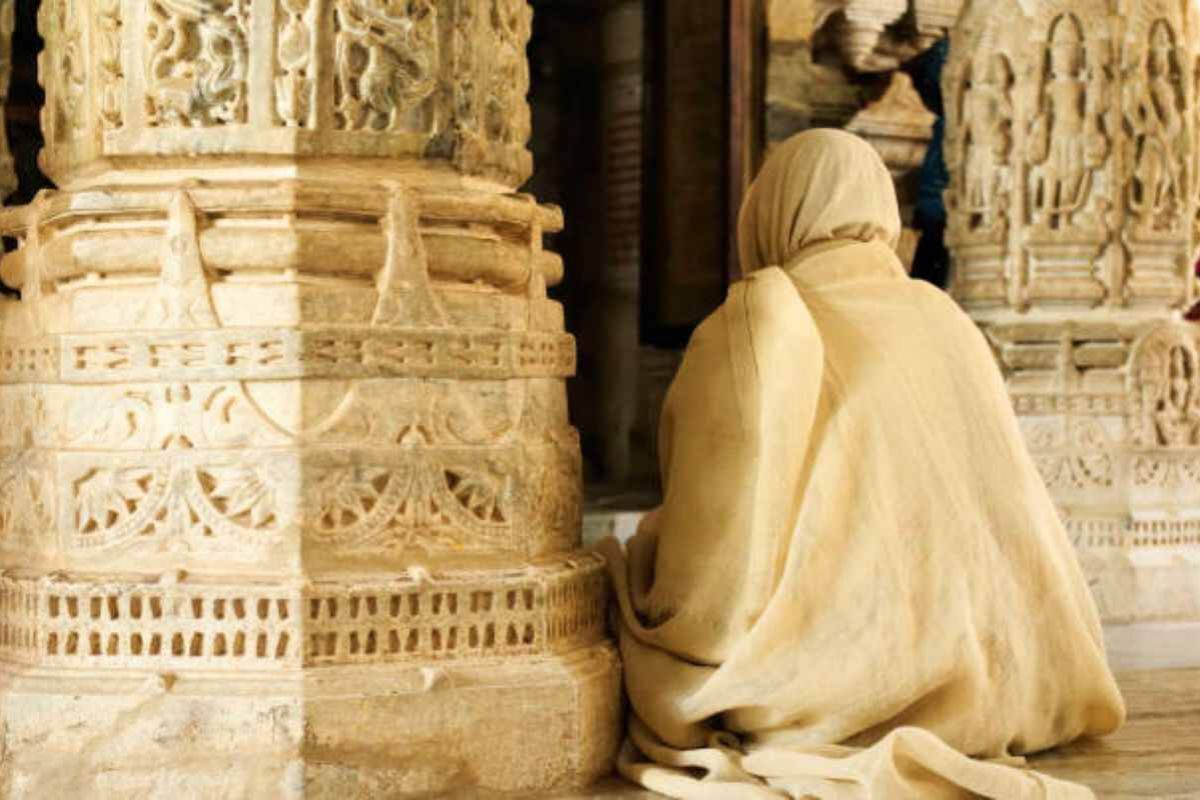
His routes stretched from northern Gujarat through Rajasthan’s deserts and as far as the Arabian Sea coast, reflecting an extraordinary geographical reach for someone who travelled solely on foot.
A Poet Who Spoke to Everyone
Over the course of his life, Samaysundar authored nearly sixty books, around half of which were collections of devotional poems composed during his travels and recited before followers.
His poetry stood apart because of its language. Rather than limiting himself to a single literary tradition, he created a vibrant blend of Gujarati, Rajasthani, Urdu, Awadhi, and early Khari Boli. This unique linguistic fusion made his verses accessible to audiences from diverse regions and backgrounds.
His work demonstrated that literature could bridge cultural and linguistic boundaries long before the idea of a common literary language had fully emerged.
When Emperor Akbar Honoured a Jain Monk
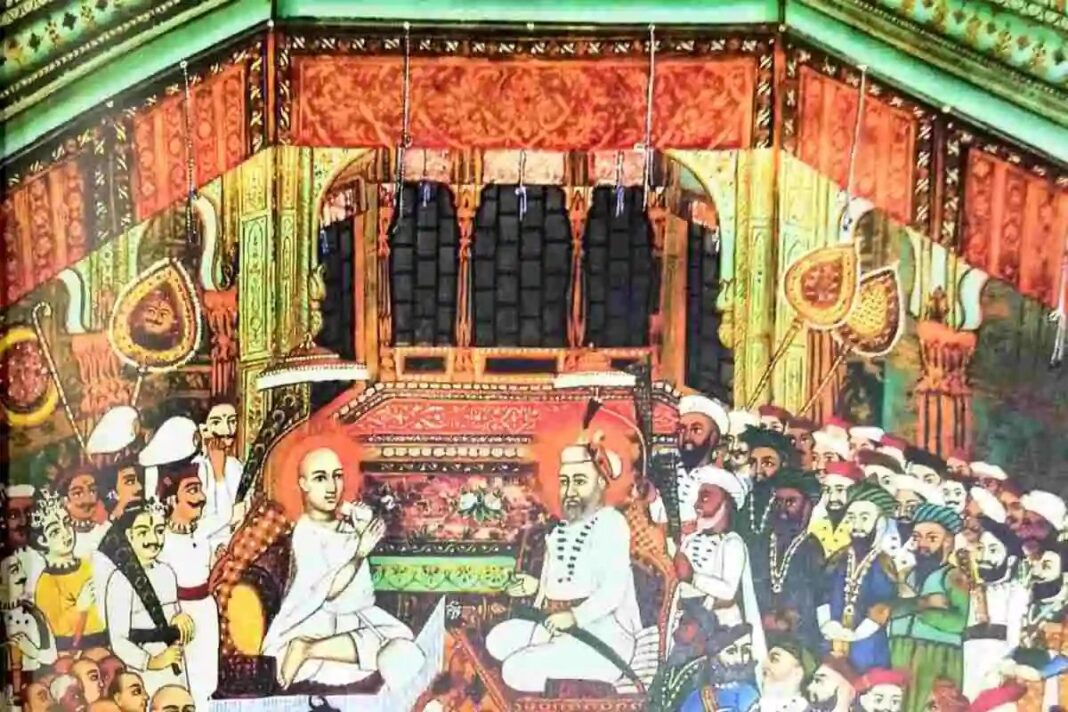
The defining moment of Samaysundar’s life came in 1592, when the Mughal Emperor Akbar invited him to Lahore and honoured him at the imperial court.
Akbar was renowned for engaging with scholars and spiritual leaders from different faiths, and Samaysundar’s invitation reflected the deep respect his scholarship, poetry, and spiritual life had earned across the subcontinent.
For a wandering monk with no political ambitions, such recognition from one of India’s greatest emperors was an extraordinary honour.
A Legacy Without Monuments
Despite his immense contribution to literature and spiritual thought, Samaysundar has largely faded from public memory.
There are no grand memorials dedicated to him, nor do contemporary chronicles or disciples leave behind elaborate accounts celebrating his life. Yet his writings continue to preserve the story of a monk who spent decades walking across India, composing poetry, sharing wisdom, and connecting people through language.
His life reminds us that some of history’s greatest journeys leave behind not monuments, but ideas, verses, and quiet inspiration that continue to endure across generations.
Also Read: Assam’s Padma Shri Nuruddin Ahmed Made Travelling Theatre Bigger Than Imagination for Generations
You can connect with DNN24 on Facebook, Twitter, and Instagram and subscribe to our YouTube channel.