

In Puri, there is a Rath Yatra secret that even the king cannot skip. Once a year, he becomes a servant, sweeping the very streets he rules, while a wooden God rides out to meet everyone who cannot come to him.
That single image explains why the Jagannath Rath Yatra has attracted crowds to a small coastal town in Odisha for nearly nine centuries. It is not simply a religious procession. It is the one day when temple walls lower, social rank dissolves, and a deity who is normally hidden behind the doors within the sanctum sanctorum chooses instead to walk among his devotees.
A festival born on a blue hill
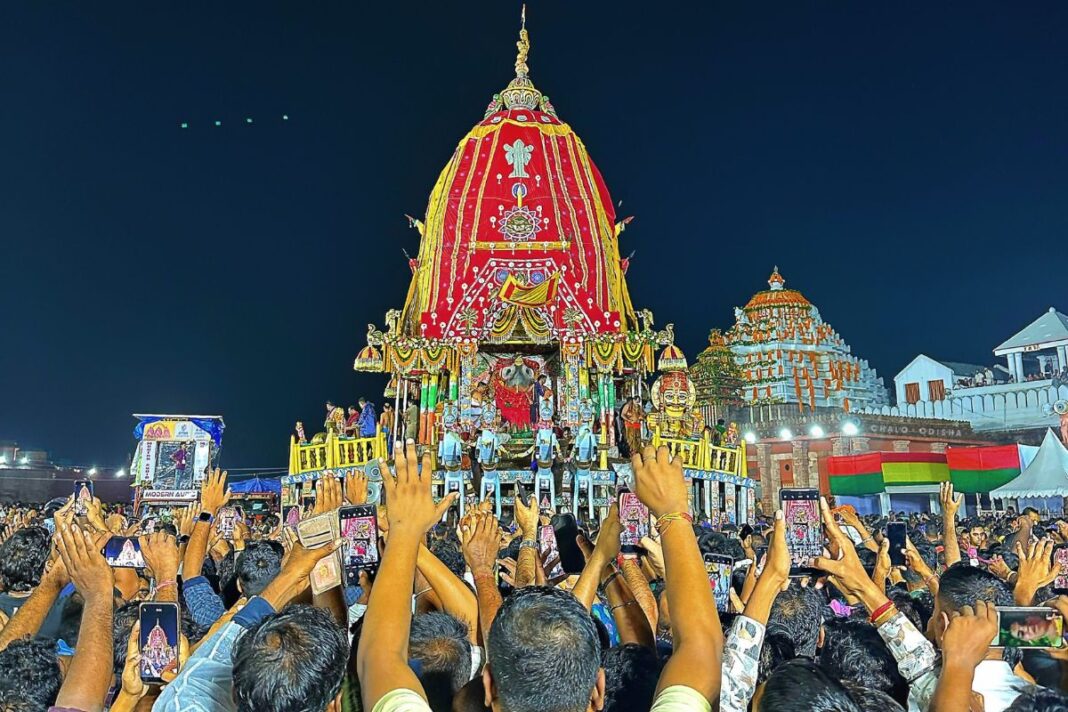
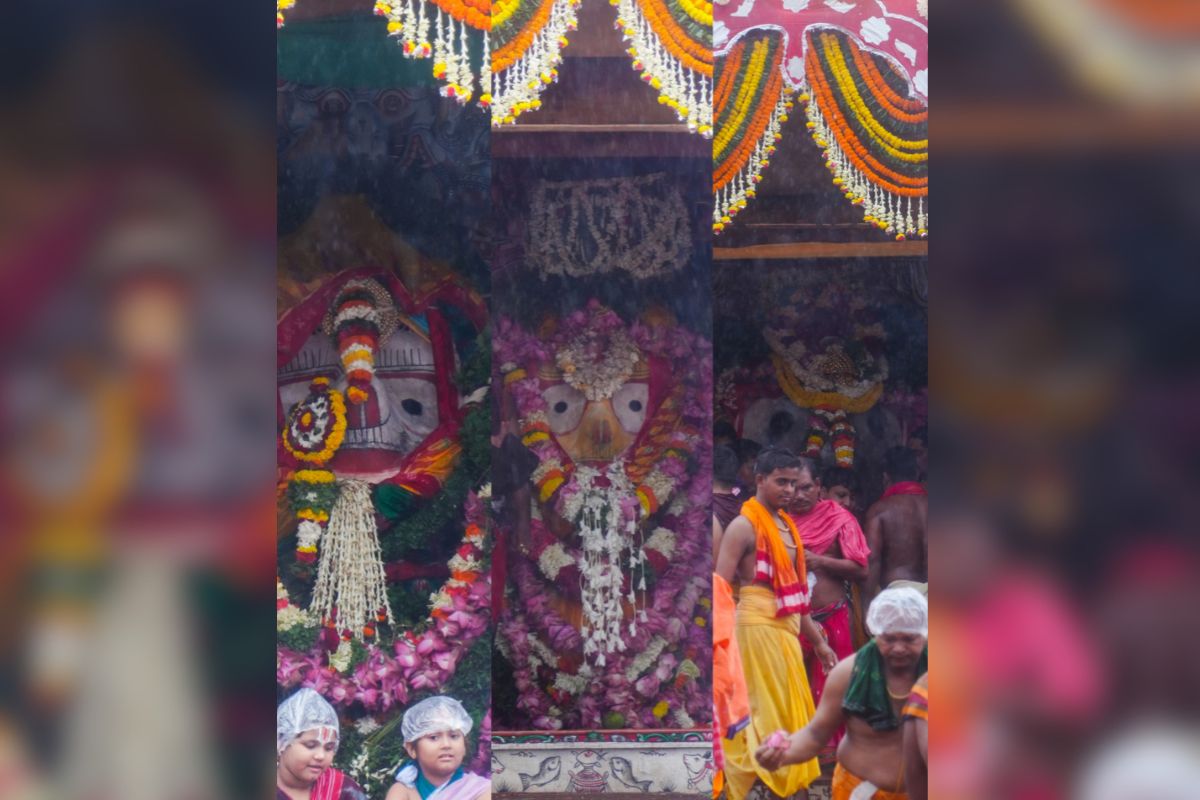
Every year in the Hindu month of Ashadha, which usually falls between June and July, Puri swells into an ocean of pilgrims. They come to watch Lord Jagannath, his brother Balabhadra, and their sister Subhadra leave the sanctum and travel down the Grand Road, known locally as Bada Danda, on chariots built fresh every season.
Historians point to the 12th century as the moment this celebration gained royal backing. King Anantavarman Chodaganga Deva, ruler of the Eastern Ganga dynasty, laid the foundation of the present Jagannath temple. His successors expanded it further, and the Rath Yatra grew into the most public and most attended expression of devotion in the temple calendar.
Legends that ride along with the chariots
Ask a pilgrim in Puri why the festival exists, and most will not quote a history book. They will tell you a story instead.
One belief holds that the Yatra recreates Lord Krishna’s own journey from Dwarka to Vrindavan. Here, the trip becomes symbolic: Jagannath travels from his main temple to the Gundicha Temple, said to be his aunt’s home.
Older texts, such as the Skanda Purana, describe a king named Indradyumna, who ruled Bhadra and received a vision instructing him to find sacred wooden images of the Lord and build a shrine on Nilachala, the blue hill of Puri. Tradition says the divine craftsman Vishvakarma agreed to carve the images on one condition, that no one disturb him while he worked. The king’s patience broke before the work was finished, and Vishvakarma left the statues as they remain today, wide-eyed, stump-armed, and strikingly unfinished. Devotees do not see this as a flaw. They see it as proof that the Lord chose to appear exactly as he wished to be seen.
Nine days, three chariots, one road
The Rath Yatra unfolds over nine days and marks the deities’ full round trip from the main temple to Gundicha Temple and back again. On departure day, the three chariots rise over the crowd like brightly colored towers.
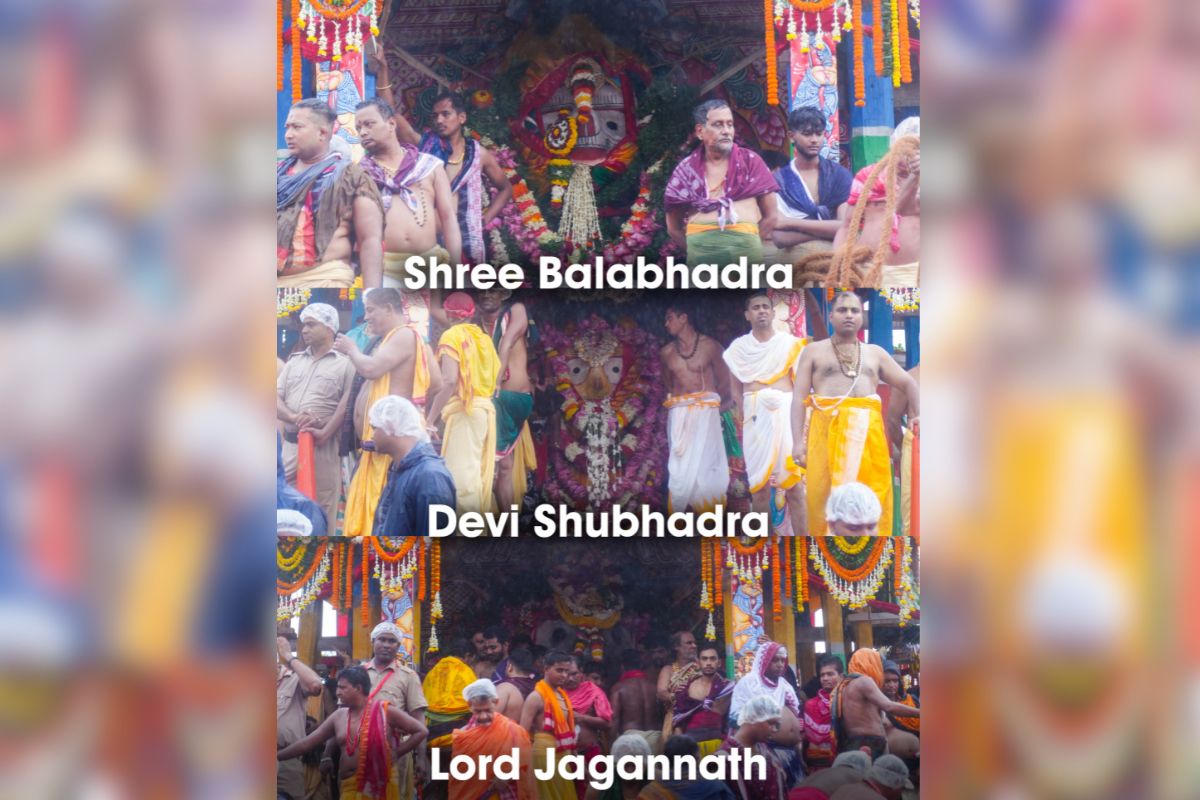
Jagannath rides in Nandighosha, the tallest and most ornate of the three.
Balabhadra rides in Taladhwaja, slightly smaller yet just as commanding.
Subhadra rides in Devadalana, more modest in size but rich with yellow and red cloth.
Before the wheels turn, the Gajapati king of Puri performs a ritual called Chhera Panhara. Using a broom with a golden handle, he sweeps the chariot platforms himself. It is a startling sight, a monarch on his knees cleaning a road, and it carries a plain message. Before Jagannath, no title outranks the role of servant.
The pull that moves a crowd
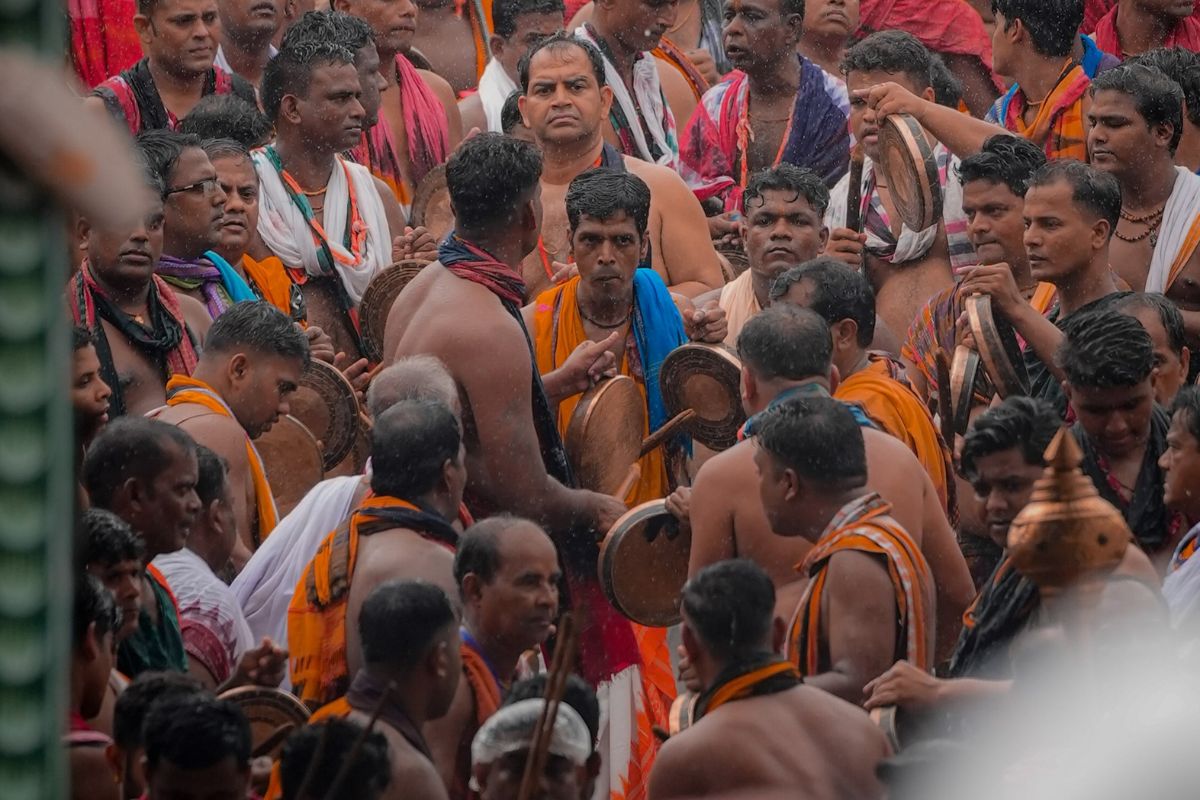
Once the ropes are tied, thousands of hands reach for them at once. People consider it a rare privilege to move the chariot even a single foot. Conch shells sound, drums beat, and the chant of Jai Jagannath rises over the road as the great wooden structures begin to inch forward, carried less by muscle than by collective will.
The deities remain at Gundicha Temple for several days, a stretch meant to feel like a stay at a relative’s house. The return leg, called Bahuda Yatra, includes a stop at the Mausi Maa temple, where the gods are offered poda pitha, a baked sweet that keeps the festival grounded in something warm and domestic rather than purely divine.
A street that becomes a temple
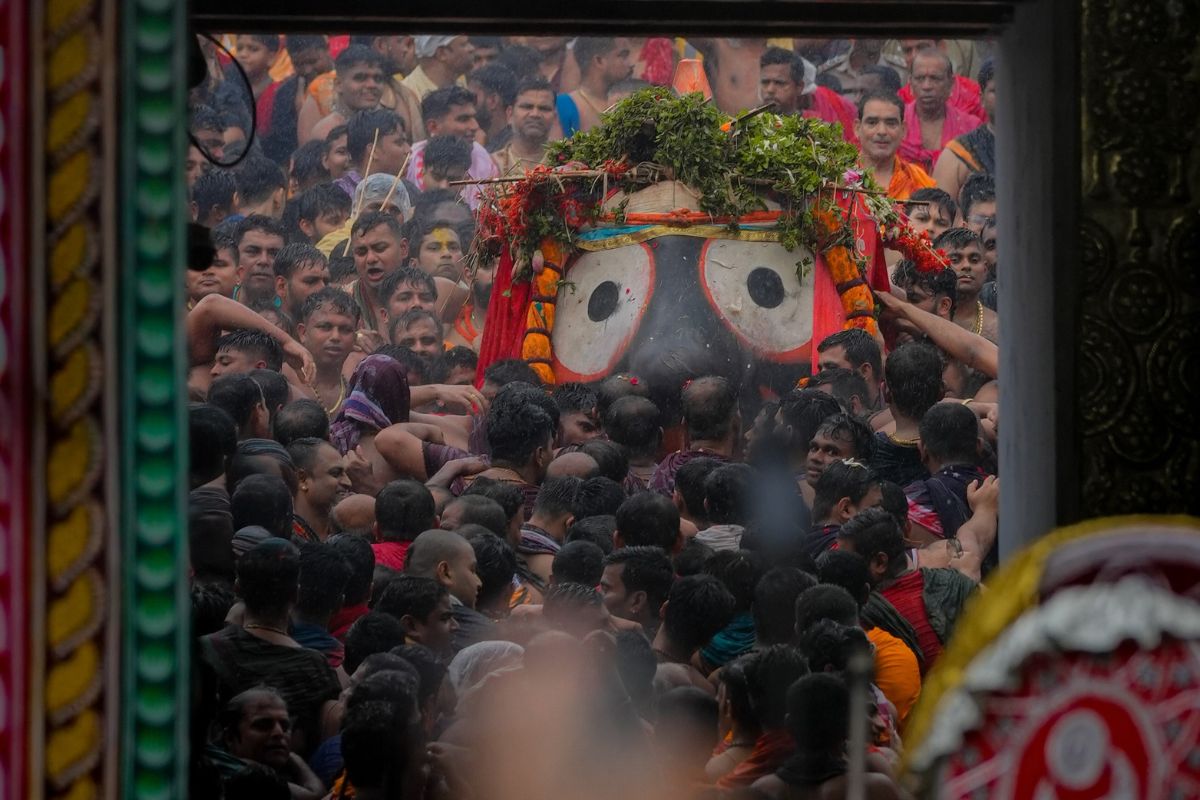
For most of the year, the inner sanctum of the Jagannath temple stays closed to non-Hindus and to some marginalised communities, a restriction that continues to draw criticism and calls for reform. But during the Yatra, that boundary loses its meaning. Jagannath leaves the sanctum. The street becomes the temple, and anyone standing on it is welcome.
Villagers, office workers, foreign travellers, and local fishermen stand together with no line separating them. Over generations, this scene, three painted deities with enormous eyes moving through a crowd where caste barriers briefly disappear, has inspired reformers and poets who read Jagannath as a symbol of shared humanity rather than a symbol reserved for the privileged.
Devotion measured in effort, not status
Countless small stories circulate among the servitors and pilgrims of Puri, and most share a common thread. Jagannath responds to sincerity, not rank.
One widely told account describes a poor man who could not afford the trip to Puri. He built a tiny clay chariot at home and pulled it with everything he had. Believers say Jagannath accepted that humble gesture as equal to the grand procession itself. Another story tells of years when the ropes snapped, or the wheels refused to budge, until a child’s prayer or a stranger’s song somehow coincided with the chariot lurching back into motion. Pilgrims read these moments as proof that faith, not force, is what truly pulls the rath.
The discipline behind the spectacle
Behind the noise and colour sits a strict and largely invisible system. Hereditary groups called sevayats handle every task, from building the chariots to preparing daily meals for the deities, performing rituals, and guarding each stop along the route.
The chariots themselves are remarkable pieces of craft. Builders construct them from scratch every year using specific types of wood gathered from designated forests. Many joints hold together without a single metal nail, relying instead on techniques passed down through generations of artisans. Painters finish the structures with motifs drawn from the Odia visual tradition. Given the size of the crowds, the precision with which this schedule holds together each year is itself a form of devotion, proof that faith and discipline are not opposites here but partners.
Why the wheels still matter today
For modern India, the Jagannath Rath Yatra remains a rare public reminder that shared belief can still gather millions in one place without conflict. At a time when daily life moves fast and attention scatters in a dozen directions, the slow and deliberate roll of the chariots down Bada Danda forces a different pace. People chant. People weep. People laugh. For a few hours, thousands of strangers move through the same emotions at the same time, facing the wide, calm gaze of a god who never blinks.
By the time the deities complete their nine-day journey and return to the main temple, the wheels have carved deep tracks into the road. Dust and ordinary traffic will cover them again within days. Yet for anyone who walked home from Puri’s crowded lanes that week, the memory tends to stay much longer, three wooden figures on towering chariots, a king kneeling with a broom, ropes gripped by hands that had never met before that morning, and the quiet realisation that in Jagannath’s world, there is always room for one more person to grab hold and help pull.
What the festival leaves behind
Scholars who study Odisha’s cultural history often note that the Rath Yatra did more than sustain a single temple’s fame. It shaped how the region understood kingship itself. Rulers who took the title of Rauta, meaning servant of Jagannath, tied their authority directly to the god’s approval rather than to conquest alone. That idea filtered down into everyday belief, where service, however small, came to matter more than birth or wealth.
Even now, families in Odisha and across eastern India plan entire years around this single week. Some travel from neighbouring states on foot, carrying nothing but a change of clothes and enough food for the journey. Others watch on television from cities far from Puri, yet still feel bound to the same chant and the same slow rhythm of wheels on stone. Few festivals anywhere manage to hold that much geography, that many centuries, and that wide a range of belief within one procession, and fewer still keep doing it, year after year, without losing the plain human warmth at the centre of the story.
Also Read: Nolan’s The Odyssey Pushes Cinematography to New Limits
You can connect with DNN24 on Facebook, Twitter, and Instagram and subscribe to our YouTube channel.