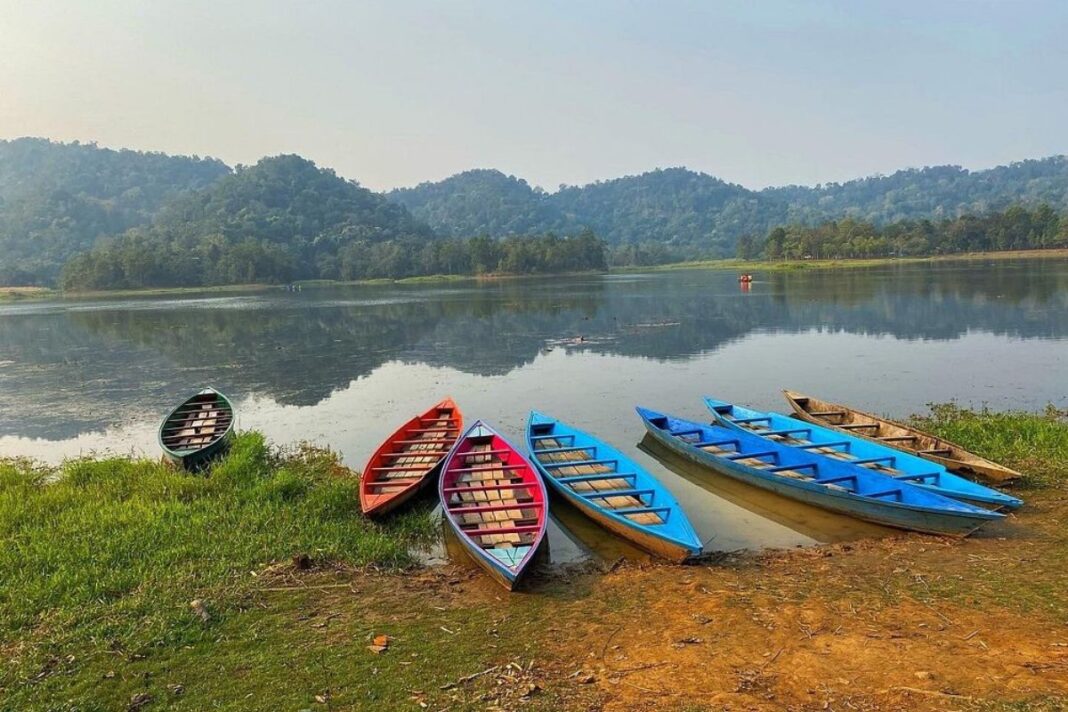

The wooden canoe that saves Assam when floods rise has no engine, no radio and no crew of trained rescuers. It is simply a hollow log, shaped by hand, and it has outlasted every flood machine sent to replace it.
When the rains come to Assam, they do not arrive gently. Roads disappear under brown water within hours. Villages become islands. Families climb onto rooftops and wait for someone to reach them. In that chaos, one small wooden vessel keeps appearing in photograph after photograph, video after video. It is called the Tulunga Nao, in some villages called the Donga. It is light enough to skim across a flooded paddy field and narrow enough to squeeze between two half-sunken houses where a motorised rescue boat would run aground.
A Boat Carved From a Single Tree
The Tulunga Nao is not built. It is carved. A craftsman selects one straight log, usually three to four metres long, and hollows it out until only a thin curved shell remains, about half a metre wide. Because the entire boat comes from a single continuous piece of timber, it has no joints and no seams. There is nothing for water to seep through. That single fact makes it one of the most trustworthy vessels a flood victim can climb into.
This is not a new invention born from some clever twenty-first-century workshop. Assam has depended on dugout canoes for centuries. A British colonial official named John Butler, writing in the nineteenth century, noted that nearly every household in the region kept one or more canoes for visiting neighbours whose homes became isolated during the wet months. From June through September, when the Brahmaputra swells and spreads across the plains, that old pattern still repeats itself. Families still paddle between homes. They still carry rice, medicine and mail the same way their grandparents did.
Where Modern Rescue Boats Cannot Go
Assam sits inside one of the most flood-prone river basins on earth. Nearly eighty-five per cent of Kaziranga National Park goes underwater during the peak of the monsoon most years. In 2026, floods in districts such as Sivasagar displaced more than four hundred thousand people, leaving homes and farmland submerged for weeks.
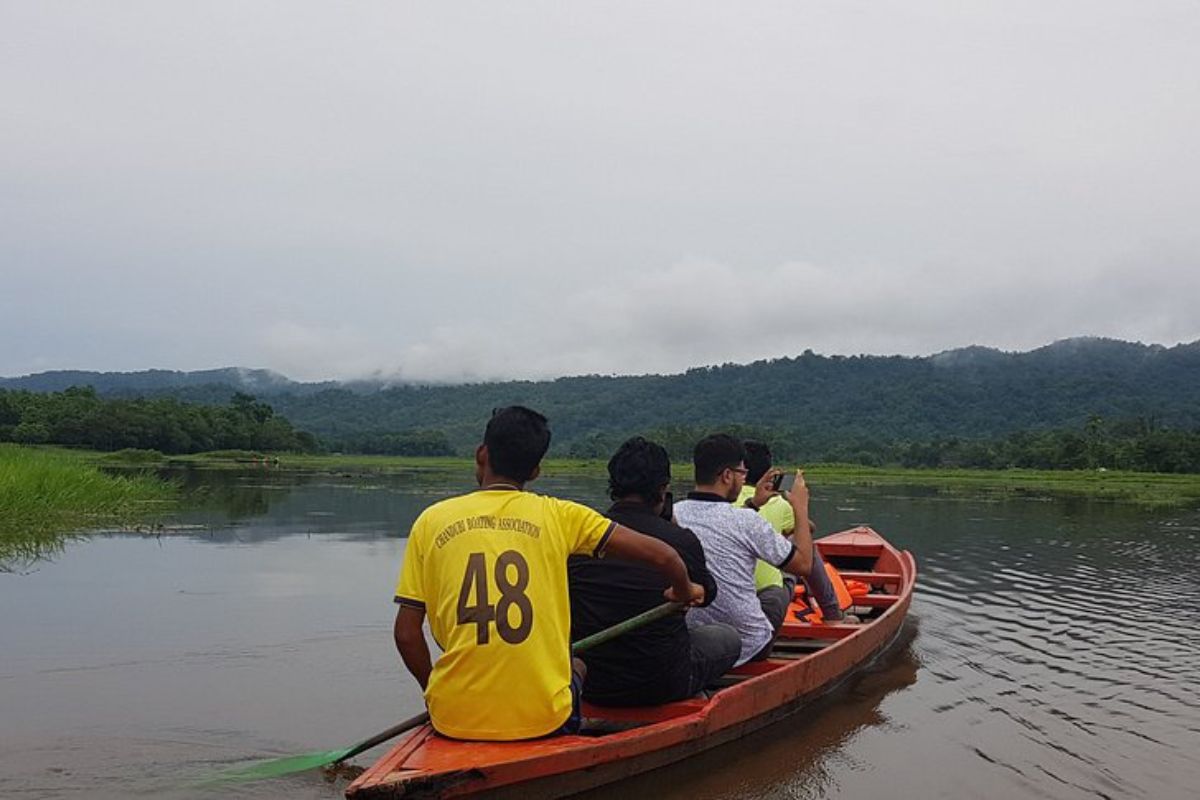
Government agencies bring motorised boats to these disasters, and those boats do genuine good. But they are wide, and they draw more water than the flooded lanes can offer. Many also depend on fuel, and supplies run short quickly once roads and depots go underwater. This is where the Tulunga Nao proves its worth. Its narrow frame lets it glide through submerged alleys and pull up beside houses that larger craft cannot approach. A single paddler can manoeuvre it through a gap barely wider than the canoe itself, turning corners that would strand anything heavier.
Villagers use these canoes to move elderly relatives to relief camps, to carry grain sacks to dry ground, and at times to rush a sick patient toward the nearest working clinic. Children are often ferried to whatever patch of dry land still holds a functioning school. Livestock, where they can be coaxed aboard, sometimes travel this way too, since a family’s animals often represent its entire savings. In earlier flood seasons, footage showed villagers wading through water up to their waists before climbing into these small wooden boats, their rooftops barely visible behind them. In one recent monsoon, families in the Gohpur area of Biswanath district began preparing their canoes weeks in advance, because they knew their entire daily routine would soon depend on a paddle rather than a road.
A Craft That Is Slowly Disappearing
Building a Tulunga Nao takes real skill, and that skill is passed down, not taught in a classroom. In villages such as Salmora on Majuli island, boatmakers traditionally sought out the hollong tree, a species so central to regional identity that it serves as the official state tree of Assam. Its wood resists water and insects far better than most timber available locally. Carving a single canoe from a hollong log could take close to a month, done entirely with hand tools such as hacksaws, chisels and blades. No machine touches the wood.
That tradition now faces a genuine threat. The hollong tree is endangered. Erosion and deforestation have thinned the forests where boatmakers once found suitable logs. Other trees once used for canoe building, including ajar and uriam, are also growing scarce. Because tree felling is restricted in many areas to slow further erosion, artisans must now buy timber from distant markets, and the added cost makes the trade far less viable than it once was.
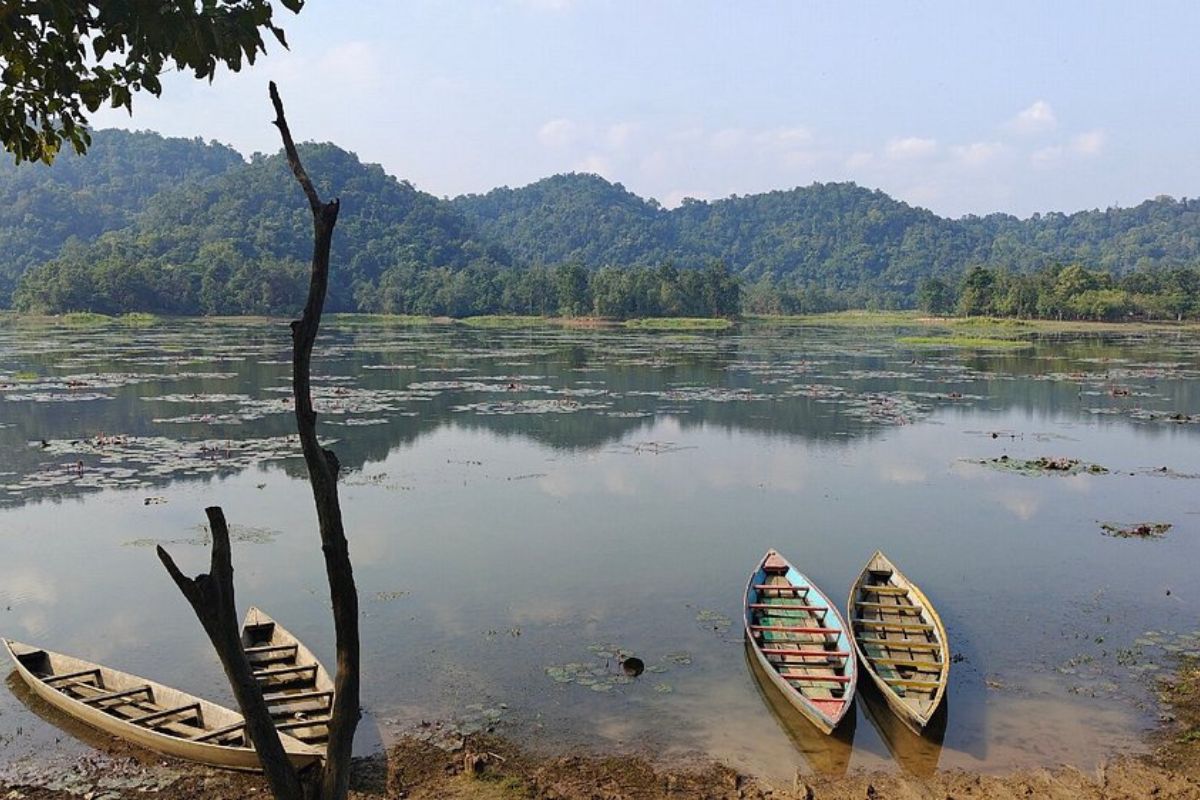
Driftwood, once gathered freely from the river during flood season, has also grown harder to find, likely because dams upstream and vanishing forest cover have changed how much wood the river actually carries down. An artisan who once finished several canoes in a season may now manage only one or two, and the price he must charge often puts a finished boat out of reach for the very families who need it most. Young people from boatbuilding families increasingly leave for work in cities, taking with them the last living memory of how these canoes are properly made. Elders in villages like Salmora worry openly that within a generation nobody left in the community will remember how to read the grain of a log well enough to know which way it should be hollowed.
Solidarity on the Water
Even as the craft fades, the boats themselves continue to carry hope. In July 2026, as Sivasagar district struggled under severe flooding, twenty freshly built canoes from Salmora village were donated to families cut off by the water. They travelled down the Dihing River to reach those in need, arriving not just with supplies but with a clear message that one flooded community had not forgotten another.
A similar spirit appeared in 2021, when boatmakers on Majuli worked alongside a conservation group to build wooden row boats for forest rangers at Kaziranga National Park. Those boats, some reaching sixteen feet in length and built from azar wood, allowed rangers to patrol flooded corridors during the monsoon and pull stranded animals to safety, including the park’s famous one-horned rhinoceroses and its tigers.
A Living Piece of Heritage
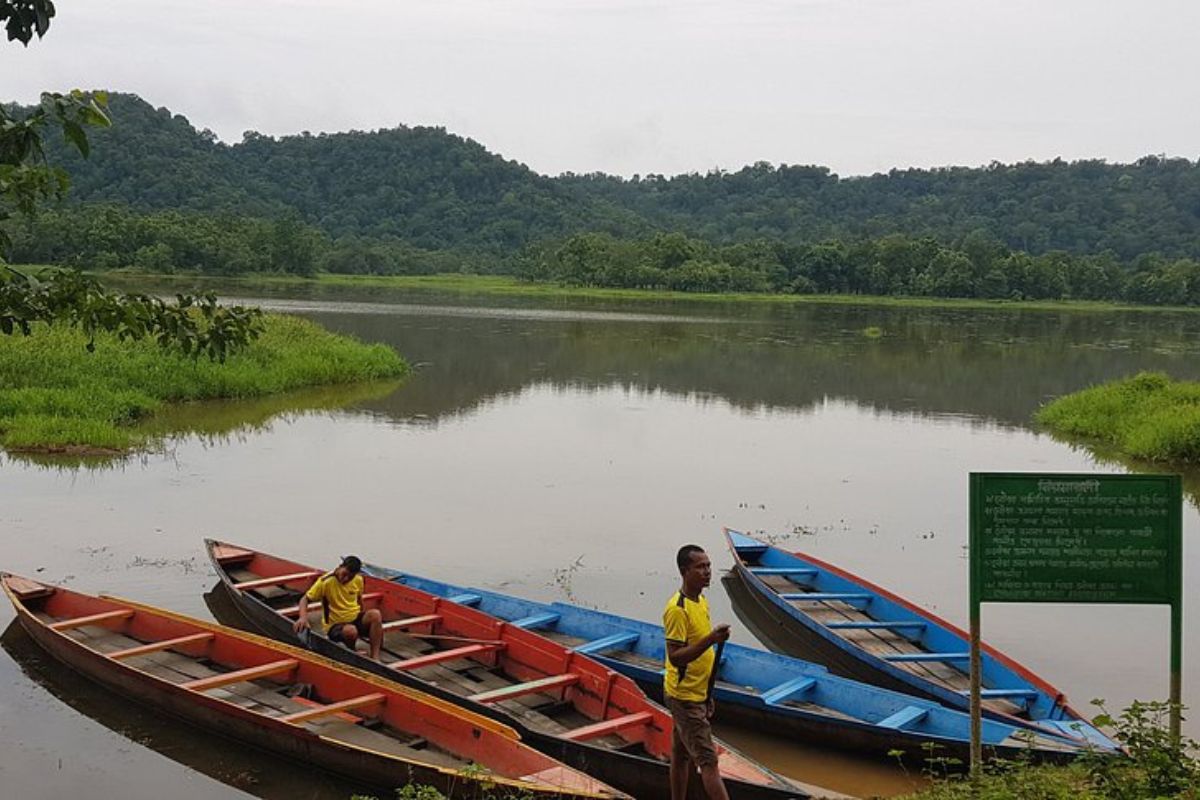
The Tulunga Nao is far more than a piece of transport. It represents generations of quiet adaptation to a river that has never been fully tamed. For as long as anyone can remember, it has connected floodplains to higher ground, carried goods to distant markets, and kept families fed and safe through the worst weeks of the year. As flooding grows more severe across Assam with each passing decade, this small hollowed log remains one of the region’s most dependable companions.
Its future, though, is far from guaranteed. Unless the forests that supply its timber are protected, and unless younger artisans find reason to stay and learn the trade, the Tulunga Nao risks becoming something displayed in a museum rather than something paddled through a flooded lane. For the moment, at least, it still does exactly what it was built to do. As the water rises and the roads vanish beneath it, these canoes keep moving forward, one paddle stroke at a time, carrying people home.
Also Read: India’s First-Ever Tribal Games Bring Indigenous Sports Into National Spotlight
You can connect with DNN24 on Facebook, Twitter, and Instagram and subscribe to our YouTube channel.