
Elon Musk has had four children with a striking, accomplished woman who runs one of his most sensitive companies — and named one of their sons after a legendary Indian physicist. So who exactly is Shivon Zilis, what is her India connection, and what lies behind the Punjabi ancestry and the “big eyes” Musk’s admirers keep bringing up?
The question has acquired sudden relevance. When Musk sat down with The Economist‘s editor-in-chief, Zanny Minton Beddoes, on 23 July 2026 to answer accusations that he traffics in racially divisive rhetoric, his defence was disarmingly personal. Pressed on whether his politics — his warnings about European immigration, his endorsements of hard-right figures such as Rupert Lowe and Tommy Robinson, his X posts about demographic decline — betrayed racist sympathies, Musk did not reach for a policy argument. He pointed instead to his own household: his partner, he said, is half Indian, and they have four children together. One of those children, he added, carries the name of an Indian Nobel laureate.
The Economist’s own channel clipped the exchange as a short — Musk’s “I’m not racist” defence, delivered straight to camera: watch it here.
It was not the first time Musk had made this case. Months earlier, on Nikhil Kamath’s podcast People by WTF, he had gone further, laying out exactly which child, and exactly why.
The partner in question is Shivon Zilis, a Neuralink executive who has spent years operating just outside the spotlight Musk otherwise commands — until, this year, her family background became unexpectedly central to his public rebuttals.
Who is Shivon Zilis
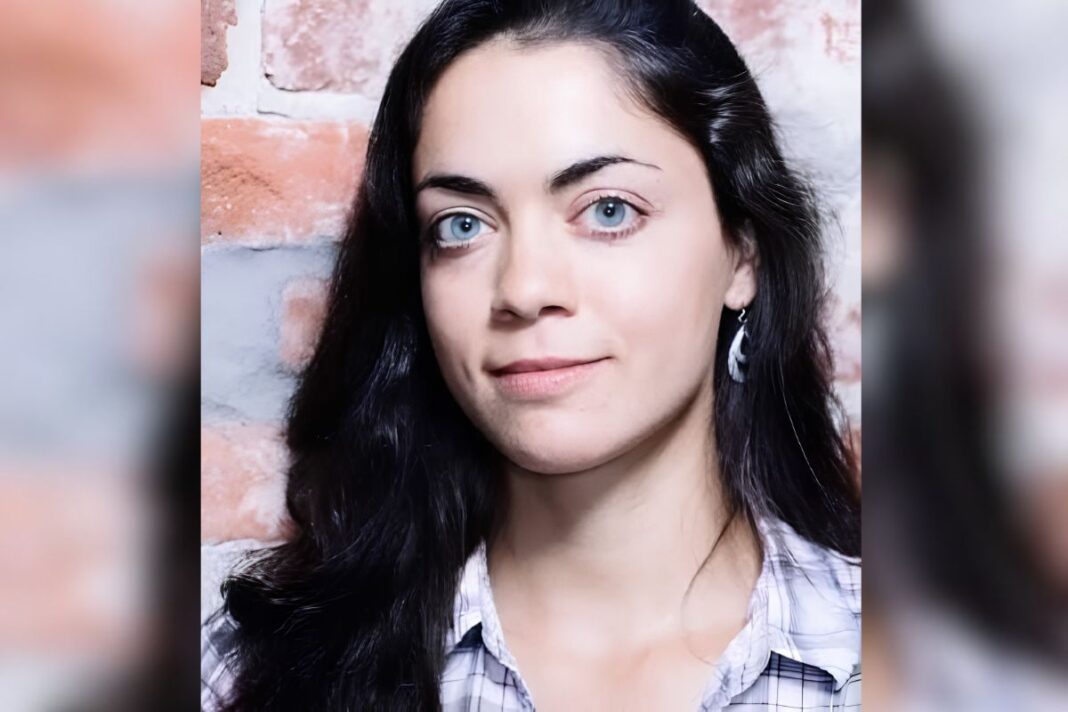
Zilis was born on 8 February 1986 in Markham, Ontario, a suburb northeast of Toronto, to Richard Zilis, a Canadian father, and Sharda Zilis, whose roots trace to Punjab in India. Accounts of exactly how her parents met vary slightly in the retelling — Musk himself, on the Kamath podcast, said he understood Sharda had come to Canada as an exchange student, though he admitted he wasn’t certain of the particulars.
Zilis grew up in Markham and attended Unionville High School, by most accounts a thoroughly Canadian upbringing rather than one steeped in Punjabi tradition. She has spoken about her mixed heritage only sparingly, and always with a certain wry understatement rather than any effort to foreground it. Asked about it by USA Today back in 2015, long before any of this became fodder for Musk’s political defences, she said she’d essentially turned out white — but made a point of crediting one feature specifically to her mother’s side: her large, striking eyes, which she attributed to her Punjabi ancestry.
It’s a small, self-deprecating detail, but it’s the one piece of her Indian heritage she volunteered herself, unprompted by any controversy, years before Musk began citing her lineage as a rebuttal to his critics. Those who’ve written about her since have leaned into the same observation — the deep-set, arresting eyes that seem to announce the Punjabi half of her ancestry before anything else does, in the way Steve McCurry’s 1985 National Geographic portrait of the young Sharbat Gula, the so-called “Afghan Girl,” made a single gaze stand in for an entire region’s intensity. It’s an imperfect comparison — Zilis is a Canadian-raised tech executive, not a war-refugee icon — but the instinct behind it is the same: that certain eyes carry a whole lineage in them.
She went on to Yale, graduating in 2008 with a joint degree in economics and philosophy, and moonlighted as the women’s ice hockey team’s goaltender, where she set the school’s all-time record for goals-against average. Her career since has tracked the rise of applied AI: she co-founded Bloomberg Beta, sat on OpenAI’s board until stepping down in 2023, and has served since 2017 as Neuralink’s Director of Operations and Special Projects, reporting directly to Musk.
Four children, one name with an Indian echo
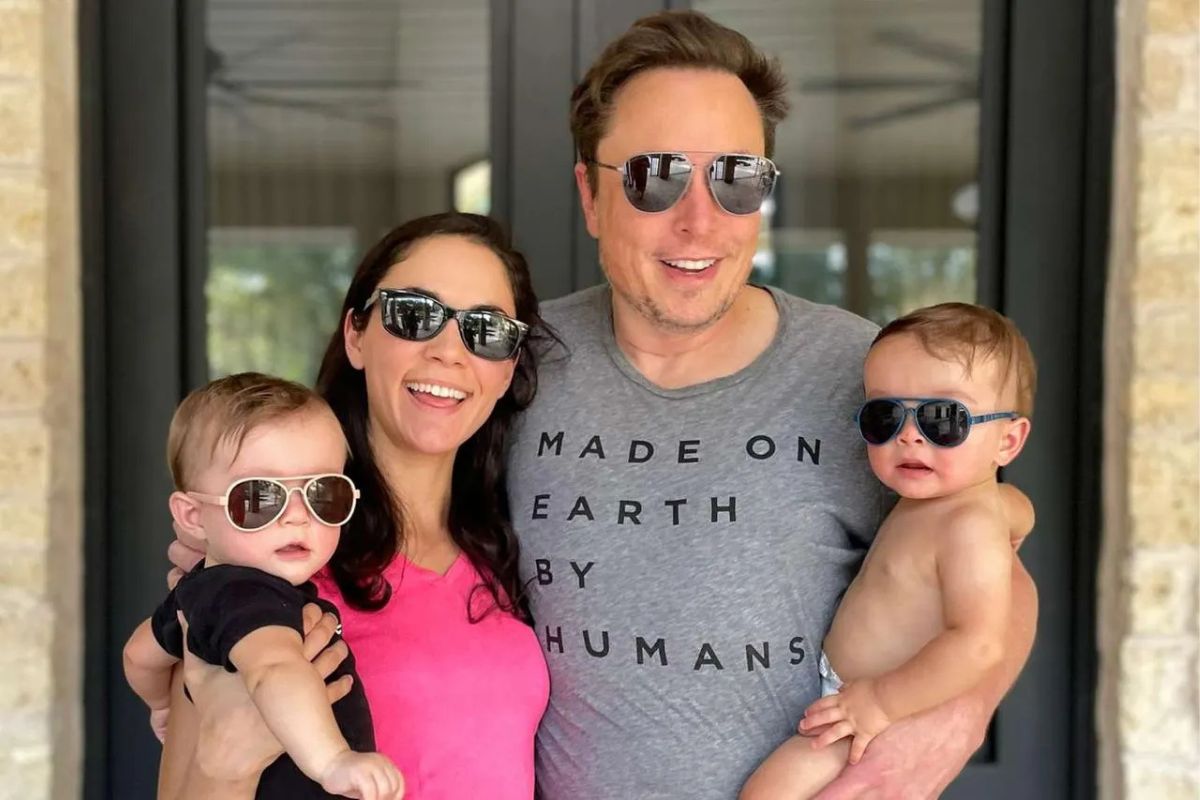
Zilis and Musk have four children together. Twins Strider and Azure were born in November 2021, conceived via IVF and kept private for months until Business Insider’s reporting — via court filings seeking to add Musk’s surname to the children — brought the arrangement to light. Their daughter Arcadia followed in February 2024, and in early 2025 Zilis announced a fourth child, a son named Seldon Lycurgus, in a post timed, poignantly, to Arcadia’s birthday.
It is the twin son, however — whose full name is Strider Sekhar Sirius — who carries the detail Musk has repeatedly invoked. In January 2026, responding to a fan photo of himself with the twins, Musk spelled out the reasoning on X: Strider nods to Aragorn’s alias in The Lord of the Rings, while Sekhar honours Subrahmanyan Chandrasekhar, the Indian-American astrophysicist who won the 1983 Nobel Prize in Physics for his work on the life cycles of stars — the same work that produced the now-famous “Chandrasekhar limit,” the mass threshold beyond which a white dwarf star cannot remain stable.
Musk repeated the explanation almost verbatim to Kamath, calling Sekhar a tribute to “a great Indian physicist,” and again to Beddoes at The Economist, framing it explicitly as evidence against the racism charge: a son named for one of India’s most consequential scientists, born to a partner who is, in his words, half Indian.
A private heritage made public by controversy
What makes the episode notable is less the naming itself — Musk’s children are, after all, a family famous for unconventional names, from X Æ A-Xii to Techno Mechanicus — than the fact that Zilis’s Indian ancestry, long unremarked upon in her own public profile, has stepped into the spotlight this year. It surfaced first in a conversational aside to Kamath, and by July had become a fixture of Musk’s public remarks, including in the Economist interview.
For Zilis herself, who has generally kept her family life out of the press even as details of her children’s births have leaked through court documents and her own occasional X posts, the sudden attention to her mother’s Punjabi background is something of a role reversal — a private fact enlisted, without much preamble, into one of the year’s more public arguments about who Elon Musk is and isn’t.
Also Read: How Pratik Shingare Turned Personal Tragedy Into India’s Accessible Places Movement Today
You can connect with DNN24 on Facebook, Twitter, and Instagram and subscribe to our YouTube channel.