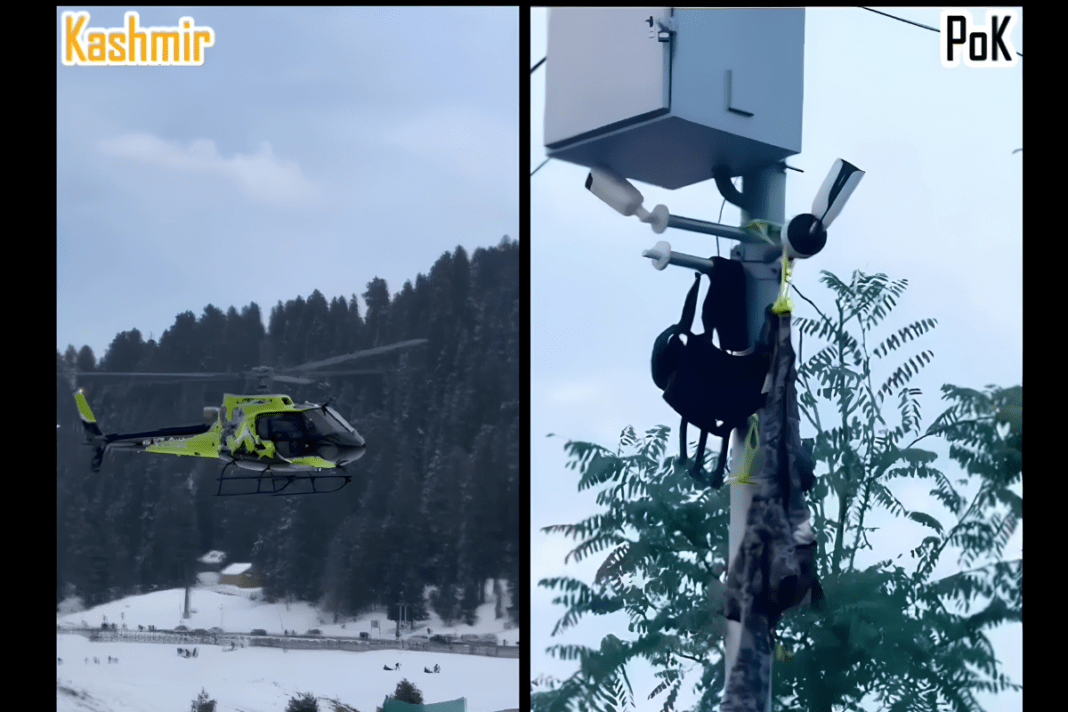

August 5 is a date of contrasting commemorations. In India, it marks the anniversary of the abrogation of Article 370, an event New Delhi frames as the beginning of a new era for Jammu & Kashmir – one marked by integration, investment, and development. Across the Line of Control, Pakistan marks the same day as “Youm-e-Istehsal,” or “Day of Exploitation,” a narrative built around describing the move as an act of oppression. However, a comparison of outcomes in Indian-administered J&K versus Pakistan-administered Kashmir (PoJK) tells a clearer story than the competing slogans.
A look at governance in Jammu & Kashmir shows deepened grassroots participation with District Development Council elections held in 2020, along with more active panchayats and urban local bodies. Central schemes now reach villages directly. PoJK, by contrast, remains constitutionally subordinate to Islamabad and has been rocked by protests over the continued political disenfranchisement. The protests over electricity bills and inflation, met with a brutal crackdown, exposed deeper frustrations with governance and economic hardship.
Infrastructure development tells a similar story. J&K has seen transformative infrastructure – the Chenani-Nashri Tunnel, the under-construction Zojila Tunnel, the Chenab Rail Bridge, and the Udhampur-Srinagar-Baramulla Rail Link ending the valley’s rail isolation – alongside record air traffic at Srinagar and Jammu airports.

Healthcare has expanded through AIIMS Jammu (with another one in Awantipora underway) and new medical colleges, backed by Ayushman Bharat insurance coverage, while IIT Jammu, IIM Jammu and new skill centres have widened access to education. PoJK’s investment in healthcare, higher education and industry remains limited, leaving an economy dependent on federal transfers, remittances and government jobs, with unemployment driving youth abroad.
Expansion of power projects and grid capacity in J&K stand in contrast to persistent electricity shortages in PoJK. While J&K has seen the rollout of 5G networks and direct benefit transfers for welfare payments, restrictions on internet access and media continue in PoJK during periods of unrest.
None of this erases J&K’s remaining challenges, and honest debate over governance should continue. But separating political rhetoric from measurable outcomes – infrastructure, welfare, healthcare, education, connectivity – shows a region prioritizing integration and investment, set against one still constrained by limited autonomy and economic hardship. History will not remember commemorations or official statements; it will only record whether ordinary people have better opportunities and a better quality of life – a measure on which the gap between the two Kashmirs is growing wider.
Also Read: Ladakh’s Governance Overhaul: 7 Autonomous Hill Councils Announced
You can connect with DNN24 on Facebook, Twitter, and Instagram and subscribe to our YouTube channel.