

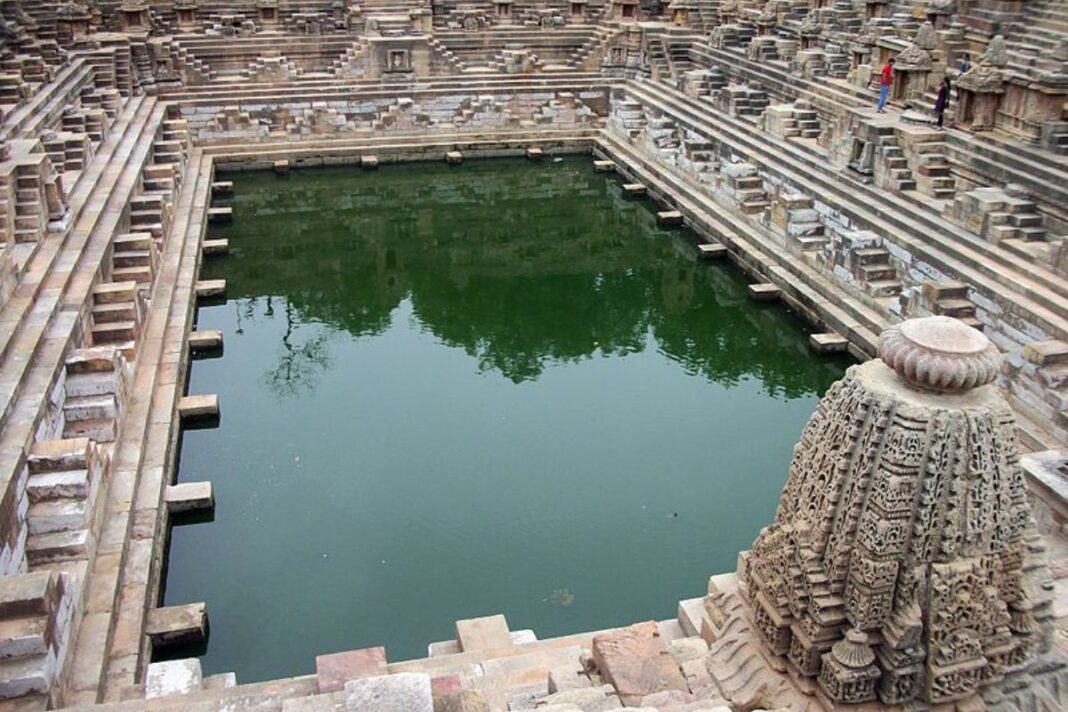

At the bottom of a staircase in Patan, Gujarat, 23 metres below ground, a rectangular water tank has waited for nearly a thousand years. A queen ordered it dug. Most visitors who admire the carvings above it never guess how much careful science sits behind them.
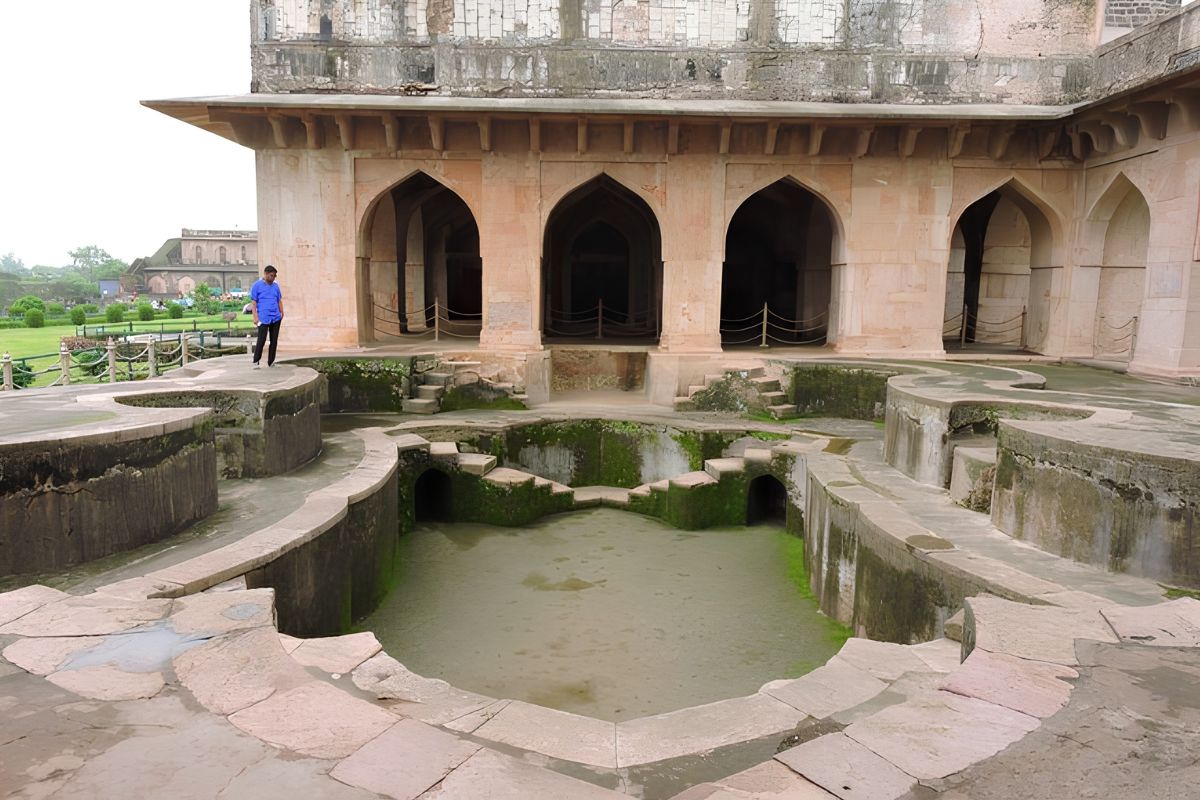
Long before piped supply, borewells and concrete reservoirs, people across India found a way to live with the dry months. They dug downward and built stairs. These structures are called stepwells, known as vav in Gujarat and baoli or baori in the north. Each is a well reached by flights of steps, made to store water, cool travellers and carry a town through the seasons without rain.
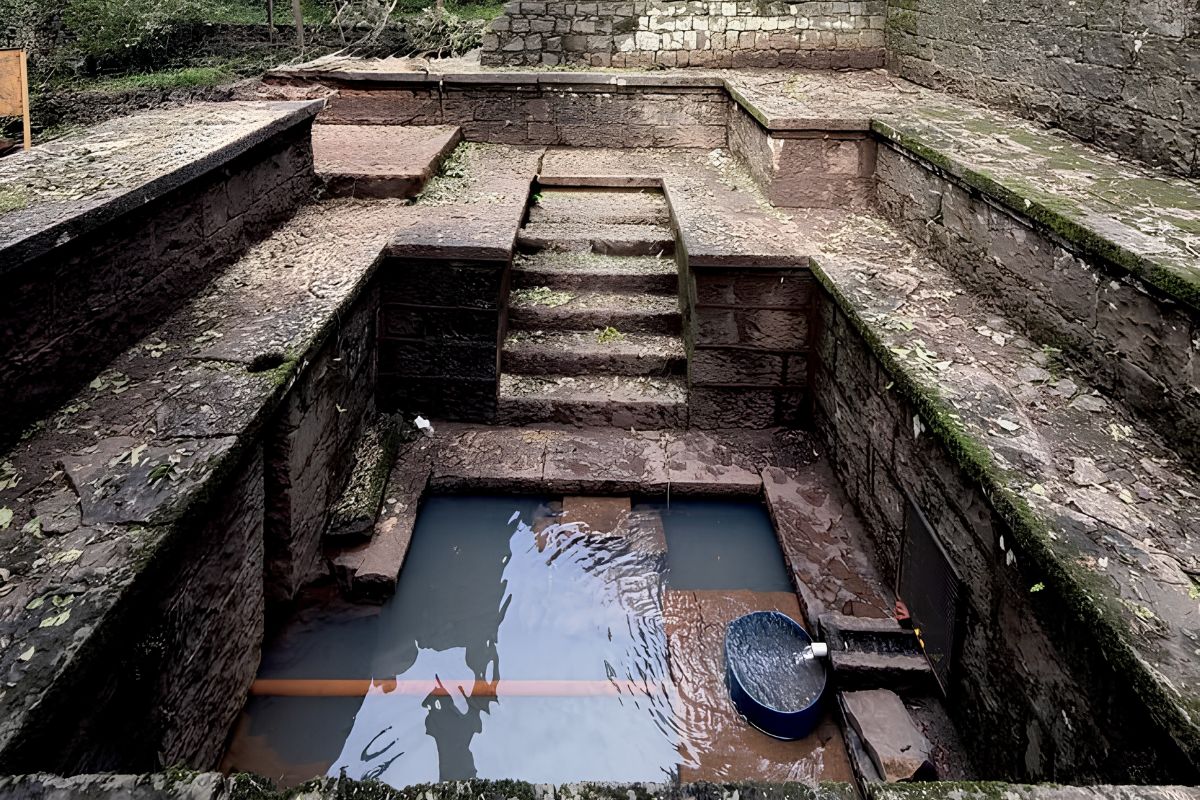
They also worked as public squares under the earth. Women collected water there, merchants rested, pilgrims prayed, and neighbours met. The finest ones were deep, collonaded and richly carved, and people came to call them underground palaces of water.
How the Stairs Did the Work
In much of India, rain arrives in heavy bursts, followed by long dry stretches. Builders went down to groundwater and cut a path that stayed useful as the water table rose and fell.
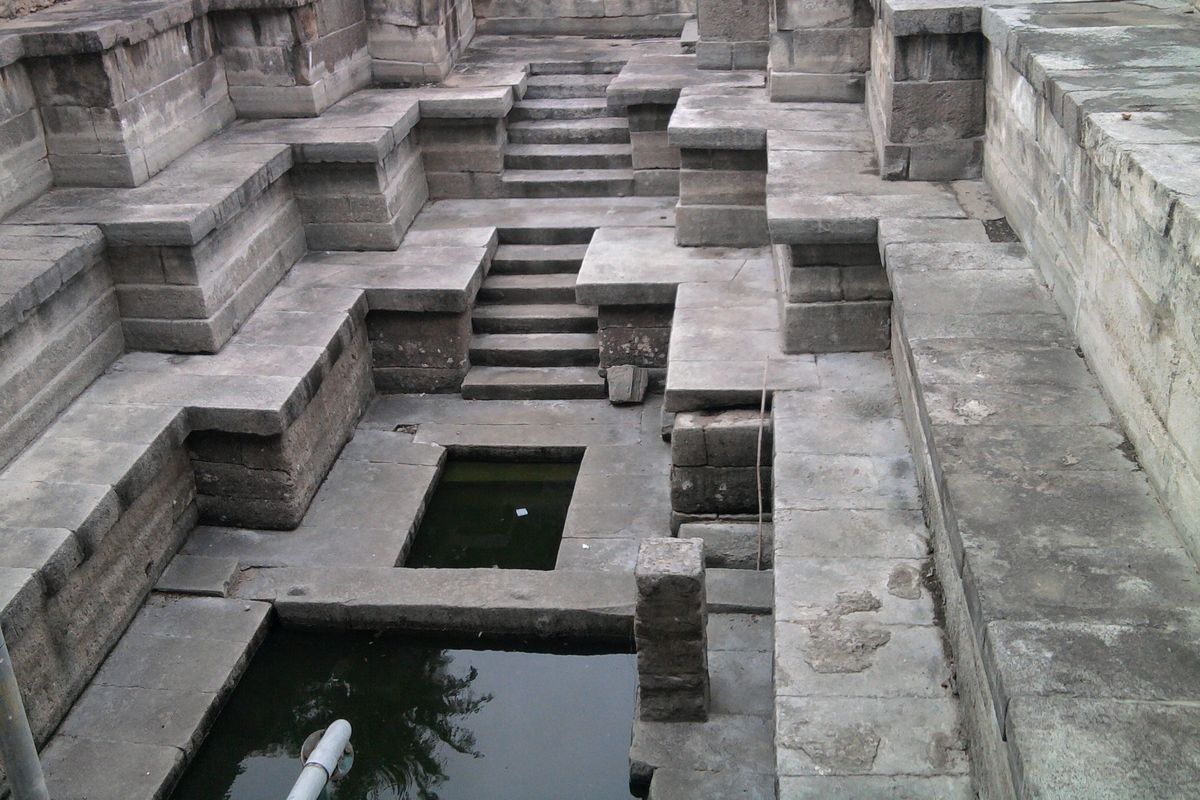
That is the first principle. The water table is the level below which soil and rock are saturated. A plain well reaches it at one fixed point. A stepwell adds a long stepped corridor, so people can walk down to the water wherever it happens to stand. After the monsoon they drew from the upper steps. As the dry months wore on, they went lower. The staircase worked like a gauge, and anyone could read it.
Shade was the second principle. Water held below ground, behind stone walls and galleries, gets little direct sunlight, so less of it evaporates. In Gujarat, Rajasthan and the plains around Delhi, that saving mattered a great deal. The mass of stone also kept the air inside cooler, which is why travellers and townspeople treated these places as shelter from the heat.
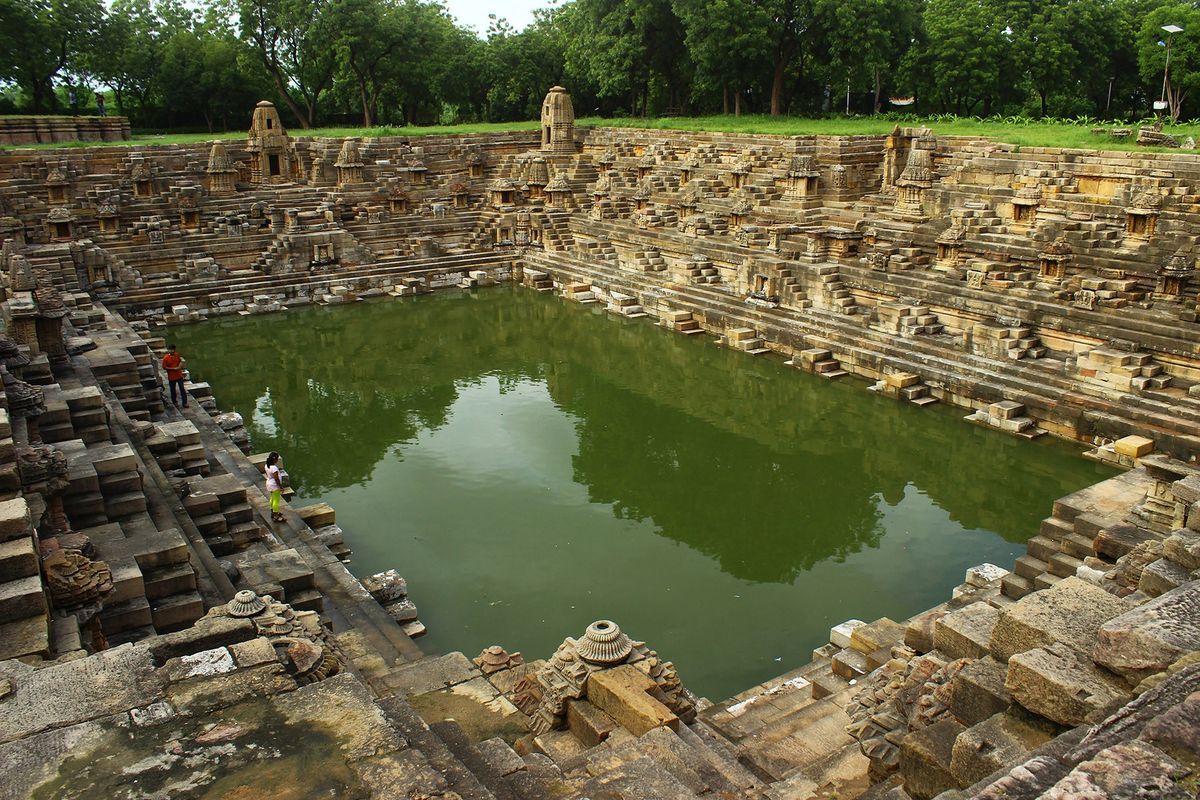
The third principle was recharge. Many stepwells sat within wider catchments. Rainwater and runoff soaked through soil, sand, gravel, and rock before reaching the aquifer, refilling the groundwater the well drew from. A stepwell was a place to take water out and also one link in a system that put water back. Restored stepwells are valued today for the same reason, since they can catch runoff and help raise local water tables.
That slow passage through earth brought a fourth benefit. Suspended impurities were filtered out as water moved down through porous layers, keeping groundwater clearer than water in open tanks. This was not sterilisation as a modern laboratory understands it, and quality still depended on the surrounding land and on upkeep. Even so, slow infiltration through natural material remains central to managed aquifer recharge today.
Last came the structure itself. Deep shafts push against the surrounding earth, so builders needed strong retaining walls, tiered galleries, buttresses, and tight masonry to prevent collapse. Water engineering and stonework had to be solved together.
The Queen’s Gift at Patan
The best-known example is Rani ki Vav, on the banks of the Saraswati River at Patan. Queen Udayamati built it in the 11th century in memory of her husband, King Bhima I of the Chaulukya dynasty. It began as a memorial and grew into one of India’s great achievements in water architecture. UNESCO inscribed it as a World Heritage Site in 2014 and called it an exceptional example of stepwell construction.
The design resembles a temple turned upside down. The stairs descend through seven levels toward the water. At the deepest level, a rectangular tank measures about 9.5 by 9.4 metres. The walls carry hundreds of principal sculptures and more than a thousand smaller carvings, many of them devoted to Vishnu and his avatars. Walking down feels like a pilgrimage, and the art and the engineering cannot be pulled apart.
The location was chosen with care. River alluvium and groundwater linked to the Saraswati supported a structure this deep. The monument also teaches endurance. It is believed that floods from the river buried it, and it stayed hidden for centuries until the Archaeological Survey of India began clearing and restoring it in 1958.
Delhi Has Its Own
The tradition reached well beyond Gujarat. In central New Delhi, the Archaeological Survey of India protects Agrasen ki Baoli. It is about 60 metres long and 15 metres wide, with 103 steps leading to a reservoir. Its origins remain uncertain. Popular belief connects it to the legendary king Agrasen. Still, the structure we see today is generally understood to have been rebuilt in the Delhi Sultanate period, probably in the 14th century under Tughlaq or Lodi rule.
Near Mehrauli stands Rajon ki Baoli, a four-tier stepwell restored by the same Survey. It stored water and gave travellers a cool place to stop and rest.
These monuments challenge the assumption that serious water infrastructure belongs to the modern age. Centuries ago, Indian builders combined hydrology, masonry, climate knowledge, and public welfare in structures that still stand amid crowded cities.
A Way of Thinking About Water
Behind the stonework was a clear outlook. Use water with care, store it close to where it is needed, and design for scarcity. The builders knew that a dependable source required more than a hole in the ground. It needed a structure that people could maintain, reach and share. Because they served whole communities, stepwells reduced the need for any large central delivery network. Households drew drinking and domestic water, and sometimes irrigation water, from a source nearby.
Water was also sacred, and many stepwells carry religious sculpture, pavilions and inscriptions. Cooling, shade, gathering space and spiritual meaning all lived inside a single structure.
Today groundwater is falling, rainfall is unpredictable, and cities keep asking for more. Against that background, the old stepwells look strikingly current. Adapting to climate is an old habit in India, and these builders produced durable systems that ran with very little energy and served people for generations.
Worth Bringing Back
Many stepwells have silted up, run dry or been neglected as modern systems took their place. Interest in reviving them is growing, as part of a wider effort to reconnect cities with local water knowledge through conservation, desilting, rainwater harvesting and protection of heritage structures.
India’s stepwells belong to the present as much as the past. They show that communities can build beauty out of necessity, and that good water management may start with a plain question. How do we live sensibly with water?
The answer, cut in stone and sinking into the earth, is still waiting beneath our feet.
Also Read: Navi Pillay: The Judge Who Made Justice a Path to Peace
You can connect with DNN24 on Facebook, Twitter, and Instagram and subscribe to our YouTube channel.