
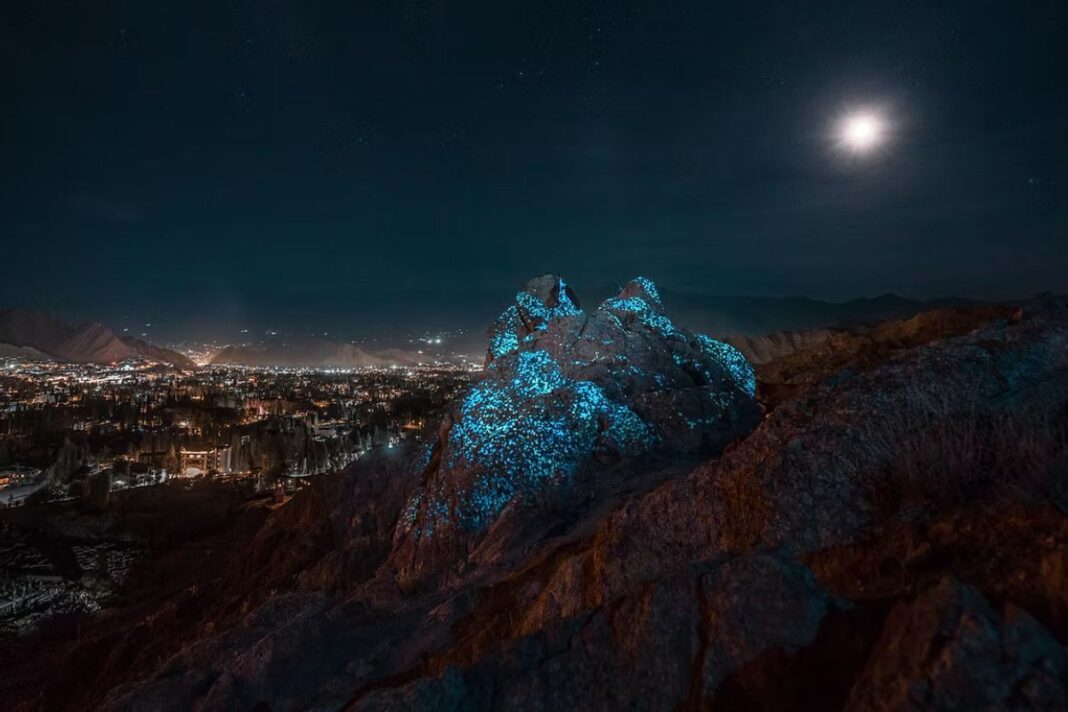

Travellers usually come to Ladakh for a familiar set of images. Turquoise lakes beneath enormous skies, monasteries perched on cliffs, and roads that climb through bare stone toward some of the highest motorable passes on earth. In August 2026, the region offered a different reason to make the journey.
The sā Ladakh Biennale spread across the Leh to Kargil corridor turned the whole stretch into an exhibition with no conventional museum, no single gallery and no fixed starting point. Spread across eight locations- all above 3,000 metres- the event carried contemporary art into villages, community halls, old settlements and open landscapes. The organisers- ASEF culture360- described it as the world’s highest regenerative art biennale.
The main programme ran from 1 to 10 August under the theme ‘Signals From Another Star’. However, the official website listed the biennale as viewable through 31 August, with most activity concentrated in those first ten days. Visitors could begin their route from either Leh or Kargil, choosing their own path between Old Leh Town, Basgo, Likir, Nurla, Lamayuru, Henasku, Mulbekh and Hunderman, so that the road itself became part of the exhibition.
The exhibition changed sightseeing in the region. Rather than moving briskly from one famous landmark to the next, visitors were asked to slow down, pay closer attention and consider how art might sit inside a living landscape without overwhelming it.
Art That Answers the Land
Artist and architect Vishal K Dar curated the biennale, with Tsering Motup Siddho serving as associate curator, bringing together artists from Ladakh alongside contributors from well beyond the region. The event grew out of sā’s earlier life as a land art festival, founded in 2023, before expanding into a full biennale.
The curatorial logic was straightforward. Each artwork would act as a signal sent out from a specific place, answering something about the land, its weather, its memory, its trade routes or its communities. A piece did not need to explain the landscape around it. It only needed to speak with that landscape, pushing back against the usual white cube model of contemporary art, where paintings, sculptures and installations sit apart from daily life inside enclosed galleries. Sā was planned entirely as an outdoor event, with no central gallery show anchoring the programme, and the mountains themselves were never simply scenery. They played an active role.
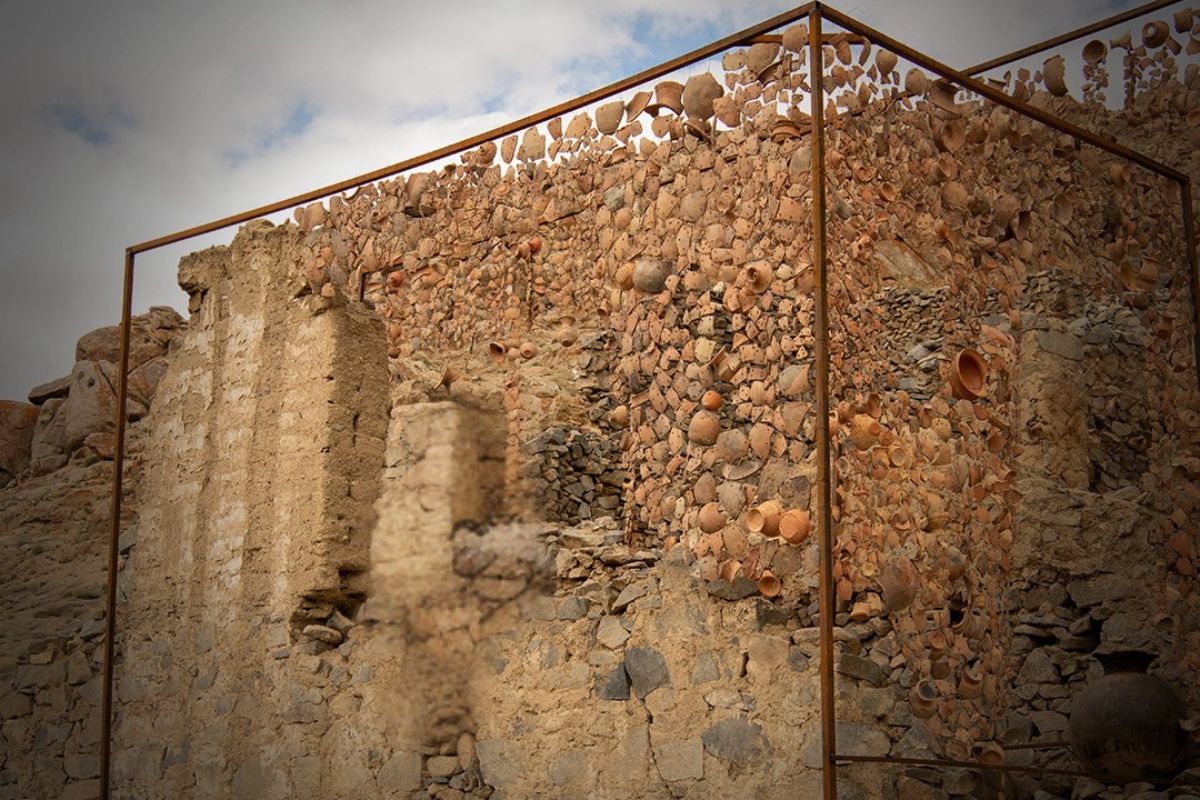
At Basgo, Swiss artist Tom Muller built a piece around fog, a weather condition almost impossible here, adding a strange sensation to an already striking setting. At Likir, Shupiwe Chongwe made a field of unfired pottery embedded with seeds, meant to dissolve over time and allow new growth, treating impermanence as its whole point rather than something to avoid.
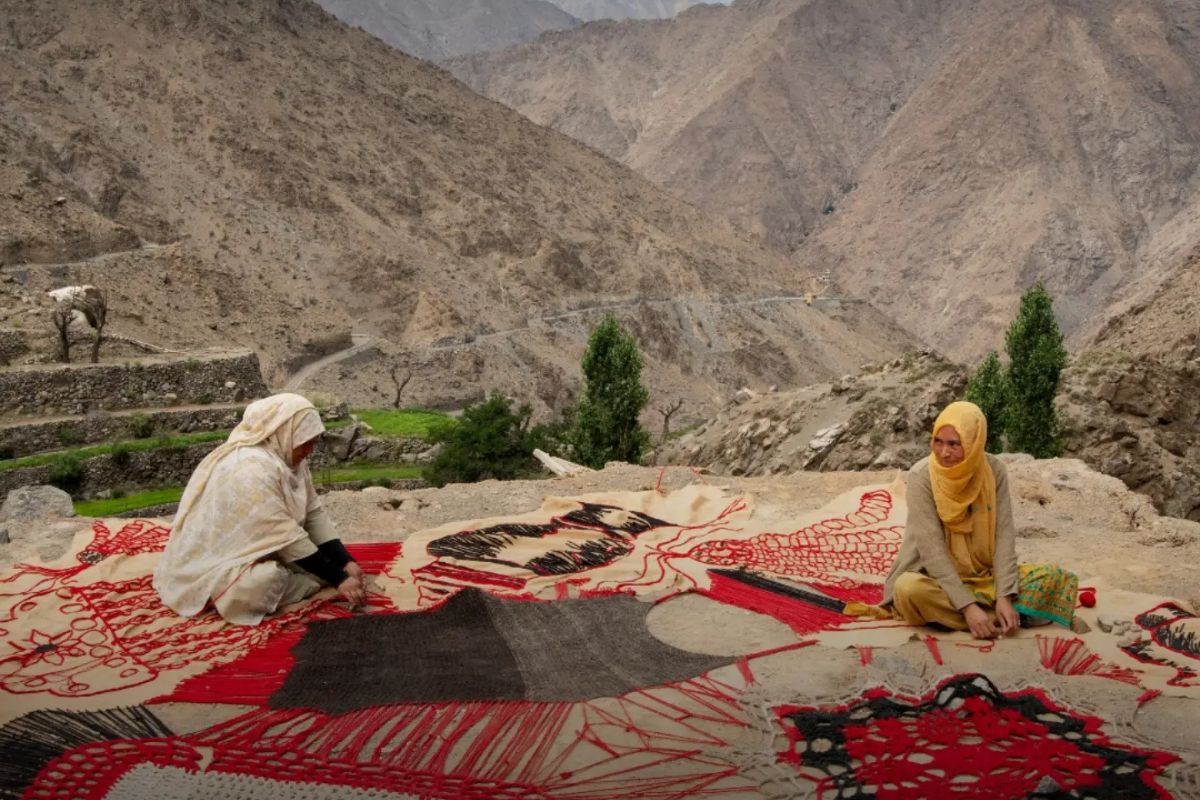
At the old bridge in Nurla, the duo Hylozoic Desires- made up of Himali Singh Soin and David Soin Tappeser- installed a sound piece on a structure built for crossing, linking human movement with the land beneath it. In Lamayuru, Studio Eidola strung a yellow wool grid across the site to connect sheep rearing with the region’s growing lithium deposits, a mineral tied to future technology.
At the abandoned village of Haniskot, artist Avantika Bawa installed scaffolding suggesting unstable ground, evoking a place caught between shifting climate and an uncertain future. Other artists worked with lime dust, black clay, soil, ceramics and sound. In Mulbekh, Stanzin Samphel drew lines stretching almost 200 metres using lime dust and black clay, a piece that would lose most of its power anywhere else.
Regeneration as a Working Method
The word sā means soil in Ladakhi, a fitting name for a project asking what it means to create art at high altitude, where water supply, waste systems, transport and construction all come with real environmental cost.
The organisers treated regeneration not as a passing theme but as a working method, built on practices with little or no environmental footprint, adaptive reuse of existing spaces, close collaboration with local communities, and materials chosen for their ability to be reused. That distinction carries weight. Plenty of cultural events talk about climate concerns while behaving like any other large temporary spectacle, importing materials and leaving debris once the crowds go home. Sā tried to break that pattern from the start, building itself as a long-term cultural project rather than a single festival, with a wider framework touching on ecological responsibility, education, accessibility and thoughtful tourism.
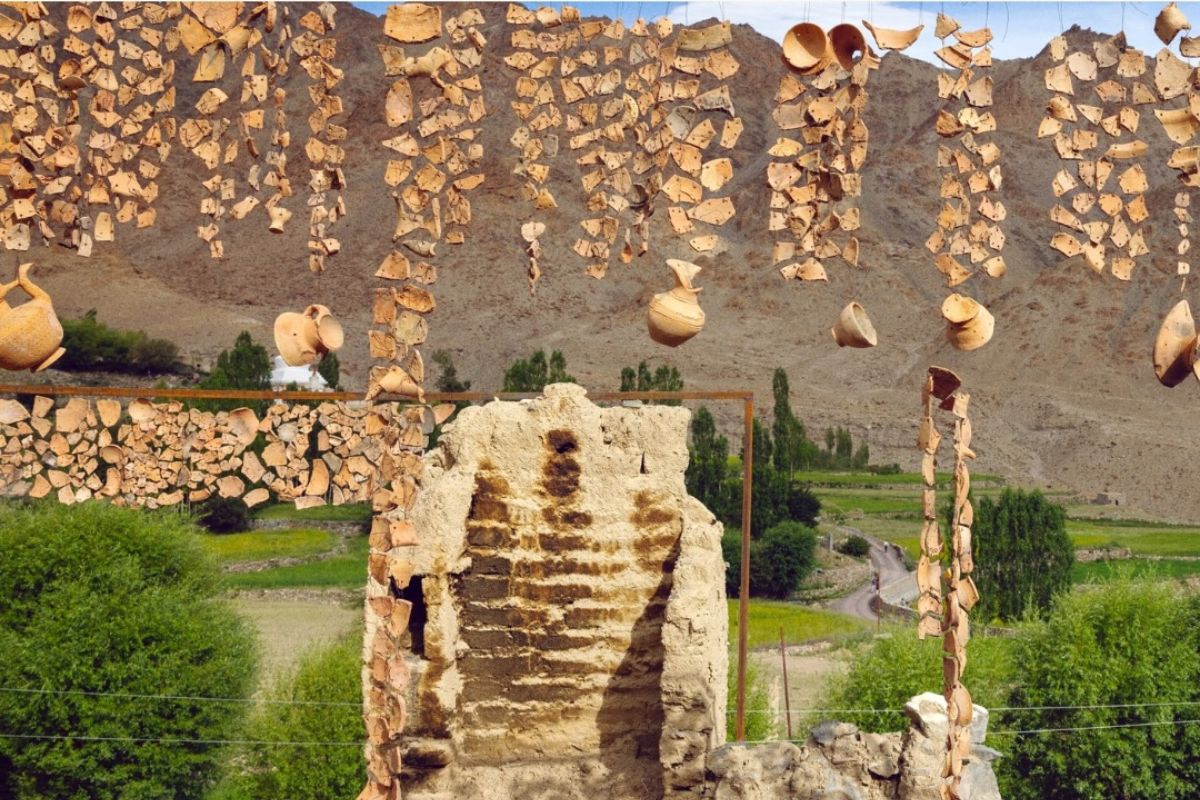
Nobody claims a single art event could resolve Ladakh’s environmental pressures. The goal instead was to build a structure where the process of making and viewing art acknowledged those pressures honestly, in a region already under visible strain from tourism, climate change and fast development. A fragile landscape like Ladakh cannot be treated as an empty canvas for outside vision. Any responsible cultural project has to ask who is represented, who benefits and what remains once the crowds are gone.
A Biennale Built With Its Neighbours
Some of the strongest work happened away from the main exhibition trail. In Old Leh Town, five Ladakhi artists activated the historic quarter through a project supported by the Ladakh Arts and Media Organisation, shaped less by outside vision and more by the neighbourhood’s own rhythm and character. Artist Ayan Biswas focused a collateral project on medicinal plants used around Kargil, using printmaking and school workshops to record knowledge at risk of fading between generations. In contrast, Ladakhi artist Urgain Zawa drew on indigenous knowledge and natural materials like soil and clay for another piece rooted in local memory.
International exchange followed a similar pattern. The Nepalese artist Amrit Karki presented a new commission through a partnership with the Rubin Museum of Himalayan Art, part of a five-year collaboration supporting artist residencies across the 2026, 2028 and 2030 editions of the biennale. Support for local talent ran through the Above 3000m Fellowship, created by sā with the Royal Enfield Social Mission, which backed five emerging Ladakhi artists working directly in village settings under mentorship from the curatorial team and the Trikona Foundation. Students also took part through a project pairing outside artists with pupils from Mahabodhi Residential School in Leh, and the biennale offered internships that gave young Ladakhis direct experience at an international event.
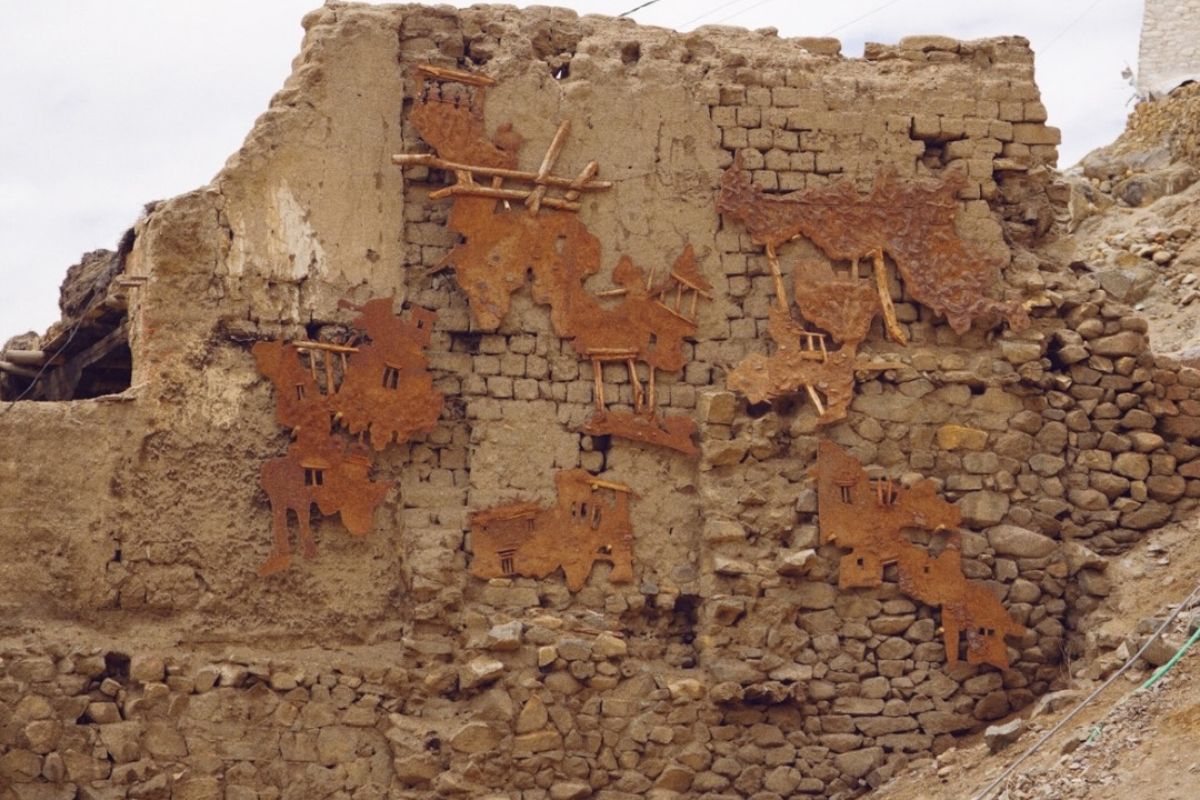
Every outside collaboration required permission from and dialogue with local community leadership, and the organisers stated plainly that they would not intervene within protected sites, a condition that mattered given how many Ladakhi landscapes carry deep religious and cultural meaning.
A Slower Way to See Ladakh
The event asked nothing of visitors in a hurry. There was no single headline venue and no compressed route through numbered rooms, only roads to traverse, villages to enter and distances to cover. The programme carried no ticket and no fixed schedule, and film screenings in Leh, Likir, Lamayuru and Kargil added another layer, setting independent cinema beside the installations.
Perhaps the most telling detail was how little the organisers wanted large crowds. Curator Vishal K Dar said plainly that big visitor numbers were never the goal. In a high-altitude region with limited infrastructure, the intention was to build something primarily for and about the people of Ladakh, welcoming outsiders only in numbers the land could actually support.
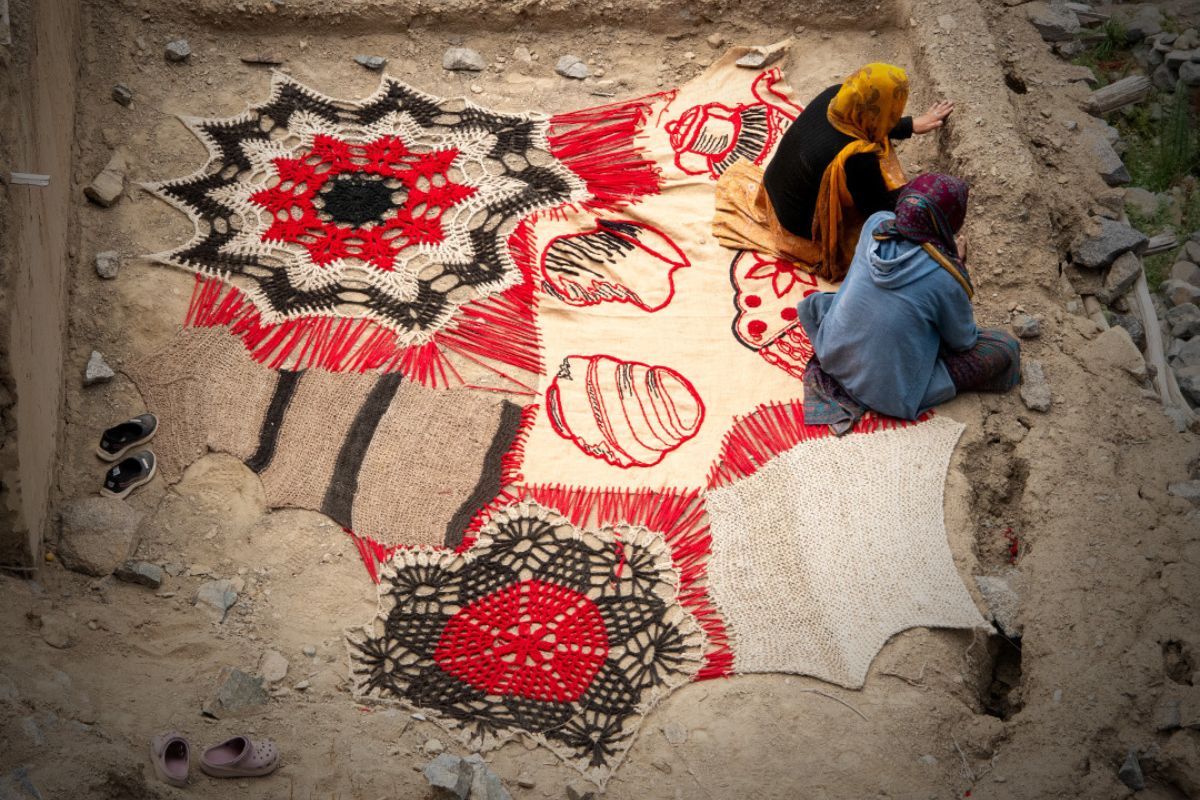
That approach offers a useful counterpoint to the idea that a cultural event succeeds only by drawing large crowds. In Ladakh, success might instead look like a village treated as a genuine partner rather than a backdrop, a local artist given funding and visibility, a schoolchild learning what a medicinal plant is worth, or a visitor leaving with a sharper sense of how fragile this landscape really is.
The lakes, monasteries and mountain roads will keep drawing travellers, as they always have. But sā offered another way of looking at the region: not as a scenic location to enjoy, but as a living place with its own knowledge, its own vulnerabilities, and its own voice. Its quietest achievement may prove its most lasting one: the simple idea that art made with real care can help people look again at the ground beneath their feet, at the communities along the way, and at the responsibility that comes with entering a landscape this fragile.
Read: Maheshwari Sarees: The Royal Weave of Maheshwar
You can connect with DNN24 on Facebook, Twitter, and Instagram and subscribe to our YouTube channel.