
A city of roughly half a million people in western Odisha has found an unlikely solution to one of urban India’s oldest headaches, and it is earning close to twenty lakh rupees every month for doing so.
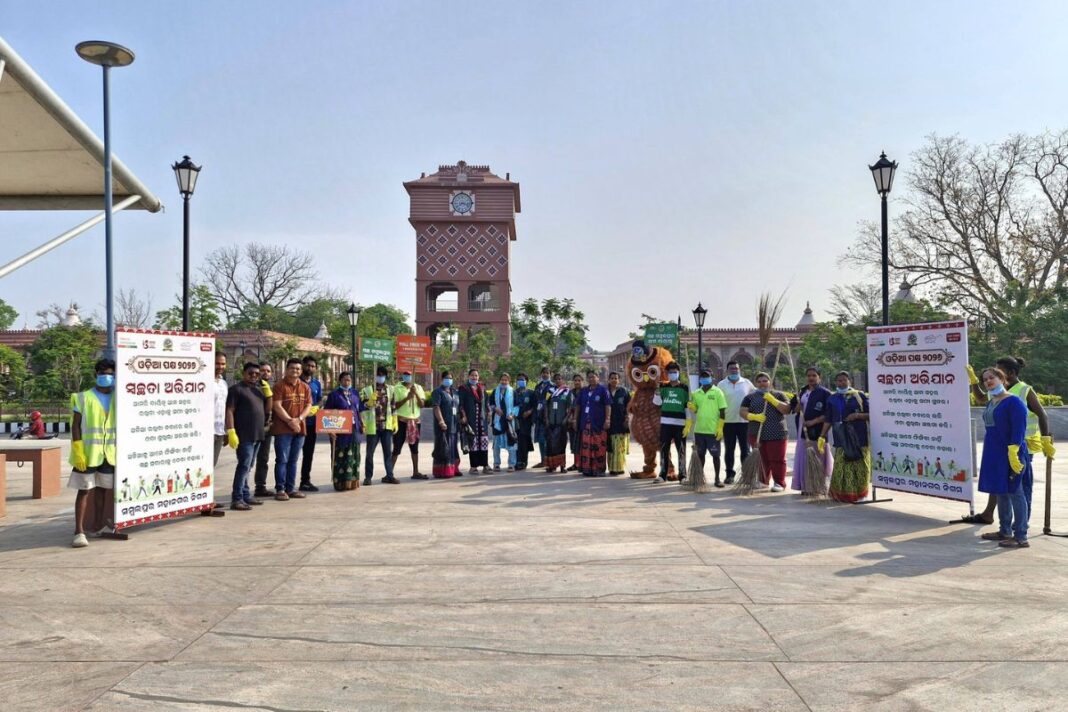
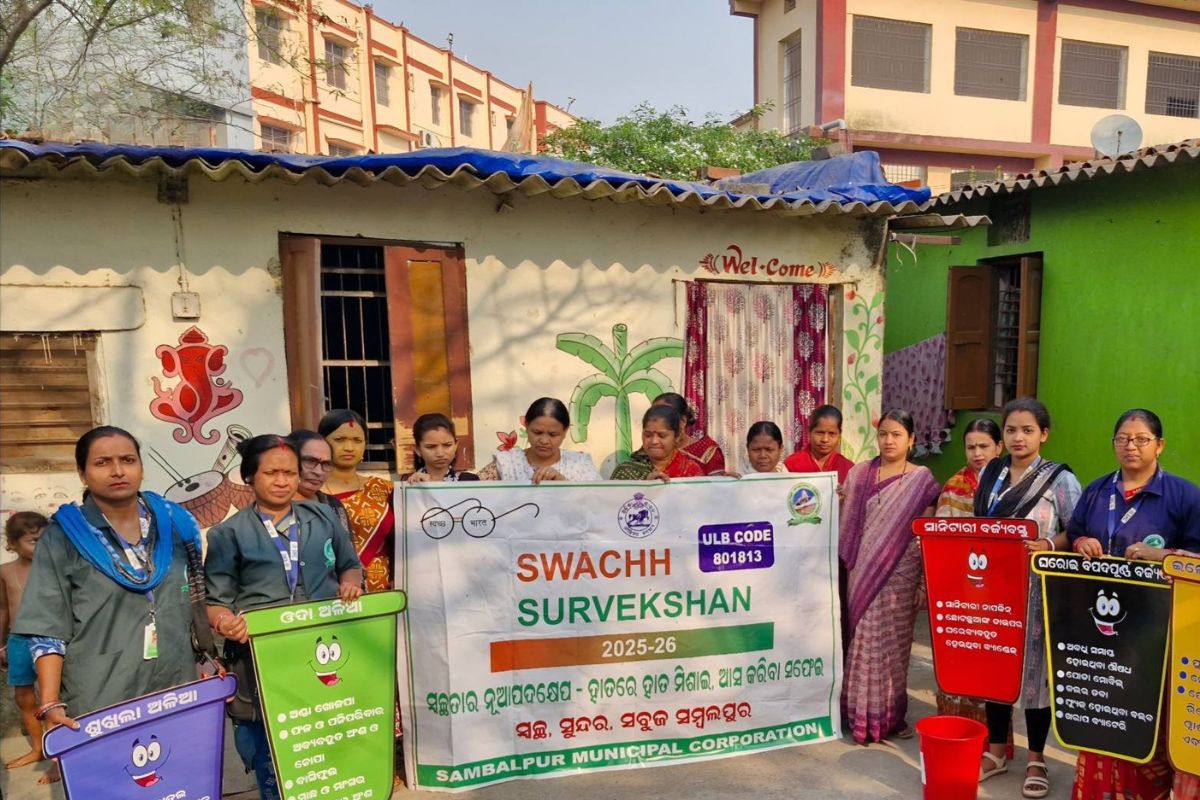
Sambalpur, the administrative and commercial centre of the Mahanadi belt, produces more than 170 metric tonnes of solid waste each day. For years, as in most Indian cities of comparable size, this waste moved in a predictable and unprofitable direction: from households and markets into mixed collection vehicles, and eventually onto overloaded dumpsites where it sat, burned, or leached into the soil. That pattern has since changed, and the agents of that change are 139 women drawn from Mission Shakti self-help groups operating under the Sambalpur Municipal Corporation.
Nine Centres, One Practical Idea
The Sambalpur Municipal Corporation now runs nine facilities distributed across the city, each formally designated a Wealth Centre. The name is functional rather than ornamental. At each site, incoming waste is divided into two broad streams: wet organic material, primarily food and vegetable matter, and dry recyclables, which include plastic of various grades, paper, cardboard, metal, and glass.
The dry stream, once sorted and bundled, is sold to authorised recycling vendors. This alone generates between eighteen and nineteen lakh rupees per month. A portion of low-grade plastic, unsuitable for conventional recycling, is supplied to cement manufacturers as a supplementary fuel, reducing both disposal costs and reliance on coal-derived fuels.
The wet stream follows a different route. Organic waste is composted on site and sold under the brand name “Mo Khata,” a nutrient-rich manure that has found buyers among farmers in the surrounding districts and urban households maintaining kitchen gardens. Monthly sales from compost bring in an additional 45,000 to 50,000 rupees.
Taken together, the nine centres convert a daily municipal liability into a reliable monthly revenue that the corporation can direct toward further infrastructure, public works, or social programmes.
The Women Running the Operation
What distinguishes Sambalpur’s model from similar waste-management experiments in other cities is the extent to which daily operations rest on women. The 139 workers employed across these centres are drawn from Mission Shakti, the state government’s long-standing self-help group programme, originally designed around microfinance and community savings. In Sambalpur, its scope has expanded considerably.
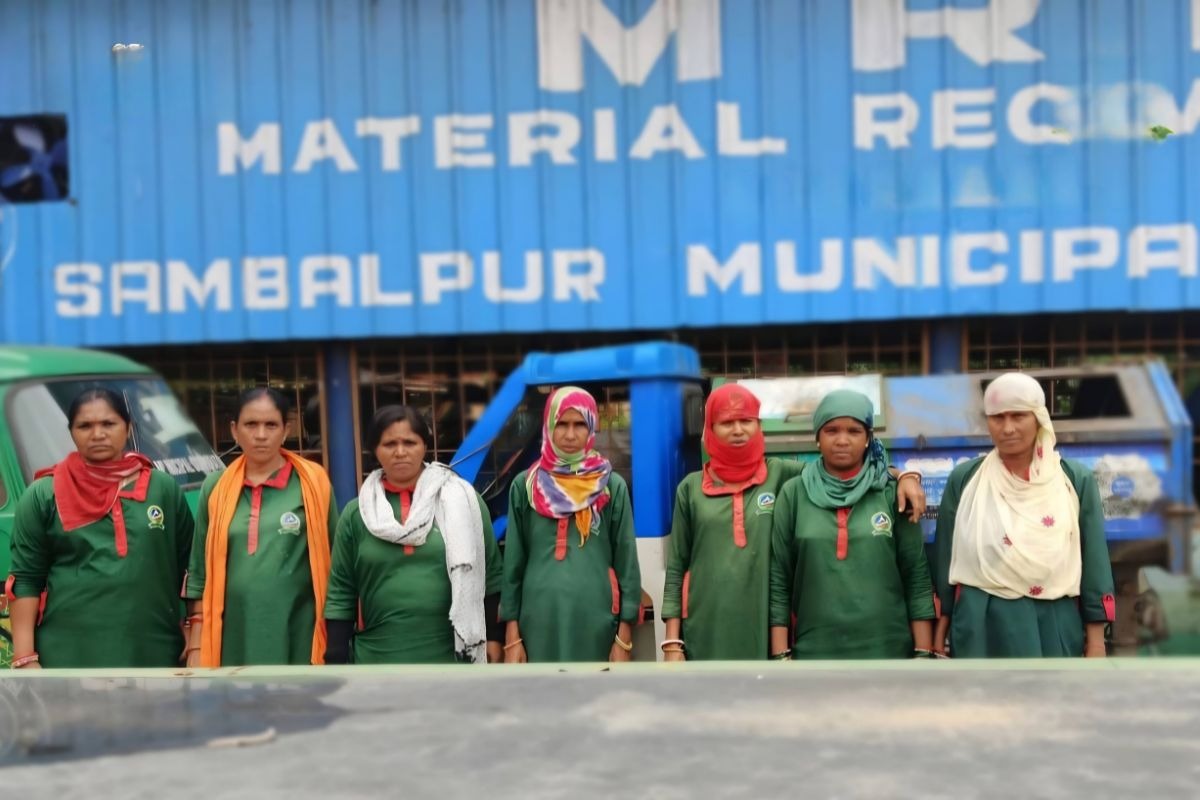
At centres in Burla, Chaunrpur, Rasanpur, Balibandha, Khanduapali, Kainsir, and Silipathar, these women carry out the full range of tasks: receiving incoming loads, manually sorting materials into the correct categories, managing the composting process, overseeing bagging and dispatch of finished compost, and coordinating pickup schedules with recycling vendors. A number of them also work directly with residents in surrounding wards, explaining how household segregation should be done and why the quality of sorting at the source affects the price the recovered material fetches downstream.
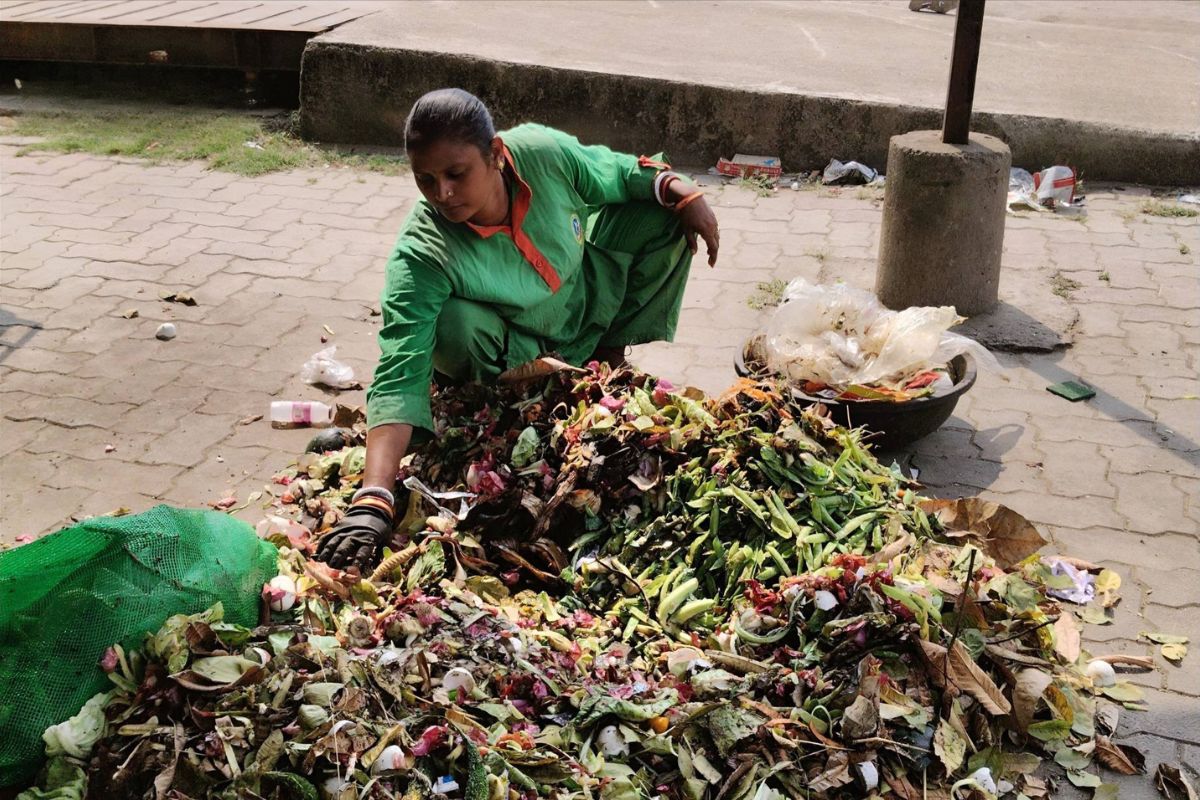
Many of these women previously worked as daily-wage agricultural labourers or in informal domestic employment, where income was seasonal and irregular. They now hold defined roles within a revenue-generating municipal system, receive regular wages, and enjoy a level of institutional recognition previously unavailable to them. District Collector Siddheswar Baliram Bondar has noted that the Wealth Centres are generating meaningful livelihoods for women while simultaneously improving the city’s solid-waste management, an outcome that neither goal could have achieved on its own.
Environmental Consequences
The shift to decentralised, ward-level processing has produced measurable changes in Sambalpur’s physical environment. The volume of mixed, unsorted waste reaching open dumpsites has fallen sharply. Leachate from decomposing organic matter, a persistent source of groundwater contamination in poorly managed dumpsites, has been substantially reduced. The practice of burning mixed waste in the open, common in areas with backlogged collection, has become less frequent.
Residents in wards served by the Wealth Centres report cleaner streets, fewer instances of stray animals congregating around refuse points, and a general reduction in odour from waste storage areas. The corporation now also manages separate collection streams for electronic waste and hazardous household materials, categories that previously disappeared into general mixed-waste loads.
For farmers purchasing Mo Khata compost, the product offers a partial substitute for synthetic fertilisers derived from energy-intensive industrial processes. The organic matter improves soil structure and water retention over time, particularly in the light soils of the Mahanadi valley. The scale of this benefit is modest at present, but it is growing alongside compost production.
What Made It Work
Sambalpur’s system was not built on imported technology or exceptional capital investment. Three straightforward conditions made it viable.
The first was mandatory household segregation, supported by sustained ward-level awareness campaigns and the involvement of the women workers themselves as community educators. When residents understand that their sorting habits directly affect what the centre can recover and sell, compliance tends to improve over time.
The second was the decision to keep processing close to the point of collection. Nine smaller centres distributed across the city cost less to supply and manage than a single large facility on the urban periphery. Transport distance is shorter, spillage and pilferage in transit are reduced, and the centres themselves become familiar neighbourhood institutions rather than distant infrastructure.
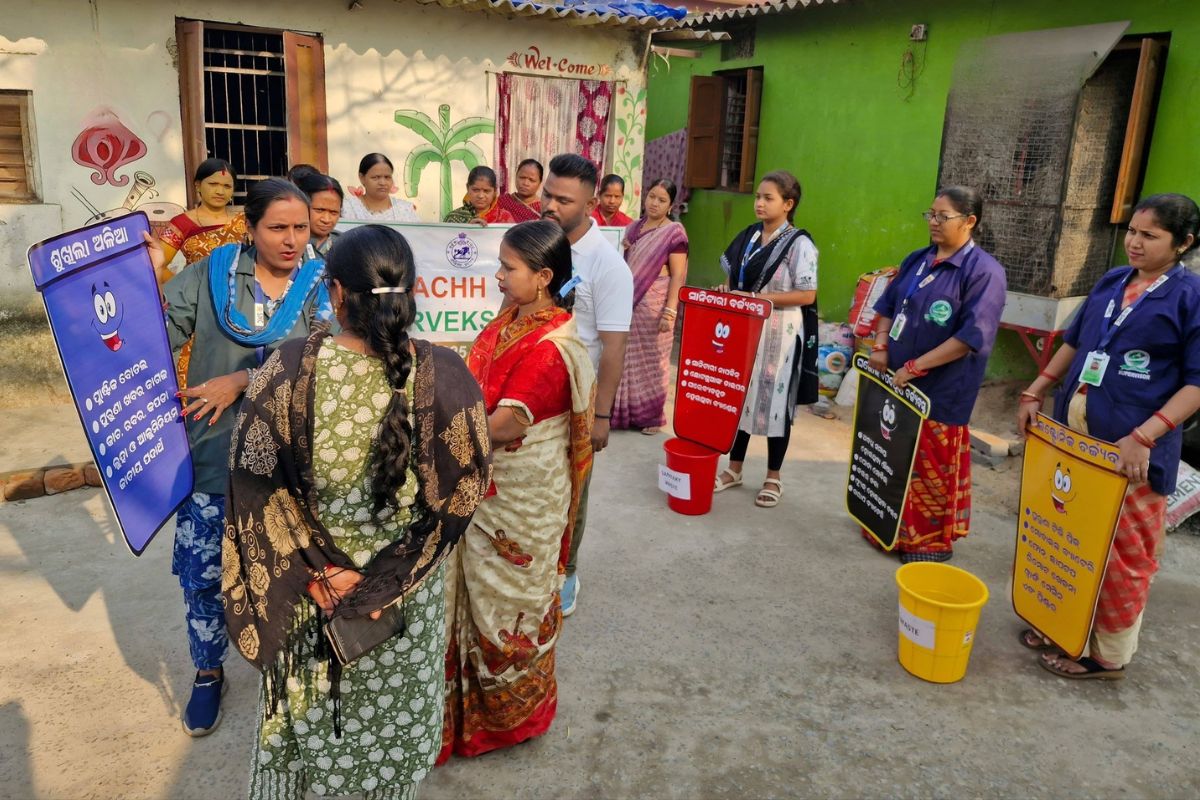
The third was the choice to organise the labour force around an existing network of community women rather than contracting the work to outside operators. Mission Shakti groups brought with them social cohesion, local knowledge, and accountability structures that a newly hired external workforce would have required years to develop.
A Reference Point for Other Cities
India produces an estimated sixty-two million tonnes of municipal solid waste annually. A significant share of that waste contains materials with recoverable market value, including plastics, metals, paper, and compostable organics, most of which currently end up in landfills or in the hands of informal recyclers operating outside any regulatory or revenue framework.
Sambalpur’s figures are not large in absolute terms. Twenty lakh rupees a month is a fraction of what a major metropolitan corporation spends on waste management. The significance lies in the direction of the cash flow. Rather than spending money to manage waste, the city is earning money from it while simultaneously reducing landfill dependency, improving public health, and employing a group of women who previously had limited access to formal economic participation.
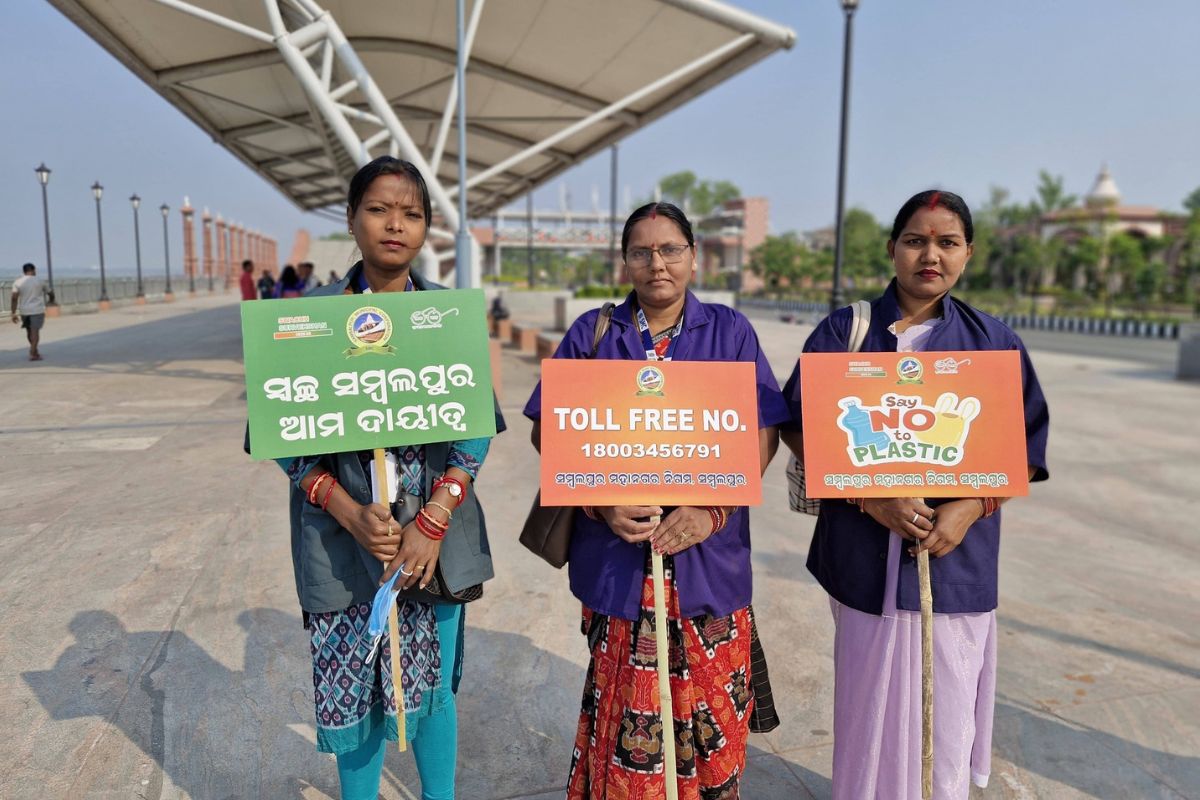
The model is straightforward enough to replicate. It requires political will at the municipal level, a functioning self-help group network or equivalent community organisation, and the patience to invest in public education over a period of months before results begin to show. None of these are unusual preconditions for a mid-sized Indian city with reasonably capable administration.
What is perhaps less easy to reproduce is the cultural shift that Sambalpur’s women have brought about in their own wards. A woman who explains waste segregation to her neighbours is not simply distributing information. She is asserting a claim to technical knowledge, to civic authority, and to a visible role in how the city functions. That claim, repeated across 139 workers in nine locations, is what has given the numbers their durability.
Also Read: Padma Shri Bhiklya Ladkya Dhinda- The Man Who Kept a 400-Year-Old Sound Alive
You can connect with DNN24 on Facebook, Twitter, and Instagram and subscribe to our YouTube channel.