

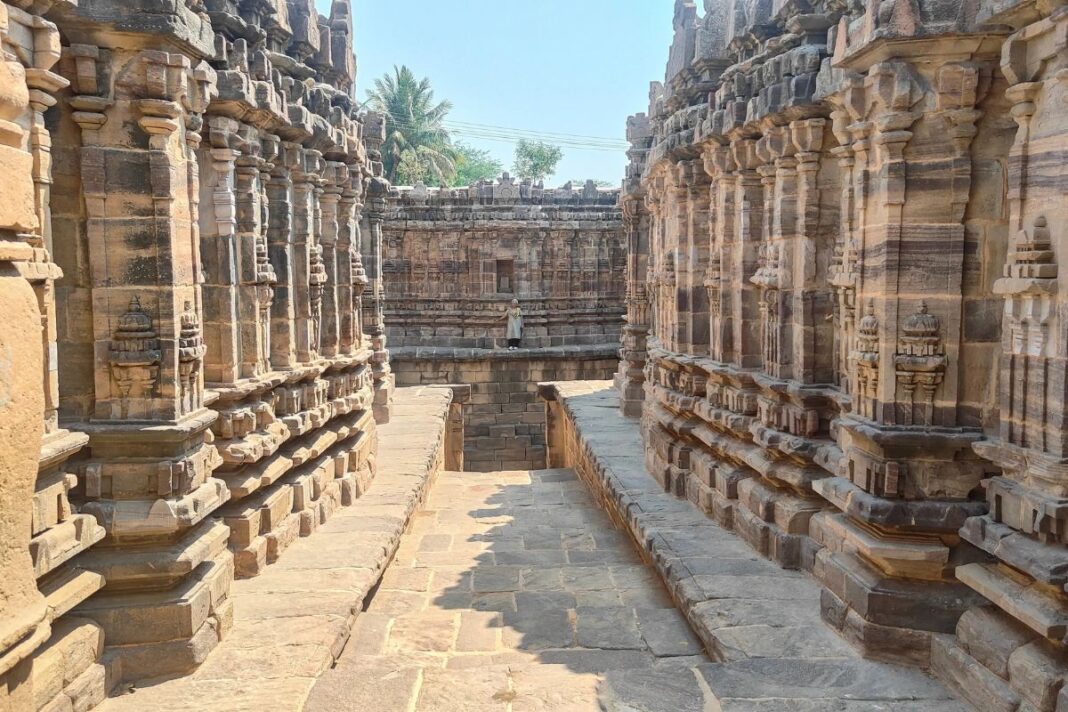

In the town of Sudi, tucked into Karnataka’s Gadag district, a buried stepwell carved with sacred serpents has revealed itself after centuries of being buried beneath rubble and roots. The Nagakunda stepwell, named after the cobra, or naga, that Indian tradition places at the heart of every sacred water source, was built during the Kalyani Chalukya period roughly a thousand years ago. It is a rare meeting point of engineering, religion and stone carving, and its slow recovery from neglect says as much about the present as it does about the past.
For years, the structure was almost impossible to fathom. Roots pushed through its joints, vegetation spread across its walls and debris settled into corners that had once held clean water. The carved surfaces inside, detailed with the same care usually reserved for temple façades, were left exposed to weathering and occasional vandalism. Today, a conservation project led by the Deccan Heritage Foundation India, in conjunction with the Government of Karnataka and several partner organisations, is giving Nagakunda a second life.
A Town Built by the Chalukyas
Sudi once held real weight under the Kalyani Chalukyas, also called the Western Chalukyas of Karnataka. This dynasty ruled large parts of the Deccan between the 10th and 12th centuries and left behind a distinct architectural signature. The town still holds important medieval structures, among them the Mallikarjuna Temple and the Jodukalasadagudi, a temple built with two towers. Together, these buildings trace how Karnataka’s Dravida architectural tradition grew out of the earlier Rashtrakuta style and into something recognisably its own. Seen alongside Nagakunda, they suggest Sudi was never a town of scattered monuments but a landscape shaped deliberately around faith, water, trade and political power.
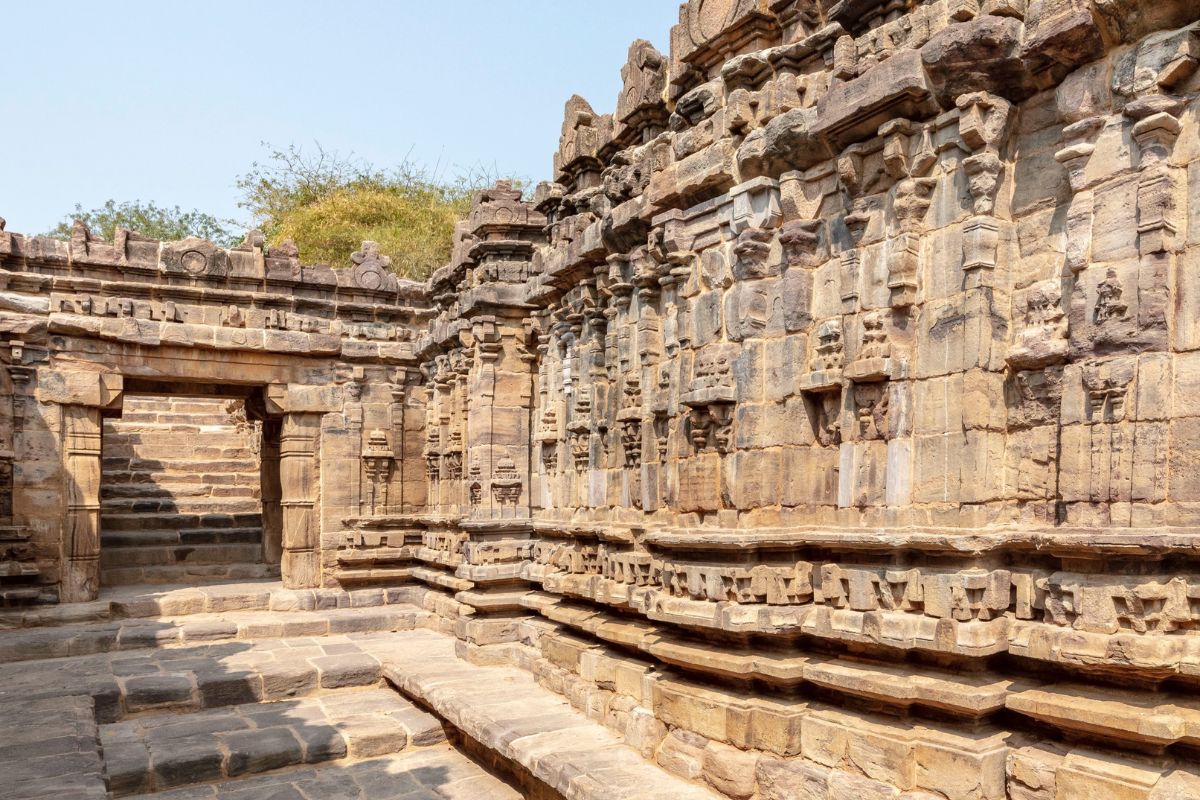
The International Council on Monuments and Sites calls Nagakunda a rare example of underground architecture and an early record of how builders understood geology and water flow. Stepwells tend to bring Gujarat and Rajasthan to mind first, but the form also took root in the south, and Nagakunda stands out for pairing a working water system with sandstone carving of unusual richness. Most scholars place its construction in the 11th century, within the years the Chalukyas were tightening their grip on the Deccan.
More Than a Place to Draw Water
A stepwell was never built for water alone. It answered a harder question: how a community meets its needs through a year of shifting rainfall and falling groundwater. The descending steps let people reach the water table wherever it happened to sit that season, the underground chambers offered relief from the heat above, and the masonry managed the quiet relationship between rain runoff, groundwater and human access. At Nagakunda, that design appears to rest on a close reading of the site’s own geology.
The name carries its own layer of meaning. Naga, tied to the cobra, runs through Indian tradition as a symbol of water, fertility, the underground world and protection. That symbolism was not a decorative flourish. Across South Asian belief, serpents are closely bound to rivers, springs, wells and everything beneath the earth, and their presence near water marked that water as sacred and worth guarding. The naga also carried associations with fertility and renewal, since a dependable water source sustained households, livestock, crops and ritual life alike, and the serpent stood in for the hidden force that let water rise to the surface.
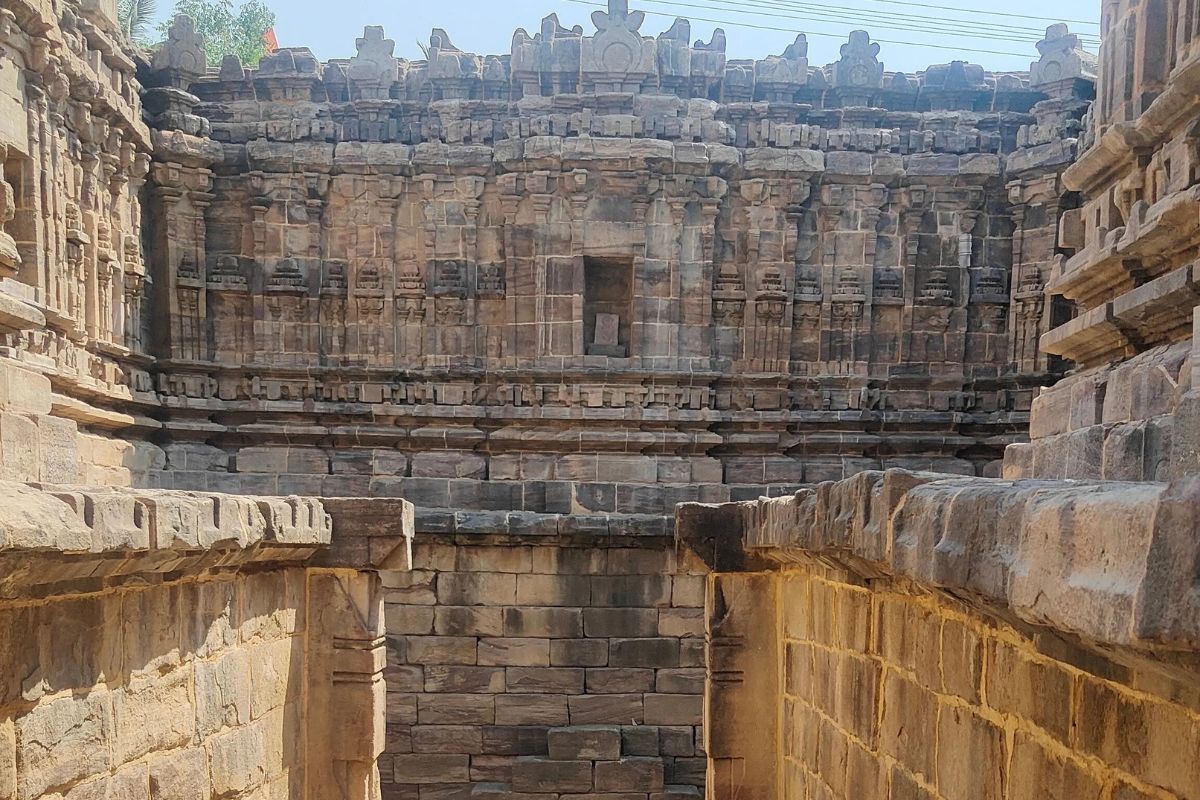
A stepwell also functions as a threshold, a passage from an open, sunlit world into a shaded, enclosed one below. Nagas fit naturally into that kind of space, since they mark boundaries between land and water, surface and underground, the human and the divine. The available records offer no single inscription spelling out the meaning of each carving, so this reading rests on the monument’s name and setting rather than one confirmed text. What made Nagakunda unusual among Chalukya monuments was not naga imagery alone, since the dynasty carved serpents and deities across many kinds of buildings. What set the site apart was the combination of a working water system, an underground descent and a name that tied the place, from the start, to the sacred cobra.
Years Under Roots and Rubble
A structure built below ground survives only as long as its walls hold against the pressure of the earth around them, and even a small gap between stones can widen over time and threaten the structure. At Nagakunda, neglect made that risk worse. Roots worked into the joints of the stonework and pried them further apart. At the same time, the site also picked up the hazards that follow lesser-known monuments everywhere in India: dumped waste, absent maintenance and vandalism. The stepwell did not just look overgrown. Its carved walls, the very evidence of what the place had once meant, were hidden from view, and a structure that had shaped community life for centuries had all but disappeared inside its own landscape.
A Restoration Takes Shape
The Deccan Heritage Foundation reached an agreement with the Government of Karnataka in January 2025 to restore Nagakunda and the monuments near it, working through the state’s Adopt a Monument scheme and with support from Rajashree Pinnameneni in memory of her father, Dr Subba Rao Devineni. The work ran on several fronts at once, conserving historic masonry, clearing invasive vegetation and debris, reviving the water system, resetting displaced stones where safe and restoring the surrounding landscape alongside the link to the neighbouring medieval structures.
None of this was cosmetic. Making the stepwell structurally sound while keeping every trace of its age intact meant every decision had to respect the existing stone, the layout of the steps and the carvings that give the place its character. The Deccan Heritage Foundation has said its goal is to restore the site’s natural hydrological balance and bring it back as a water body with genuine social and cultural standing. It has even raised the possibility of the stepwell eventually supplying water to nearby residents, though that would depend on further study. The Gandipet Welfare Society, Heritage Matters and the Water Literacy Foundation have joined the Karnataka government and the Deccan Heritage Foundation in this work, a reminder that a water monument’s future depends on more than repointed masonry. It depends on upkeep, local involvement and a real grasp of how water moves through that ground.
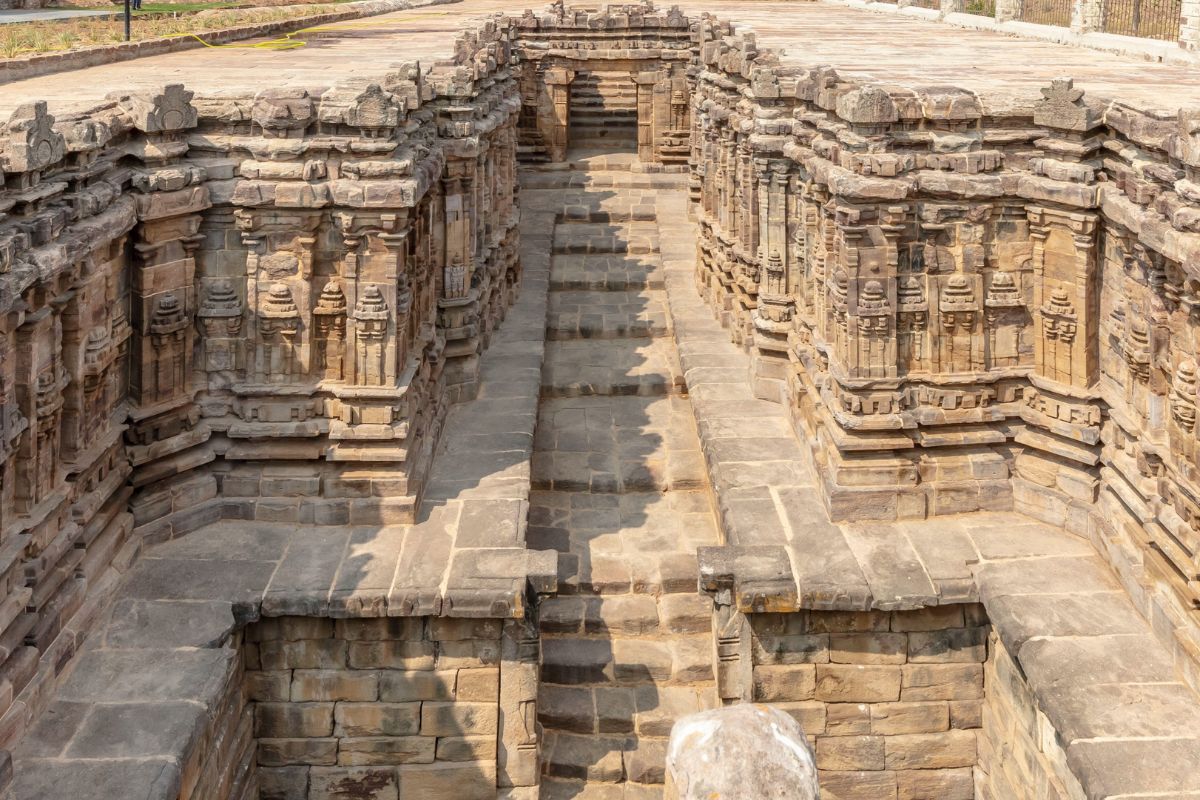
The first phase centred on Nagakunda itself, its structure, its water and its immediate surroundings. A second phase was planned around the Jodakalasa temple and a pathway connecting the heritage sites. This change could let visitors experience Sudi as one connected landscape rather than a single attraction standing alone. By late 2025, the Deccan Heritage Foundation reported that Nagakunda and a cluster of nearby medieval monuments had been fully restored under the scheme, with continued upkeep to follow, through the Gandipet Welfare Society.
What Nagakunda Leaves Behind
Nagakunda’s revival points beyond Sudi. India’s traditional water structures grew out of local material, climate, terrain and need, built at points where technical skill and belief worked side by side. Bringing one back into view offers a lesson in heritage and water sustainability alike, and a chance to show younger generations that the history of water and the history of the environment were never really separate stories.
Sudi’s position near Badami and Hampi gives the project a wider horizon. The Deccan Heritage Foundation has floated the idea of a heritage corridor linking these places, though any growth in visitors will need to support the monument rather than strain it. What stands out most about Nagakunda’s return is how small the first steps were. Roots were cleared. Debris was hauled away. Stones were checked and set back in place. Carvings that had waited under dirt for years were allowed to reappear. A water system nearly forgotten was recognised again as both an engineering achievement and a living part of its landscape. The naga figures now watch over walls raised nearly a thousand years ago, and their survival is a reminder that heritage is never just what remains. It is what people in the present choose to notice, protect and carry forward.
Also Read: Ex-Journalist Built Free Boarding School in India’s Highest Village for Children
You can connect with DNN24 on Facebook, Twitter, and Instagram and subscribe to our YouTube channel.