

A 92-year-old farmer from Palghar never set foot on a concert stage, never recorded an album, and never asked for recognition. He simply played, and because he did, an ancient Indian tradition has survived to this day.
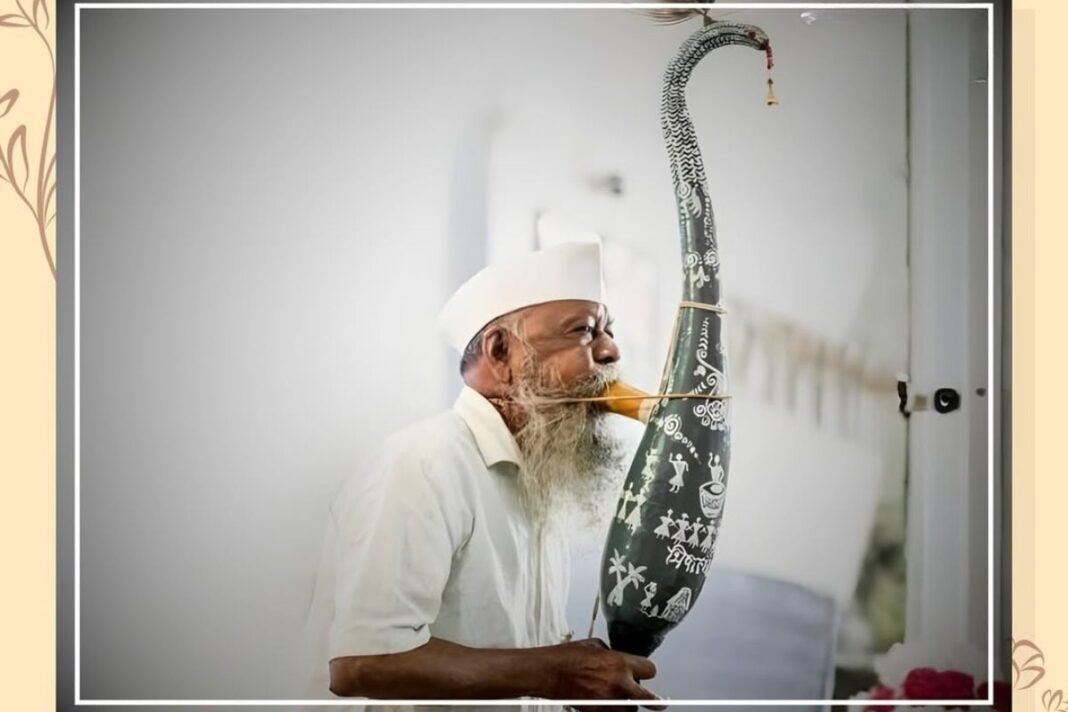
On May 25, 2026, Bhiklya Ladkya Dhinda received the Padma Shri from President Droupadi Murmu. He is 92 years old and comes from Walvanda, a quiet village in Jawhar, Palghar, Maharashtra. He is a farmer who grows crops and plays a five-foot instrument made from dried gourd and bamboo. And he has been doing that, without pause or public reward, for eighty-two years. What Bhiklya Baba has preserved is the living pulse of the Warli tribe, carried forward through a single instrument called the Tarpa.
What is Tarpa
The Tarpa is a wind instrument. It is built from materials the forest provides: a dried bottle gourd forms the main chamber, bamboo tubes extend from it, and small leaves or reeds sit inside the pipes to create sound. The player blows into the gourd; air moves through the bamboo and the reeds vibrate. The instrument is roughly three to five feet tall and is held upright during performance, not unlike a flute. However, the sound it produces is something else entirely: low, layered, and persistent, with a quality that settles over a gathering rather than filling it with noise.
It is not tuned with pegs or keys. The player adjusts tension in the strings, monitors how the gourd responds to humidity, and keeps the whole thing in working order through close attention and long familiarity. Bhiklya treats the Tarpa not as equipment but as a presence. He says that he considers the Tarpa, God incarnate.
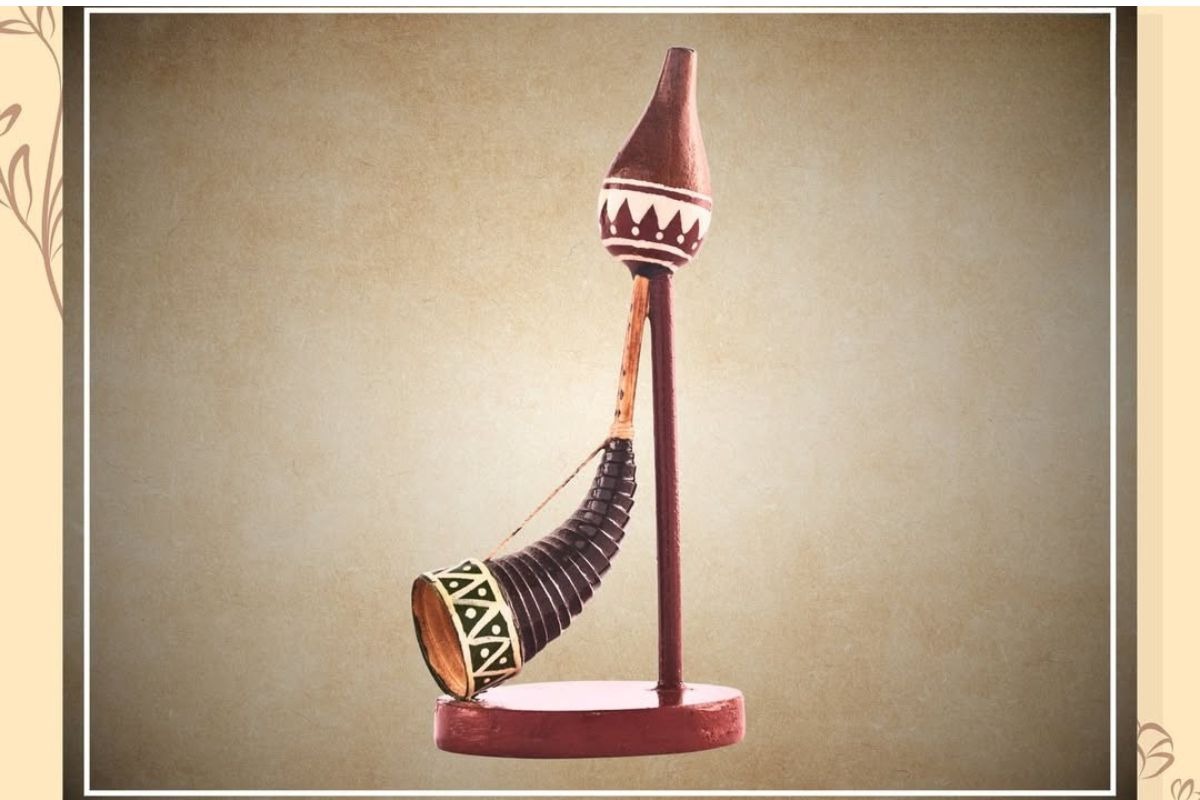
The instrument belongs amidst Warli festive dances, played alongside the Dhol during communal gatherings. Together, they mark births, harvests, and the seasons. For the Warli people, one of the larger tribal communities in India, spread across the hills of Palghar, Dahanu, Jawhar, and Talasari, the Tarpa is not background music. It is the sound of collective memory.
A Lineage Four Centuries Old
The Warli are older adults. Their name comes from “Warla,” a word meaning a small piece of tilled land, and their connection to agriculture and the forest is not poetic shorthand. It is literal and practical. Their famous paintings, with white geometric figures painted on mud walls- depicting hunting, farming, and celebration- have entered galleries and textbooks. However, the music, which requires a living practitioner rather than a wall, has been far more difficult to sustain.
Bhiklya’s family has played the Tarpa for approximately four hundred years. He picked it up at age ten, as earlier generations had, by watching and listening. That is how Warli culture has always moved: through bodies and memory rather than paper and institutions.
For most of his life, Bhiklya was a farmer first. He worked the land to survive. He was not wealthy, and the years were not always kind. However, he never set the Tarpa aside. He played at village gatherings. He taught younger people when they showed interest. He kept the practice intact through sheer continuity, one performance at a time, without any formal programme or government backing.
What the Recognition Means
The Padma Shri is India’s fourth-highest civilian honour. For 2026, 131 such awards were approved, across fields ranging from medicine to literature. Bhiklya’s is categorised under Art, a reasonable label, though it understates the case.
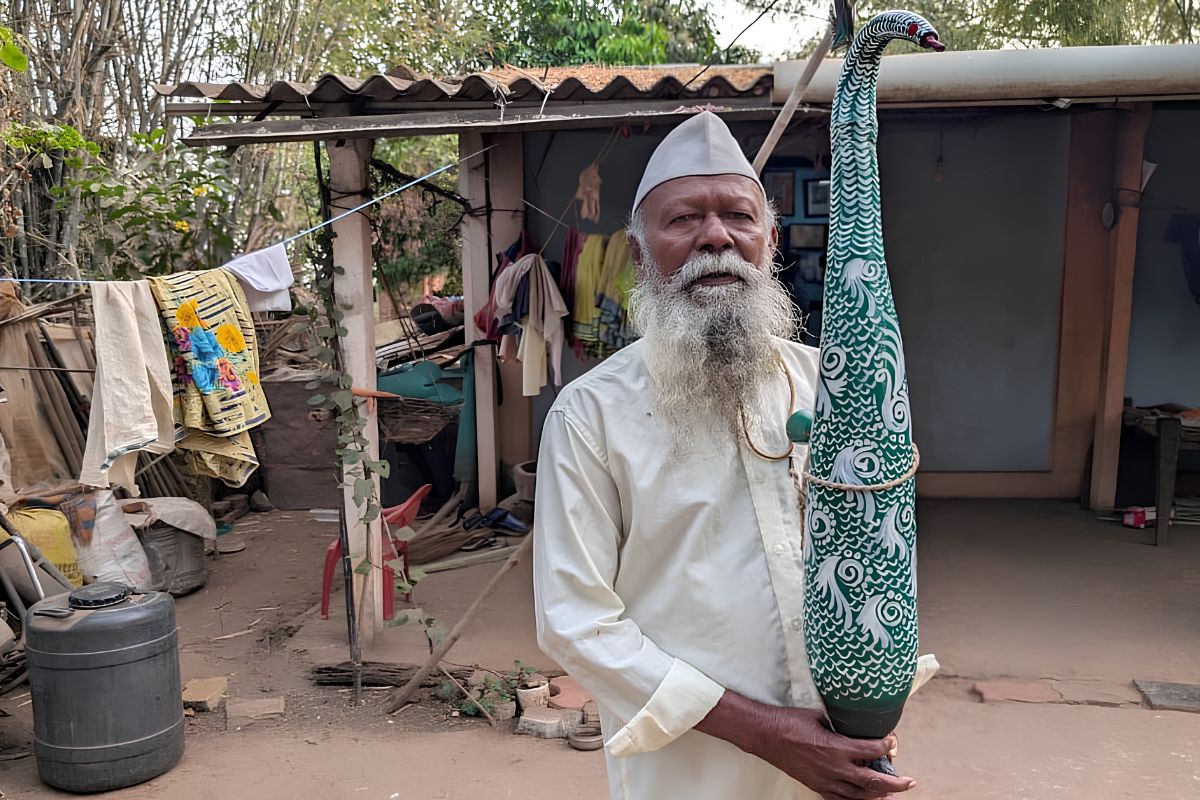
What he has done is closer to conservation. He has kept a musical tradition alive at a moment when many comparable traditions have disappeared, their last practitioners dying without students, their instruments falling silent forever. The Tarpa could have followed that path. It did not, largely because one man from a small village decided to keep playing it over eight decades.
When the award was announced in January, Bhiklya said something brief and direct: “In the mobile age, I am preserving culture.” It is not a grand statement, just an accurate one.
The Work That Continues
Bhiklya is now teaching the craft to the younger generation. Young people from Palghar are learning the Tarpa from him, taking up the instrument with varying degrees of skill and commitment. Some will continue. Some will not. That is the nature of oral tradition: it requires each generation to decide what to carry forward. For now, the four-hundred-year lineage continues. The sound has not vanished.
Also Read:Padma Shri Mir Haji Kasam: The Dholak Player Who Performed 30,000 Charity Shows
You can connect with DNN24 on Facebook, Twitter, and Instagram and subscribe to our YouTube channel.