

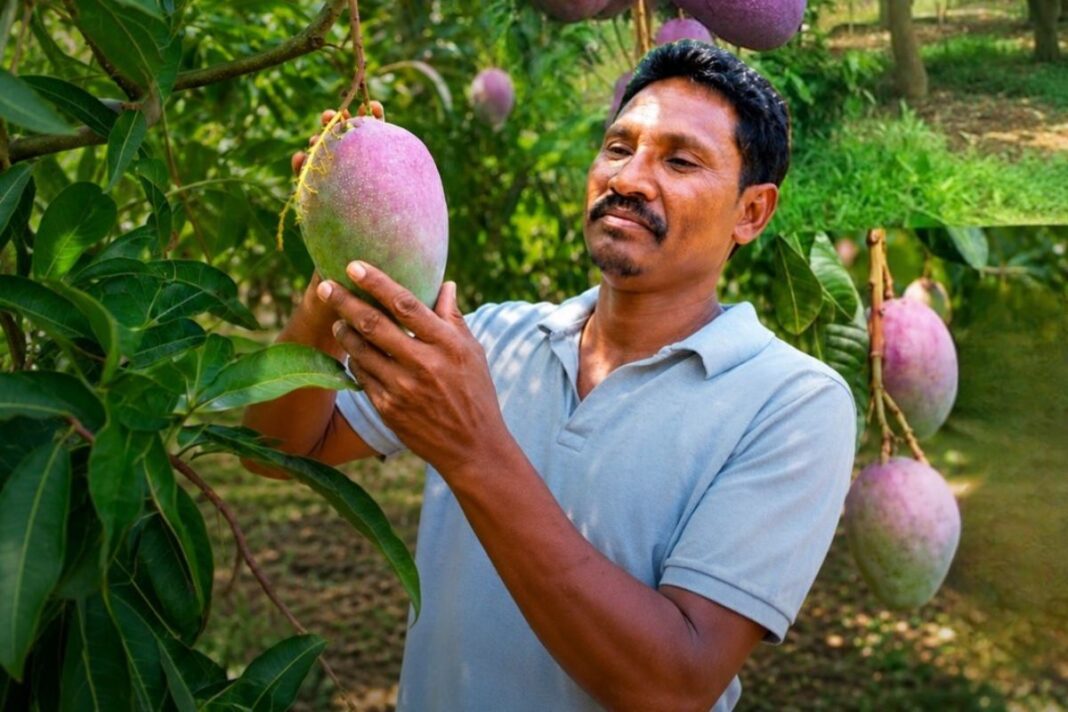

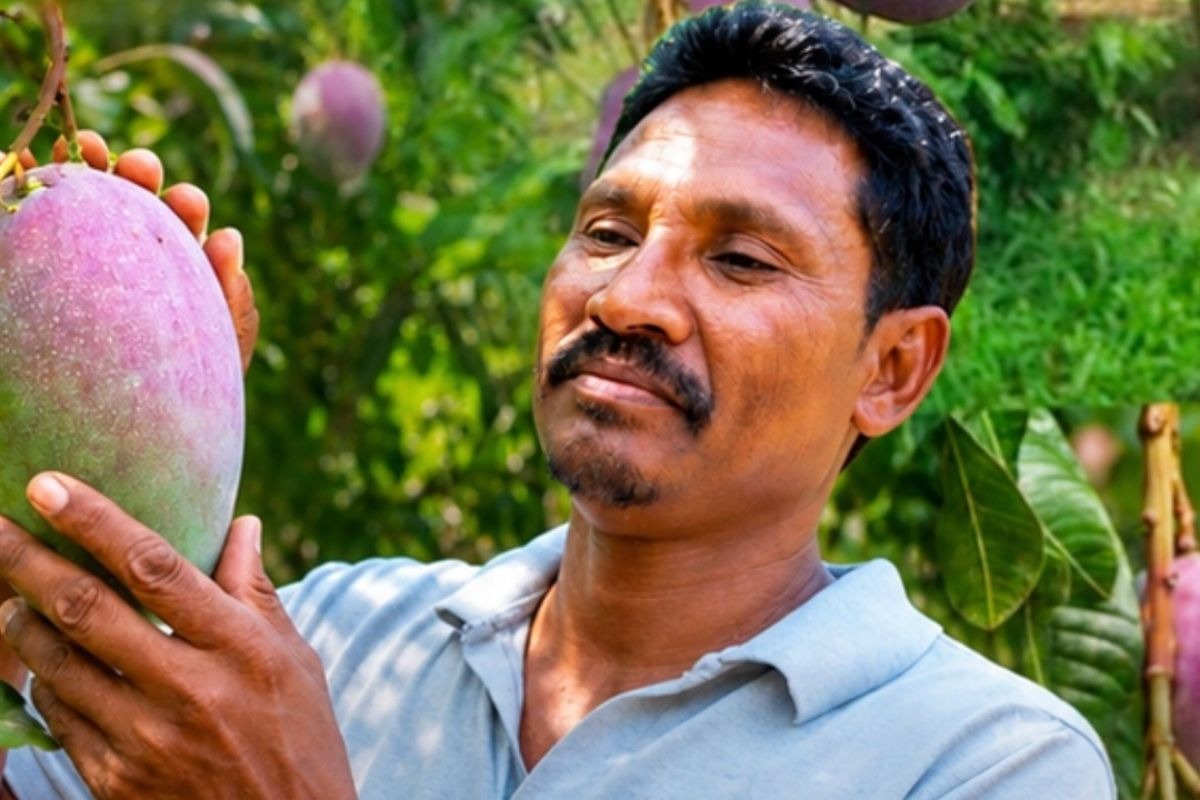
Deba Padhiami no longer sleeps in his house. Every night, the tribal farmer from Tamasa village in Odisha’s Malkangiri district spreads a mat beside a single mango tree and lies down under the open sky, listening for footsteps that do not belong there. What he is guarding is not gold or cash. It is fruit. However, in this case, the distinction barely matters.
The tree produces Miyazaki mangoes, a Japanese variety that commands nearly three lakh rupees per kilogram on international markets. Four years ago, a social worker handed Deba a sapling. Nobody told him what it would become. He planted it anyway, watered it through Odisha’s harsh summers and uncertain monsoons, and waited. Now the mangoes hang there, red and heavy, and Deba has no idea what to do with them except make sure nobody steals them first.
What Japan Calls the Egg of the Sun
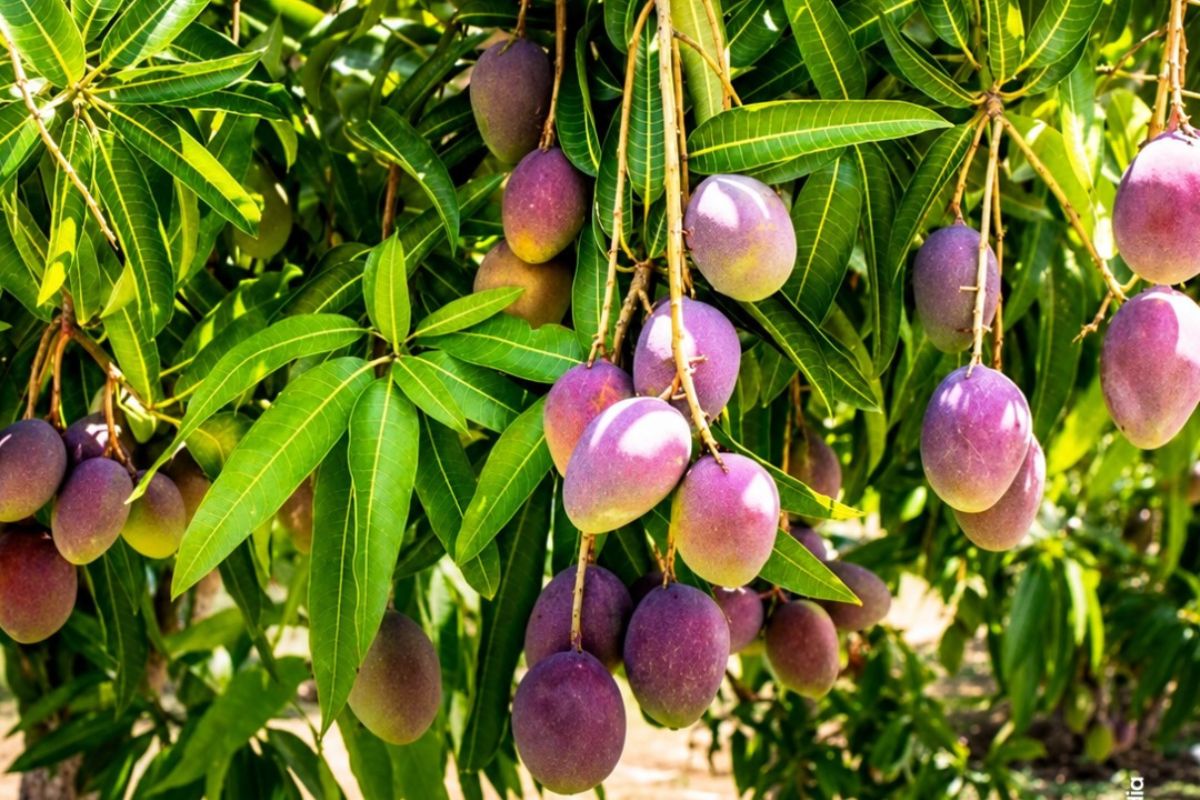
The Miyazaki mango is known in Japan as Taiyo-no-Tamago, which, with no exaggeration, translates as “Egg of the Sun.” The name is accurate. The fruit is oval, deeply crimson, and when ripe, it seems to hold light rather than reflect it. Some growers and traders have compared the appearance to dinosaur eggs, which sounds theatrical until you actually see one.
It originates from Miyazaki Prefecture in southeastern Kyushu. This region has spent decades refining this single variety into something that functions less like produce and more like a luxury object. Each fruit weighs over 350 grams. The sugar content must be measured at 15 degrees Brix or higher to qualify for certification. The skin must show vivid red colouring across more than half the surface. Premium pairs have sold at Japanese auctions for over ₹3,82,571.
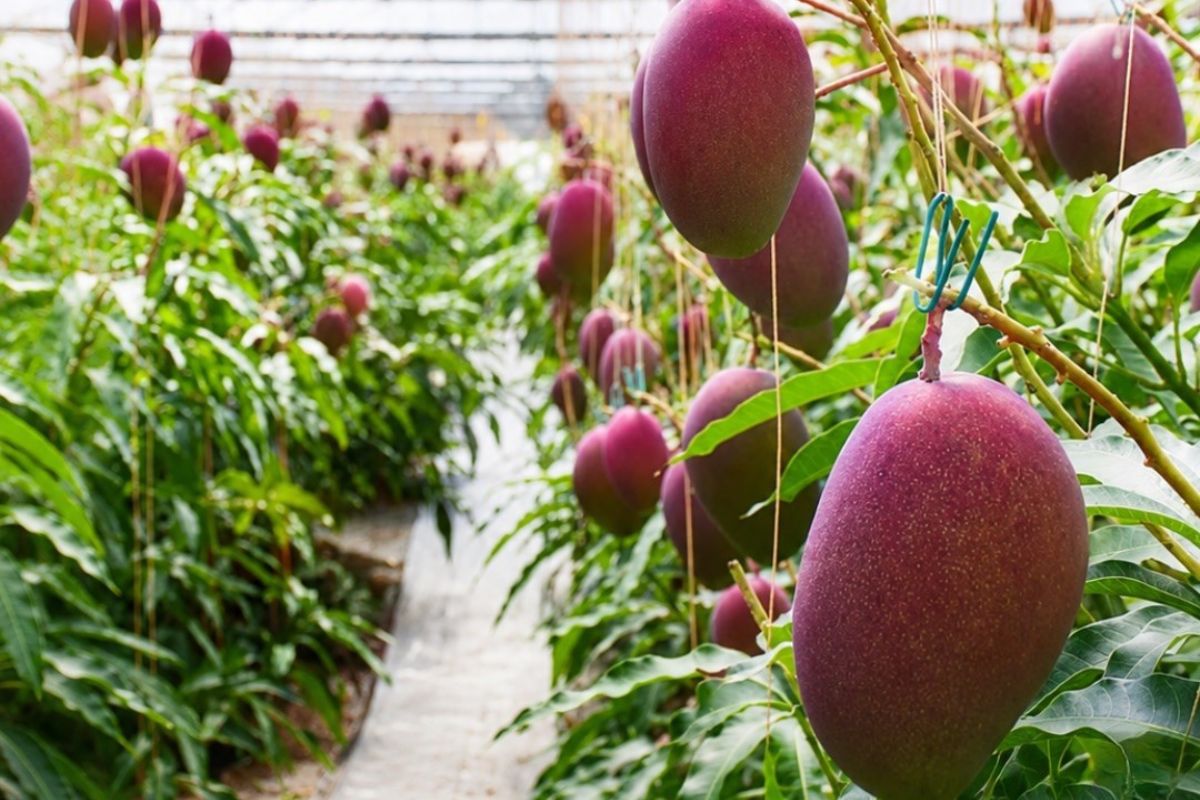
The taste warrants attention. The flesh is entirely fibreless, pale gold, and so soft that it dissolves rather than chews. The sweetness is dense and clean, carrying faint suggestions of coconut and pineapple beneath a honeyed tropical fragrance. Juice runs freely. A single bite is, by most accounts, an experience rather than a snack.
Four Years of Quiet Labour
Deba’s four years of cultivation were not dramatic in any visible way. He did not have advanced irrigation equipment, laboratory soil testing, or horticultural consultants visiting from the city. What he had was the sapling, basic farming knowledge, and consistent attention.
Odisha’s climate posed real difficulties. Malkangiri is remote, the soil conditions vary, and the Miyazaki tree is not a forgiving plant. It requires steady care, controlled conditions, and patience that most farmers reserve for crops that at least carry a predictable market.
Deba persisted without certainty of outcome. That patience has now produced mangoes that visitors from across the district travel to see. His small orchard has become something of a local spectacle, which is precisely when anxiety replaced quiet satisfaction. The mangoes are visible and desirable, and Deba has no formal security arrangement of any kind. Hence, the mat under the tree and the sleepless nights.
He told PTI directly: he worries someone will take them before he understands what they are actually worth.
The Branding That Built the Price
The Miyazaki mango did not become expensive by accident. The price is the product of an organised, deliberate effort sustained over several decades.
Farmers in Miyazaki Prefecture began cultivating mangoes in 1984, following an agricultural inspection trip to Okinawa. Early results were inconsistent. The turning point came when growers discovered that mangoes allowed to ripen fully on the tree, rather than harvested early and left to soften off the branch, developed markedly superior sweetness. They then developed a harvesting method called net harvesting, placing individual nets beneath each fruit to catch it as it naturally fell. This prevented bruising while preserving complete ripeness.
By 1989, quality had stabilised across the cultivation. By 1998, Taiyo-no-Tamago received official certification as a regional brand under Miyazaki Prefecture. The certification process remains strict. Every mango is inspected individually. Each one that passes receives a hand-applied seal. The local government and farming cooperatives have maintained that standard without compromise for nearly three decades.
This infrastructure of certification, cold-chain logistics, premium packaging, and coordinated marketing to luxury buyers is what generates three lakh rupees per kilogram. The mango itself is extraordinary. The system around it converts that quality into price.
India Grows the Fruit, Not the System
Deba is not the only Indian farmer growing Miyazaki mangoes. Farooq Inamdar, a farmer from Pune, has been cultivating them for some years and reportedly sells them in India at around 1.5 lakh rupees per kilogram, compared to roughly 2.5 lakh rupees in Japan. Rajesh Dhargalkar, an engineer who turned to farming in Goa, has also succeeded with the variety. These cases confirm that, with appropriate care, India’s climate can support the fruit.
What India has not yet built is the commercial structure that surrounds it. Luxury fruit buyers, specialised cold-chain transport, premium packaging houses, export channels, and the kind of certification that convinces a buyer in Tokyo or Dubai to pay auction prices are all either absent or underdeveloped for this segment.
Deba understands that none of that infrastructure exists in Malkangiri for him. He knows the mangoes are valuable. He does not know how to convert that value into income. He is, at present, a farmer with perhaps the most expensive fruit in India and no clear buyer.
What Support Would Actually Look Like
Deba has reached out to government departments and agricultural organisations, asking for guidance. What he requires is practical and specific.
He needs certification support to verify that his mangoes meet premium quality standards. He needs packaging materials designed for delicate tropical fruit that will be moved long distances. He needs cold-chain logistics because a Miyazaki mango that arrives bruised or warm is worthless, regardless of the cost of growing it. Moreover, he needs direct access to buyers in the luxury product market: high-end hotels, speciality importers, premium retailers, and collectors who already pay a premium for Alphonso or Kesar and would recognise a rarer offering.
None of this is technically out of reach. The difficulty is coordination. Agricultural extension services in remote tribal districts rarely intersect with luxury export markets. That gap is where Deba currently stands.
What Hangs on This
Malkangiri is not a district that appears often in stories about agricultural progress or economic opportunity. It is historically remote, economically constrained, and largely absent from discussions of India’s expanding role in global food exports.
If Deba succeeds in finding a viable market for his Miyazaki mangoes, the effect extends beyond personal income. It demonstrates that luxury cultivation is possible in tribal Odisha, not just in Maharashtra or Goa. It gives other small-scale farmers in the region reason to consider varieties beyond traditional low-margin crops. It places Malkangiri, however briefly, in a conversation it has rarely entered.
Indian farmers have proved repeatedly that the country’s soil and climate can produce world-class fruit. Alphonso mangoes have found buyers in Europe and North America. Kesar commands recognition in Gulf markets. The question now is whether the country’s agricultural systems can extend that reach to farmers like Deba, who cultivated something remarkable with no initial support and now needs the systems to catch up.
The mangoes are ripening. The tree is real. A farmer is sleeping beside it every night to make sure it still means something in the morning.
Also Read:Badi Aayi Patrakar: The story of the Women behind Khabar Lahariya
You can connect with DNN24 on Facebook, Twitter, and Instagram and subscribe to our YouTube channel.