

Varanasi receives more pilgrims than almost any city in India. It also has more beggars than most. For centuries, the two have coexisted in a quiet, unchallenged arrangement: the devout give, and the destitute receive. That arrangement, one former journalist decided, was the problem.
Chandra Mishra, 59, from Odisha, spent years in newsrooms before arriving at a conclusion that struck him as both obvious and largely ignored. India donates an estimated 34,000 crore rupees every year to roughly 413,670 beggars. Almost none of it changes anything. The beggars remain on the streets. The donations continue to pour in. The cycle, as durable as the ghats themselves, persists.
In 2021, Mishra moved to Varanasi and did something unusual. He stopped writing about poverty and started working to eradicate it.
From Reporter to Founder
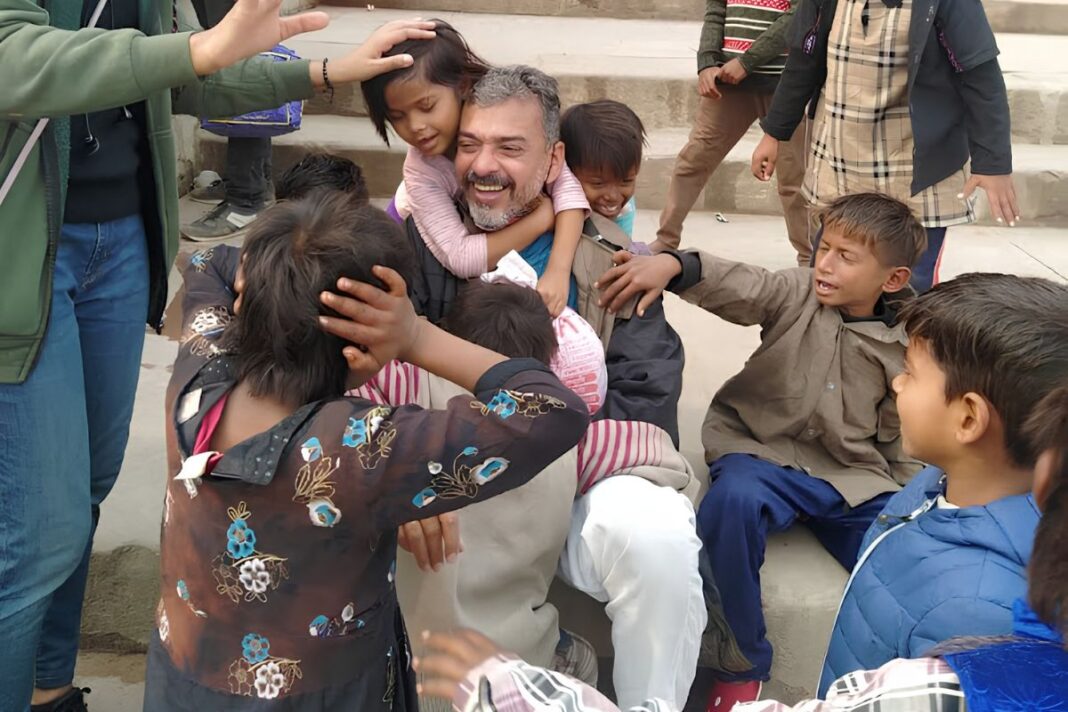
His first initiative was called Mission Unemployment- Free Varanasi, a structured attempt to test whether result-oriented employment could replace the charity model entirely. By October 2021, he was sitting with beggars, not interviewing them, but asking a different kind of question: what would you do if someone invested in you instead of pitying you?
The answer, it turned out, was more interesting than most people expected. In August 2022, Beggars Corporation was registered as a for-profit company. Two months later, the Department for Promotion of Industry and Internal Trade recognised it as a Social Impact Startup. It was the first company in India founded by former beggars and structured to return profit to investors. This was not a charity. That distinction was the whole point.
The Investment Architecture
The model Mishra built rests on a principle he summarises in three words: charity breeds poverty. His alternative is a structured investment arrangement he calls One Beggar, One Mentor.
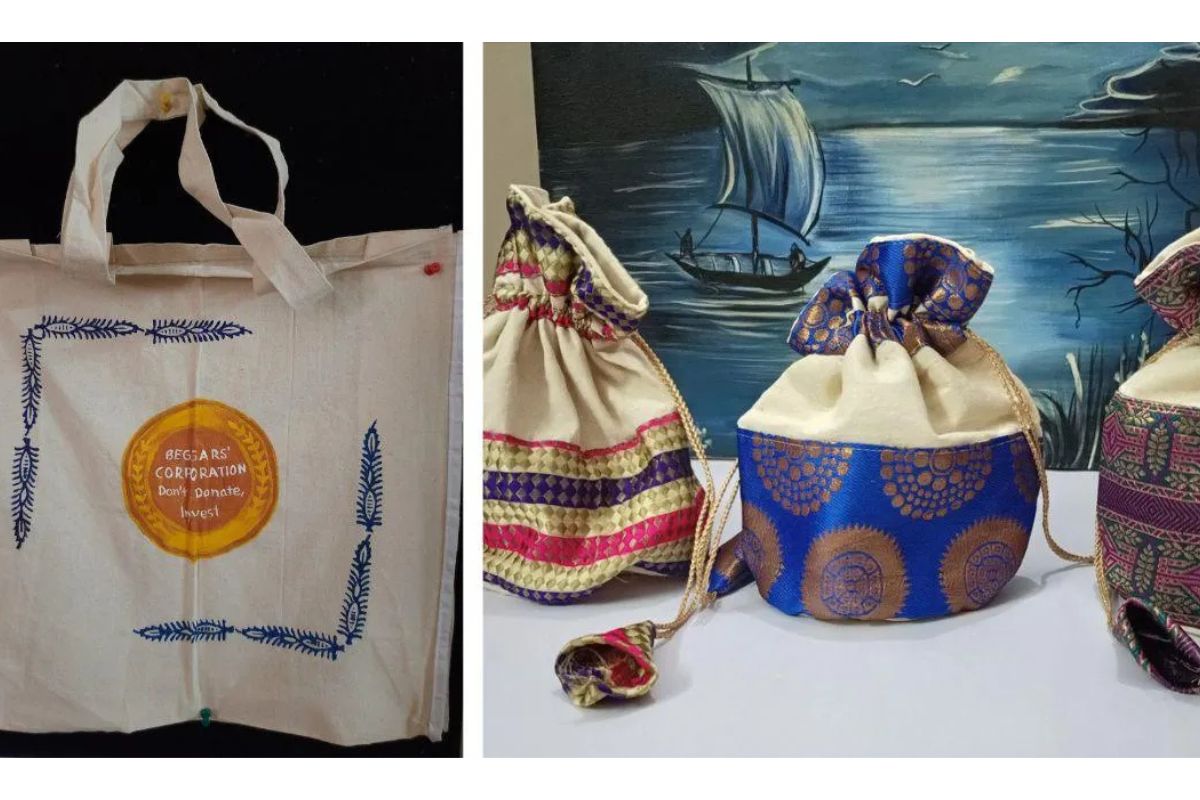
Each participant selected for the programme, referred to internally as a Beggar-Turned-Entrepreneur, or BTE, undergoes three months of vocational training in tailoring, embroidery, bag production, or basic business management. During training, they receive a monthly stipend of 10,000 rupees.
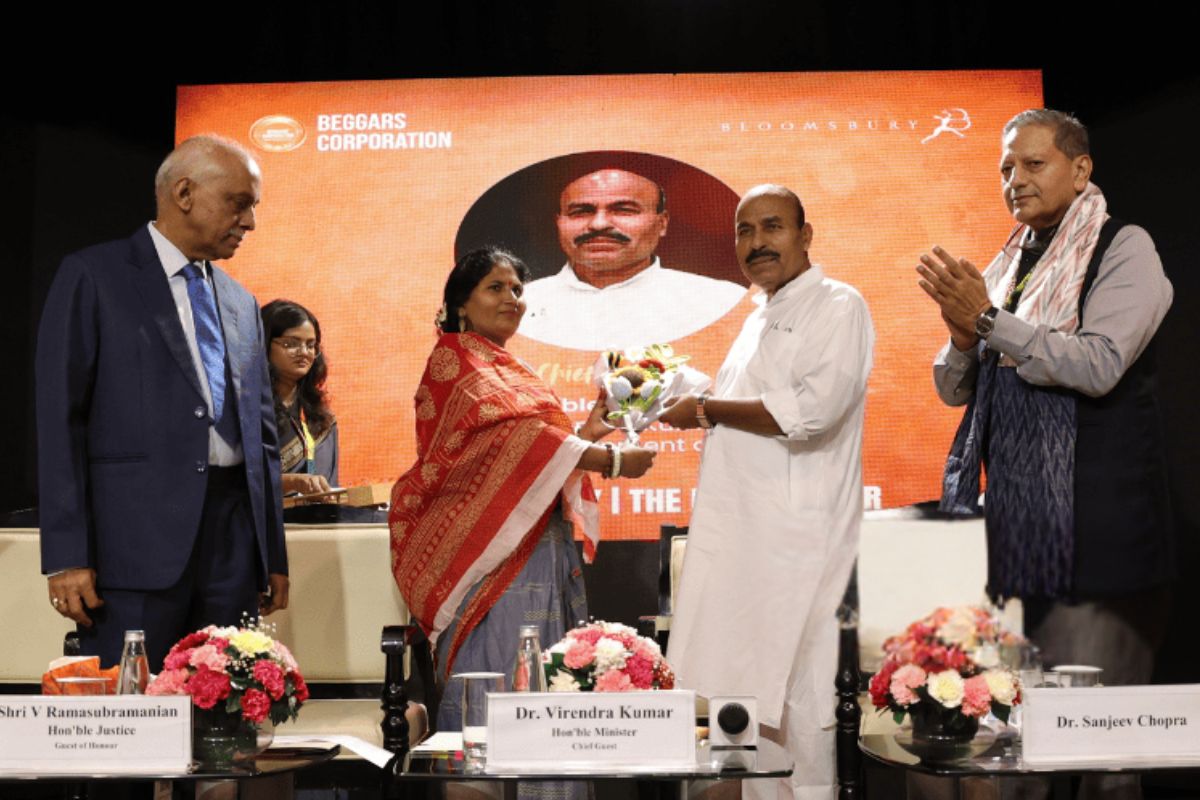
A mentor, drawn from India’s wealthier middle and professional class, commits 200,000 rupees over three years. In return, each BTE forms a Special Purpose Vehicle: the entrepreneur holds 24 percent ownership, the mentor holds 24 percent, and Beggars Corporation retains 52 percent. The mentor provides guidance on finances, regulatory requirements, and sales for the full three-year period. At the end of the period, the mentor recovers the investment with returns, and the BTE continues as an independent business owner.
The first round involved 57 investors. They received an annual return of 33.5 percent. Earlier trials had delivered 16.5 percent within six months. These figures do not require embellishment. The total cost of transforming one beggar into a functioning entrepreneur: 150,000 rupees.
What the Businesses Actually Look Like
The product lines are deliberately unglamorous and commercially practical. Twelve beggar families now manufacture conference bags, laptop bags, cloth shopping bags, and paper carry bags. Their products have been supplied to top hotels in Varanasi, to multinational companies, and, on at least one occasion, to delegates attending the BJP’s national executive meeting in Delhi.
Two families are running shops near temples selling flowers and religious ritual goods. A cafe called Karma has opened in Varanasi, creating twelve jobs under its own SPV. A home cleaning service called Helping Hands employs up to a hundred former beggars.
Revenue figures tell part of the story. In the financial year ending 2022, the corporation recorded a profit of 554,000 rupees. The following year, that figure rose tenfold to 5.68 million rupees. In FY24, 21 active BTE businesses generated 35.7 million rupees.
Two People Worth Knowing
Rajni was the first BTE to complete the programme. She learned embroidery, then built two small brands: Bagful of Dreams and Enchanted Shirts. She now works at a hospital and supports her son. She no longer begs.
Vishal’s story begins earlier. At twelve, he was photographed on the streets of Varanasi, and the image went viral with journalists calling him India’s mascot of poverty. He enrolled in what Beggars Corporation calls its School of Life, a morning programme combining academic instruction up to the tenth standard with personality development and vocational training. He is now a licensed tour guide in Varanasi, earning between 14,500 and 29,000 rupees a month depending on the season.
Why the For-Profit Structure Matters
Beggars Corporation does not accept government funding. It does not accept venture capital. It does not function as a non-governmental organisation, and Mishra is clear why it is so.
When an organisation depends on donations, it has no structural incentive to end the condition it addresses. A begging-free India would, in theory, put a traditional charity out of work. A for-profit company, by contrast, must generate revenue from market activity to survive. Its investors require returns. Its entrepreneurs require customers. The model only continues if the businesses actually function.
Mishra has coined the term Employonomics to describe his broader philosophy: that sustained, result-oriented employment policy, not welfare or alms, is the mechanism by which a country’s poorest citizens become contributors to its economy rather than dependent on it. Several of his BTEs now pay GST. Some have entered the income tax base for the first time.
The Expansion Beyond Varanasi
In late 2023, Beggars Corporation signed a memorandum of understanding with Dehradun, the capital of Uttarakhand, to extend the model there. A second School of Life for child beggars is planned for the city. Mishra has stated his intention to bring Beggars Corporation to an initial public offering within five years, with angel investors and venture capital groups already expressing interest totaling 25.5 million rupees.
His stated objective for Varanasi was to eliminate begging by March 2023. Progress toward that goal has been partial but measurable. In just under three years, roughly 1,000 individuals have been affected either directly as BTEs or through employment in BTE-run businesses. Seventeen beggars have become entrepreneurs. Fourteen families earn a regular income from skilled work.
The Larger Argument
India’s 34,000 crore rupees in annual charity to beggars produces, by most observable evidence, more beggars. Mishra’s position is that generosity is not wrong but the form it takes determines whether it helps or sustains what it claims to oppose.
At 150,000 rupees per person, the arithmetic of converting all 413,670 registered beggars into business owners is not as remote as it sounds. It would require redirecting a fraction of what is already spent into a structure that generates returns rather than disappearing into the street.
That is the proposition Chandra Mishra is making, not to governments, not to philanthropists, but to ordinary Indians with modest savings and a tolerance for a different kind of risk.
Do not donate. Invest.
Also Read:Padma Shri Bhiklya Ladkya Dhinda- The Man Who Kept a 400-Year-Old Sound Alive
You can connect with DNN24 on Facebook, Twitter, and Instagram and subscribe to our YouTube channel.