
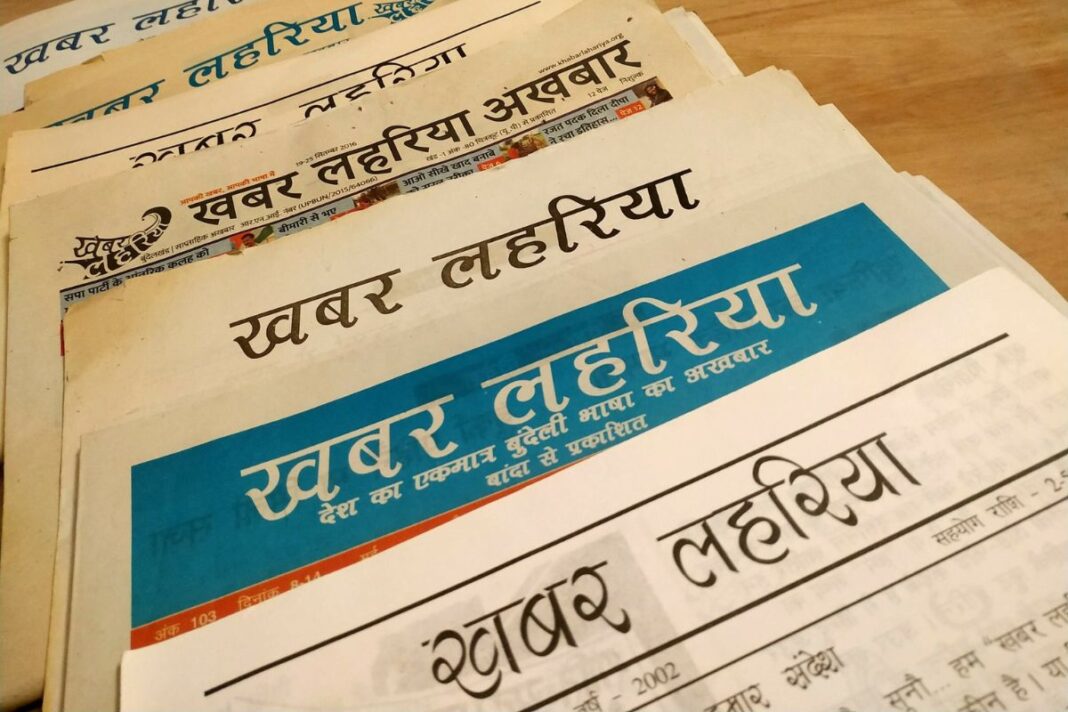

They were told, for most of their lives, that their opinion did not matter. Then, they started a newspaper. Khabar Lahariya did not just give a voice to rural women, it revolutionized grassroots journalism.
A Book and a Taunt
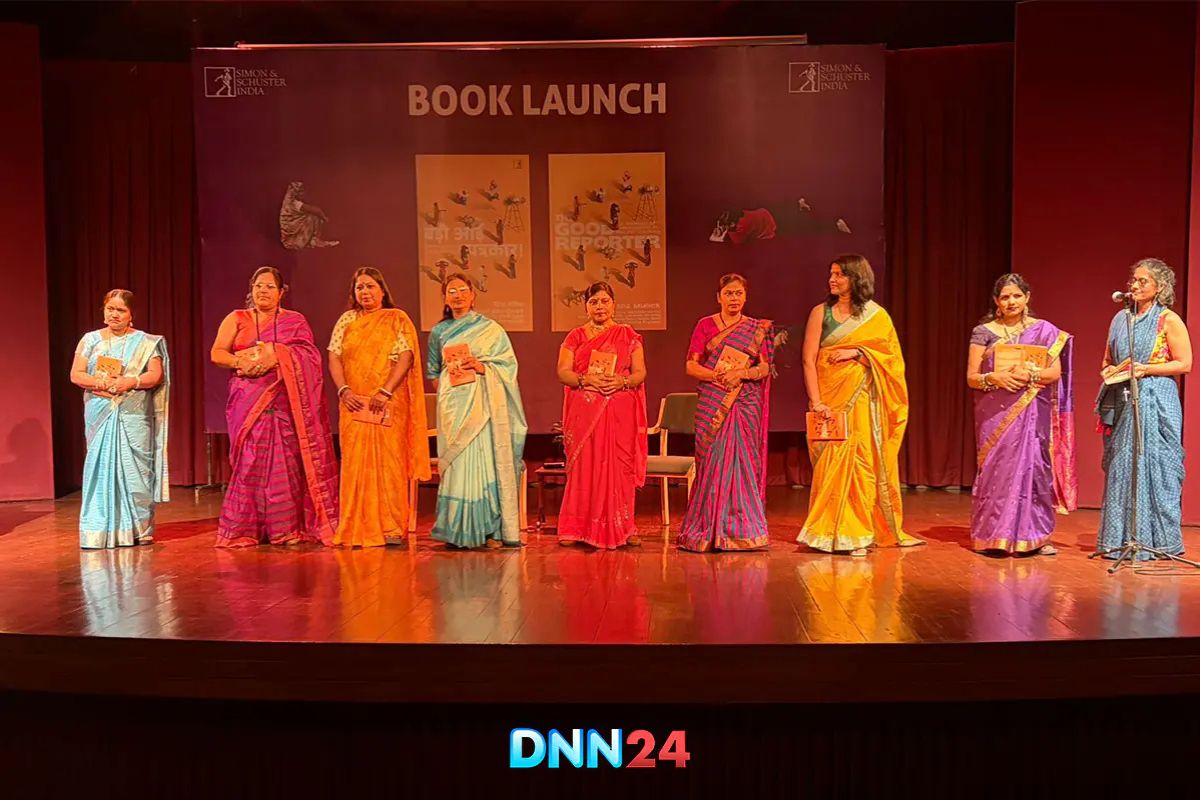
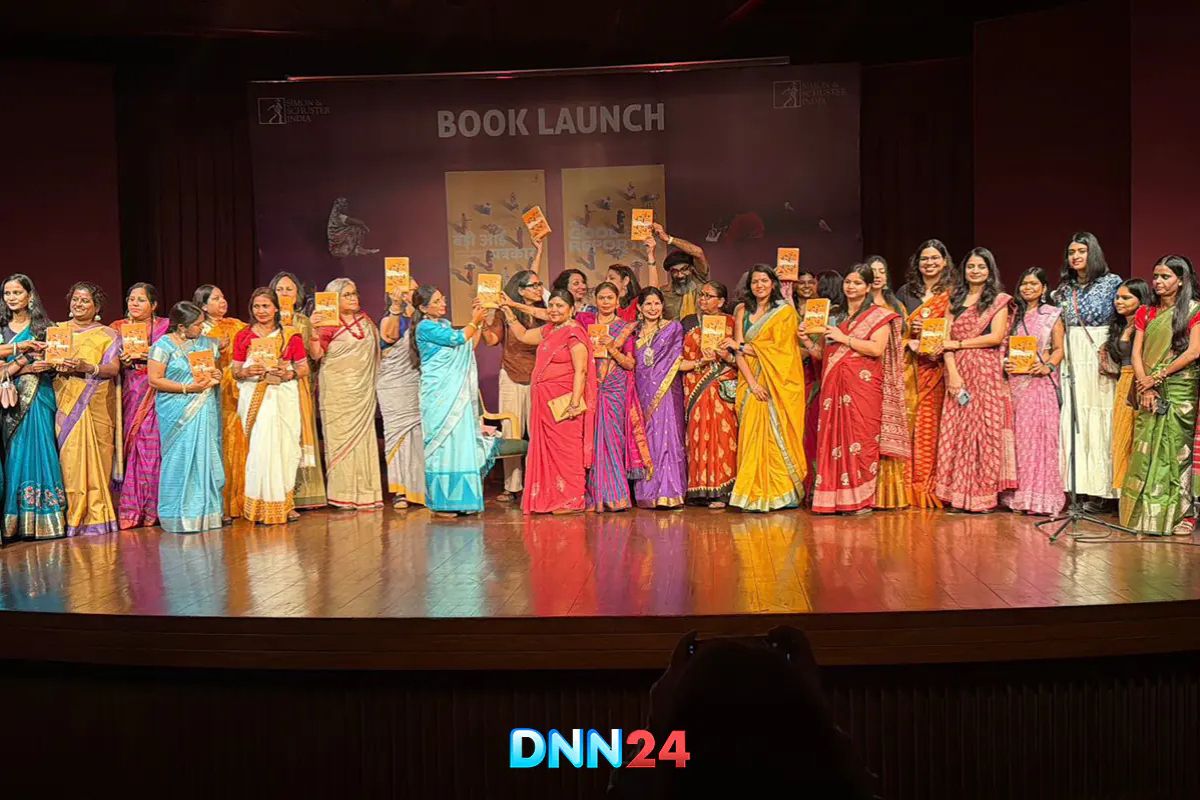
25 years of the newspaper’s journey was marked by a book launch at Triveni Kala Sangam in New Delhi recently. The book’s title is “Badi Aayi Patrakar.” In Uttar Pradesh and Bundelkhand, that phrase is commonly used as a dismissal, directed at women who step out of their assigned place. It roughly translates as “So, now she is a journalist?” The book takes its title from the taunt.
Published by Simon and Schuster, the book appears in Hindi as “Badi Aayi Patrakar” and in English as “The Good Reporter.” It tells the stories of ten women journalists associated with Khabar Lahariya: Disha Malik, Geeta Devi, Harshita Verma, Kavita Bundelkhandi, Lakshmi Sharma, Lalita, Meera Devi, Naznin Rizvi, Shyamkali and Sunita Prajapati.
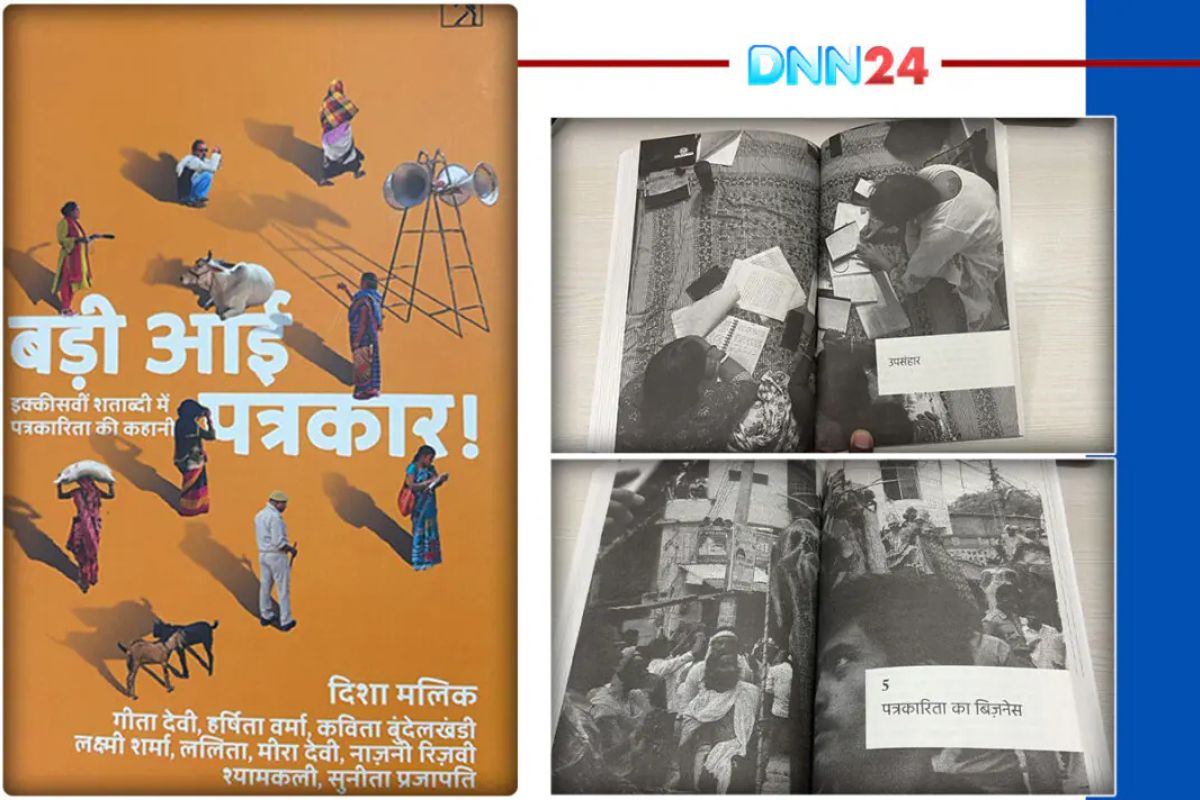
At the launch, Meera Devi explained the title’s origin. “People spent years using the taunt- ‘Badi Aayi Patrakar’- to belittle us,” she told the gathering. “That sting stayed with us. In the end, we decided to take that very taunt and make it our strength, and our title.” She described the book as an honest record of experience, one that does not spare its authors from self-examination.
Twenty-Five Years in One Volume
Disha Malik, the book’s principal author, said the project attempts to document the full arc of Khabar Lahariya’s twenty-five-year existence- from hand-produced newsprint to viral video; from village anonymity to an Oscar-nominated documentary.
“We have not just written the stories we reported,” she said. “We have tried to record the story behind each story- the struggle, the feeling, what it means to be a rural woman journalist in India.” The result, she added, is less a single memoir than a collective biography, assembled in many voices.
One passage in the book addresses superstition and the personal costs of good journalism. A reporter describes how she approached a story at a religious site with faith but was disillusioned when she found a priest charging pilgrims money for access to the deity. The realisation that faith was being sold changed the way she saw both the story and herself. “In writing that report in 2017,” the passage notes, “the reporter had to set aside her own belief.”
The Khabar Lahariya journalists also describe the book as a document of risk. Journalism in rural India, particularly journalism that challenges local power structures, carries dangers that are seldom acknowledged in national conversations about press freedom. The book is intended, in part, to make those dangers visible.
A Literacy Class That Grew Too Large for the Room
Khabar Lahariya, which translates loosely as “News Waves” in the Bundeli dialect, began in 2002 in Chitrakoot district, as an unplanned consequence of a rural women’s adult literacy programme run by the NGO Nirantar. The women who attended those classes learned to read. What no one had quite anticipated was that they would immediately want to write.
Spurred by that desire, a collective of women, most of them Dalit, Adivasi and from Other Backward Classes, produced an eight-page fortnightly newspaper covering issues from their own villages. It was written, edited, illustrated and distributed entirely by the women themselves. The founding group included Meera Jatav, Shalini Joshi and Kavita Bundelkhandi, who helped give the paper its early shape. Kavita would later become its editor-in-chief. The paper was printed in Bundeli, not Hindi or English, because the point was to reach the people who lived there in a language that was their own.
Reporting From the Invisible End of the Country
In the years that followed, Khabar Lahariya reporters wrote about panchayat meetings, broken handpumps, local elections, school closures, hospital failures, and government schemes that never quite arrived in the villages they were meant to serve. They also covered caste violence, domestic abuse, land disputes and the chronic neglect that defines life in what journalists sometimes call “media dark” regions. In these places, no major media outlet maintains a correspondent, and wrongdoing consequently tends to go unrecorded.
Their presence alone was disruptive. Rural Dalit women arriving at a police station with notebooks and, later, cameras were not what officials in those spaces expected to encounter. Some were laughed at. Some were threatened. Many were ignored in the hope that they would give up and return home. They did not.
What Feminist Journalism Actually Looks Like
Khabar Lahariya is accurately described as a feminist news organisation. It is worth being specific about what that means in practice, because the word is sometimes used to suggest a narrowed focus on stories about women.
The reporters cover elections with the same seriousness they bring to dowry cases. They investigate illegal sand mining and crop failures. They follow money through government welfare schemes. They attend and question district administration hearings. What is feminist about this journalism is not its subject matter but its method: the insistence that a woman from a Dalit village in Bundelkhand has the same right to question power as any correspondent at a national daily, and that her community’s concerns are as newsworthy as issues reported from cities.
This approach has had tangible results. Roads have been repaired after Khabar Lahariya ran stories on them. Ration cards have been issued after the issue figured in the newspaper. Investigations have been ordered into cases where the organisation was exposed by the reporters.
The Digital Turn
Around 2015, the collective began moving from print to digital platforms, a shift driven by the recognition that even in remote villages, mobile phones were becoming the primary means of getting information. The transition was not painless. It required learning video production, platform algorithms and audience engagement at a moment when none of those skills were common in the organisation.
By 2022, Khabar Lahariya’s YouTube channel had exceeded 500,000 subscribers and was averaging roughly 10 million views per month. The numbers attracted attention from the media industry and from international press freedom organisations alike. Audiences outside Bundelkhand, outside Uttar Pradesh, and well outside India began following a channel that ran interviews in Bundeli and Bhojpuri about broken roads and missing government funds.
The collective is now described as India’s only fully digital rural news network. Whether or not that is accurate, it points to something real: the organisation has built a national audience for hyper-local reporting, which most media businesses continue to assume is impossible.
The Wider Meaning
The organisation has, over the years, received the UNESCO King Sejong Literacy Prize, the Laadli Media Award and the Rani Laxmibai Bravery Award. The documentary “Writing with Fire,” which followed Khabar Lahariya journalists as they navigated smartphones and male obstruction in equal measure, received an Academy Award nomination in 2022. All of this attention has brought the organisation resources and visibility it would not have had otherwise.
However, the measure of Khabar Lahariya’s success is probably not its awards or its subscriber count. It is the assurance that a woman in a Bundelkhand village now has that there is a journalist nearby who speaks her language, knows her landscape, and considers her problems worth reporting.
Also Read:India’s Pink-Saree School for Grandmothers
You can connect with DNN24 on Facebook, Twitter, and Instagram and subscribe to our YouTube channel.