

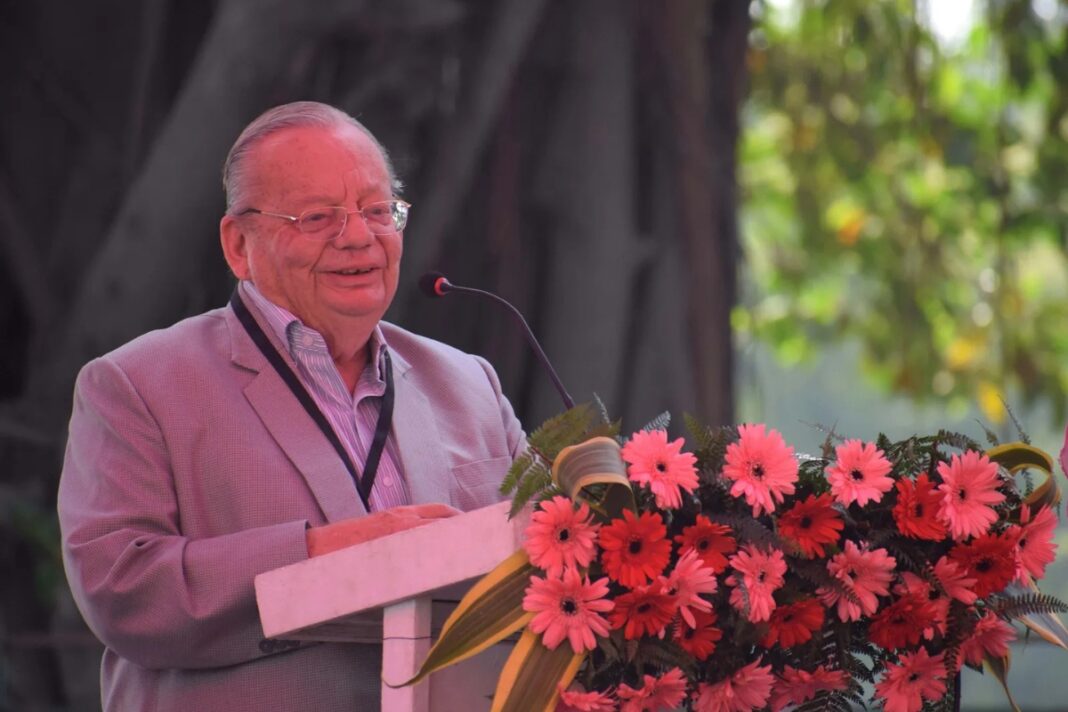

The man who brought the mountains alive for generations of readers over six decades is not done yet.
Ruskin Bond turns 92 Today. He lives, as he has lived for most of his adult life, in Landour, a small cantonment above Mussoorie, where pine trees crowd the slopes and mist arrives without warning. From that altitude, he has produced some of the most widely read fiction and non-fiction in modern Indian literature. His readers number in the millions. His stories have been simple and much loved.
A Childhood That Became a Career
Bond was born in Kasauli, Himachal Pradesh, on 19 May 1934. His early years were spent between Jamnagar, Dehradun, Delhi, and Shimla before he left for England for a short while and returned to India for good. That restless, somewhat solitary upbringing gave him most of what he needed as a writer. Loneliness, hills, friendship, memory, and the feeling of not quite belonging appear so consistently in his work that readers often speak of his fiction as autobiography thinly dressed.
He was seventeen when he wrote his first novel, The Room on the Roof. It was published in 1956 and won the John Llewellyn Rhys Prize in Britain the following year. The central character, Rusty, is an Anglo-Indian boy in Dehradun who slips away from a cold guardian and discovers a warmer life among Indian friends in the bazaar and the lanes of the old town. The book made an impact not because it was showy, but because it was honest. It captured the texture of everyday life, the smells and sounds of a real place, without trying to make that place seem exotic or picturesque for a foreign audience.
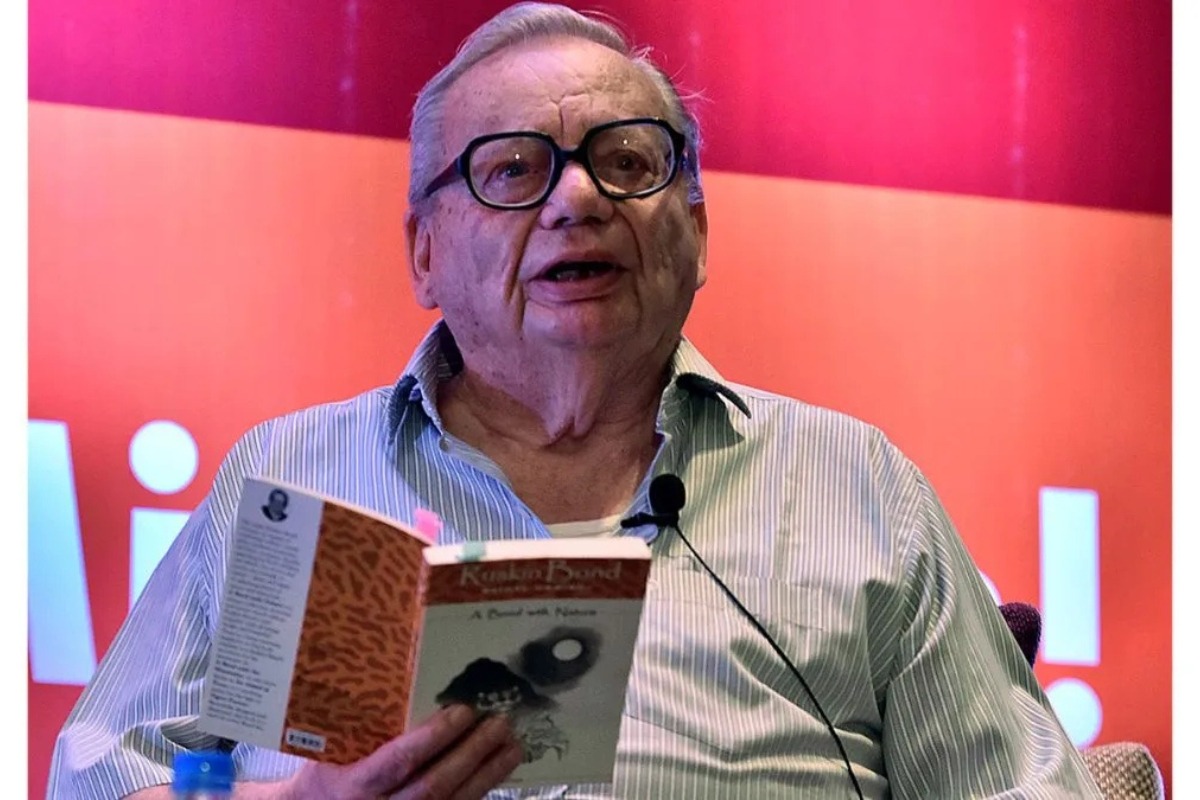
The novel’s sequel, Vagrants in the Valley, continued Rusty’s story. Together, the two books established Bond as a writer who could hold a reader’s attention through character and mood rather than through events and spectacle.
A Body of Work Built Over Sixty Years
Bond has written close to five hundred short stories, articles, essays, and novels. The count is impressive, but the more remarkable fact is that the quality has remained consistent. He has never lost the quality that defined his first novel: a preference for the observed detail over the manufactured drama.
His better-known titles include A Flight of Pigeons (1978), later adapted for the screen by Shyam Benegal as Junoon; Angry River (1972); Delhi Is Not Far (1994); The Night Train at Deoli and Other Stories; and Time Stops at Shamli and Other Stories. His autobiographical and personal writing, collected in books such as Scenes from a Writer’s Life, Lone Fox Dancing, The Lamp Is Lit, and Life at My Own Pace, reveals the man behind the fiction with the same unguarded candour that makes his stories readable.
His more recent work, Another Day in Landour: Looking Out from My Window, carries on his long practice of turning daily observation into literary material. Looking out from his window at Landour, Bond notices birds, the weather, passersby, and the slow change of seasons. From those observations, he weaves sentences that stay with you like a pleasant aftertaste.
He has also written extensively for children, and his standing in that field is as strong as in adult fiction. The Bal Sahitya Puraskar, awarded to him by the Sahitya Akademi in 2012, specifically recognised that contribution. For many Indian readers, Bond was the first writer they encountered in school, and the effect of that early encounter has not worn off.
The Hills as Literary Territory

The Mussoorie and Landour area is not simply where Bond lives. It is where his imagination operates most freely. The hills appear in his work not as a scenic backdrop but as an active presence: they carry weather, shape mood, and hold the memory of the people who have lived among them.
Bond writes about rain, mist, pine forests, and mountain paths the way a skilled naturalist writes about the field, with attention to the particular rather than the general. A specific tree, a specific lane, a specific view from a window: these are the materials he works with. That particularity is one reason his descriptions feel lived in rather than literary. He is not describing hills in general. He is describing these hills, observed from his window.
His connection to Cambridge Book Depot in Mussoorie has become one of the enduring legends attached to his name. The store, the oldest and only general bookstore in the hill town, is known for a Saturday gathering where Bond meets his readers. Visitors come from across the country. For many of them, meeting Bond at that shop is the closest literature has ever come to feeling like a personal relationship rather than a public one.
Recognition and Its Proper Place
Bond received the Sahitya Akademi Award in 1992 for ‘Our Trees Still Grow in Dehra’. He was awarded the Padma Shri in 1999 and the Padma Bhushan in 2014. In 2021, he received the Sahitya Akademi Fellowship, the Akademi’s highest literary honour.
These awards matter because they confirm what readers already knew, that Bond’s work belongs to Indian literary terroir. But they have not altered his manner of living or writing. He remains in Landour. He continues to write. He does not appear to have much interest in the kind of public literary life that involves festivals, panels, and promotional circuits. His presence in Indian letters is felt through the books themselves.
Why the Work Endures
Bond’s prose style has always been its own argument. He writes in short, clear sentences. His early prose relied on a close narrative voice, strong sensory imagery drawn from natural settings, and a habit of understatement that let emotional weight build without being announced. That restraint was deliberate, and it was right.

What he achieved with those techniques was a kind of writing that felt accessible without being simple, and literary without being remote. Indian English fiction, when Bond began publishing, was still finding its own feet. ‘The Room on the Roof’ helped because it showed that a writer could set a story in Dehradun, use Indian rhythms and textures, and produce a book that would stand alongside European models without imitating them. That was a genuine contribution to the tradition.
His stories about childhood and youth gave younger readers something they rarely found in formal literature: an account of inner life that matched their own experience without talking down to them. His nature writing gave readers a way of paying attention to the non-human world that was free from both sentimentality and the kind of scientific detachment that keeps feelings at a distance.
A Quiet Conversation That Has Not Ended
On his 92nd birthday, Ruskin Bond remains what he has always been: a writer who observes keenly, writes with restraint, and trusts his readers to find what is important without being told directly. That trust is unusual. It is also the source of his continuing appeal.
From The Room on the Roof to the books he is still producing, from Dehradun to Landour, from the Saturday gatherings at Cambridge Book Depot to the school libraries where Indian children first read his stories, Bond has built something durable- a way of reading the world that readers carry with them long after the book is closed.
Also Read:Palace on Wheels: A Taste of the Royal Life
You can connect with DNN24 on Facebook, Twitter, and Instagram and subscribe to our YouTube channel.