

The title is not a boast. Mayo College, Ajmer, was designed for royalty, and for nearly a century and a half, it has done something far harder: it kept reinventing what that meant.
Founded in 1875 under Viceroy Lord Mayo, the school was conceived as a deliberate instrument of colonial administration. Its stated purpose, drawn from the founding charter, was to give the young princes and nobles of India a liberal education, training them to render useful service to their country. That language belonged to the 19th century, but the ambition behind it was older and more calculated than it appeared.
The Eton of the East: Flattery or Diagnosis?
The comparison to Eton is one of the school’s most durable labels. Historians and journalists applied it early, and the school itself did little to discourage the association. The architecture borrowed from Britain’s collegiate tradition. The house system, the sports ethic, the morning assemblies, and the formal dinners all arrived from the English public school model, with their edges barely softened.
That the founders looked to Winchester and Eton was no accident. The British administrators who designed Mayo understood that shared schooling produced shared loyalty, and that loyalty, rooted through common rituals and a common language, was easier to manage than the sprawling, independent, often mutually suspicious courts of Rajputana. If the princes ate at the same refectory tables, wore the same uniforms, and played cricket on the same pitches, they would also, in theory, govern according to similar instincts.
The first student to enrol was Maharaja Mangal Singh of Alwar. He arrived, by all accounts, with several hundred retainers in tow. The spectacle illustrated the cultural chasm that Mayo was built to bridge, though the bridge ran in only one direction at first. What it produced, across the following decades, was a generation of rulers who could converse with the Viceroy at dinner and still command respect in their own durbars. That was the real curriculum, and it was taught as much by the school grounds as by any classroom.
What the Sandstone Actually Taught
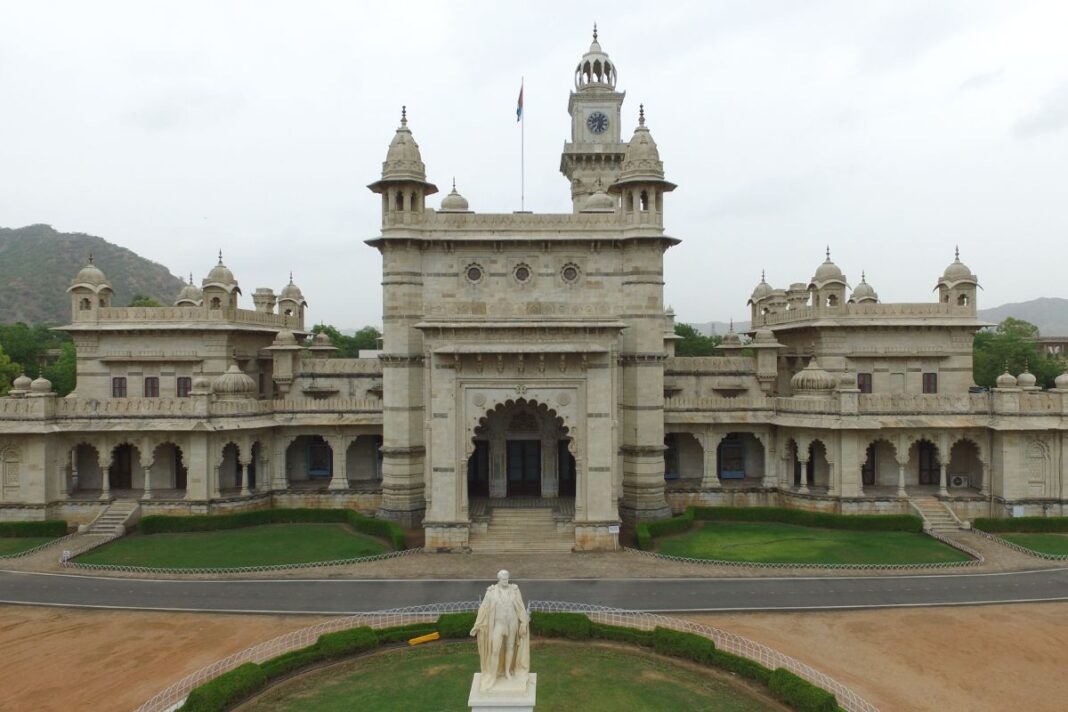
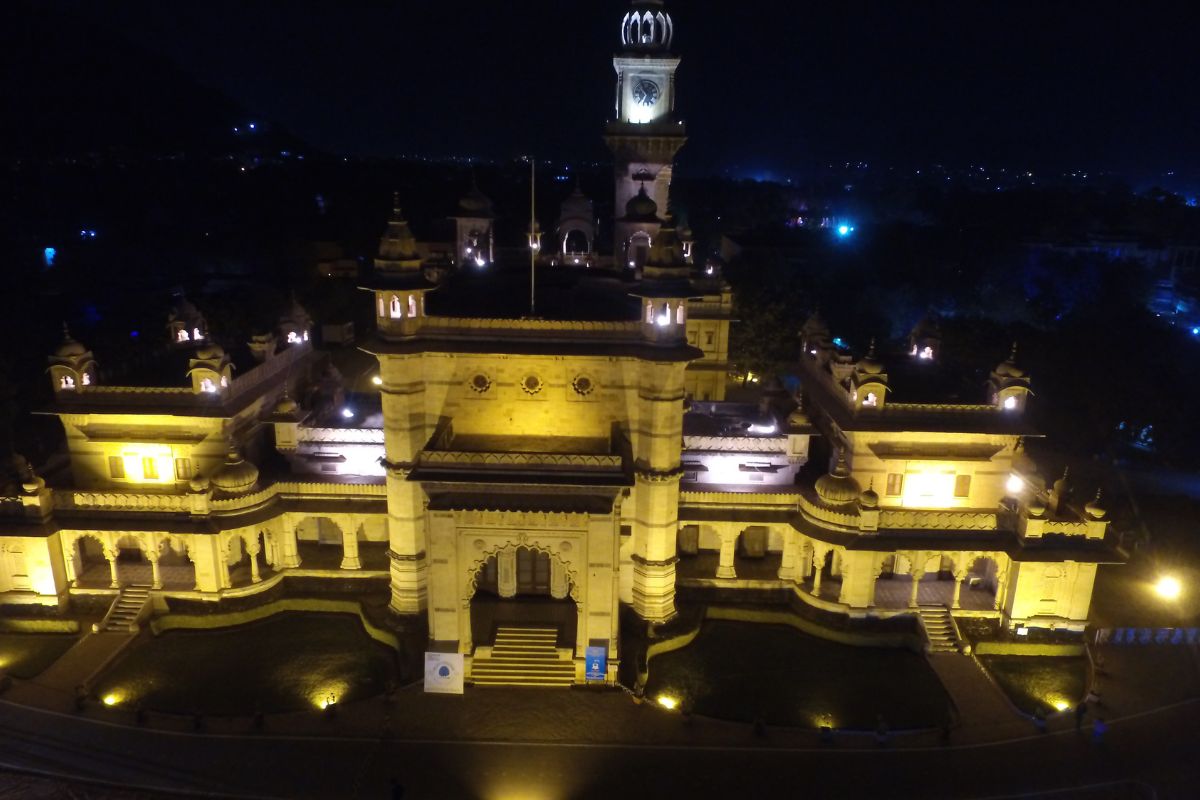
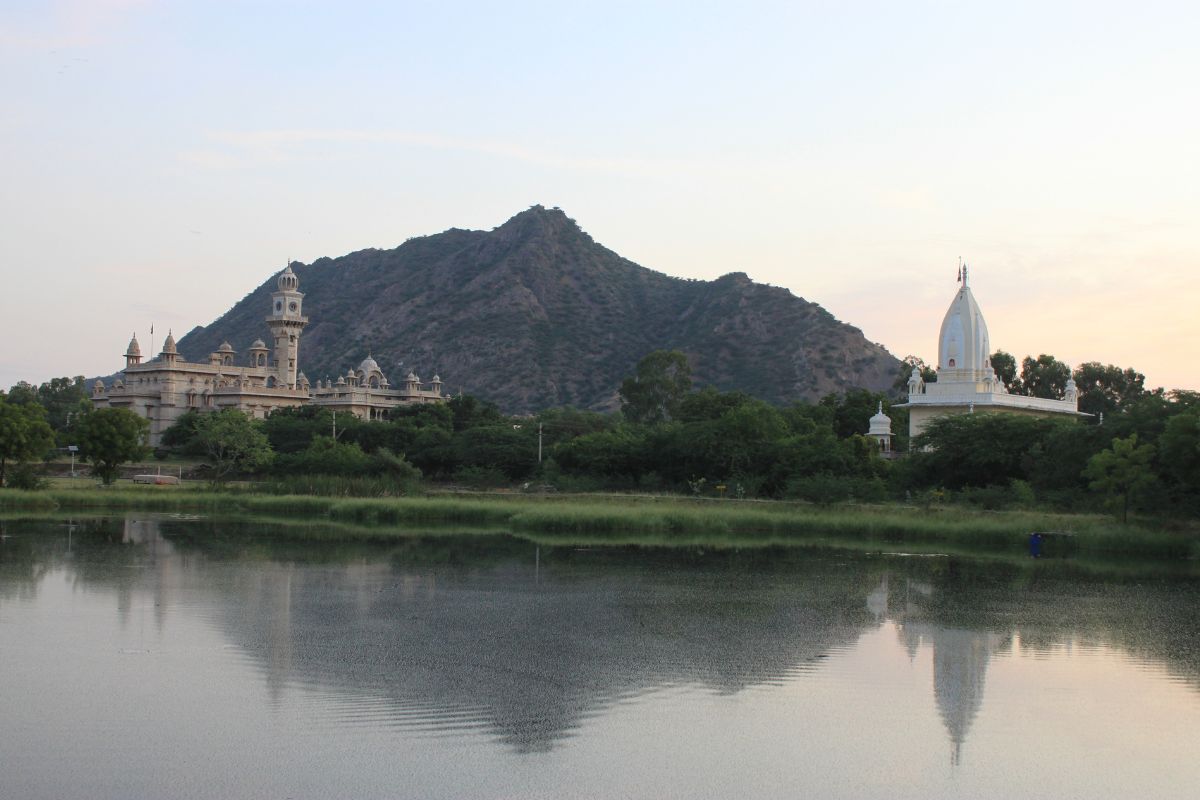
The campus speaks before any teacher does. Broad avenues of banyan and ashoka, colonnaded buildings finished in the characteristic Indo-Saracenic blend of sandstone and whitewash, a parade ground wide enough for a cavalry display, and behind it all the distant profile of the Aravallis. Every physical element was chosen to communicate permanence and authority.
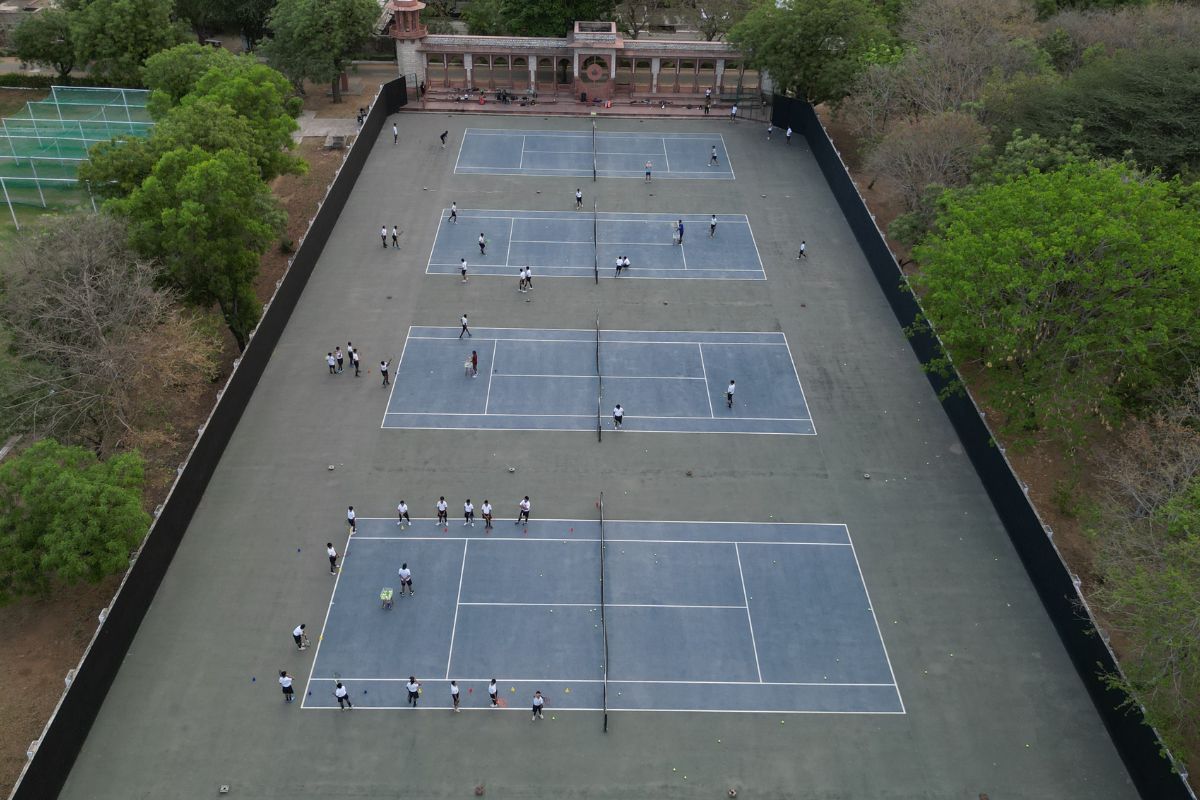
Academically, the school ran a rigorous course that combined the traditional with the practical. Pupils studied the standard subjects required for Indian and British examinations. Beyond the classroom, debating societies, project work, and a tradition of formal public speaking built habits of argument and composure. Sport was never optional. Cricket, hockey, athletics, and equestrian events were woven into the schedule with the same seriousness as mathematics or Latin, because the founders believed, and the school still holds, that team sport teaches the ethics of shared defeat and collective effort better than any lecture can.
The house system divided boys into competing units and placed real responsibilities on older students. Prefects answered for their houses, managed younger boys, and carried a public role that required them to act, not merely to aspire. It was, in practice, an apprenticeship in governance conducted within the walls of a school.
After the Princes: What the Alumni Built
The hereditary princes lost their titles and their privy purses in 1971, when the government abolished the official recognition of princely states. It was a constitutional and financial blow for many families, but not a terminal one for Mayo College. The school had trained its students too broadly for that.
Across independent India, Mayo alums entered the civil services, the armed forces, journalism, business, politics, and the arts. The careers of notable graduates span decades and demonstrate that the school’s real product was not loyalty to a throne but a particular quality of public conduct: composed, service-oriented, and accustomed to institutional responsibility. The school had, almost by accident, trained citizens as well as princes.
That adaptability was not entirely accidental. The curriculum evolved in the decades after independence, shifting emphasis toward critical thought, civic engagement, and merit-based achievement. Model United Nations conferences, service projects in nearby villages, and adventure programmes in the Aravallis replaced some of the older ceremonial rigour with a more practical sense of social duty.
The Price of Tradition and Its Critics
No school with Mayo’s pedigree escapes criticism over access. The annual fees place it among India’s more expensive boarding schools, and, for most of its history, the social profile of its intake has been narrow. Critics have argued, with some justification, that such institutions, however distinguished, perpetuate a form of privilege that sits uneasily with the ethos of a democratic republic.
The school has attempted to respond, with varying success. Scholarship programmes, bursary arrangements, and a shift toward meritocratic entrance criteria have widened the pool of entrants in recent decades. Whether these measures go far enough is a legitimate question, and one the school’s leadership has not always answered with the directness the subject demands.
What can be said is that the case for Mayo, made honestly, does not rest on exclusivity. It rests on the depth of formation. The school asks its students to build discipline, tolerate discomfort, take public roles seriously, and carry civic obligations beyond graduation. That formation has value independent of fee level or family name, and the task now is to make it available to a broader range of young people.
What Endures, and Why It Matters
More than a century later, the sandstone is the same. The discipline in the morning schedule is the same. The expectation that students will leave with something more than examination certificates is the same.
What has changed is the destination. Mayo College no longer trains rulers for courts that ceased to exist fifty years ago. It trains young people for a country that is plural, competitive, and sharply attentive to public conduct. The school’s real lesson, absorbed over 150 years of continuous operation, is that tradition is worth preserving only if it can serve a changing society rather than merely commemorate a finished one.
Also Read:When India Opened Its First Petrol Pump
You can connect with DNN24 on Facebook, Twitter, and Instagram and subscribe to our YouTube channel.