
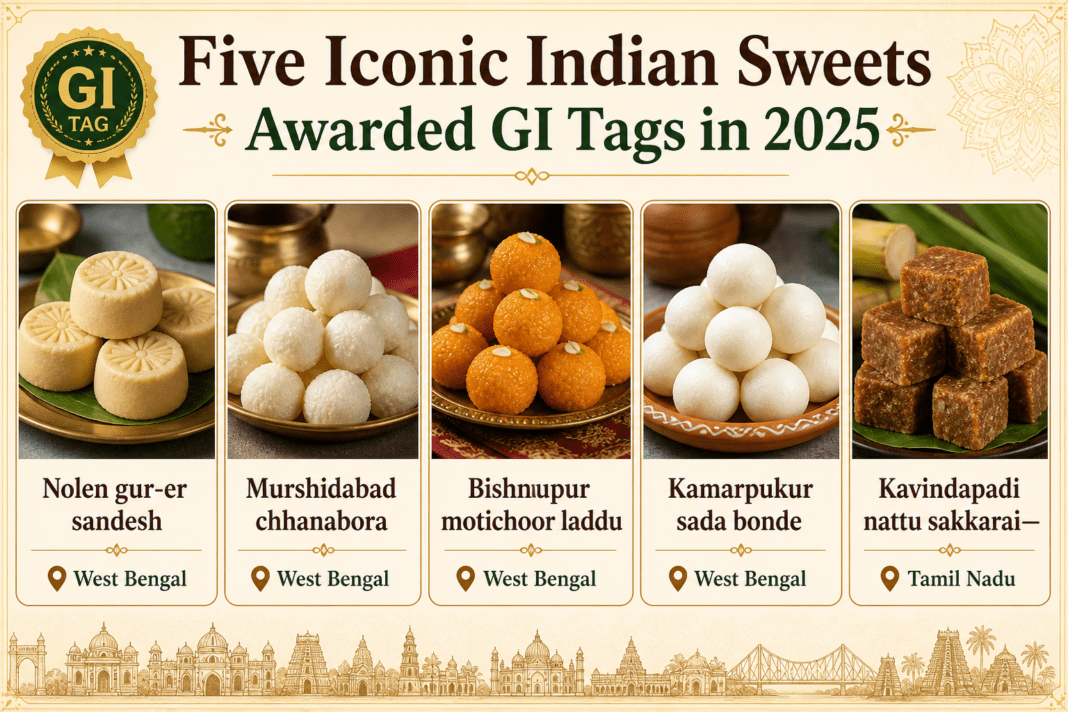

Government stamp (GI Tags) on a piece of mithai may sound absurd, but these five sweets just secured recognition of their enduring legacy.
In 2025, India’s Geographical Indication registry added five confections to its list of protected products. The decision was not just symbolic. It formalised what generations of artisans, farmers, and temple cooks have long understood: that certain foods belong to specific places in the way a dialect belongs to a valley or a folk song to a season. Take away the place, and you lose the food. These five sweets, four from the districts of West Bengal and one from Tamil Nadu, carry within them the soil, history, and inherited labour of the communities that made them.
What a GI Tag Actually Means
A Geographical Indication tag is a form of intellectual property protection granted to products that originate from a defined geographic area and carry qualities tied directly to that origin. For food producers using traditional methods, the tag creates a legal barrier to imitation. It also increases the product’s market value by confirming its authenticity. In practice, this means a sweet sold as Bishnupur Motichoor Laddu must actually come from Bishnupur and be made by artisans following the traditional method. The tag alone does not guarantee quality. It guarantees provenance.
Nolen Gur-er Sandesh, West Bengal
Bengali winters arrive quietly, but they bring one eagerly awaited ingredient: fresh date palm jaggery start appearing in the market. This jaggery, called Nolen Gur, is harvested only during the cold months, when the sap of the date palm tree has a distinct sweetness and fragrance that warmer weather cannot replicate. It is a seasonal product in the truest sense, available for a few weeks and gone for the rest of the year.
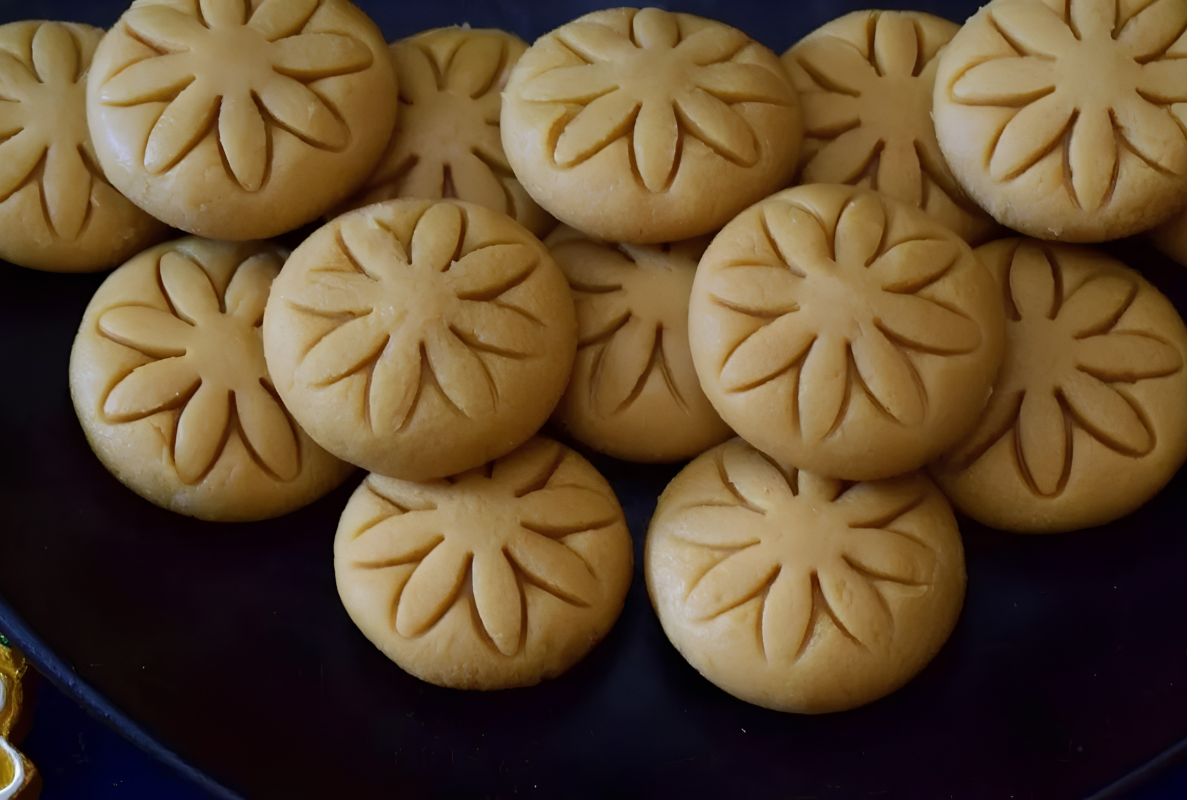
The Nolen Gur-er Sandesh is made with this jaggery. The sweet itself is made from chhena, a soft, fresh cheese prepared by curdling milk and pressing out the whey. When jaggery is kneaded into the chhena by hand, and the mixture is cooked over low heat, the result is a pale caramel sweet with an earthy, faintly smoky flavour. It is not aggressively sweet, as industrial confections often are. It is measured, seasonal, and unmistakably Bengali.
The GI tag for this sweet protects the method of preparation and the requirement that authentic Nolen Gur be used. Without this protection, manufacturers in other regions could label any date palm-flavoured sweet with the same name, diluting the reputation of the original.
Murshidabad Chhanabora, West Bengal
Murshidabad was the capital of Bengal’s Nawabs in the eighteenth century. The wealth concentrated there influenced everything, including the cuisine. The Chhanabora is a product of that era, a sweet designed for both practicality and pleasure. Because the Nawab’s court required sweets that could travel without spoiling, the Chhanabora was made to last. Chhena balls are deep-fried slowly until the exterior darkens and the interior becomes dense and firm. They are then soaked in syrup.
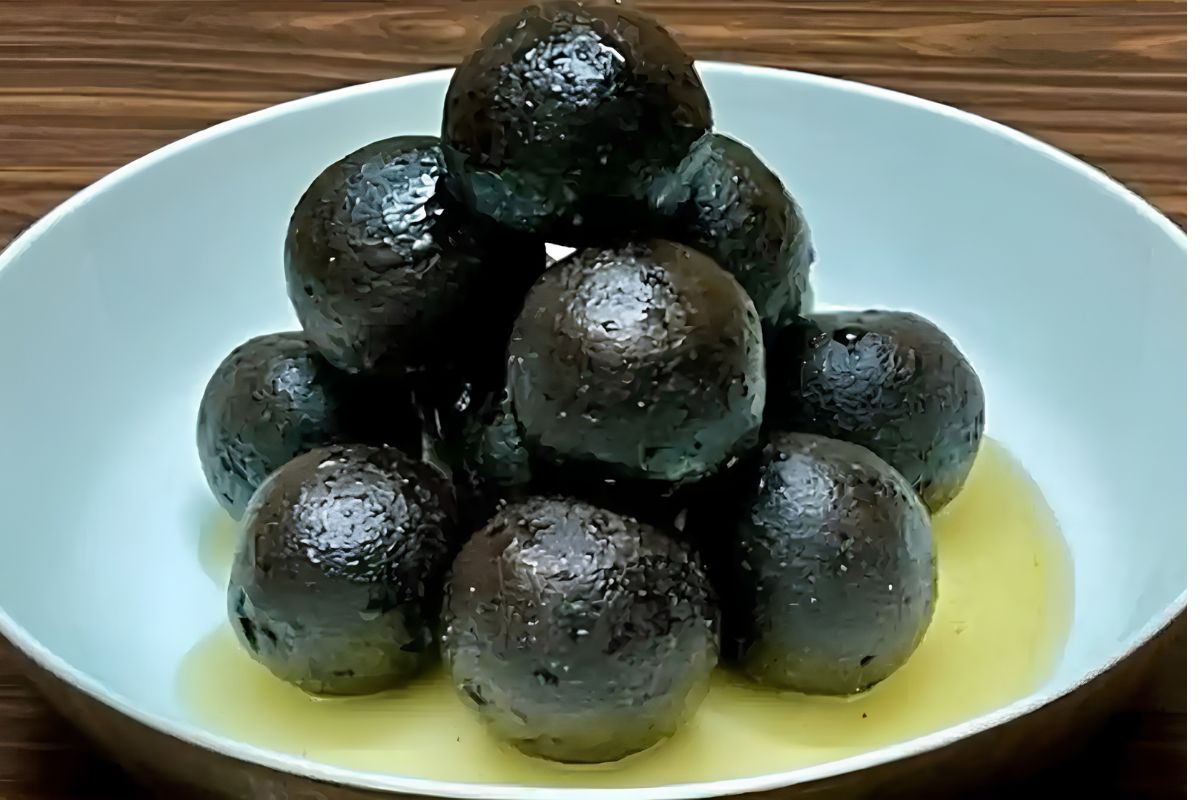
The result is chewy and concentrated, quite unlike the soft, syrup-drenched rasogolla or the gentle firmness of a sandesh. Local artisans, known as karigars, have passed the precise temperature and timing of the frying process down their families for generations. Too much heat and the chhena burns rather than cooks through. Too little, and the ball remains soft and perishable. The GI tag acknowledges that this balance is a skill held in specific hands, in a specific town, and cannot be reproduced anywhere else without loss.
Bishnupur Motichoor Laddu, West Bengal
Bishnupur is best known for its terracotta temples, which rise from the flat land of Bankura district with quiet confidence. The town has a classical music tradition, a royal history, and a distinctive way of making Motichoor Laddu that differs from other versions of the sweet found across India.
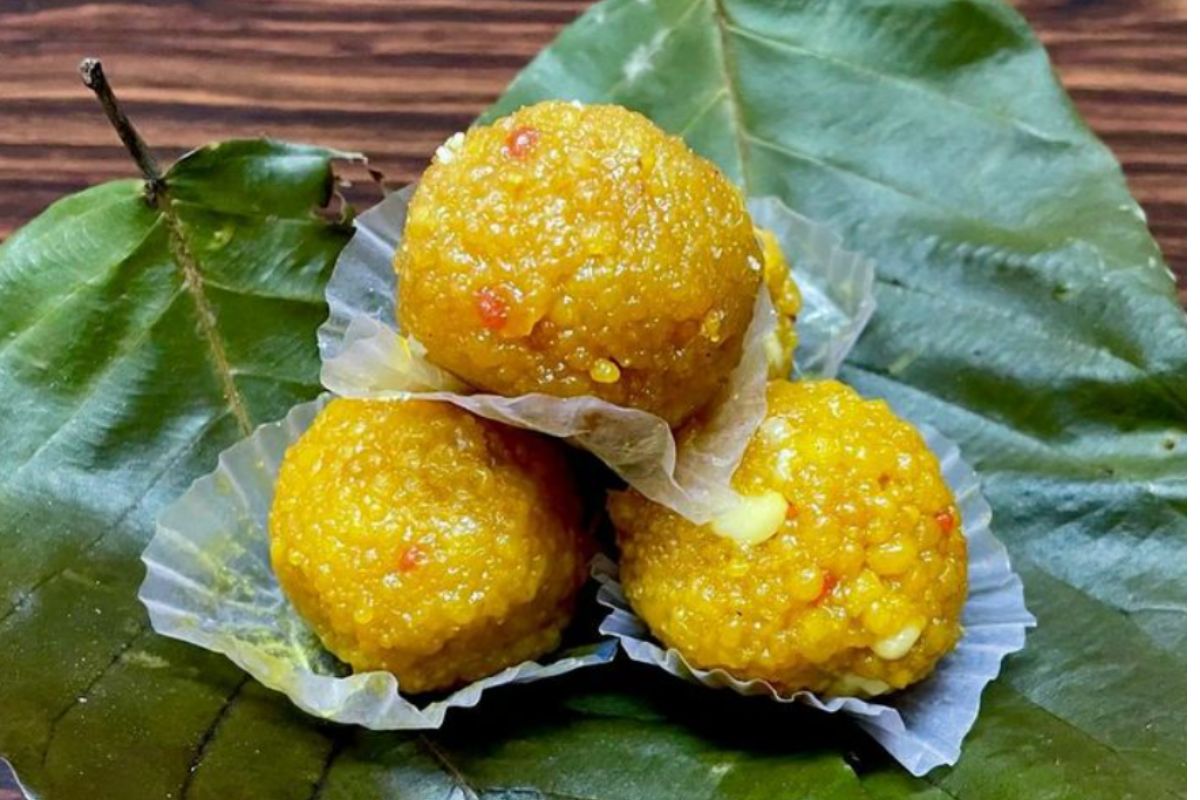
The difference lies in the boondi, the tiny drops of gram flour batter that are fried and bound together with sugar syrup to form the laddu. In Bishnupur, each boondi must be precisely uniform in size. This is not merely an aesthetic concern. Uniform boondi absorbs the syrup enriched with ghee at the same rate, resulting in a final laddu with an even texture throughout rather than pockets of dry or oversaturated gram flour. The recipe is said to have originated as an offering for the Malla Rajas’ family deity, Radha Govinda, and the care taken in its preparation reflects that origin.
The GI recognition preserves this exacting standard and connects it firmly to Bishnupur, ensuring that the name carries a specific meaning rather than becoming a generic description available to any manufacturer willing to print it on a box.
Kamarpukur Sada Bonde, West Bengal
Kamarpukur is a small village in the Hooghly district, known worldwide as the birthplace of Sri Ramakrishna, the nineteenth-century mystic and spiritual teacher. The sweets made in Kamarpukur reflect something of his reputation for simplicity. The Sada Bonde, which roughly translates to plain bonde, is made from gram flour and fried in a clean medium, without the saffron colouring or the sugar-heavy coating found in versions from other parts of India.
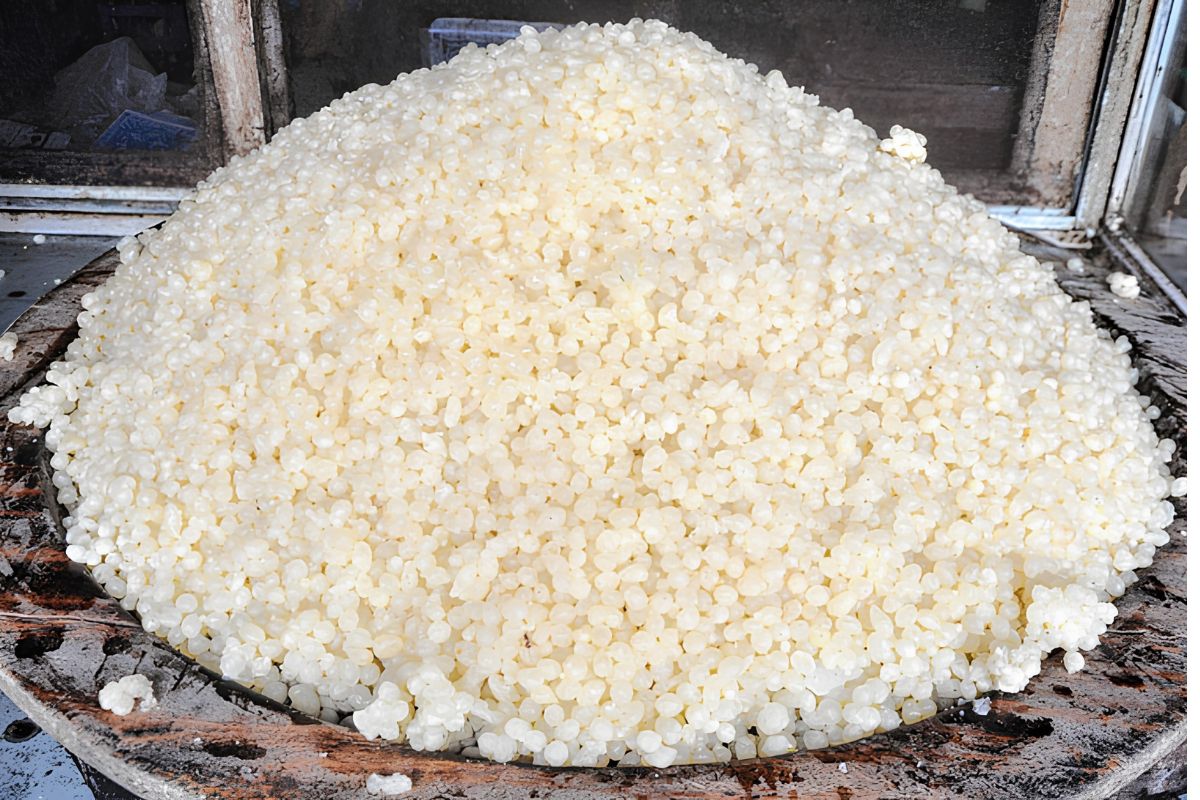
What makes this sweet notable is precisely what it leaves out. There is no decoration, no flavouring beyond the natural taste of well-fried gram flour and good sugar syrup. The result is modest and careful, and in this modesty, it has maintained a flavour profile that has not changed in decades. The GI tag protects the local sweetmakers of Kamarpukur from being undercut by manufacturers who replicate the name without the restraint that gives the sweet its character.
Kavindapadi Nattu Sakkarai, Tamil Nadu
In Tamil Nadu, a different kind of product received GI recognition. Kavindapadi Nattu Sakkarai is a traditional jaggery made from sugarcane grown in and around Kavindapadi in Erode district. The soil and water conditions of this specific region affect the sugarcane, and the old methods used to clarify and solidify the cane juice produce a jaggery with a mineral depth that refined sugar cannot match.
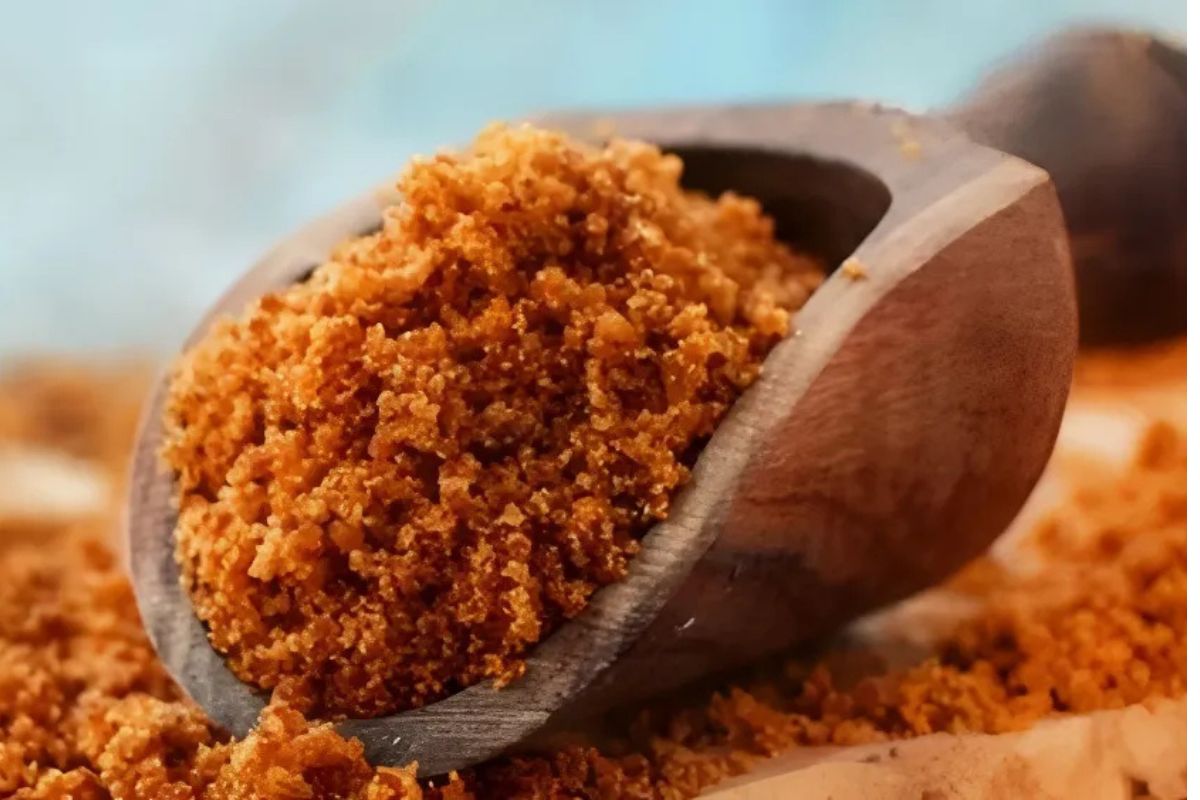
This product is not a sweet in itself but an ingredient, one that goes into countless regional preparations. The farmers and producers who make it have worked without chemical inputs for generations, maintaining a process that is slow, labour-intensive, and increasingly rare. The GI tag provides legal backing for their claim of origin and supports the price their product commands compared to cheaper imitations made through industrial shortcuts.
A Record Written in Sugar and Soil
These five products span hundreds of miles and centuries of practice. A piece of Chhanabora from Murshidabad and a block of Kavindapadi jaggery from Tamil Nadu have almost nothing in common except the fact that both are tied irrevocably to the ground that produced them. The GI tag does not change how they taste. It changes what that taste means, and who has the right to claim it.
For the artisans, farmers, and families who have maintained these products through shifting tastes and economic pressure, that recognition is not a small thing. Food is among the most durable forms of historical record, and these five products are now formally acknowledged as such. The sweet you eat is never only what it contains. It is also where it comes from, and by whose hands it was made.
Also Read:Hearing Impaired Entrepreneur Helps Children Learn English Through Sign Language Platform
You can connect with DNN24 on Facebook, Twitter, and Instagram and subscribe to our YouTube channel.