

When a family in a quiet Rajasthan village decided to stop waiting for government help, more than a thousand women found a way to earn a living without leaving home.
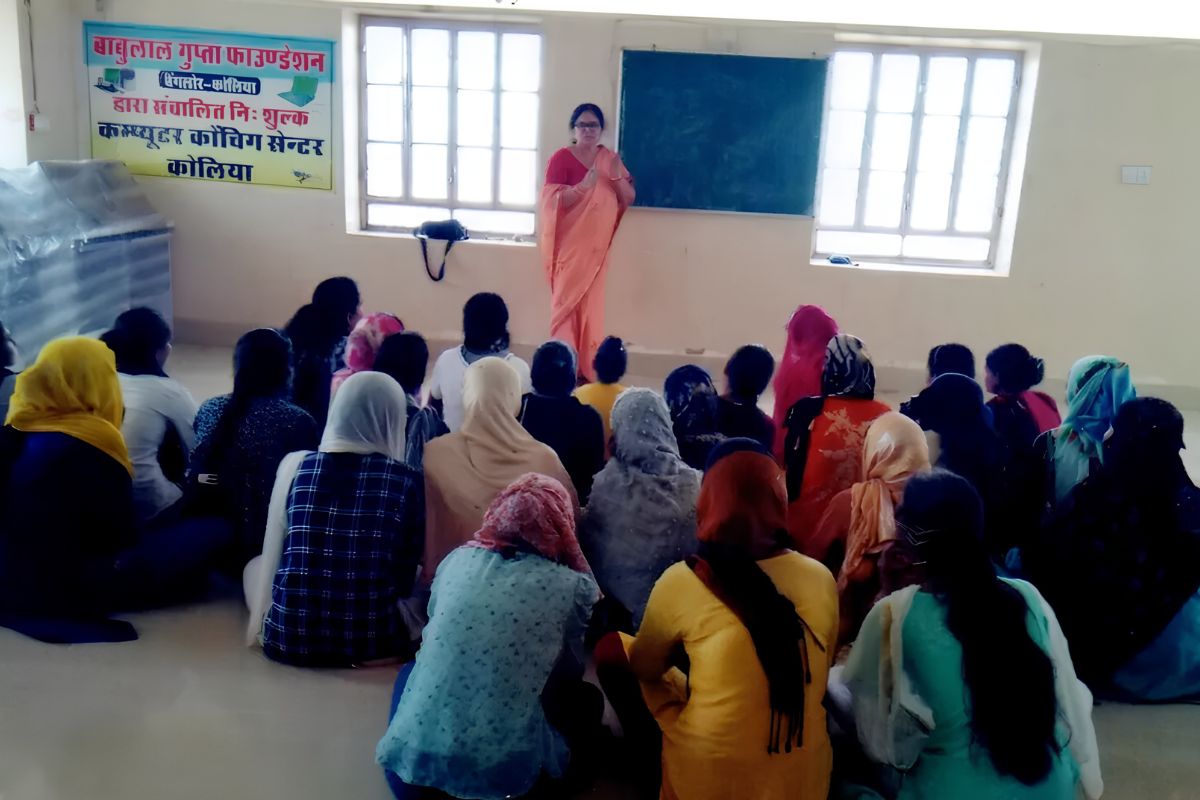
The village of Koliya sits far from the nearest city, in a part of Rajasthan where women have long been excluded from public economic life. Road connections are thin. Formal employment is scarce. For most women here, the idea of running a business or working at a computer was something that happened elsewhere, in places they had never been. That began to change when the Shri Babulal Gupta Foundation opened a free skill-training centre in the village and began filling it, batch after batch, with women who had never held a pair of tailoring scissors or touched a keyboard.
A Family Rooted in the Village
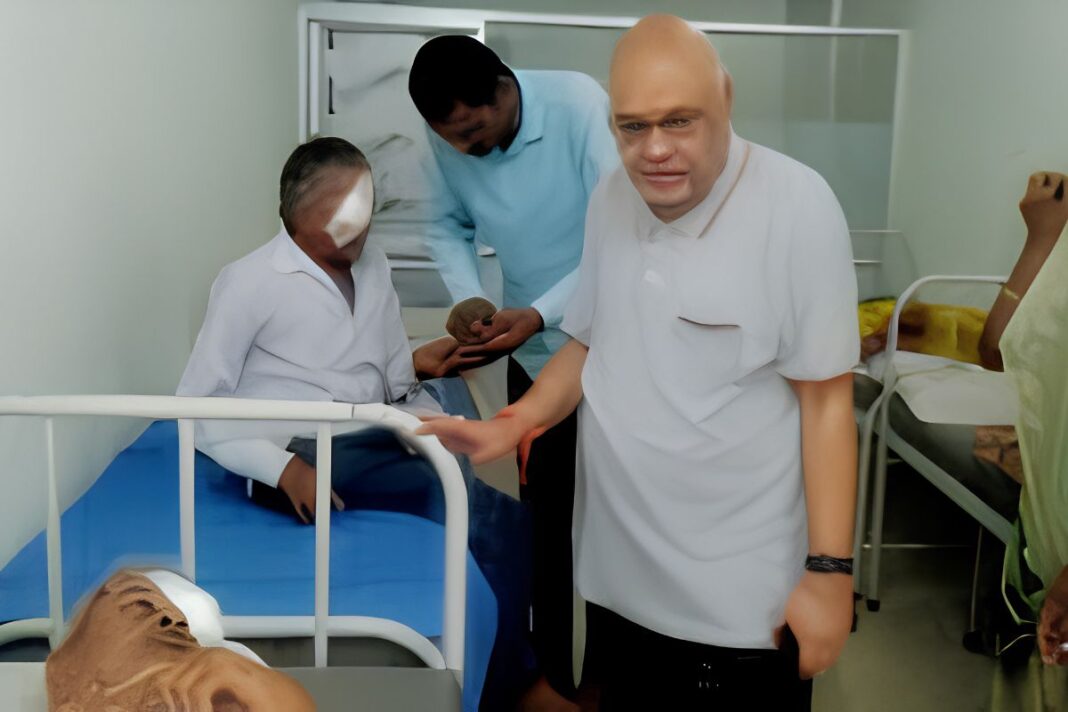
The Gupta family has lived with Koliya’s problems for generations. When droughts hit, elders in the family helped organise relief. When illness spread, they were among those who sought solutions. That pattern of local responsibility eventually took an institutional form. In 2007, the family established a maternity hospital in response to the high rates of maternal mortality that marked rural Rajasthan at the time. Doctor shortages and limited government funding kept the hospital from expanding as intended. Still, the effort itself clarified something for the family: the most persistent problems in a place like Koliya required long-term, consistent work from people who already belonged there.
The foundation is named after Shri Babulal Gupta, whose memory shaped the family’s direction. Avinash Chandra Gupta, who serves as Managing Director of associated institutions, including a Montessori school, has remained closely involved in the foundation’s social programmes. The centre in Koliya represents the clearest expression of what the family has been building toward.
What the Centre Actually Teaches
The training centre focuses on two broad areas: tailoring and computer skills. Both are structured as formal courses rather than casual workshops.
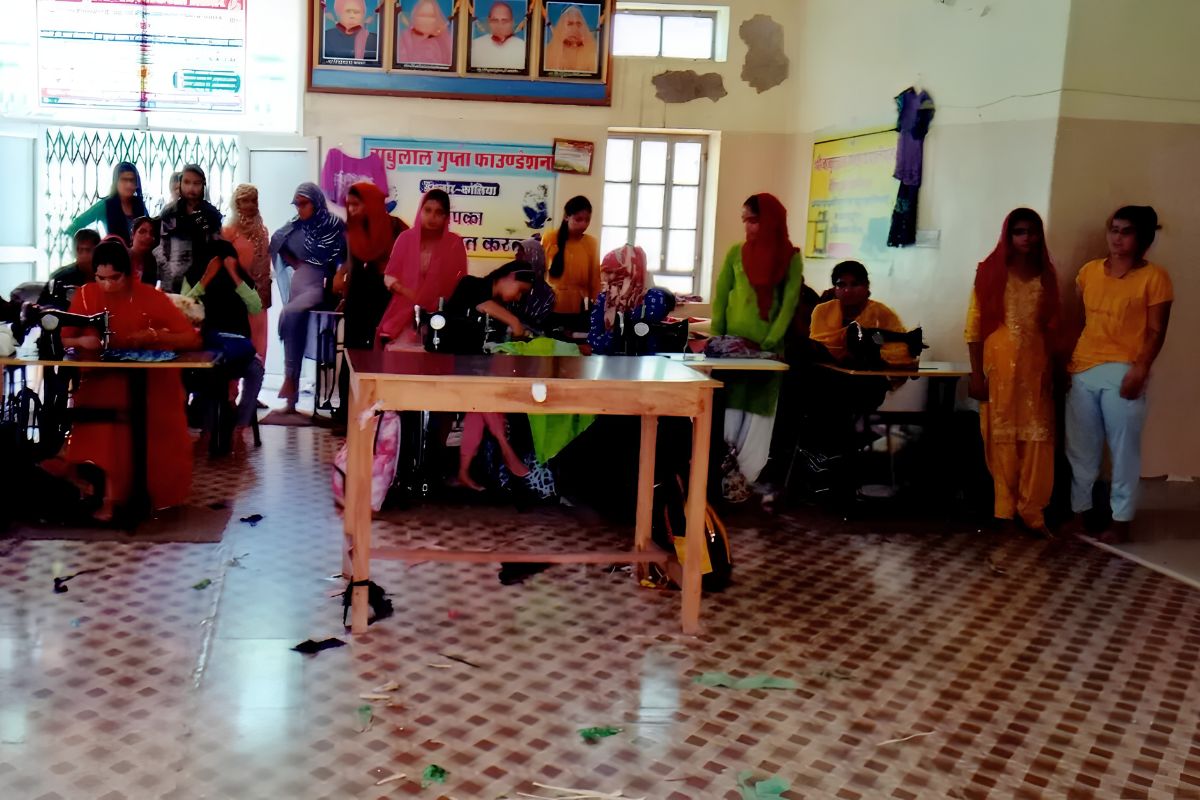
The tailoring programme runs for three months. Women attend for 5 to 6 hours each day and work through a course covering basic machine operation, pattern cutting, and garment construction. By the end, most students can produce blouses, kurtas, and salwar suits to a standard that local markets will accept. The embroidery component includes techniques such as zari work and applique, which command higher prices in the regional market. Thirty women complete each batch, and the foundation distributes sewing machines to graduates so they can begin working from home immediately.
Computer training covers the tools most useful for practical employment. Students learn Microsoft Word, Excel, and PowerPoint. They practise typing in both English and Hindi. Later modules address email, basic internet use, digital payment systems, and the fundamentals of e-commerce. The aim is not technical mastery but working competence, enough for a woman to take a data entry job, list products online, or manage the accounting side of a small tailoring business.
Running through both programmes is a layer of practical instruction that is often not mentioned in official descriptions. Students learn how to price their work, how to find customers in neighbouring towns, and how to handle the basic paperwork of running a small enterprise. Financial literacy and communicative English appear as formal subjects. The centre is designed to produce women who can sustain themselves, not simply women who have attended a course.
What Graduates Have Done With It
The results across more than 1,000 women trained show a consistent pattern. Most graduates establish home-based tailoring operations. They take orders from neighbours, supply local shops, and in some cases form small groups that fill bulk orders for markets in nearby towns. Monthly earnings for many fall between 3,000 and 12,000 rupees, a significant shift in villages where women often had no independent income at all.
One documented batch of 90 women moved from total financial dependence to active self-employment within months of completing training. Some of those women have since taken on informal mentoring roles, teaching basic stitching to others in their immediate communities. Several computer-trained graduates have found data entry work without relocating, and a smaller group has begun operating digital storefronts through which urban buyers can order handmade garments.
Families in the village describe practical changes: daughters being kept in school because the household can now afford the fees, better food and medical access, and a shift in the weight of household decisions. Women who earn money are consulted more often about how they spend it.
The Conditions That Made It Work
Rural training programmes fail for several common reasons. Women cannot travel far. Course fees exclude those who most need help. There is no support structure after training ends. The Koliya centre has addressed each of these directly.
The courses are free. The machines given to graduates remove the largest barrier to starting work. The location inside the village means attendance does not require negotiating with families over travel or safety. The combination of these conditions explains why demand has remained high enough for the centre to keep launching new batches.
Cultural resistance has not disappeared. Some families remain cautious about women taking on visible economic roles. The foundation has not resolved this so much as worked around it, by keeping the training local, by structuring courses around domestic hours where possible, and by demonstrating through example that the women who complete the programme do not leave the village or change in ways their families find threatening. Progress here is measured in small, accumulated steps.
What This Model Represents
The Shri Babulal Gupta Foundation is a family organisation, not a government scheme or a large NGO. It does not have the resources to scale across districts or replicate itself in ten villages at once. What it has done, in Koliya, is demonstrate something worth noting: a sustained, locally grounded effort, built on personal knowledge of a place and its people, can produce changes that official programmes have not managed to reach.
Rajasthan has its own state-level skill development initiatives. Some of them are effective. But the distance between a government office and a village like Koliya is not only geographic. The Gupta family’s presence in that gap, over many years and through more than one form of service, has allowed a kind of trust to develop that external programmes cannot assume.
More than a thousand women in and around Koliya now have skills and incomes they did not have before, and a degree of economic independence that was not available to most of them when they were growing up. The centre that produced this is a modest building in a small village. That, perhaps, is the most instructive detail.
Also Read:Hearing Impaired Entrepreneur Helps Children Learn English Through Sign Language Platform
You can connect with DNN24 on Facebook, Twitter, and Instagram and subscribe to our YouTube channel.