
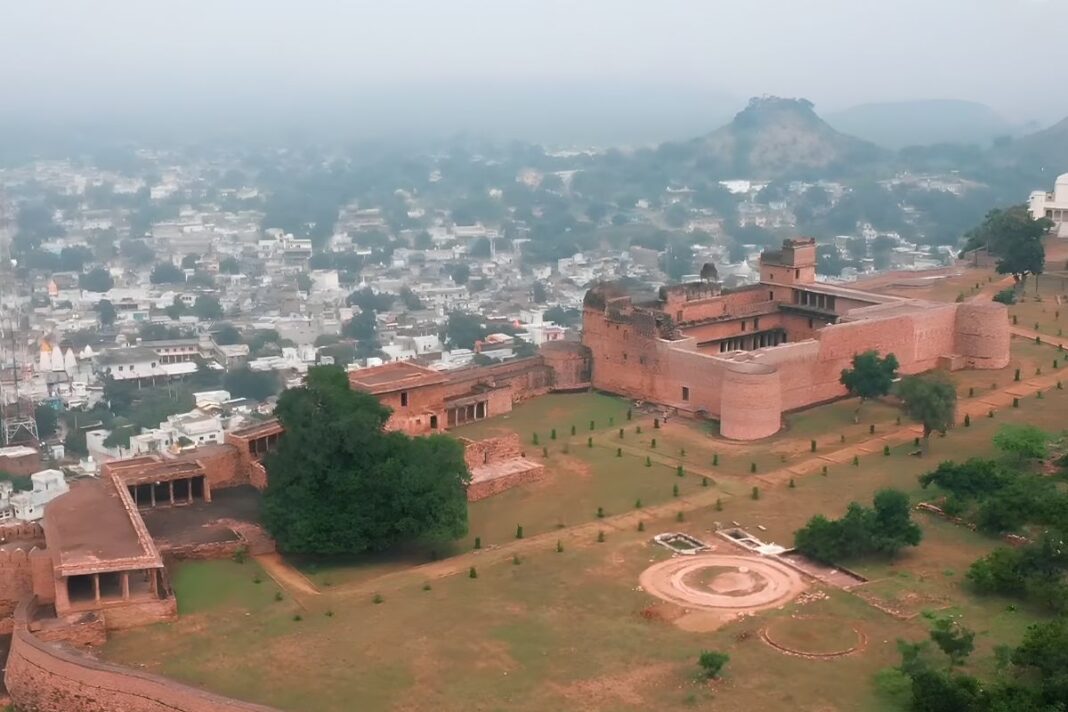

Chanderi Fort towers above the plains of Madhya Pradesh, a stone monument to eight centuries of warfare, conquest, and cultural collision. The structure commanded the trade routes between Gujarat and the Deccan, making it a prize for every dynasty that swept across central India from the 11th century onward.
Strategic Position and Physical Setting
The fort sits on a hill southwest of the Betwa River in Ashoknagar District, part of the Gwalior Division. Chanderi town spreads below, positioned on the Malwa-Bundelkhand border. A 5-kilometre-long fortification wall once encircled the complex, though much of it has crumbled over time.
Chanderi lay at the intersection of routes connecting Gujarat ports to Malwa, Mewar, and the Deccan plateau. Merchants carrying textiles, spices, and other goods passed through the town regularly from the 11th century onward. This traffic brought wealth and invited conflict. The town lies 127 kilometres from Shivpuri, 37 kilometres from Lalitpur, and 38 kilometres from Mungoali, distances that made it both accessible yet far enough to deter casual attacks.
Surrounding hills, lakes, and forests provided natural barriers. Persian scholar Al Biruni mentioned the town in 1030 CE, confirming its early importance. Visitors today climb winding paths to reach the upper fort, where views extend across the Bundelkhand landscape and the town known for handloom saree production.
Foundation and Early Rule
Hindu texts link Chanderi to Shishupal, a Yadava king from the Mahabharata who met his end at Krishna’s hand. Historical records place the fort’s construction in the 11th century under Pratihara king Kirti Pal, who built Kirti Durg and established the first defensive structures.
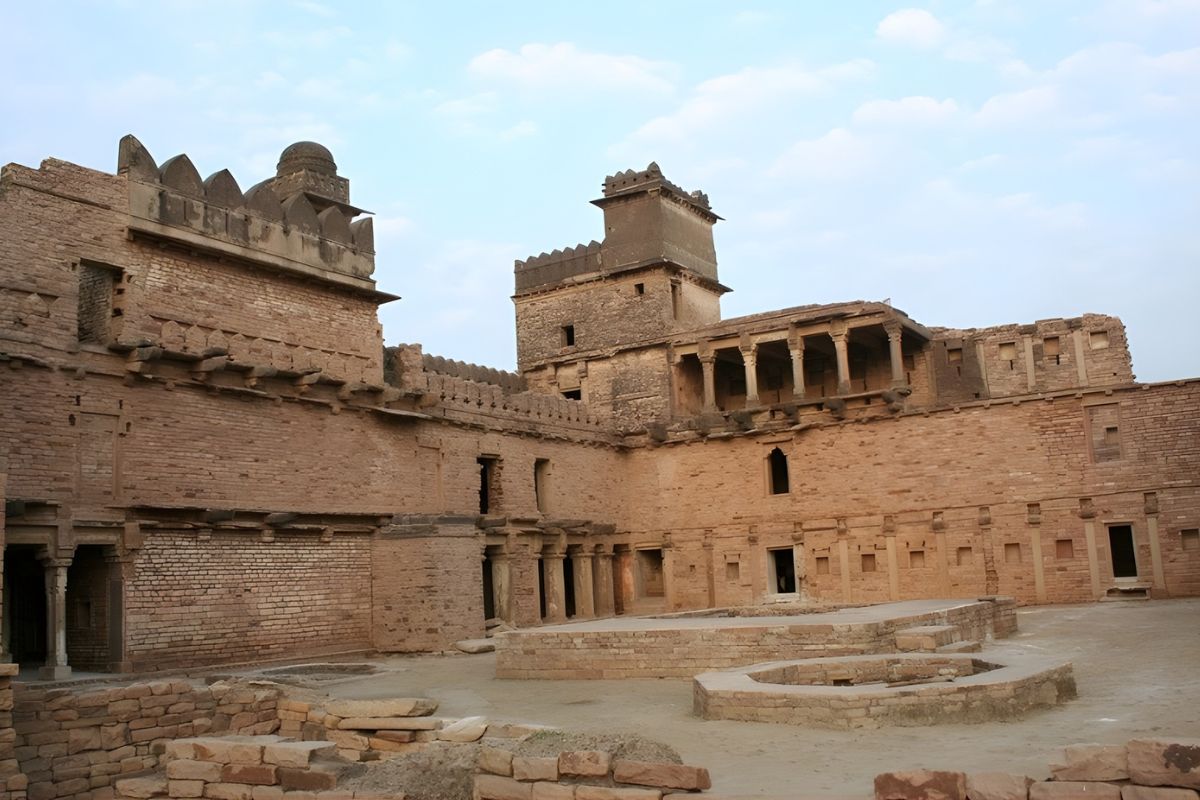
Rajput engineers used massive stones for the walls, creating barriers that could withstand medieval siege equipment. By the 12th century, Chanderi had become a regional trade centre. Jain communities established temples in the area during the 9th and 10th centuries, adding religious significance to the commercial activity.
Medieval Warfare and Changing Hands
The fort changed hands repeatedly as rival powers wrested control of central India. Ghiyas-ud-din Balban captured it in 1251 for Delhi Sultan Nasiruddin Mahmud, bringing the stronghold under the Delhi Sultanate. Malwa Sultan Mahmud Khilji took it in 1438 after a lengthy siege, extending Malwa’s reach eastward.
Rana Sanga of Mewar seized Chanderi in 1520 and gave control to Medini Rai, a former Malwa minister who had switched allegiances. This arrangement lasted only eight years. In 1528, the Mughal emperor Babur marched on the fort after Medini Rai refused to surrender it in exchange for territory in Shamsabad.
Babur’s forces breached the outer defences at night and captured the upper fort within an hour the following morning. Babur recorded his surprise at the rapid victory in his memoirs. The conquest marked a turning point in Mughal expansion into central India.
Raja Puran Mal recaptured the fort in 1529 and held it for 11 years until Sher Shah Suri, the Afghan ruler who briefly displaced the Mughals, took it in 1540. Sher Shah placed Shujaat Khan as governor. Akbar later designated Chanderi as a sarkar, an administrative division, within Malwa subah.
Bundela Control and Later Transitions
Bundela Rajputs established themselves at Chanderi in the late 16th century. Ram Sab, son of Orchha’s Raja Madhukar, took control in 1586. Devi Singh Bundela ruled from 1680 until 1811, when Maratha forces under Daulat Rao Scindia annexed the territory through Jean Baptiste Filose, a European officer in Maratha service.
Subsequently, the British acquired Chanderi in 1844 but lost it during the 1857 uprising. Sir Hugh Rose recaptured the fort in 1858, an action for which Richard Harte Keatinge received the Victoria Cross. The British returned it to the Scindias in 1861 as part of their policy of maintaining allied princely states.
After independence in 1947, Chanderi became part of Madhya Bharat, which merged into Madhya Pradesh in 1956.
Architectural Features and Gates
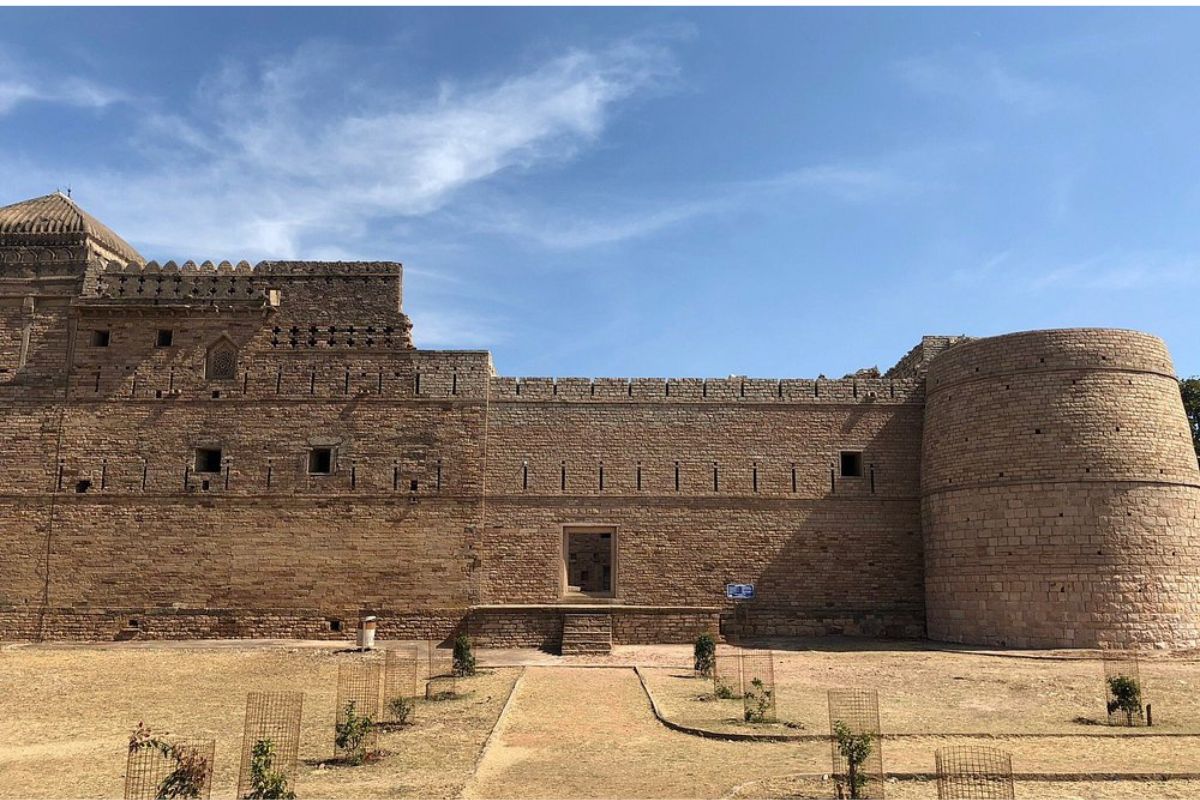
Three main entrances provide access to different levels. Khooni Darwaza, the primary gate, earned its name from the practice of throwing condemned criminals from the battlements. The bodies would fall onto rocks below, serving as public warnings. Hawa Paur, positioned at the highest point, functioned as a ventilation gate and observation post.
Kati Ghati represents the most remarkable engineering achievement: a 59-meter-long tunnel carved through solid rock at an elevation of 230 feet. The passage measures 12 meters wide and 24.6 meters high, allowing armed riders to enter the fort protected from arrows and other projectiles.
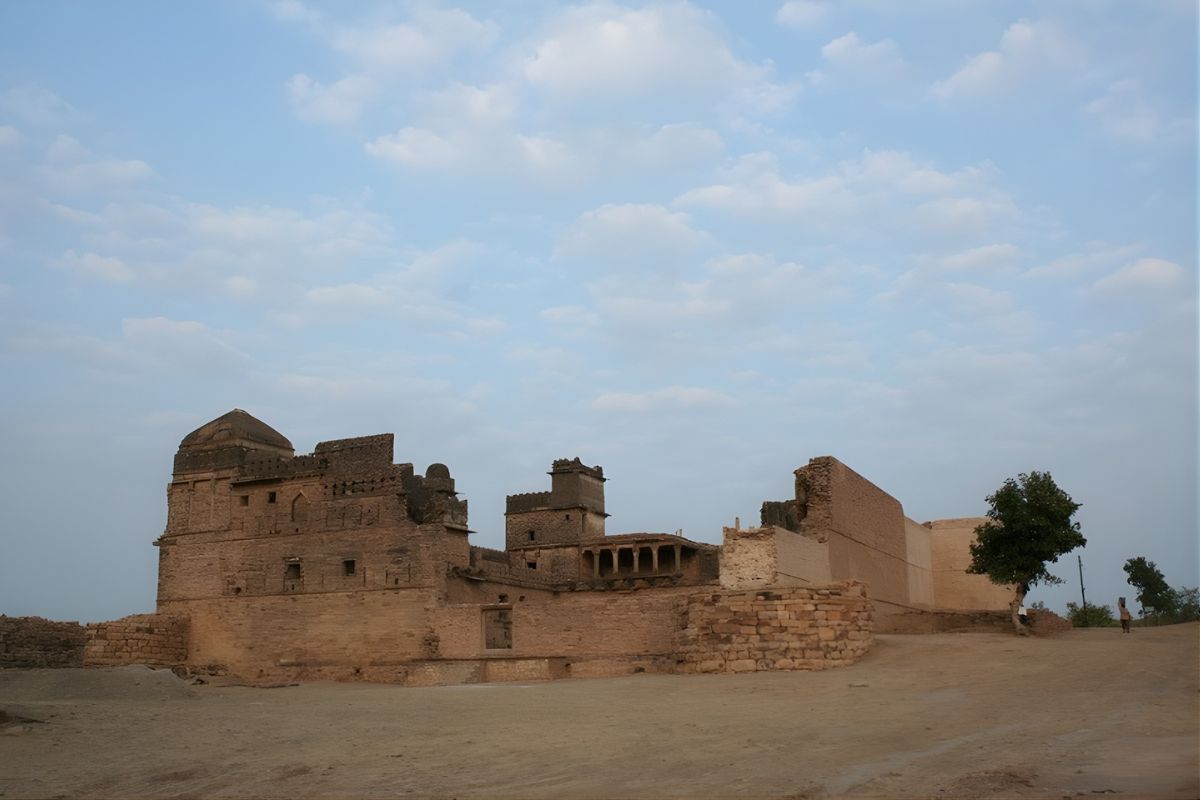
Within the walls, structures reflect the succession of rulers. Naukhanda Mahal, built by Bundela ruler Durjan Singh, contains a courtyard with a fountain and water tank. The palace shows Hindu architectural elements combined with practical military design.
Two mosques demonstrate Islamic influence. The mosque attributed to Alauddin Khilji features floral carvings and Quranic inscriptions. The Khilji Mosque displays different decorative patterns. Badal Mahal Gate rises between 15 and 100 feet, its carved motifs marking the formal entrance for visiting dignitaries.
Seven boundary walls once protected the town and fort together, creating multiple defensive layers. Most have collapsed, leaving only foundations and scattered sections.
The Jauhar Memorial
A monument near Khooni Darwaza commemorates 600 Rajput women who committed jauhar, ritual self-immolation, during Babur’s 1528 siege. The act followed Medini Rai’s departure from the fort. A plaque provides details of the event, which Rajput communities remember as an act of honour in the face of certain defeat.
Current Status and Access
Madhya Pradesh Tourism maintains the fort and the surrounding monuments. Visitors can reach Chanderi from Gwalior Airport, 214 kilometres away, or from railway stations at Lalitpur (40 kilometres) and Ashoknagar (50 kilometres). October through February offers the best weather conditions, with moderate temperatures and clear skies.
The town supports over 9,000 handloom weavers who produce Chanderi sarees, continuing a centuries-old textile tradition. The fort has appeared in films, including a musical sequence from Stree shot at Kati Ghati. Festivals at the tunnel feature zip-lining and craft demonstrations, drawing local tourists.
Preservation work continues on the baolis, water reservoirs that supplied the fort during sieges, and on damaged gates. The site serves as both a historical monument and an economic asset, supporting tourism infrastructure, including Madhya Pradesh Tourism hotels such as Kila Kothi. The Chanderi Fort remains a living testament to the different dynasties that made it their own across different timelines.
Also Read:Hyderabad’s Paigah Tombs: Hidden Architectural Treasure
You can connect with DNN24 on Facebook, Twitter, and Instagram and subscribe to our YouTube channel.