


As subsea cables power the modern digital world, the United States is working with partners including India to secure these vital networks and strengthen connectivity across the Indo-Pacific.
Beneath the vast waters of the Indo-Pacific lies a largely unseen but indispensable network powering the modern world. Subsea cables, often overlooked in public discourse, are essential to global connectivity, economic exchange, and strategic coordination.
“Subsea cables carry over 95 percent of international internet traffic, supporting everything from cross-border payments to cloud and AI services,” says an economic officer at U.S. Embassy New Delhi. “Because so many routes run through Indo-Pacific chokepoints, any cut or compromise there can send shockwaves through the global economy.” This is why securing subsea cables has become a frontline strategic issue.
For the United States and the many countries they connect, these cables are economic lifelines. “Asia-focused routes support a vast share of U.S. digital trade and services exports, and one recent estimate suggests that connectivity with the region via subsea systems adds on the order of $169 billion a year to the U.S. economy,” the officer says.
“They are also the critical backbone of the AI and cloud era,” she adds, pointing to investments by major U.S. technology firms in trans-Pacific and regional cable systems to enhance speed, security, and resilience.
The strategic dimension is equally significant. “Militarily, the same fiber-optic networks are indispensable to the United States for national security, logistics, and coalition operations,” she says. “We need to protect them from physical and technical threats because these cable networks hold a real impact on how power is exercised in the Indo-Pacific.”
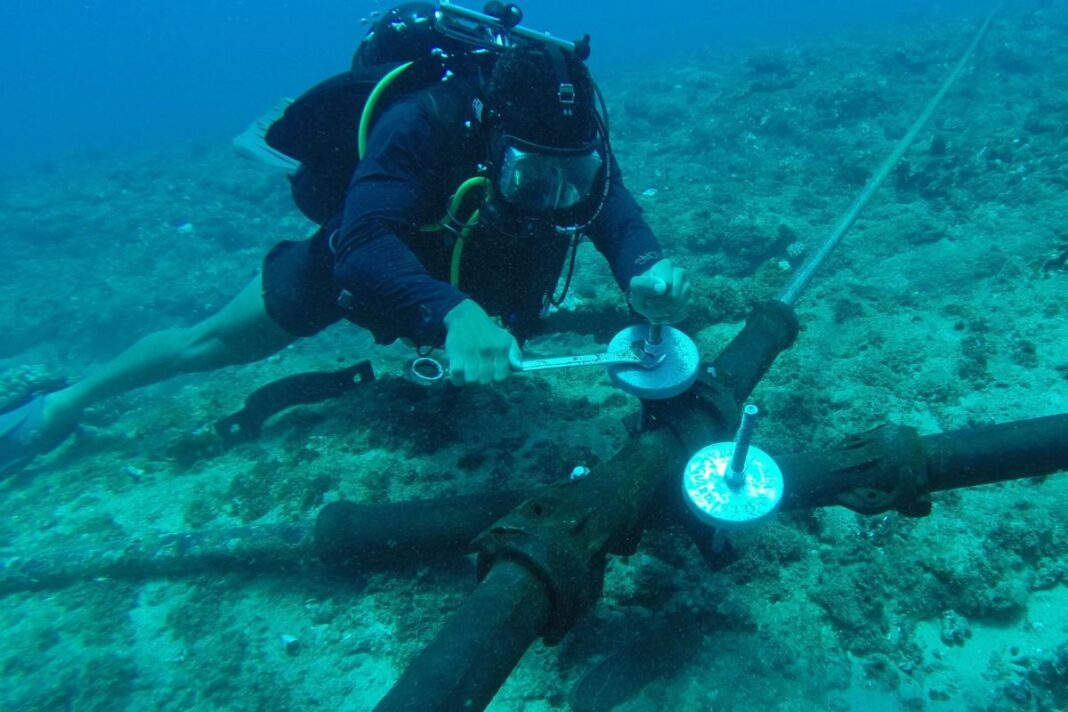
A U.S. Navy utilitiesman performs maintenance on subsea cables at the Pacific Missile Range Facility in Hawaii. Subsea cables are essential to global connectivity, economic exchange, and strategic coordination, and militarily, they are indispensable for national security, logistics, and coalition operations. (U.S. Navy photo by Builder 2nc Class Ben Reed/Released)
Building secure networks
In response, U.S. policy is increasingly focused on strengthening subsea cable infrastructure and shaping how these networks are built and secured. The Department of State’s CABLES Program, the officer explains, “aims to shape where and how new cables are built, who supplies them, and what security standards they follow.”
Through partnerships with governments and industry, the program promotes best practices, route diversification, and safeguards against risks like sabotage, surveillance, and overreliance on untrusted vendors. Complementing these efforts, the Quad Partnership for Cable Connectivity and Resilience, linking the United States, India, Japan, and Australia, seeks to expand secure connectivity and strengthen network resilience across the region.
“These efforts back trusted suppliers, push for high infrastructure standards, and encourage new cable routes that avoid single points of failure,” says the officer.
Partnering for digital resilience
India is emerging as an important partner in this evolving landscape. “India’s digital consumption is booming with 36 GB per user per month which is amongst the highest globally,” she notes, highlighting its nearly one billion internet users and rapidly expanding data infrastructure. Its geographic position further enhances its importance, placing it “at the crossroads of Asia, the Middle East, Africa, and Europe, astride key subsea routes.”
U.S. companies are playing a central role in this transformation. “U.S. hyperscalers remain central to India’s digital ecosystem,” she says, pointing to new investments that are reshaping both India’s and the region’s connectivity by diversifying landing points. Recent projects in cities like Visakhapatnam and Mumbai are expected to broaden India’s subsea gateways, strengthen resilience, and support the AI-scale data and cloud capacity the country increasingly needs.
“Beyond the infrastructure itself,” says the officer, “U.S.-India collaboration can also shape regional norms by championing transparent procurement, trusted suppliers, and high standards for secure cable development.”
Risks beneath the surface
Despite their critical role, subsea cables face a range of vulnerabilities. “The most common threat to subsea cables is surprisingly mundane: accidental human activity,” she observes, noting that fishing trawlers and ship anchors account for most of the roughly 150 cable cuts reported annually. Natural disasters like earthquakes and underwater landslides further compound the risks.
Yet the growing concern lies in deliberate disruption. “In a crisis, hostile actors could sabotage cables to cripple communications and economic activity,” she says. Technical vulnerabilities also persist, as cables can be targeted for surveillance, raising concerns about espionage and data interception. Structural weaknesses like limited route redundancy can further increase vulnerability by concentrating traffic along a small number of pathways.
“When a cable is cut, repairs can take days or even weeks depending on location, permits, and weather,” the officer explains. “In contested regions such as the South China Sea or the Taiwan Strait, cable disruptions could slow connectivity, interrupt financial flows, complicate military communications, and affect economies that depend heavily on digital trade.”
Insights from the Wavelength Forum
The July 2025 Wavelength Forum in New Delhi underscored the urgency of action. “A key takeaway is that subsea cables must be treated as frontline strategic infrastructure,” she says.
Participants called for regulatory reforms, including a streamlined single-window clearance system in India so installation and repairs can proceed quickly. They also emphasized the importance of diversifying landing stations beyond a few coastal cities and strengthening inland connectivity to reduce systemic vulnerabilities.
Another critical gap identified was repair readiness in India. “Vessels often take too long to reach fault sites, prolonging outages and raising economic and security risks,” the officer notes. Overall, the forum reinforced that cable protection is inseparable from economic security, digital resilience, and geopolitical stability.
Industry leaders at the forum agreed that, looking ahead, India’s priorities should include streamlining approvals for cable installation and enabling rapid emergency repairs so that faults can be resolved quickly.
Above all, international cooperation is essential. “Stronger international cooperation, particularly between the United States and India, can promote trusted suppliers, better information-sharing, and common standards for secure cable development across the Indo-Pacific.”
-By Giriraj Agarwal, SPAN Magazine, U.S. Embassy New Delhi
The above article was published in SPAN Magazine and is being reproduced here with their permission.
Also Read: Operationalizing the U.S.-India Defense Partnership
You can connect with DNN24 on Facebook, Twitter, and Instagram and subscribe to our YouTube channel.