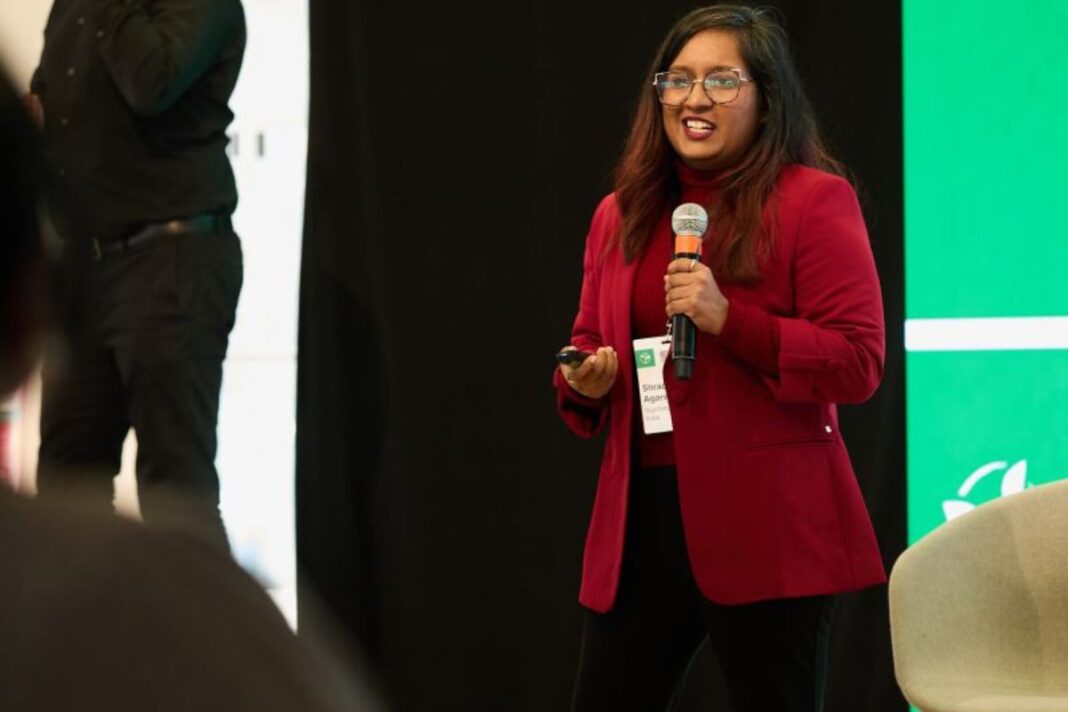

Shraddha Agarwal spent her childhood in Chennai classrooms half understanding what her teachers said. She watched their lips move, scribbled notes frantically, and asked classmates for explanations after every lesson. The effort exhausted her. She confused “doctor” with “daughter” because both words looked identical when spoken. By evening, while her peers moved on to homework, Agarwal was still trying to decode what had happened during the morning classes.
That daily struggle became the blueprint for SignSetu, the edtech platform she founded to teach English through Indian Sign Language. The company addresses an invisible crisis: five to six million hearing impaired children who finish high school reading at a third-grade level because curricula ignore their first language.
A Mainstream Education Built on Struggle
Agarwal attended Balavidyalaya School in her early years, where instruction happened in sign language. Her transition to mainstream schools in Chennai in the later years exposed her to a system designed around sound. Teachers faced the blackboard while speaking. Visual aids were rarely used in classrooms. Instructions were never repeated.
She coped by lip-reading and borrowing notes from sympathetic classmates. The strategy worked partially. She graduated from Stella Maris College in 2018 with a Bachelor’s degree in Commerce focused on entrepreneurship. She then completed a Master’s in Entrepreneurship at the University of Warwick in 2019. She had to invest twice as many hours as her peers.
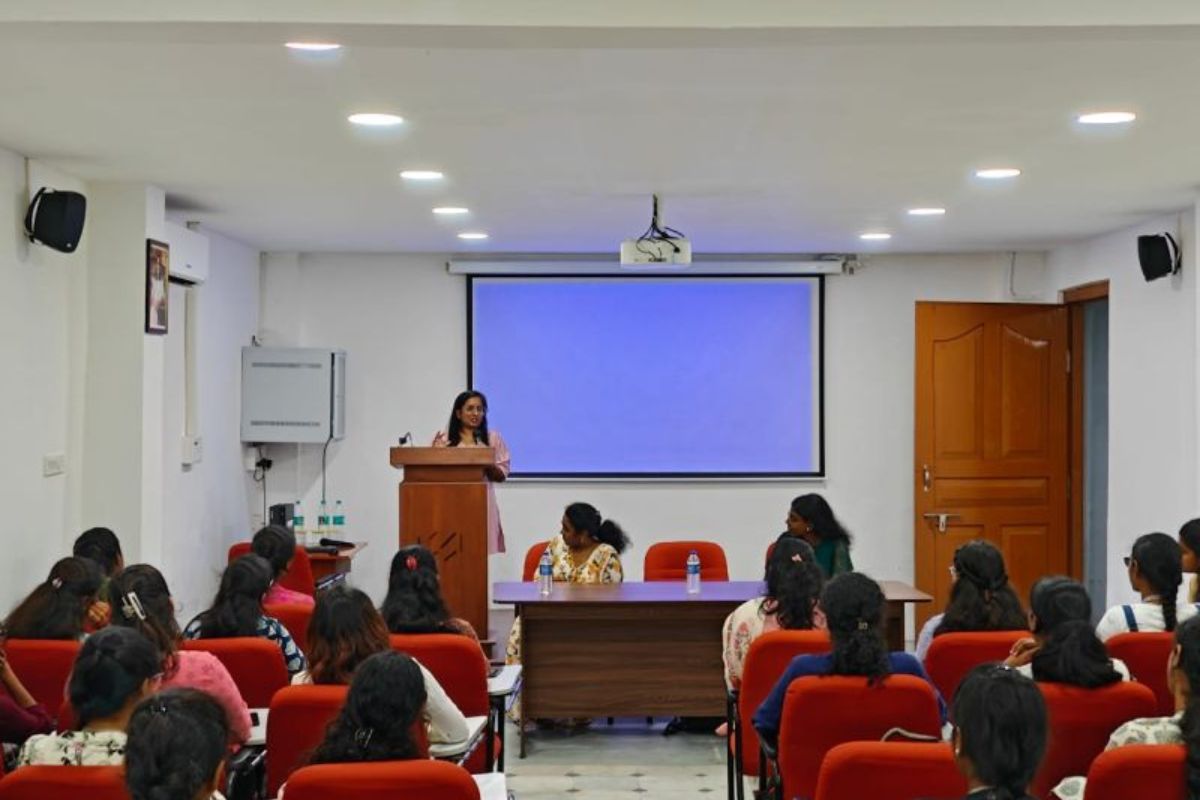
The gap between effort and outcome never closed. Research confirms her experience as typical rather than exceptional. Studies in India show that hearing impaired students in Class 12 read and write at levels equivalent to hearing children in Classes 3 or 4. The cause can be traced back to language deprivation in early childhood, when the hearing impaired children receive limited exposure to a complete natural language like ISL.
Mainstream schools compound the problem. Few employ teachers fluent in sign language. Curricula assume all students acquire knowledge through listening. The result isolates these children in classrooms where communication happens around them but not with them.
From Personal Frustration to Product Design
Agarwal observed a pattern during her education. Generic literacy apps failed the hearing impaired users because designers built them for hearing children who already possessed spoken language. Translation tools helped adults but ignored the developmental needs of young learners. Nothing on the market treated ISL as a legitimate teaching medium rather than a remedial tool.
She launched SignSetu in response, positioning it as India’s first gamified, ISL-integrated platform for hearing impaired students aged 6 to 18. The comparison to Duolingo emerged naturally because both platforms use short visual lessons to build language skills. SignSetu differs by making ISL the foundation rather than an accommodation.
Each lesson runs for fifteen minutes. Students see images paired with ISL videos and English text. Vocabulary drills follow. Animated stories reinforce sentence structure. The sequence builds bilingual literacy without requiring spoken English as an entry point.
The platform gamifies progress through points, badges, and daily streaks. Children unlock new stories after completing vocabulary milestones. Leaderboards track their progress against peers. The mechanics mirror successful language apps but replace audio prompts with visual cues. Virtual rewards celebrate retention rather than speed.
Measurable Results in Chennai Classrooms
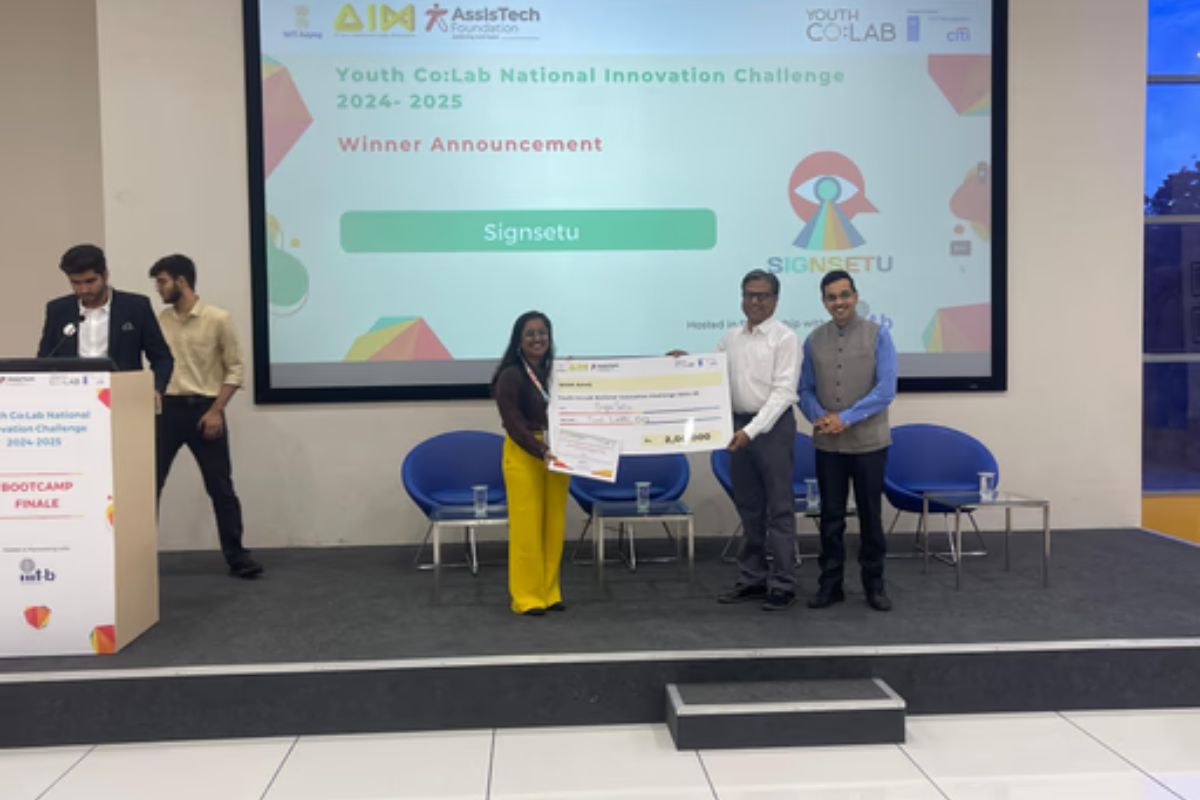
SignSetu conducted a fifteen-day pilot in Chennai schools during 2024. Students aged 6 to 18 used the platform for 15 minutes daily. Post-trial assessments showed word recall improved by 50-75% compared to the baseline. Teachers noted changes in classroom behaviour. Students volunteered answers more frequently. Participation increased during group activities. Ms Sweetlin, a Chennai educator who observed the trial, endorsed the curriculum’s alignment with how hearing impaired learners actually acquire literacy.
The gains matter because they address a specific failure point in the education of the hearing impaired. Traditional methods assume children will “catch up” to hearing peers through harder work and better focus. SignSetu flips that model. It treats ISL as the natural starting point and builds English skills on that foundation.
Early users reported practical benefits beyond test scores. Children felt more confident writing emails and text messages. Sentence formation became easier. The bilingual approach gave them tools for both hearing impaired community communication and interaction with the hearing society.
Institutional Recognition and Expansion Capital
The Youth Co: Lab India Award 2025, presented by UNDP and Atal Innovation Mission, recognised SignSetu as an innovative youth-led solution. The NCPEDP-Mphasis Assistive Technology Hub provided seed funding. The organisation also received the 16th NCPEDP-Mphasis Universal Design Award as a Role Model Organisation.
International Purple Fest 2025 selected Agarwal as a finalist for Pitch Fest in Goa, where disability-led startups presented to investors. The recognition brought visibility and validation, but also highlighted how rare hearing impaired-led ventures remain in India’s startup landscape.
Agarwal emphasises the principle “nothing about us without us” when discussing product development. SignSetu’s team includes researchers and designers with hearing impairment who understand barriers from lived experience rather than academic study. The approach contrasts with assistive technology developed by hearing engineers, which consults hearing impaired users only for feedback.
Pursuing National Curriculum Integration
SignSetu signed a memorandum of understanding with the Indian Sign Language Research and Training Centre (ISLRTC) in 2024. The partnership standardises content with national ISL norms and creates pathways for NCERT collaboration. The company aims to license curriculum materials to state education departments and, eventually, integrate them with NCERT textbooks used in public schools nationwide.
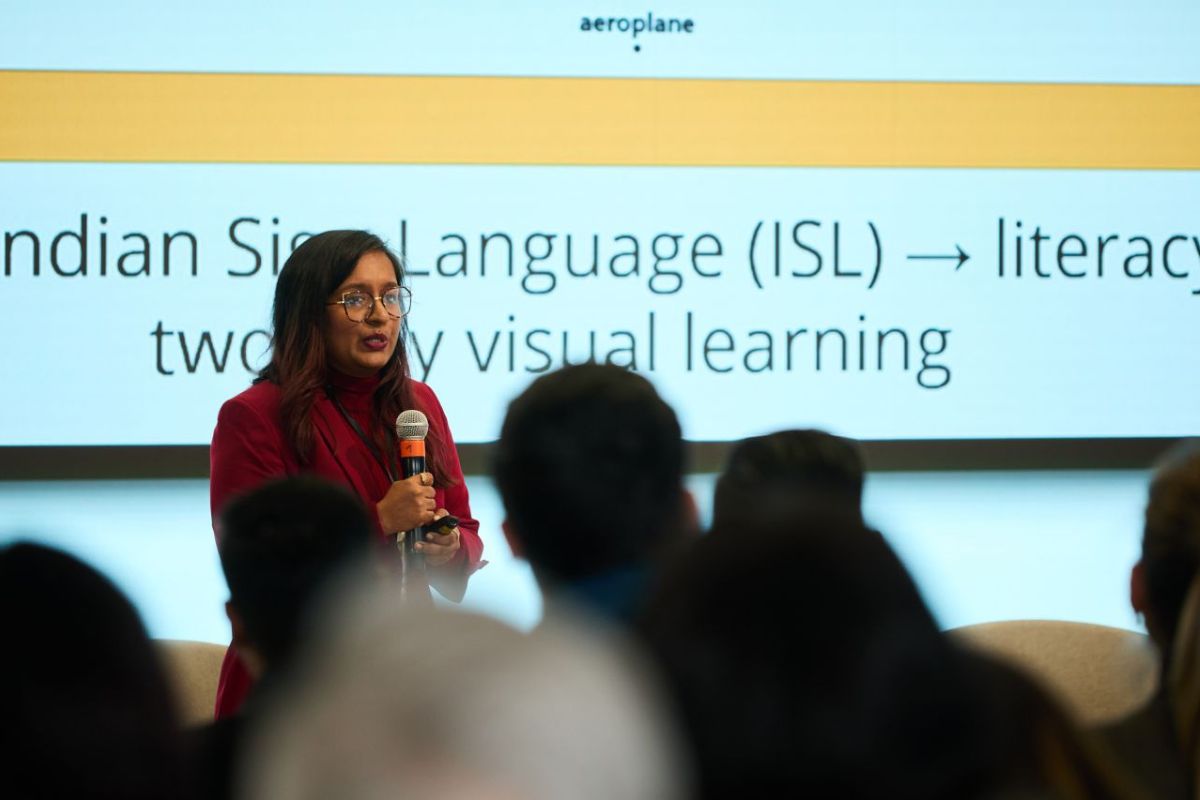
Policy momentum supports the expansion. The Chief Commissioner for Persons with Disabilities issued a directive in November 2025 requiring NCERT to convert the textbooks for Classes 1 through 12 into ISL within 3 months. The order aligns with ISLRTC and the National Education Policy 2020, which designates ISL as a medium of instruction.
NCERT signed previous memoranda with ISLRTC in 2020 and launched ISL training initiatives, signalling institutional readiness for scalable hearing impaired-inclusive materials. SignSetu positions itself to fill the gap between policy mandate and classroom implementation.
The business model combines licensed B2B partnerships with schools and a forthcoming freemium B2C app for individual users. Premium content will fund development while free tiers ensure access for students from under-resourced backgrounds. Teacher training programs will help educators incorporate ISL tools into existing lesson plans.
The Road Ahead
India’s legal framework promises accessible education through the Rights of Persons with Disabilities Act 2016, which mandates the use of ISL in schools. Implementation lags far behind legislation. Most schools lack trained ISL interpreters. Textbooks assume auditory learning. Attitudes still frame hearing impairment as a medical deficit requiring correction rather than a cultural and linguistic difference requiring accommodation.
Research from Haryana involving 215 hearing impaired individuals documents the implementation gap. Studies recommend bilingual ISL-English models as the evidence-based approach. SignSetu provides a template for what such models look like in practice.
Agarwal’s vision extends beyond literacy scores. She wants hearing impaired children to have access to higher education and professional employment at rates comparable to those of their hearing peers. Breaking the literacy cycle early creates compound effects across a lifetime. A child who reads fluently at twelve has options that remain closed to the one who struggles with basic comprehension at eighteen.
The platform’s expansion depends on partnerships with state governments and sustained funding for content development. Success in Chennai pilots demonstrates viability at a small scale. A nationwide rollout requires infrastructure that most edtech companies take for granted: reliable internet, device access, and teacher buy-in. For hearing impaired students in rural India, those prerequisites remain uncertain.
Agarwal’s trajectory from an isolated student to a recognised entrepreneur illustrates both progress and persistence. She transformed personal hardship into social impact by building solutions the market overlooked. Her work challenges assumptions about who designs assistive technology and who benefits from educational innovation. SignSetu succeeds because it begins with voices of the hearing impaired rather than hearing assumptions about what they need.
Also Read:Janaki Ammal: One Botanist Who Transformed India’s Sugarcane Forever
You can connect with DNN24 on Facebook, Twitter, and Instagram and subscribe to our YouTube channel.