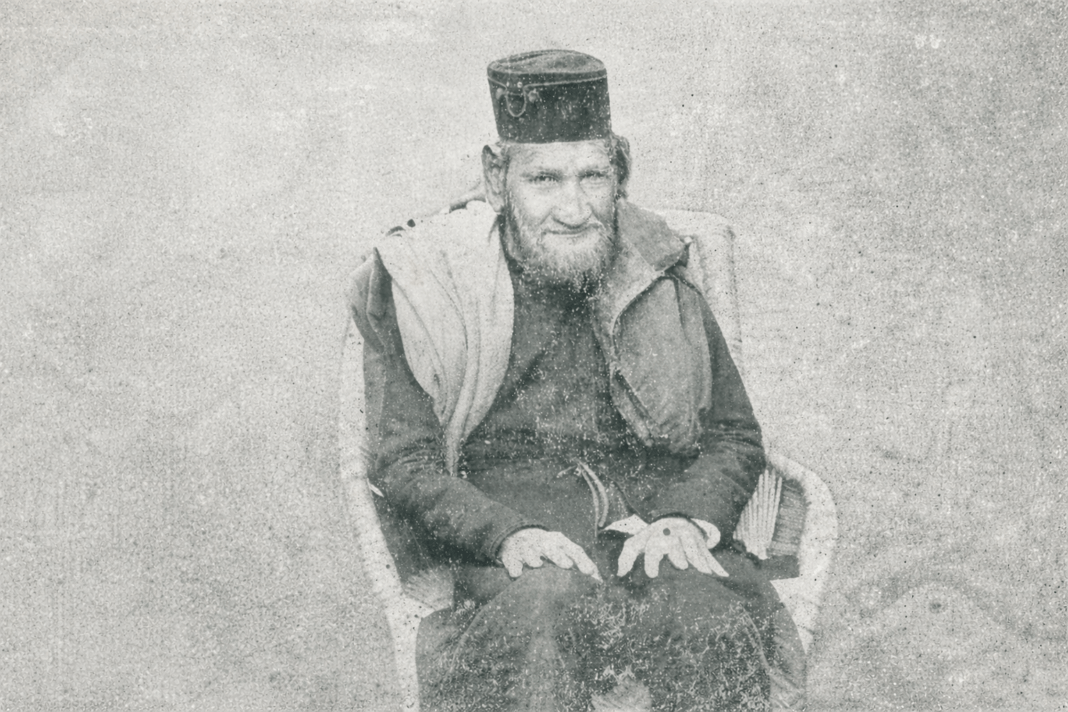

Whenever Urdu literature is discussed in the streets of Delhi, the name of Mirza Ghalib is the first to come to mind. But a significant part of Ghalib’s personality is hidden in his disciples, whom he not only taught poetry but also considered his ‘sons’. Among them is a name without whom ‘Khutoot-e-Ghalib’ (Ghalib’s letters) would be incomplete: Mir Mehdi Majrooh.
Mir Mehdi Majrooh belonged to a family where ‘knowledge and literature’ were inherited. He was born around 1833 in the famous ‘Urdu Bazaar’ of Delhi, situated between the Red Fort and the Jama Masjid – the very area where Urdu flourished.
His ancestors had migrated from Iran to India and, through their abilities, gained access to the Mughal court. His father, Mir Hussain ‘Figar’, was himself a seasoned poet and a disciple of Ghalib. Thus, poetry and the refinement of Delhi flowed in Majrooh’s veins.
Chura ke mutthi mein dil ko chhupaye baithe hain
Bahana yeh hai ki mehndi lagaye baithe hain
When Delhi was a ‘Garden of Poetry’
Majrooh spent his youth during what we can call the ‘golden age’ of Urdu poetry. Imagine the scene: it’s evening, a mushaira (poetic gathering) is in progress, and on one side sits Sheikh Ibrahim Zauq, on the other Hakim Momin Khan Momin, in one corner Mufti Sadruddin Azurda, and in the center, Mirza Asadullah Khan Ghalib.
Majrooh grew up in the company of these great personalities. He was incredibly handsome, a man of genuine character and refined temperament. Wearing the typical Delhi attire and always drenched in perfume was his hallmark. People said that wherever Majrooh passed, the streets would fill with fragrance. This was a period of his carefree and romantic disposition.
Jaan insaan ki lene walon mein
Ek hai maut doosra hai ishq
The Mutiny of 1857 and the Migration to Panipat
But time doesn’t always remain the same. The 1857 rebellion devastated the splendor of Delhi. The city that was a center of learning became a river of blood. Majrooh had to leave his beloved city. He went to Panipat to his dear friend, Maulana Altaf Hussain Hali.
In Panipat, Hali welcomed him warmly, providing him with a home, but Majrooh’s heart remained in the streets of Delhi. He often fell ill, and it was during this time that he developed the eye ailment that would eventually render him completely blind in his later years. Ghalib, in a letter to Majrooh, beautifully captured his longing to return to Delhi.
Kya hamari namaz, kya roza
Bakhsh dene ke sau bahaane hain
Ghalib and Majrooh: An Unparalleled Relationship of Master and Disciple
If we are familiar with Ghalib’s personal life, his joys and sorrows, and his sense of humor today, a large part of the credit goes to Majrooh. Majrooh had Ghalib write so many letters to him that a significant portion of Ghalib’s correspondence is addressed to him.
Ghalib would sometimes call him “Mir Mehdi,” sometimes “Syed Sahib,” and often “Farzand-e-Dilband” (beloved son). Majrooh not only sought guidance on poetry from Ghalib but was also like a member of his household. Ghalib also greatly praised Majrooh’s prose. Upon returning to Delhi, when circumstances were unfavorable, Majrooh was plagued by financial difficulties. On Ghalib’s recommendation, he went to Alwar, where Maharaja Shiv Dhyan Singh appointed him as a Tehsildar (revenue officer). Later, he moved to Jaipur, where he held the position of Naib Kotwal (deputy police chief).
This period of his life reveals the struggles that writers of that era faced, caught between their ego and the need to earn a living. Finally, in his old age, Nawab Hamid Ali Khan of the Rampur state granted him a monthly stipend of 40 rupees, which allowed him to live his last years in some comfort.
The Style of his Poetry and its Resemblance to Daagh Dehlvi
Majrooh’s poetry lacked the complexity of Ghalib’s, but instead possessed the simplicity, linguistic purity, and apt use of idioms characteristic of Daagh. His ghazals touched the heart directly. His poetry had the flavor of the colloquial language of Delhi. Maulana Hali, himself a renowned critic, appreciated his work.
His Final Journey and Death
Majrooh’s last years were spent in great hardship. He had lost his eyesight, and his body had become weak. Shortly before his death, he undertook a pilgrimage to Karbala and Najaf. Perhaps he was seeking forgiveness for his sins and spiritual solace.
On April 15, 1903, this shining star of Delhi set forever. He was laid to rest near the Dargah Qadam Sharif. Today, we remember Mir Mehdi Majrooh not only because he was a fine poet, but also because he was a witness to that “Delhi” which is now buried in the pages of history books. His greatest contribution is that he conveyed Ghalib’s zest for life to us through his letters.
Also Read: Aazam Khursheed : The Poet Who Made Faces Speak & Still Matters
You can connect with DNN24 on Facebook, Twitter, and Instagram and subscribe to our YouTube channel.