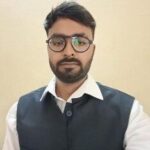


Mohammad Shareef repairs bicycles for a living in Ayodhya, Uttar Pradesh. The 87-year-old man also does something else. He performs funeral rites for bodies that nobody claims.
For 27 years, Shareef has collected corpses from police stations, hospitals, railway platforms, and morgues. He has buried or cremated more than 5,500 people. He was awarded the Padma Shri in 2020 in recognition of his social service. Neighbors call him Sharif Chacha.
The Death That Started Everything
In 1992, when communal violence swept through the Ayodhya region, Shareef’s eldest son, Raees Khan, disappeared during the riots. It was weeks before he learned his son was dead. He found only pieces of evidence: a torn shirt and a note from a tailor. The body had already decomposed on a roadside. Stray animals had fed on it.
The discovery broke something within Shareef. But instead of collapsing into private grief, he made a decision. No other family would suffer what his family went through. No other body would rot unclaimed.
He started visiting mortuaries and asking questions. Which bodies had no relatives? Which corpses would the state dispose of in unmarked graves? Authorities told him the procedure. After 72 hours with no claimant, they could release a body to him.
Shareef became that claimant.
How the Work Happens
Shareef owned a bicycle. Later he acquired a pushcart. These became his tools. When authorities called, he arrived with volunteers or municipal workers. They loaded the body onto his cart or bicycle. He transported it to the correct site.
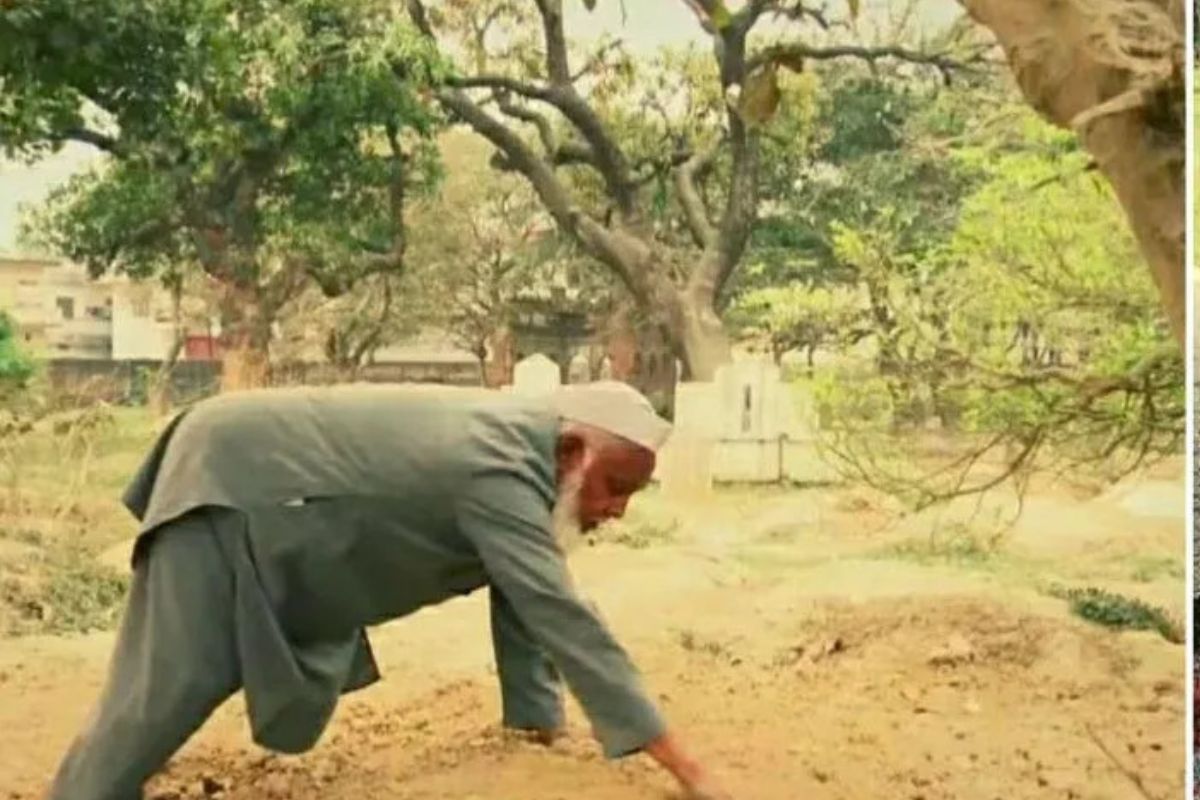
The transport was only the beginning. Shareef insisted on proper ritual. Hindus received cremation according to Vedic custom. Muslims received burial according to Islamic law. Christians and members of other faiths received appropriate rites when he could determine their religion. When he could not determine religion, he made his best judgment and proceeded.
The work required money. Wood for pyres costs money. Shrouds cost money. Burial plots cost money. Shareef earned little as a bicycle mechanic. He asked for donations. He approached community leaders. He worked with local charities and trusts. Sometimes the money ran short. He found ways to proceed anyway.
The True Numbers
Early social media posts about Shareef mentioned 5,500 bodies. That figure was incomplete. National newspapers and official government records confirm a different total. In that time, Shareef has performed last rites for over 3,000 Hindus and 2,500 Muslims.
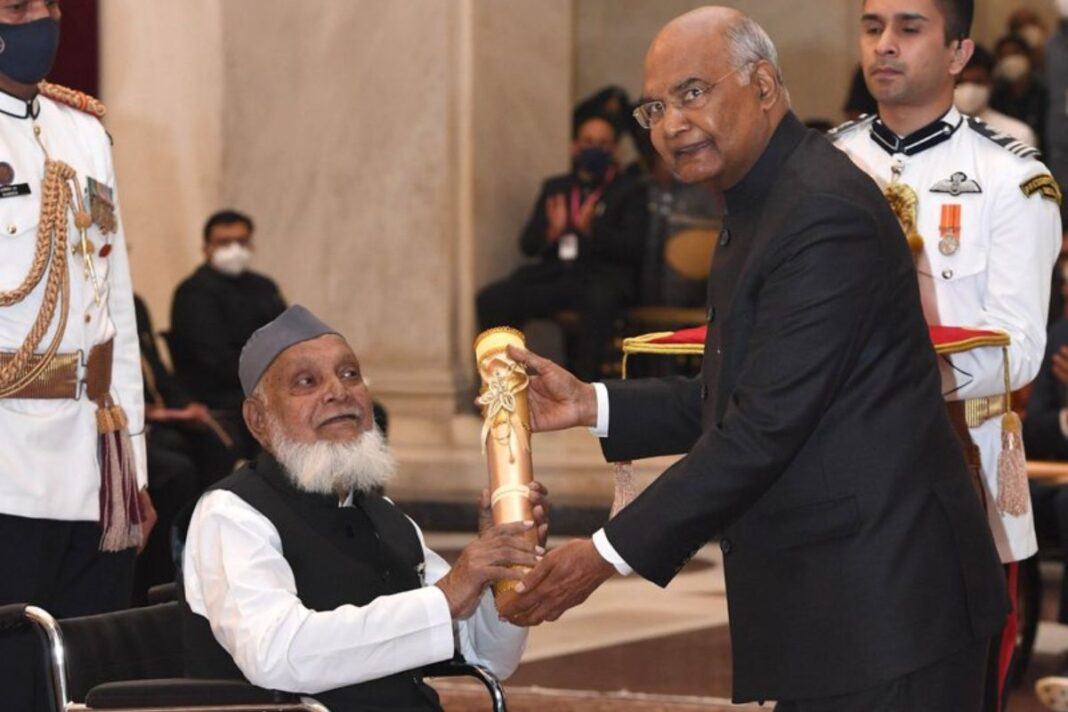
The Padma Shri citation made this official. The award places him in the Social Work category. Because of pandemic delays, he received the medal in November 2021 from the President of India at Rashtrapati Bhavan. The award citation credits Shareef with giving dignity in death to those whom society forgot. He was formally acknowledged for what he had been doing alone for three decades.
Religion Means Nothing Here
Ayodhya carries history. It was the site of the 1992 destruction of the Babri Masjid. Communal tensions have marked this city for generations. Yet Shareef moves through this landscape without regard for religious boundaries.
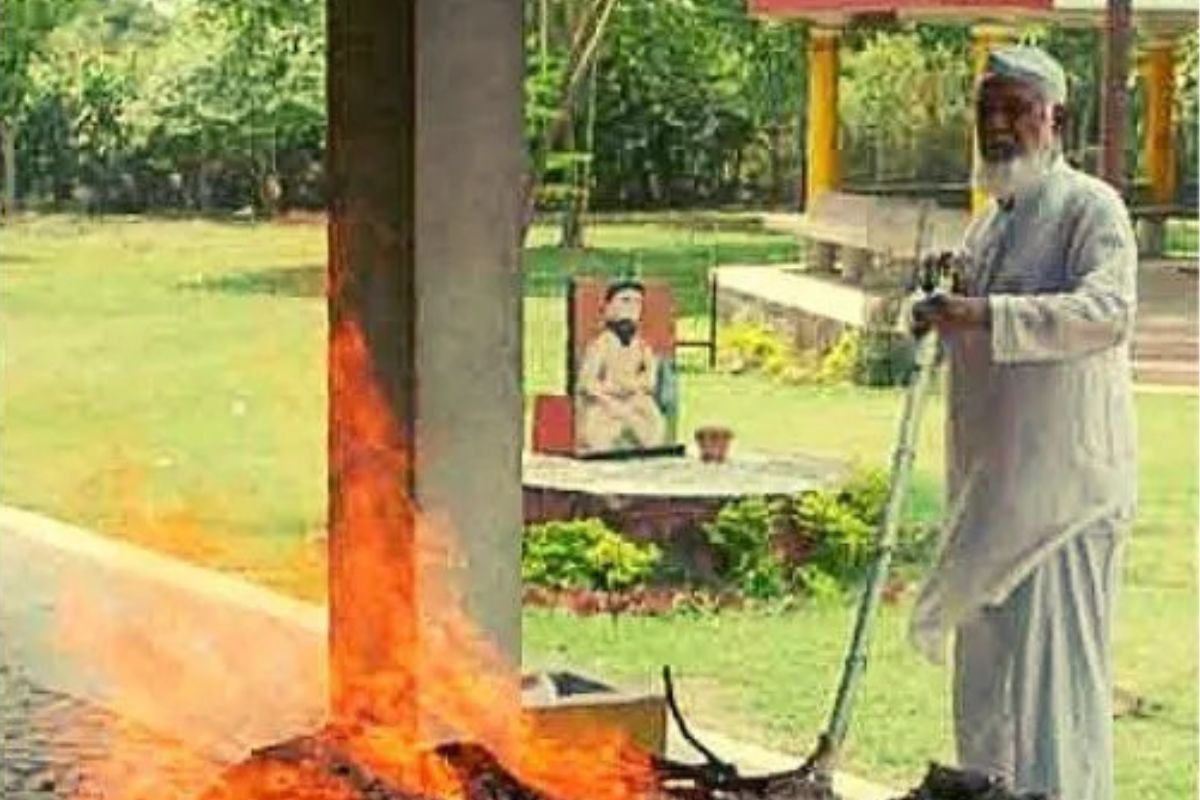
He does not ask the religion of a corpse before accepting it. He determines religion when possible and performs the correct rites. When determination proves impossible, he simply ensures the body receives respectful treatment. Hindu, Muslim, Christian, unknown: all receive the same care.
He has earned the people’s trust across community lines. Television producers invited him onto national programs. Interviewers asked how he managed interfaith work in a divided society. Shareef’s answer was sinple- he did not think in communal terms. Dead people were just dead people. They deserved proper farewells.
The Cost of Compassion
Fame did not bring wealth. In early 2021, Shareef fell seriously ill. He became bedridden. Medical treatment required money his family did not have. His son, Shabbeer Siddique, spoke to journalists about the situation. The man who ensured dignified deaths for thousands now struggled to afford basic healthcare.
The irony reached newspaper editorial pages. Commentators asked why India celebrated Shareef while leaving him in poverty. Some donations arrived. Local organizations mobilized. The story highlighted a larger problem. Health care for the poor remains a gap in Indian public infrastructure.
Shareef’s illness also revealed how his model worked. He had operated mostly alone. A few volunteers helped occasionally. Municipal workers assisted with transport. But the system depended on one old man making daily rounds on a bicycle.
What Happens to Unclaimed Bodies
India has millions of migrant workers. Many die far from home. Street dwellers die with no identification. People with mental illness die alone. Accidents kill people whose families never learn their fate. All these deaths produce unclaimed bodies.
Standard government procedure involves waiting periods and paperwork. After the waiting period expires, municipal authorities dispose of bodies in the cheapest available manner. Sometimes this means mass graves. At other times, this means cremation without ritual. Record keeping varies by region.
Shareef inserted himself into this system. He became the family member who showed up. By claiming bodies and documenting basic details, he created records that otherwise would not exist. He turned bureaucratic disposal into a human ritual.
Why This Matters
Shareef did not start a movement. He did not found an organization. He simply began a practice in 1992 and continued it for 27 years. Other people noticed. Some local groups in Ayodhya now coordinate unclaimed body services. They track deaths. They work with crematoriums. They run small donation drives.
These groups cite Shareef as their inspiration. His example proved the work could be done. One person with a bicycle and determination could change how a city treats its dead.
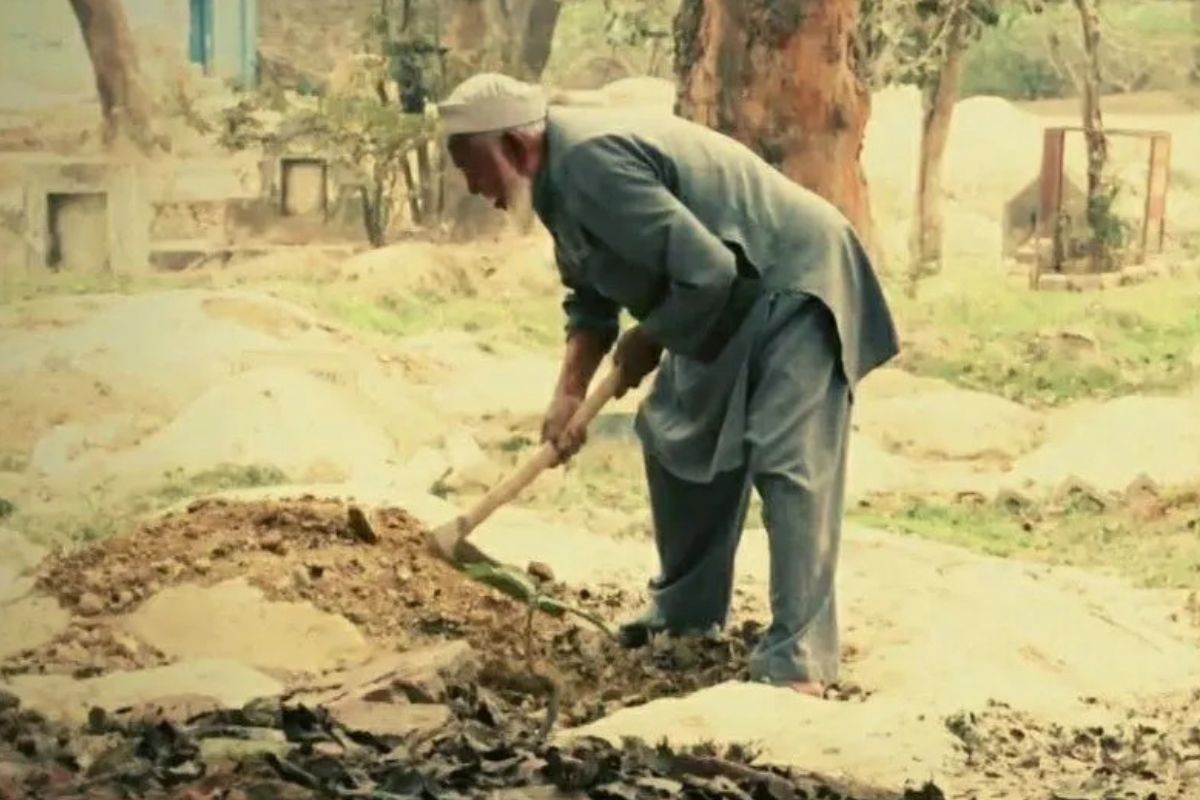
The broader lesson concerns visibility. Unclaimed bodies are statistics. They appear in municipal reports as numbers. Shareef made them visible as individual deaths requiring individual attention. Each body got its own ritual. Each death got acknowledged as a human ending.
The Measure of a Society
His story asks an uncomfortable question. What does it mean when one elderly mechanic provides a service that should belong to the state? India has public health systems, municipal governments, and social welfare programs. Yet this work fell to a private citizen operating on donations and personal funds.
The Padma Shri acknowledged the work. It did not solve the underlying problem. Unclaimed bodies still accumulate in morgues. Migrants still die anonymous deaths. The gap between state capacity and human need remains.
Shareef filled that gap for three decades. His legacy will be measured not in medals but in changed attitudes. He demonstrated that the forgotten deserve remembrance. The unclaimed deserve claiming. The anonymous deserve names, or at least rituals that honor their namelessness.
How a society treats its dead reveals what it values. Mohammad Shareef, bicycle mechanic, showed India what those values should be.
Also Read:Indian Festivals: Heritage Celebrations Across Communities in April
You can connect with DNN24 on Facebook, Twitter, and Instagram and subscribe to our YouTube channel.