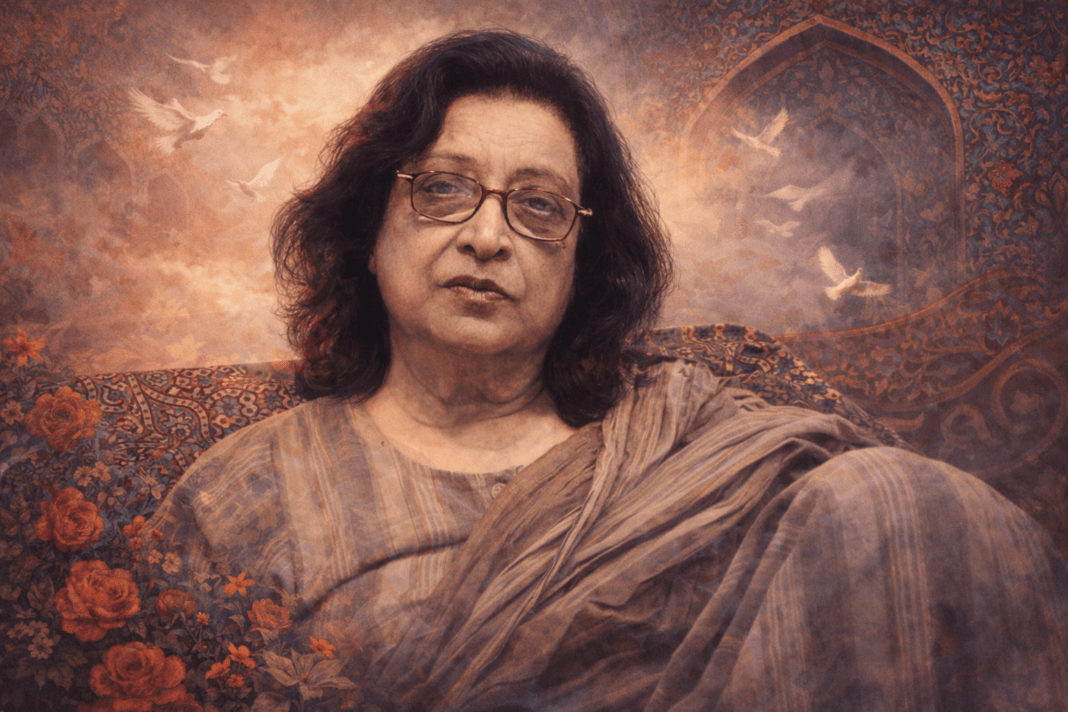
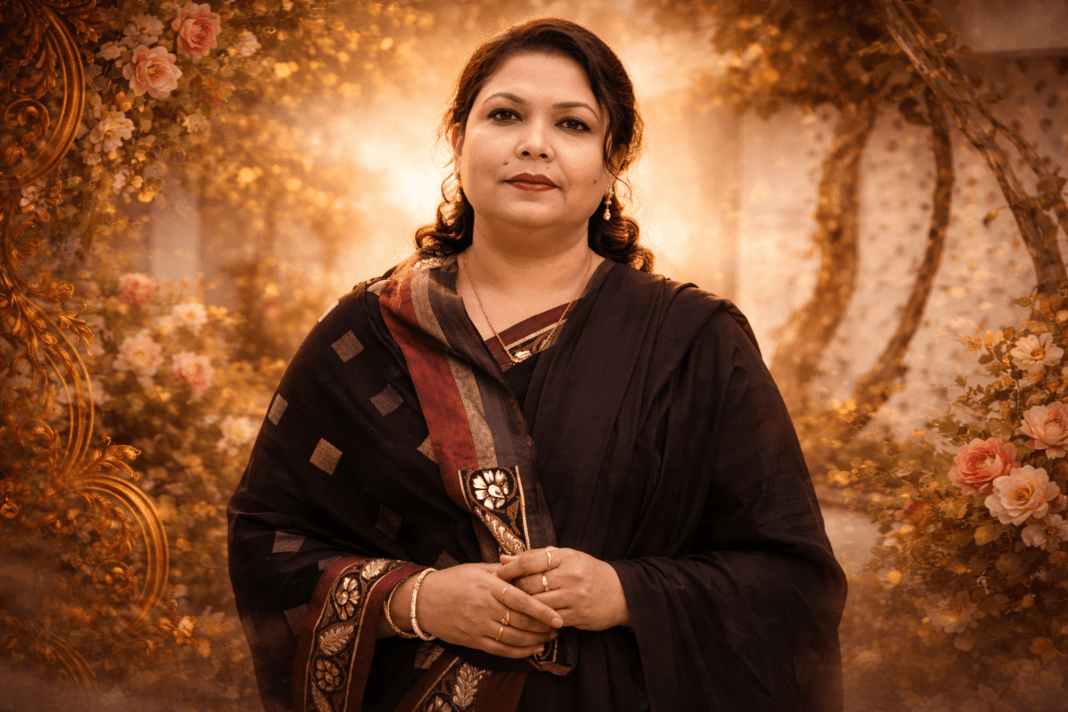

She is a poet of Urdu-Hindi literature whose every couplet reflects the pain of life, the sweetness of love, and the pulse of society. Anjum Rahbar, who emerged from the soil of Guna and created a sensation in mushairas (poetic gatherings) around the world, has a journey that is not an ordinary story, but a ghazal that touches hearts. She was born on September 17, 1962, in the Guna district of Madhya Pradesh, from where her journey began, a journey that continues to captivate millions of hearts today.
Childhood Poetic Gatherings
Imagine the streets of a small town like Guna, where the fragrance of Urdu poetry permeated the air. Anjum Rahbar was born into a family where her father, Mohammed Hussain Rahbar, was not only a renowned physician but also a man of poetic temperament. In Guna, his literary gathering, ‘Bazm-e-Adab,’ was held in the courtyard of their home. Great poets from across the country would come, stay, and recite ghazals. Anjum, the eldest of eight siblings, served at these gatherings from a young age. Serving tea, welcoming guests – all this was a part of her daily routine.
In such an environment, poetry became ingrained in her very being. She started composing rhymes from childhood. Sometimes while playing in the courtyard, sometimes with her mother in the kitchen, that magical world of words settled in her heart. Listening to her father’s ghazals, the melody resonated in her ears. This journey from her maternal grandparents’ home in Morena to Guna laid the foundation of her poetry. Questions arose in little Anjum’s mind: What is love? What is the pain of separation? These questions later transformed into her verses and echoed in mushairas. The soil of Guna provided the roots, but education was essential for flight. Anjum Rahbar earned her MA in Urdu literature from Jiwaji University, Gwalior. This was a time when it was difficult for girls to venture outside the confines of their homes, but Anjum chose the path of books. The Urdu classics – Mir, Ghalib, Iqbal – nurtured her poetry.
During her MA studies, she realized that poetry wasn’t just confined to books, but was the language of everyday life. Therefore, she moved away from pure Urdu and developed a blend of Hindi and Urdu that resonated with the common man. From the university in Gwalior, she moved to Bhopal, where she resides today. This education became not just a degree, but a weapon for her poetry.
First Mushaira: Beginning with her father’s ghazal
It was 1977, and Anjum Rahbar was just 15 years old. Her first mushaira (poetry recital), and she recited a ghazal written by her father. Imagine the young girl standing on stage, her hands trembling, but a sea of verses in her heart. The applause echoed, and thus began her journey. The doors of mushairas opened for her. Her participation in poetry gatherings increased.
Gradually, she gained recognition. At one mushaira, she met the renowned poet Rahat Indori. Three or four years of friendship and meetings followed, and in 1988, they married. Rahat Indori was already married and had a family in Indore, but love found a way. This relationship later faced challenges, but Anjum’s poetry never stopped. The pain of separation deepened her ghazals. Her son, Sameer Rahat, became a part of this journey.
The Storm of Mushairas: From TV to Abroad
The true test of poetry is the mushaira. Anjum Rahbar has been passing this test since 1977. She has recited her poetry on national channels – ABP News, SAB TV, Sony Pal, ETV Network, DD Urdu – and internationally. In the 2019 Kapil Sharma Holi Special, silence fell as she stepped onto the stage, followed by a burst of applause. Her voice possesses a magic that lays the moon and stars at her feet.
International tours included the USA, Canada, Pakistan, Oman, Dubai, Qatar, Jeddah, and Sharjah. She created a sensation at the Dubai Republic Day Mushaira. Her first performance after the pandemic at a Kavi Sammelan in Indore was deeply emotional; she was moved to tears, and the audience wept. Hindi literary platforms also embraced her with open arms. She combines the purity of Urdu with the effortless flow of Hindi, and her couplets touch the heart.
Jin ke aangan mein ameeri ka shajar lagta hai,
Unka har aib zamaane ko hunar lagta hai.
Chaand taare mere qadmon mein biche jaate hain,
Ye buzurgon ki duaaon ka asar lagta hai.
Maa mujhe dekh ke naraaz na ho jaaye kahin,
Sar pe aanchal nahi hota hai to darr lagta hai.
Zindagi ko zindagi ke vaaste,
Roz jeena roz marna chahiye.
Dosti se tajurba ye ho gaya,
Dushmanon se pyaar karna chahiye.
Pyaar ka iqraar dil mein ho magar,
Koi pooche to mukarna chahiye.
Dafna diya gaya mujhe chaandi ki qabr mein,
Main jis ko chahti thi wo ladka gareeb tha.
Milna tha ittefaq, bichhadna naseeb tha,
Wo utni door ho gaya jitna qareeb tha.
Sach baat maan lijiye chehre pe dhool hai,
Ilzaam aainon pe lagana fizool hai.
These couplets bring bursts of applause at Mushairas. ‘Malmal Kacche Rangon Ki’ (Muslin of Raw Colors) is her 2018 book, a colorful Kohinoor of poetry. Ghazals, songs – everything. A Shower of Awards
Indira Gandhi Award (1986), Ramrikh Manhar Award, Sahitya Bharati, Hindi Sahitya Sammelan, Akhil Bharatiya Kavi Vidyapeeth, Dainik Bhaskar, Chitransh Firaq Gorakhpuri, Guna ka Gaurav. These honors were a reward for bridging the gap between Hindi and Urdu. Life brought its storms. The relationship with Rahat Indori ended, but poetry provided solace. The pain was evident in his emotional recitations. Nevertheless, he returned to mushairas (poetic gatherings). He inspired the new generation – showing that anything is possible through poetry. He conquered the world from Bhopal.
Also Read: Zubair Ali Tabish: A journey of love-filled poetry from a simple poet
You can connect with DNN24 on Facebook, Twitter, and Instagramand subscribe to our YouTubechannel