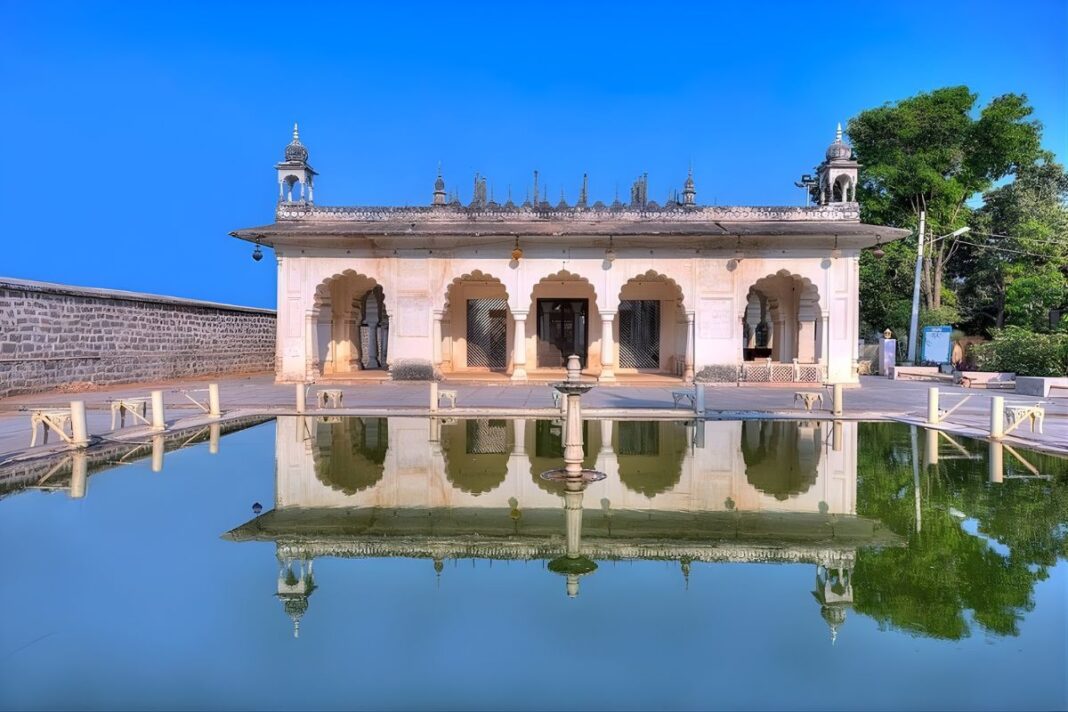

The most elaborate burial ground in Hyderabad sits tucked away in a concrete residential quarter, visited by few despite housing architectural artistry that rivals monuments drawing millions. The Paigah Tombs, resting place of nobles who commanded armies and married into royalty, blend eight distinct architectural traditions into structures so intricate that no two carved patterns repeat across the entire complex.
The Rise of a Noble Dynasty
The Paigah family emerged as kingmakers in 18th-century Hyderabad, tracing its lineage to Hazrat Omar bin Al-Khattab, the second caliph of Islam. Abdul Fateh Khan Tegh Jung established the dynasty’s power by serving Nizam II Salabat Jang as Commander-in-Chief, earning the title Shams-ul-Umra, which translates to Sun among Nobles. His military service and administrative acumen secured vast landholdings totalling more than 4,000 square miles, territories comparable to small European principalities.
The family accumulated wealth surpassing many maharajas across the Indian subcontinent. They maintained private military forces numbering in the thousands, operated independent courts, and constructed palaces that became landmarks of Deccan architecture. The Paigahs controlled estates that generated revenue streams funding hospitals, schools, and public infrastructure throughout Hyderabad State.
Strategic matrimonial alliances cemented their position in the royal hierarchy. In 1797, Fakhruddin Khan, son of Abdul Fateh, married Sahebzadi Bashirunissa Begum, daughter of Nizam II. This union established a precedent in which Paigah men regularly wed Nizam princesses, elevating the family to second only to the ruling dynasty in social standing and political influence.
Notable family members shaped Hyderabad’s governance and cultural landscape. Sir Khursheed Jah Bahadur expanded the family necropolis into the architectural wonder visible today. Sir Asman Jah served as Prime Minister from 1887 to 1893, steering state policy amid British colonial pressure. Sir Viqar-ul-Umra demonstrated the family’s opulence by gifting the magnificent Falaknuma Palace to Nizam VI, a structure that later became a symbol of Hyderabad’s golden age.
Development of the Necropolis
Construction of the burial complex began between 1786 and 1787 when Abdul Fateh Khan was interred at Pisal Banda, now known as Santoshnagar, adjacent to the Barhana Shah Dargah. The site evolved organically over generations as subsequent family members expanded and embellished the grounds. Amir-e-Kabir I, also known as Fakhruddin Khan, initiated major refurbishment in the 1880s, transforming the simple graves into elaborate monuments.
Sir Asman Jah, Sir Khursheed Jah, and Sir Viqar-ul-Umra each commissioned additions that reflected their travels and exposure to global architectural trends. The complex eventually sprawled across 30 to 40 acres, though the principal tombs occupy roughly two acres at the heart of the property. Five generations of Shams-ul-Umra lie here alongside Sultan-ul-Mulk, Zaheer Yar Jung, and other distinguished nobles who served the Nizams.
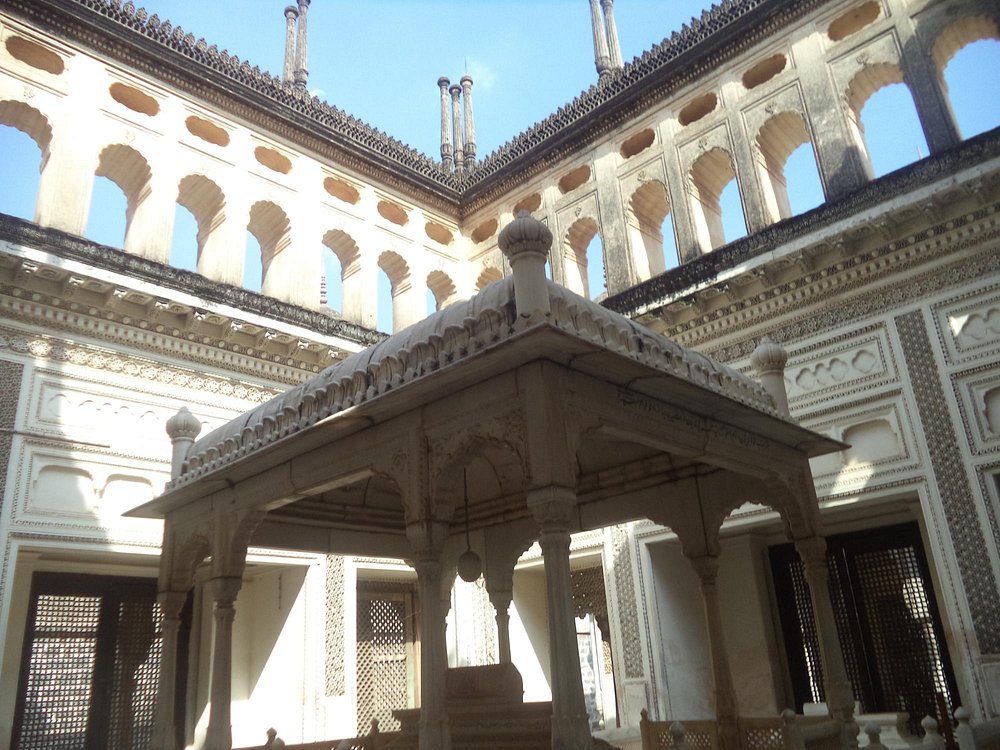
The mausoleums follow the chaukhandi style, structures open to the sky in accordance with Islamic burial tradition. This design choice emulates the grave of Mughal Emperor Aurangzeb, symbolising humility before God regardless of worldly rank. Latticed perimeter walls enclose individual tombs, their surfaces adorned with geometric patterns and botanical motifs carved in stone and stucco.
Urban development in the 20th century gradually obscured the site. Residential construction crept inward from all directions, eventually surrounding the tombs with apartment blocks and narrow lanes. The necropolis became increasingly difficult to locate, known mainly to residents and occasional heritage enthusiasts who stumbled upon references in historical texts.
Architectural Synthesis
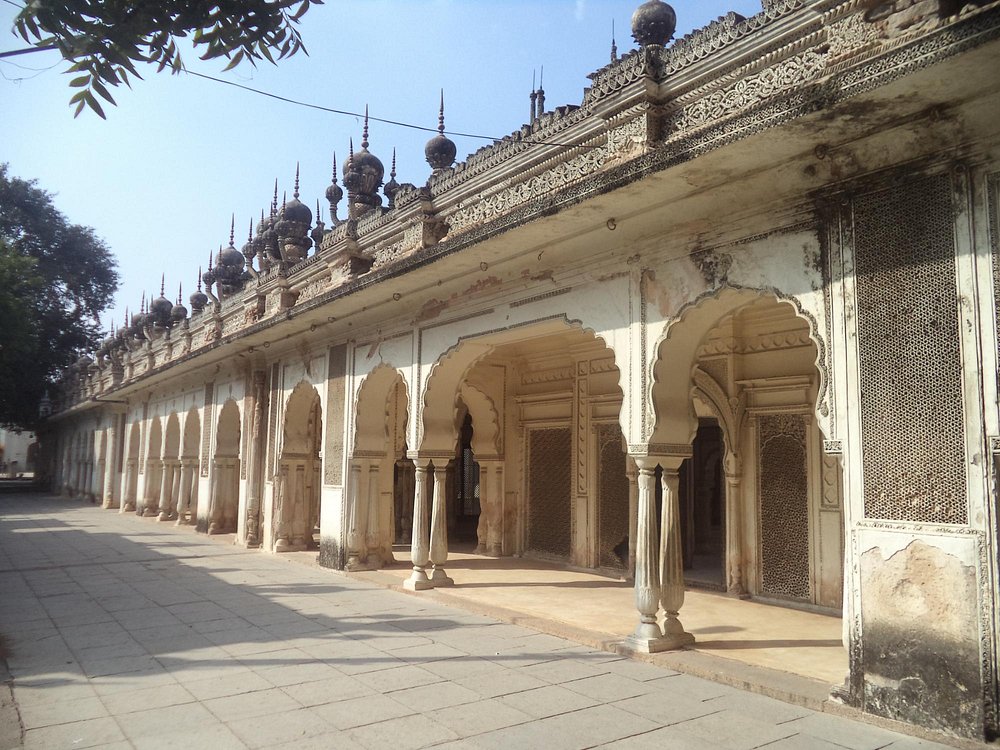
The tombs represent a fusion of Mughal, Persian, Asaf Jahi, Rajasthani, Deccani, and Moorish design elements, a combination unprecedented in South Asian funerary architecture. Artisans employed lime mortar construction techniques, creating crypts decorated with marble inlays and stucco work reminiscent of Andalusian palaces in Granada and Seville.
Pierced marble screens, known as jaali, filter sunlight into delicate patterns across tomb interiors. These perforated barriers feature botanical designs and geometric tessellations executed with precision, suggesting the involvement of master artisans from multiple cultural traditions. Each structure displays unique motifs, with no decorative schemes repeated across the entire complex.
The family tomb of Sir Khursheed Jah features the largest archway in the necropolis and a distinctive double maqbara structure, locally known as Mahajar. Adjacent stands an ornate stucco memorial for Lateefunnisa Begum, his grandmother, featuring decorative complexity unmatched elsewhere on the grounds. Wall decorations incorporate imagery of fruits, musical instruments, serpents, vases, and latticed fencing. The semi-circular fringed arches display distinctly Indian proportions and ornamentation.
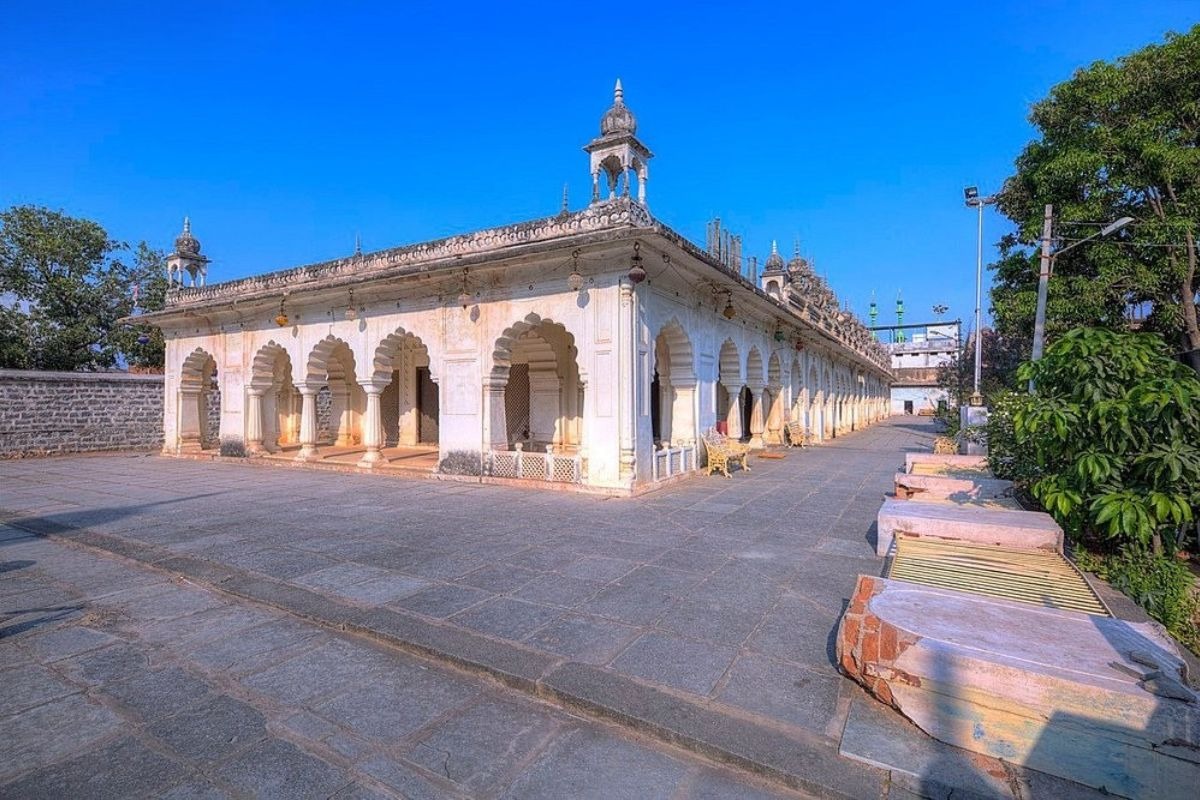
Original construction included inlays of semi-precious stones that reportedly shifted hue with seasonal changes in temperature and light. This chromatic effect, now largely lost to time and weathering, demonstrated the considerable financial resources the Paigahs devoted to memorialising their dead. The family employed artisans encountered during extensive foreign travel, importing techniques and aesthetic sensibilities from across Europe, North Africa, and the Middle East.
Cultural Legacy
Local historians have dubbed the complex the Taj of the South, though this comparison understates the tombs’ unique character. While the Taj Mahal represents the pinnacle of Mughal architecture, the Paigah Tombs showcase a hybrid design philosophy, blending eight distinct traditions into coherent aesthetic statements. Several Hyderabad localities bear Paigah names, including Vikarabad, Shamshabad, and Begumpet, testament to the family’s territorial reach.
The unroofed graves symbolise religious humility, a democratic gesture notable given the aristocratic status of those interred. This architectural choice places the Paigah nobles in death alongside common believers, all equal before divine judgment. The necropolis preserves material evidence of Deccan aristocratic culture at its apogee, a period when regional nobility commanded resources rivalling those of European nobility.
The site operates daily except Fridays, is open from 10 AM to 5 PM, and is located approximately 4.5 kilometres from Charminar, down a lane near Owaisi Hospital. Visitor numbers remain modest compared to those of more famous Hyderabad monuments. However, photographers prize the location for the dramatic shadow effects created by the afternoon sun filtering through carved screens.
Conservation and Future Access
Following Hyderabad State’s integration into independent India in 1948, the tombs entered a period of neglect. Encroachment from surrounding development damaged perimeter walls, while well-intentioned but inappropriate cement repairs harmed original lime mortar work. Vegetation growth in cracks and crevices threatened structural stability, and by 2024, the complex was in serious deterioration.
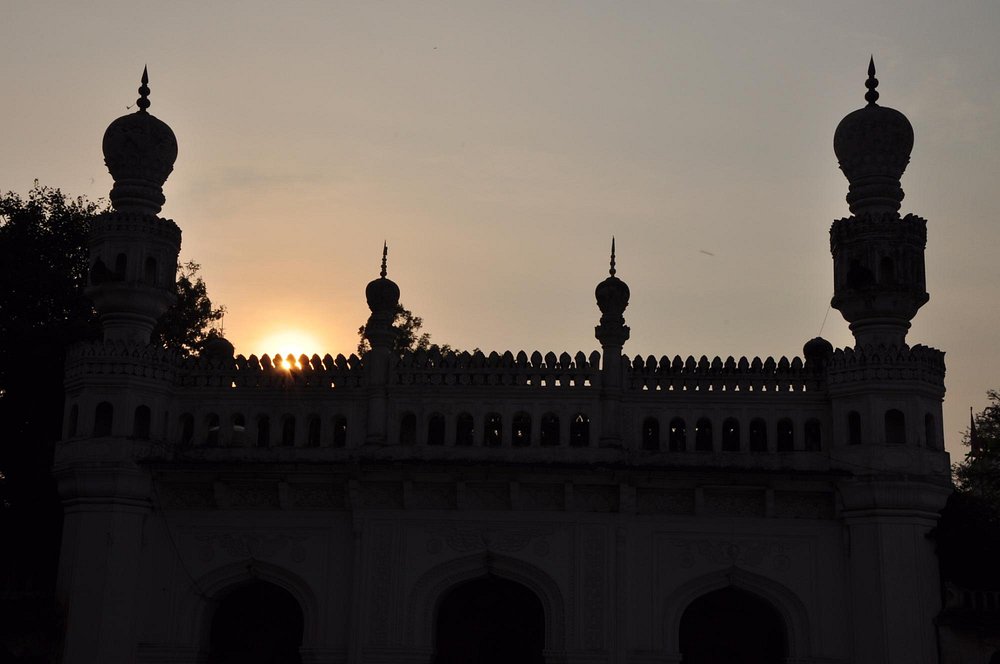
The Aga Khan Trust for Culture partnered with the Telangana Heritage Department to launch a comprehensive restoration project, supported by $250,000 from the U.S. Ambassadors Fund. The project aims to be completed by late 2025, addressing six principal tombs using traditional construction methods. Workers are reconstructing over 100 minarets using historical techniques, removing cement additions, and conserving stucco and jaali elements.
Planned improvements include landscaping, pedestrian pathways, informational signage, and lighting systems designed to enhance visitor experience without compromising architectural authenticity. The restoration aims to return the complex to public consciousness, transforming it into an accessible monument that illustrates Hyderabad’s layered cultural history.
The Paigah Tombs stand as evidence that imperial grandeur, however magnificent, ultimately yields to the passage of time without active preservation. Their current restoration offers contemporary audiences an opportunity to engage with Deccan history through structures once reserved for the nobility.
Also Read:Khan Market: Refugee Camp to Global Landmark
You can connect with DNN24 on Facebook, Twitter, and Instagram and subscribe to our YouTube channel.