
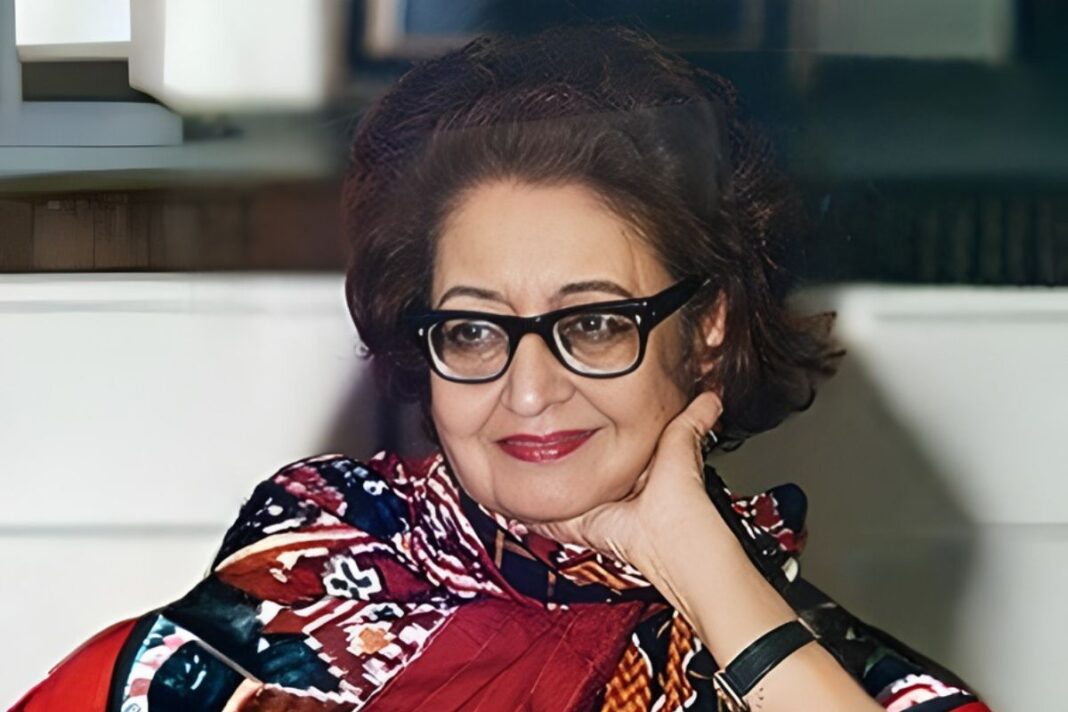

Qurratulain Hyder, who began crafting stories at age 11, transformed Urdu fiction into a serious literary form, creating masterworks that chronicle centuries of South Asian history through intimate human narratives.
Birth into Literature
Qurratulain Haidar entered a world filled with words. Born on January 20, 1927, in Aligarh, Uttar Pradesh, she was raised in a household where literature shaped the daily routine. Her father, Sajjad Haidar Yaldram, was a prominent Urdu writer specialising in travel and humour. Her mother, Nazar Zahra, wrote novels under various pen names. Books and literary discussions were her typical childhood companions.
Her parents named her after Qurrat-ul-Ain Tahira, a notable Iranian poet. The name translates as “solace to the eyes,” a term of endearment. Friends later knew her as “Ainee Apa,” a nickname carrying affection and respect.
While other children played with toys, Haidar reached for a pen and paper. She began writing at age six or seven, creating little books for her dolls. By 11, she had started serious composition, publishing her first story in the children’s magazine Phul. The trajectory of her life had become clear.
Qurratulain Hyder: Education and Formation
Haidar attended Indraprastha College in Delhi before earning a degree in English literature from Isabella Thoburn College at Lucknow University. This Western literary training, combined with her Urdu heritage, created a unique perspective.
Her education coincided with a period when Urdu literature was heavily oriented toward poetry. The novel had not yet established itself as a serious genre. Haidar would help change that.
Partition and Migration
The year 1947 brought upheaval across the subcontinent. Haidar’s family moved to Pakistan after her father’s death.
In Pakistan, she worked on documentary films. She then moved to England and worked with the BBC, gaining exposure to international literature.
In 1961, she returned to India permanently. She lived in Bombay before shifting to Noida near New Delhi. Unlike many writers who chose one side of the border, Haidar experienced both nations and understood the border’s artificiality.
Professional Life Beyond Fiction
Haidar supported herself through journalism, working for publications including Imprint and the Illustrated Weekly of India. She also did radio work.
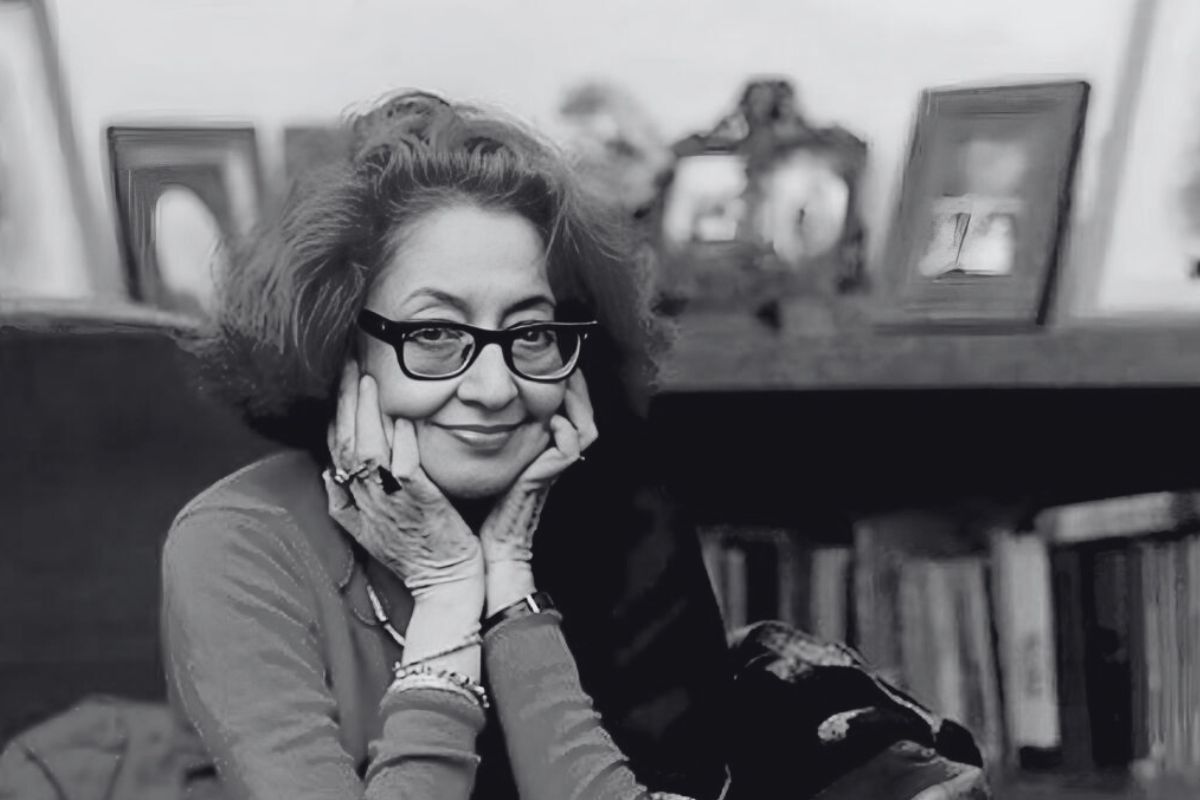
She served as a guest lecturer at universities including Chicago, Arizona, California, and Wisconsin. In 1979, she participated in the International Writing Program at the University of Iowa. In India, she taught at Aligarh Muslim University and Jamia Millia Islamia, influencing younger writers.
River of Fire
In 1959, her Lahore publishers released “Aag Ka Darya” (River of Fire), the novel that would define Haidar’s career. The book attempted something unprecedented in Urdu fiction. Its narrative stretched from the fourth century BC through the partition period, chronicling centuries through interconnected characters across vast spans of time.
The novel employed modernist techniques, particularly stream of consciousness, to reveal inner turmoil. Historical events appeared not as grand political movements but as forces that shaped individual destinies and destroyed families.
In later years, it drew comparison with Gabriel García Márquez’s “One Hundred Years of Solitude.” Aamer Hussein wrote in The Times Literary Supplement that the novel had the same significance for Urdu fiction as García Márquez’s masterpiece had for Hispanic literature.
However, the novel sparked controversy in Pakistan. Haidar questioned the partition and the two-nation theory. Through her characters, she examined whether the separation had justified its cost in blood. Pakistani authorities found these questions uncomfortable, which led to her decision to return to India.
Literary Innovation and Technique
Haidar’s writing style distinguished her from contemporaries. She employed stream-of-consciousness techniques, bringing readers into the characters’ mental worlds. Interior monologues revealed psychological processes behind choices. This approach demanded more from readers but rewarded them with a deeper understanding.
Her fiction incorporated history, politics, and social observation without becoming didactic. Characters faced genuine moral dilemmas rather than serving as ideological mouthpieces. Settings ranged across centuries yet remained grounded in specific cultural details.
Expanding the Literary Canon
Besides “River of Fire,” Haidar produced extensive work. Her early collection, “Sitaron Se Aage,” was published in 1947. “Mere Bhi Sanamkhane” and “Safina-e-Gham-e-Dil” established her reputation. “Patjhar Ki Awaaz” (The Sound of Falling Leaves), published in 1965, won the Sahitya Akademi Award in 1967.
“Chandni Begum” explored Muslim society following partition, examining how communities adapted to new political realities while maintaining cultural identity. “Akhir-e-Shab Ke Humsafar” (published in English as “Fireflies in the Mist”) earned the Jnanpith Award in 1989. “Kaar-e-Jahaan Daraaz Hai” offered insights into her creative process.
Her repertoire comprised approximately twelve novels and novellas, plus four short story collections. She translated classical works into Urdu, making international literature accessible. Her own works eventually appeared in English and other languages, expanding her audience beyond South Asia.
Women in Her Fiction
Haidar’s female characters challenged prevailing stereotypes. Her protagonists were educated, independent thinkers who questioned social constraints rather than passively accepting them. They made their own choices, pursued their intellectual interests, and actively participated in historical moments.
This portrayal reflected her own position as an unmarried woman who built a literary career through her efforts. She never married and lived alone for extended periods. Her life demonstrated that women could claim literary space without conforming to traditional expectations.
Recognition and Legacy
The literary establishment honoured Haidar extensively. The Sahitya Akademi Award came in 1967 for “Patjhar Ki Awaaz.” The Soviet Land Nehru Award followed in 1969. She received the Ghalib Award in 1985. The government conferred the Padma Shri in 1984 and Padma Bhushan in 2005. The Jnanpith Award, India’s highest literary honour, arrived in 1989. In 1994, she received the Sahitya Akademi Fellowship. The Bahadur Shah Zafar Award came in 2000.
These accolades confirmed what readers already knew. Haidar had transformed Urdu fiction from a minor genre into a serious literary form capable of addressing complex historical and psychological themes.
Final Years
Haidar died on August 21, 2007, in a hospital in Noida after a prolonged lung illness. She was 80. Authorities buried her in the Jamia Millia Islamia cemetery in New Delhi. The President and Prime Minister of India, as well as the Chief Minister of Uttar Pradesh, expressed condolences. Then Prime Minister Manmohan Singh described her as a towering literary figure whose passing had left a void in Urdu literature.
A small gathering of family and friends marked the occasion. She had lived in her Jalvayu Vihar home with a domestic help, maintaining independence until the end.
Enduring Influence
Haidar left behind more than published works. She demonstrated that Urdu fiction could explore vast historical canvases while maintaining an intimate focus on individual consciousness. Her techniques influenced subsequent generations who borrowed her methods for ambitious historical novels.
Her work continues attracting new readers and scholars. Translations of her fiction bring her work to audiences unfamiliar with Urdu. Academic conferences examine her contributions to modernist literature. Her books remain in print, introducing each generation to her vision of history as lived experience.
Critics labelled her the “Grande Dame” of Urdu literature, recognising both her pioneering role and sustained excellence. She proved that serious literary ambition and popular readership need not be in conflict. Her novels satisfied both scholarly analysis and general reading pleasure.
At a time when Urdu literature was centred on poetry, she made space for prose. When fiction existed primarily as entertainment, she transformed it into art. When women writers faced limited recognition, she claimed equal standing. Her legacy persists in every Urdu novelist attempting serious historical fiction, every writer experimenting with narrative technique, and every woman pursuing literary ambition without apology.
Also Read:Project Ecosanitation Transforms Menstrual Health Across India
You can connect with DNN24 on Facebook, Twitter, and Instagram and subscribe to our YouTube channel.