
Thandai-the chilled milk drink served at every Holi celebration carries centuries of trade history in each sip. What began as a medicinal tonic in northern India evolved through ancient commerce networks into the festival beverage that now defines spring celebrations across the subcontinent.
Ayurvedic Foundations and Early Development
Thandai first appeared in medical texts over a millennium ago, primarily in the regions now known as Uttar Pradesh and Rajasthan. Physicians working within the Ayurvedic tradition documented the drink as a remedy for heat exhaustion and digestive complaints. The earliest references appear in writings attributed to Charaka and Sushruta, medical scholars from the first and second centuries who catalogued the therapeutic properties of cardamom, black pepper, and fennel.
These practitioners combined cooling milk with ground almonds, poppy seeds, watermelon kernels, rose petals, and saffron to create what they considered a seasonal restorative. The timing proved deliberate. Holi falls during Phalgun, the lunar month when winter temperatures give way to early summer heat, and ancient doctors prescribed this mixture to help bodies adjust to the shift.
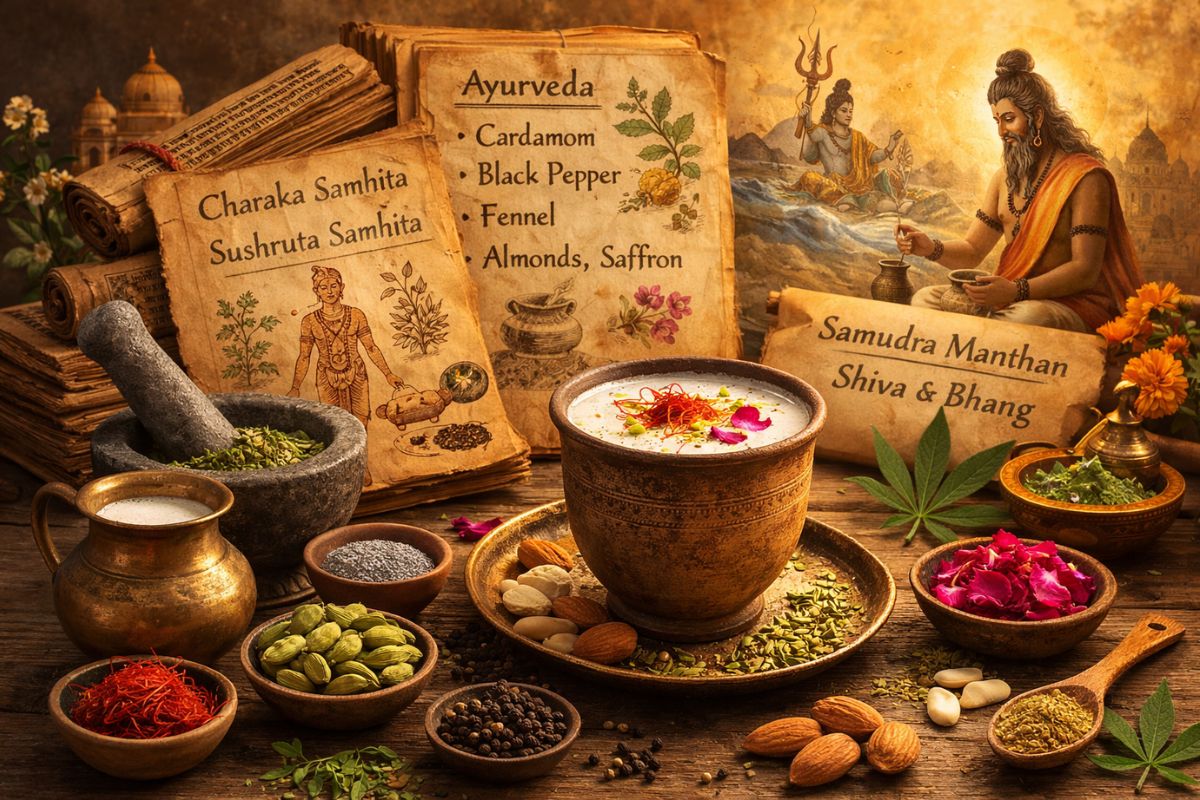
Hindu mythology connects thandai to Shiva through the Samudra Manthan legend, where the deity consumed poison to save creation, then drank a cannabis milk preparation for relief. This narrative established bhang thandai as a ritual Holi offering.
The Formula and Its Components
Traditional preparation requires between ten and fifteen ingredients. Almonds, pistachios, and cashews form the base, providing both texture and nutritional density. Fennel seeds, cardamom pods, and black peppercorns contribute aromatic complexity, while poppy seeds and melon seeds add substance. Saffron threads and rose water supply fragrance and colour.
Preparation methods have remained consistent for centuries. Cooks grind the ingredients in stone mortars called silbattas, strain the mixture through muslin, and chill the result before serving. Regional variations exist. Some versions emphasise almonds, others feature rose or mango prominently, but the bhang preparation dominates Holi celebrations for its mild psychoactive properties.
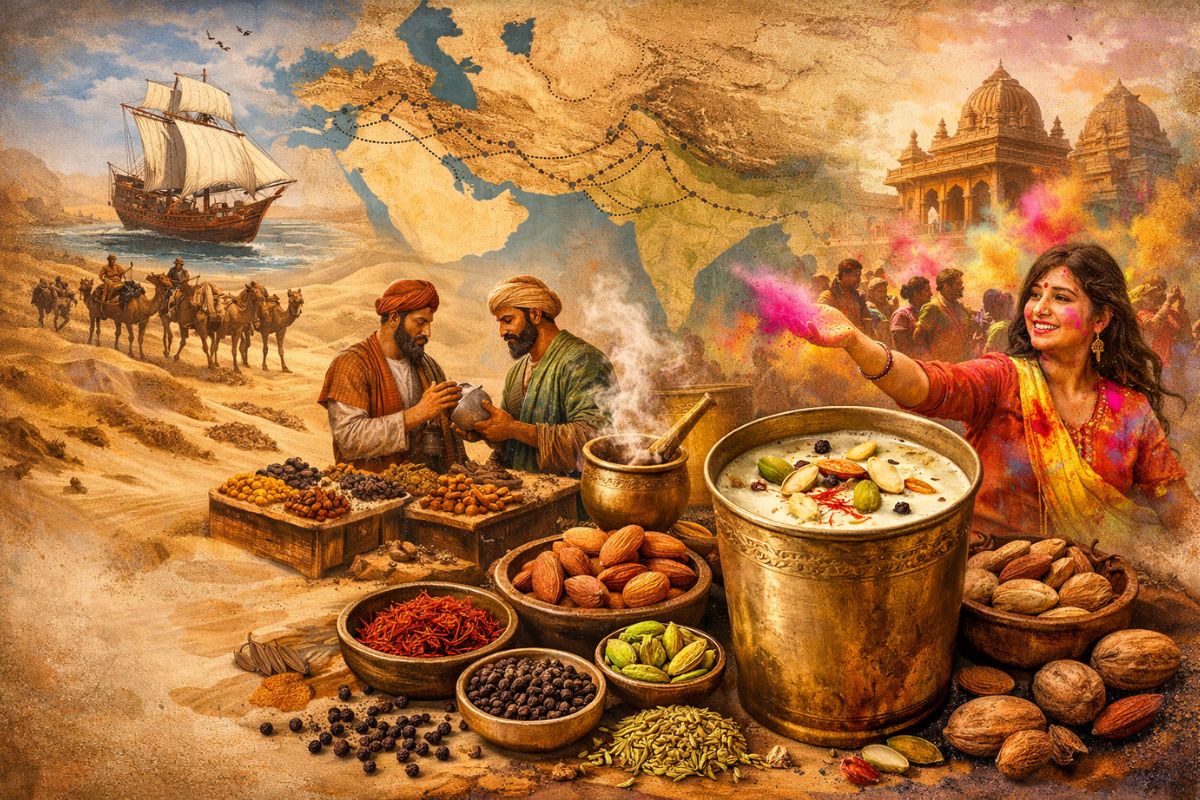
The nutritional profile supports prolonged outdoor activity. Nuts supply protein and fats. Seeds provide quick energy. The spices contain compounds that support immune function and aid digestion. These qualities made thandai practical for festivals that involve hours of physical celebration amid rising spring temperatures.
Maritime Commerce and Ingredient Expansion
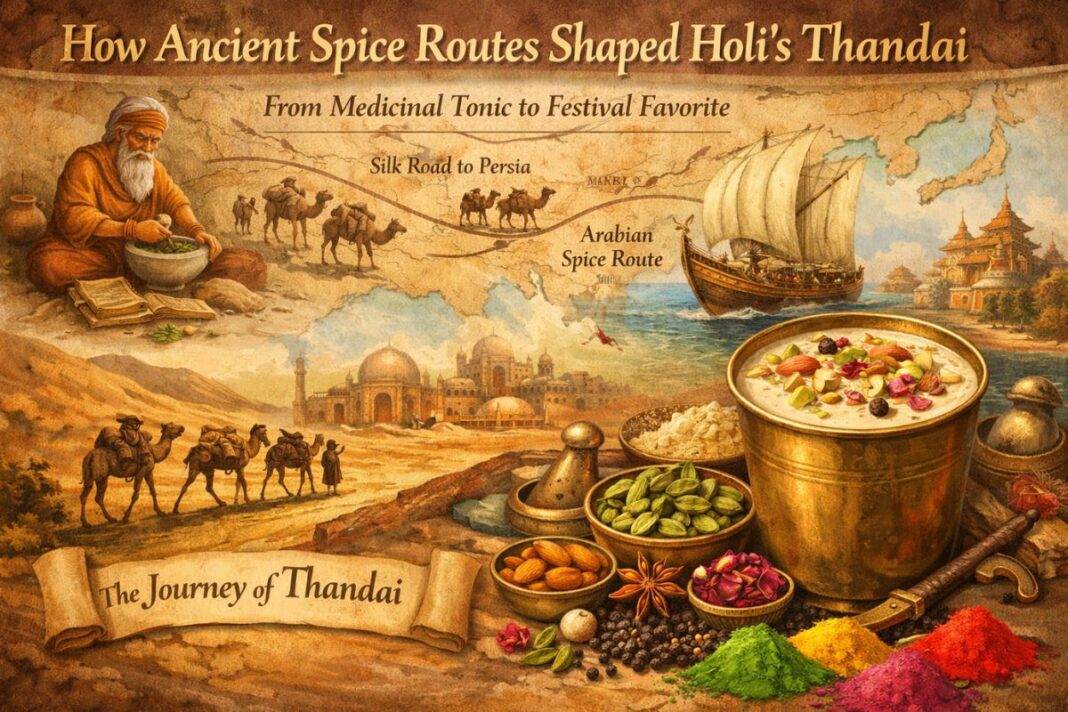
India participated in spice trade networks for more than 4,000 years. Archaeological evidence from the Indus Valley civilisation shows trade connections that supplied ingredients eventually incorporated into drinks like thandai. Ports along the Malabar Coast, particularly Muziris and Calicut, shipped black pepper, cardamom, and turmeric to Arabia, Egypt, and Rome as early as the first century before the Common Era.
Black pepper generated enough wealth to earn the designation “black gold” among merchants. Roman writers complained about gold reserves draining eastward to pay for spices. This commerce-funded infrastructure throughout southern India, while introducing foreign goods into local traditions.
Maritime routes linked Kerala to the Spice Islands of Southeast Asia by the time the Chola dynasty controlled southern waters between 850 and 1250. Cloves and nutmeg from Indonesia reached Indian markets through these channels, as did cinnamon from Sri Lanka. Arab and Jewish trading communities established in port cities facilitated exchange with Persian and Central Asian merchants, creating a cosmopolitan environment where culinary practices merged.
Cardamom cultivation in the Western Ghats predates written records, but Babylonian accounts from the eighth century before the Common Era mention imports of the spice. Saffron reached Kashmir through Central Asian trade routes connecting to Iran, where the crocus grows natively. These expensive ingredients transformed thandai from a medicinal preparation into a luxury beverage.
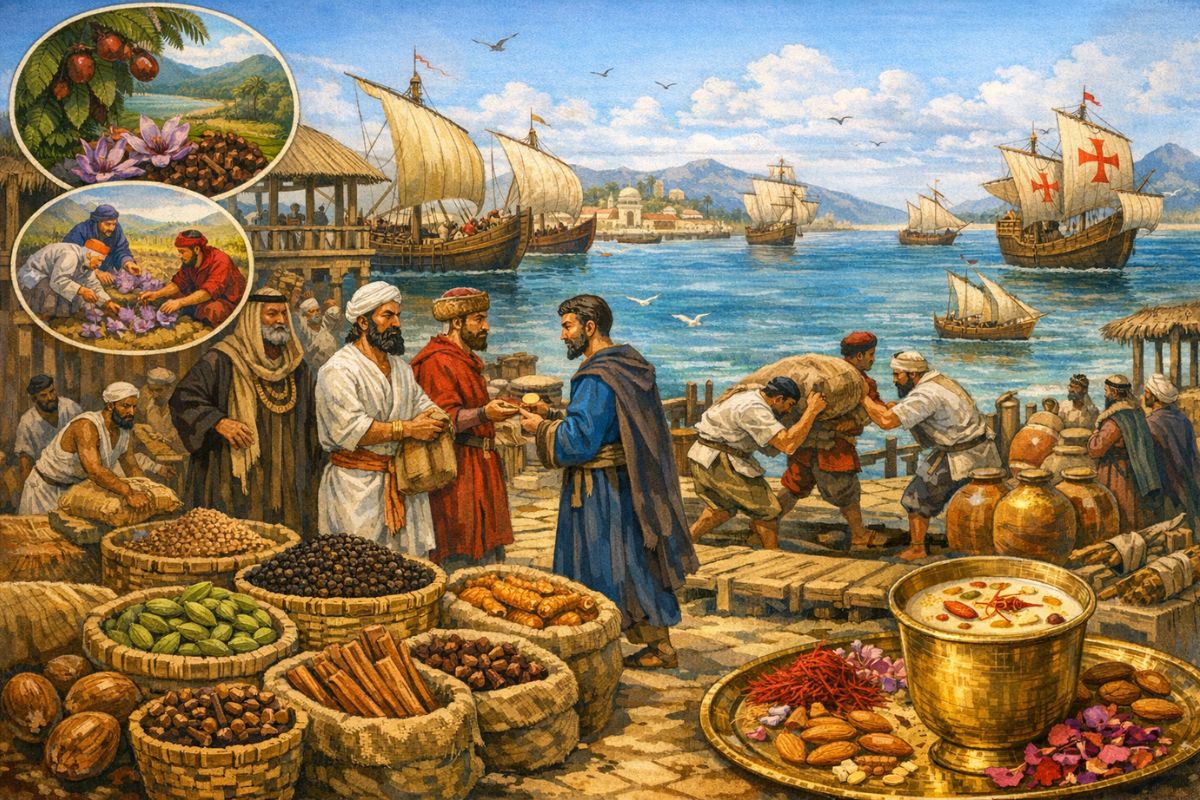
The Portuguese arrival in 1498 intensified European involvement in the spice trade. Vasco da Gama’s expedition sought direct access to pepper and other valuable commodities, bypassing Arab intermediaries. Portuguese control of coastal trade increased the availability of imported spices in Indian markets, though at varying costs that reflected political relationships and monopolistic practices.
Court Culture and Recipe Refinement
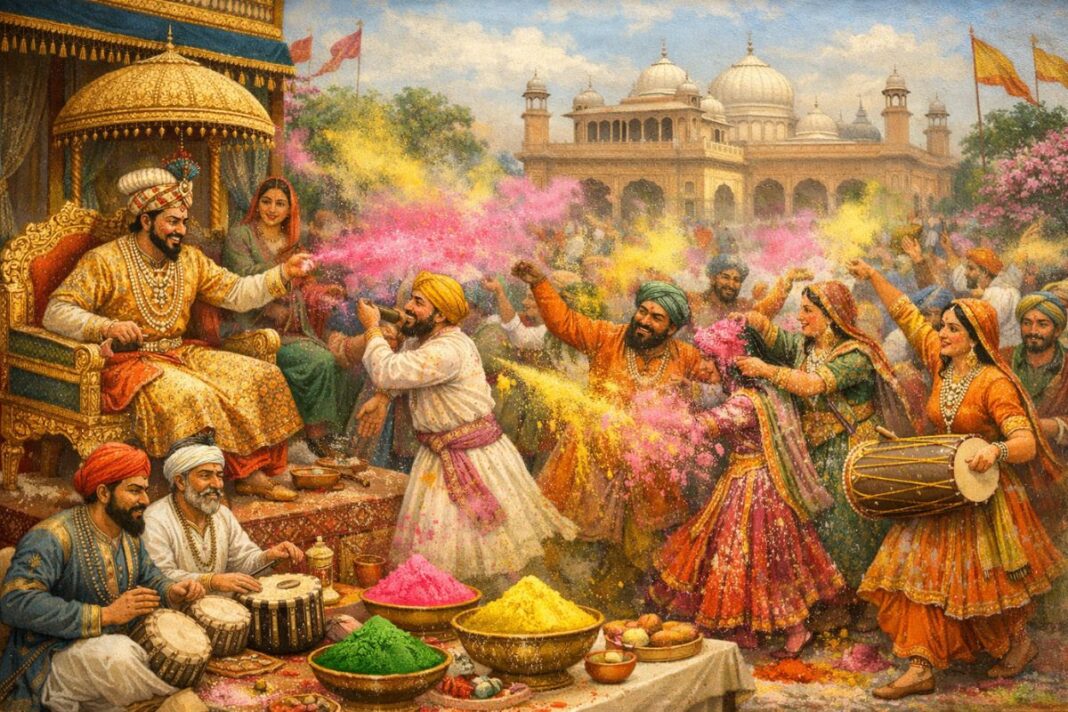
Mughal emperors adopted thandai after establishing their dynasty in the sixteenth century. Court records show the beverage appeared at royal feasts, enhanced with Persian touches such as greater use of rose water and elaborate nut combinations. Lucknow became a centre for refined preparation. A shop called Ramadhar Shivadhar ki Thandai, established in 1936, claimed to use recipes from older yogic sources and helped standardise commercial versions.
Rajput warriors in Rajasthan consumed thandai before battles, served in silver cups, believing it provided stamina. The Mughal period saw increased use of expensive spices as imperial trade agreements made cardamom and saffron more accessible. Hindu and Muslim culinary traditions merged during this era. Thandai became central to this synthesis, served alongside festival foods.
Festival Integration and Contemporary Practice
Holi’s agricultural roots connect to Puranic stories celebrated through bonfires before colour throwing begins. Thandai addresses practical needs during prolonged outdoor activity in warming weather.
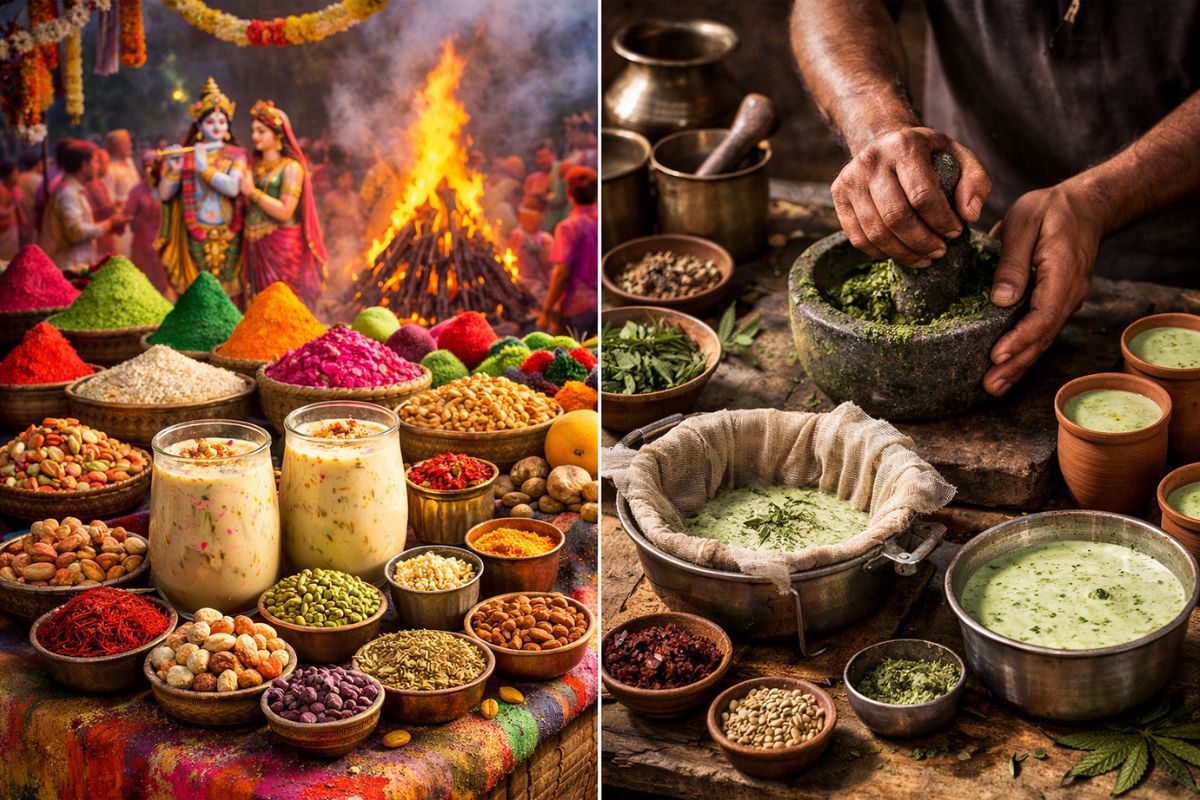
Bhang thandai draws on Krishna legends describing playful Holi celebrations in Vrindavan and on Shiva associations. The combination produces euphoria that enhances communal bonding and temporarily suspends social hierarchies.
Modern Holi generates significant demand for thandai ingredients. Markets stocked up on saffron, cardamom, and dried fruits before the festival. Health-conscious consumers have driven demand for versions emphasising Ayurvedic benefits without bhang.
Cannabis Preparation and Regulation
Bhang thandai uses leaves and seeds from young female cannabis plants, ground into a paste, strained, and blended with the standard formula. Preparation requires soaking nuts and seeds before grinding them with the cannabis paste. The mixture passes through muslin before being added to chilled milk.
Festival versions typically produce mild effects rather than heavy intoxication. The Indian government permits the sale of bhang through licensed outlets. Cities like Varanasi and Jaisalmer have authorised shops that operate year-round, with peak business during Holi and Maha Shivaratri.
The Narcotic Drugs and Psychotropic Substances Act of 1985 exempts bhang made from leaves and seeds while prohibiting other cannabis preparations. States regulate sales individually. Court decisions have upheld these exemptions by citing customary religious practice.
Historical Documentation
Mughal rulers developed elaborate cannabis preparations, including confections called ma’jun. Historical accounts report that Emperor Humayun particularly enjoyed these items. British colonial administrators studied bhang consumption patterns extensively. The Indian Hemp Commission report of 1894 documented widespread recreational use and concluded the practice caused minimal social harm, a finding that influenced policies allowing continued legal access.
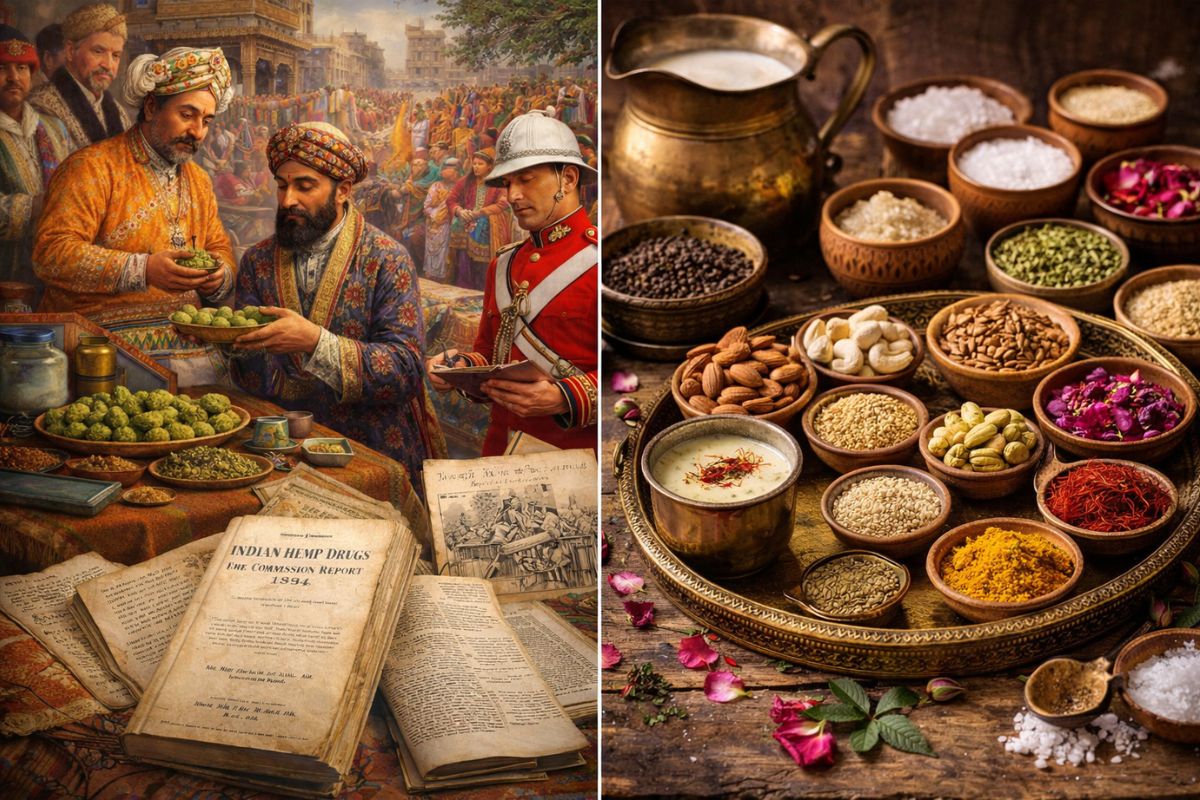
Early European observers noted bhang’s role in Indian festivals. Some accounts expressed surprise at the public nature of consumption during religious celebrations. Others documented medical uses and compared the effects with those of European herbal remedies containing different psychoactive plants.
Standard Ingredient Profile
Non-intoxicating thandai relies on specific proportions. Almonds, 10 to 15 per two-cup serving, are chosen for their cooling properties. Cashews and pistachios add creaminess. White poppy seeds and melon seeds contribute thickness without psychoactive effects.
Four to five cardamom pods provide aromatic sweetness. One teaspoon of fennel seeds adds a liquorice note. Five to six black peppercorns deliver subtle heat. Eight to ten saffron strands create a golden colour. Rose petals or rose water supply floral notes.
Full-fat milk forms the base, which is then boiled and chilled. Sugar or jaggery sweetens to taste. The grinding, straining, and chilling process takes several hours.
The drink represents an intersection of medicinal knowledge, religious practice, commercial history, and festival tradition. Trade routes that moved spices across oceans also carried culinary techniques. Thandai demonstrates how a cooling beverage evolved from a medical prescription into a festival centrepiece through centuries of exchange.
Also Read:Keep Your Living Space Cool with indoor plants
You can connect with DNN24 on Facebook, Twitter, and Instagram and subscribe to our YouTube channel.