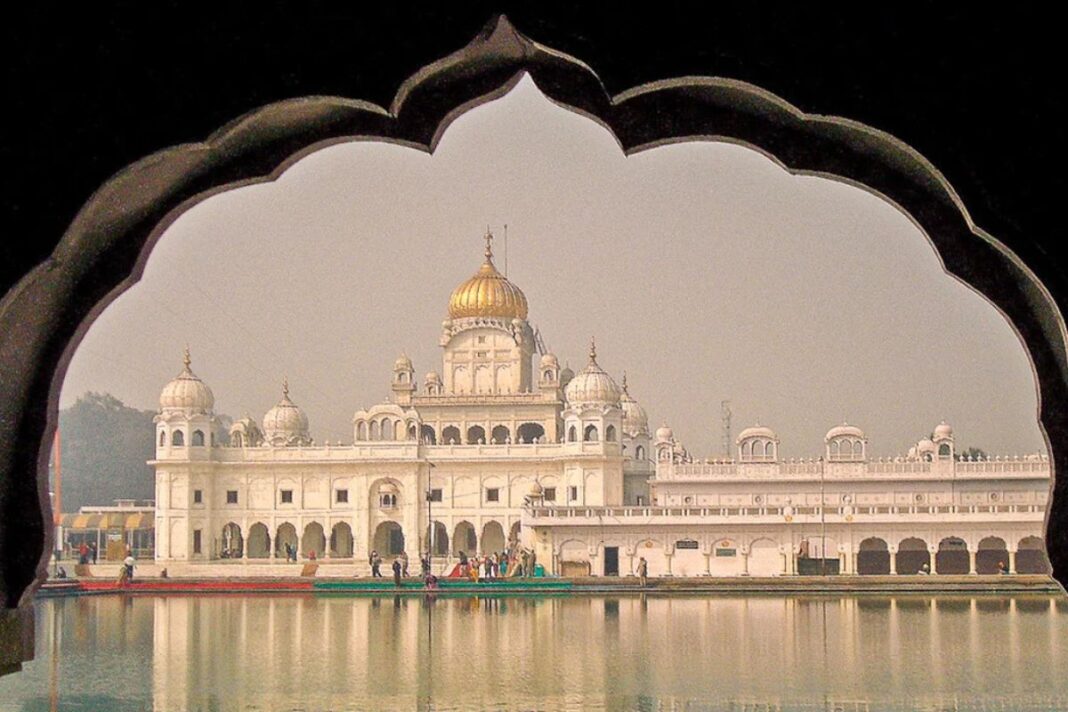


Every evening in Chennai, three calligraphers sit in an 800-square-foot office and handwrite an entire newspaper. Page by page, word by word, they preserve a tradition most publishers abandoned decades ago.
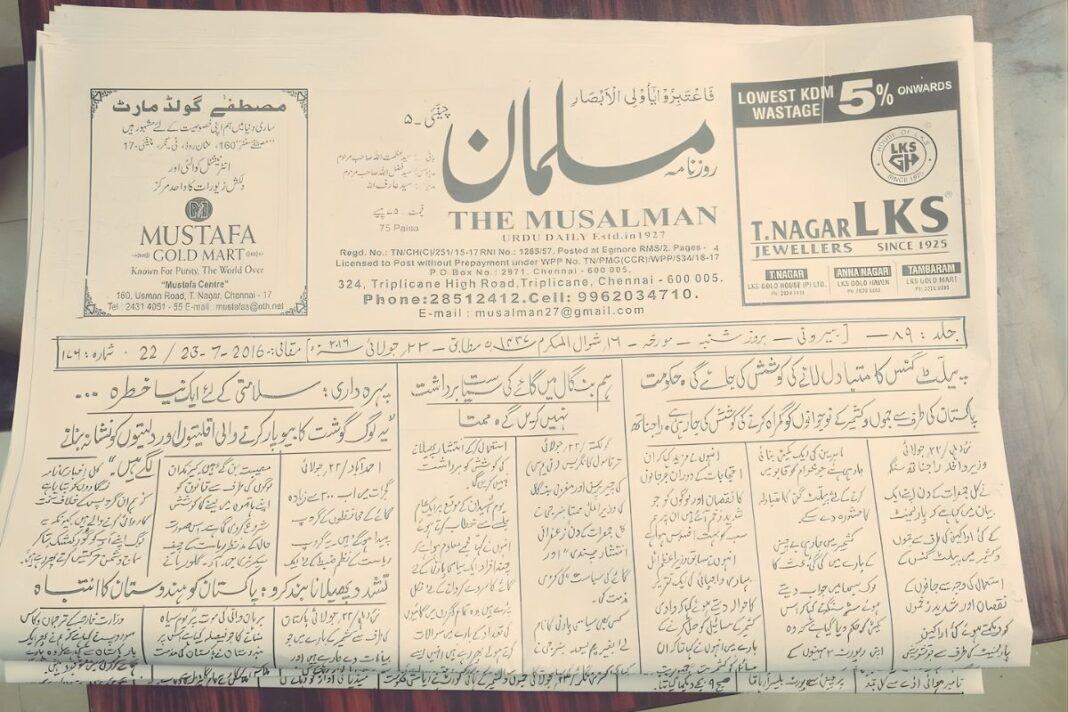
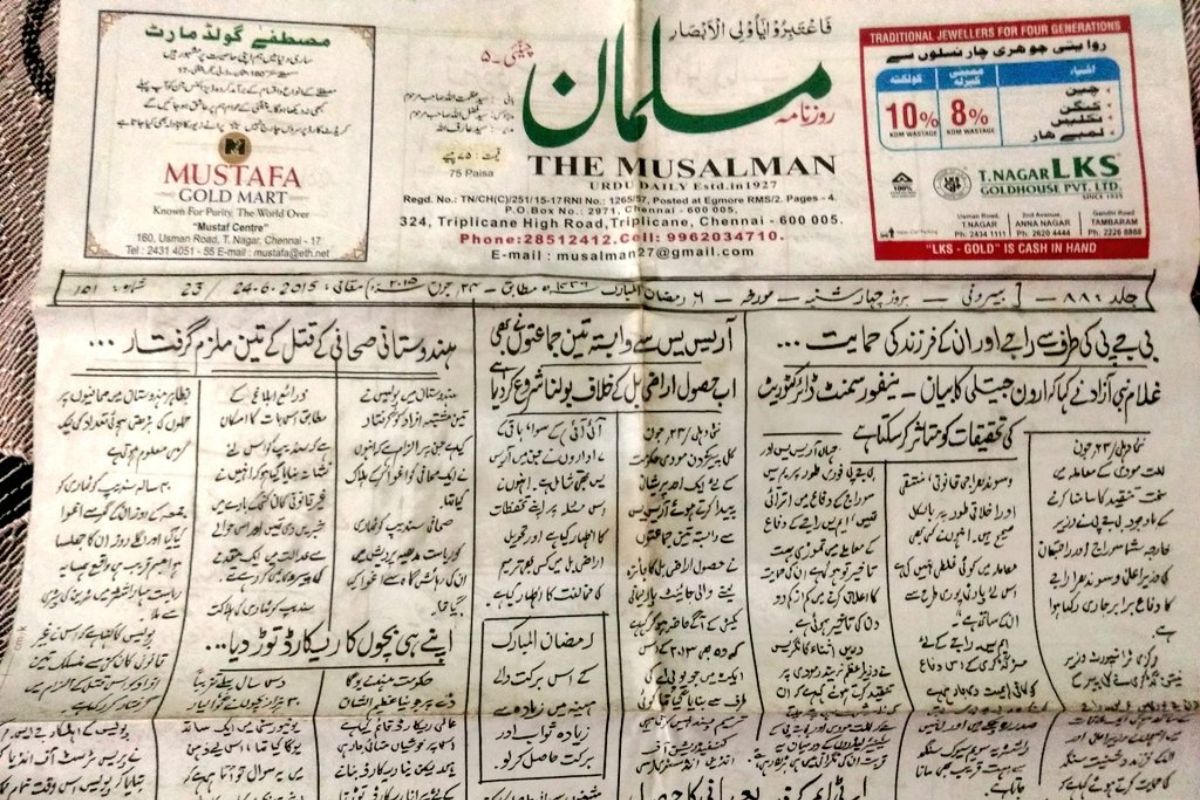
The Musalman has operated this way since 1927. No computer touches its pages before printing. The paper remains the only handwritten daily newspaper still published anywhere in the world, a fact confirmed by multiple international sources, including Wired magazine and various academic institutions.
Origins in Colonial India
Syed Azmathullah founded The Musalman on July 30, 1927, during British rule. Dr Mukhtar Ahmed Ansari, then president of the Indian National Congress at its Madras session, launched the inaugural edition. South India’s Muslim community lacked a dedicated Urdu publication, though such papers had existed in northern India for decades.
Azmathullah established his office on Triplicane High Road, near the Wallajah Mosque in Chennai. From this base, he built a four-page evening broadsheet combining news reporting with Islamic scholarship. The paper survived India’s independence in 1947, the partition that followed, and nearly a century of political transformation without interruption.
The Handwriting Process
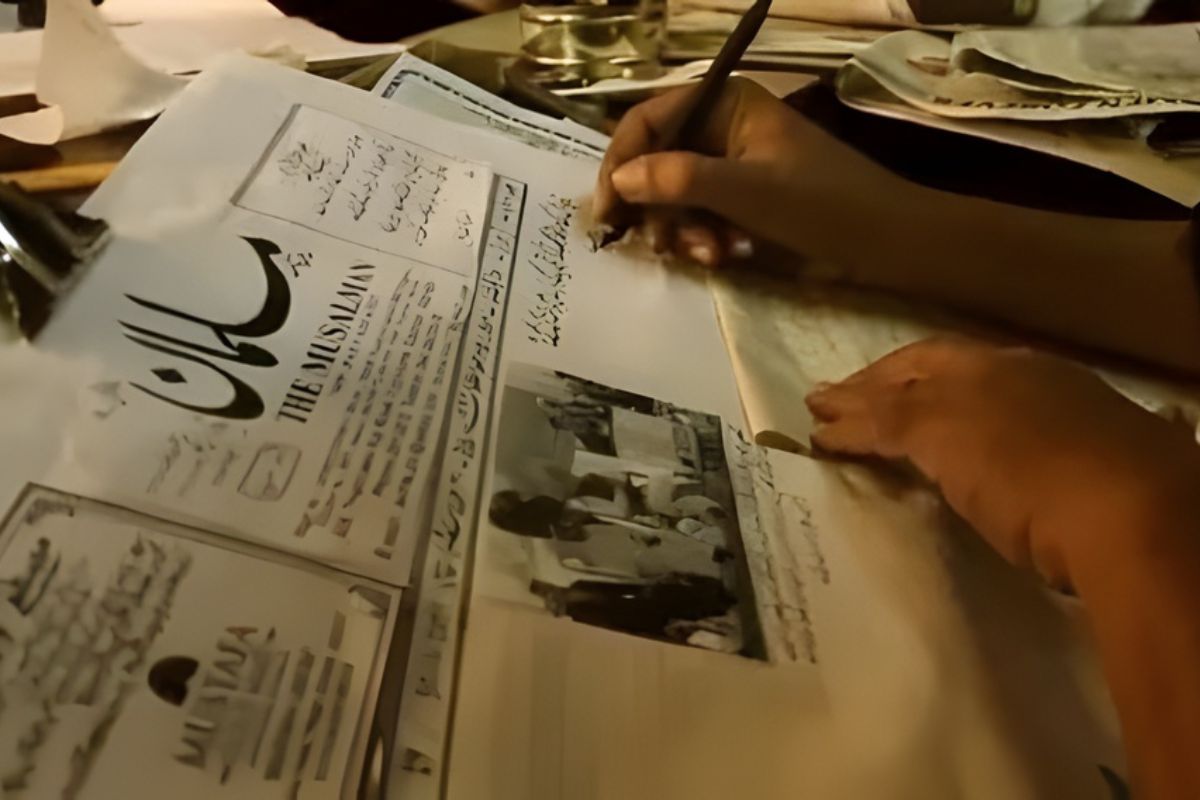
Three katibs, or calligraphers, produce each edition using reed pens and ink. They work on large plain sheets, writing in the Nasta’liq script style. Each page requires approximately three hours. A single error means starting over. The completed handwritten pages become photo negatives for offset printing presses. This hybrid method allows mass production while maintaining the handcrafted original. Around 21,000 copies are printed daily.
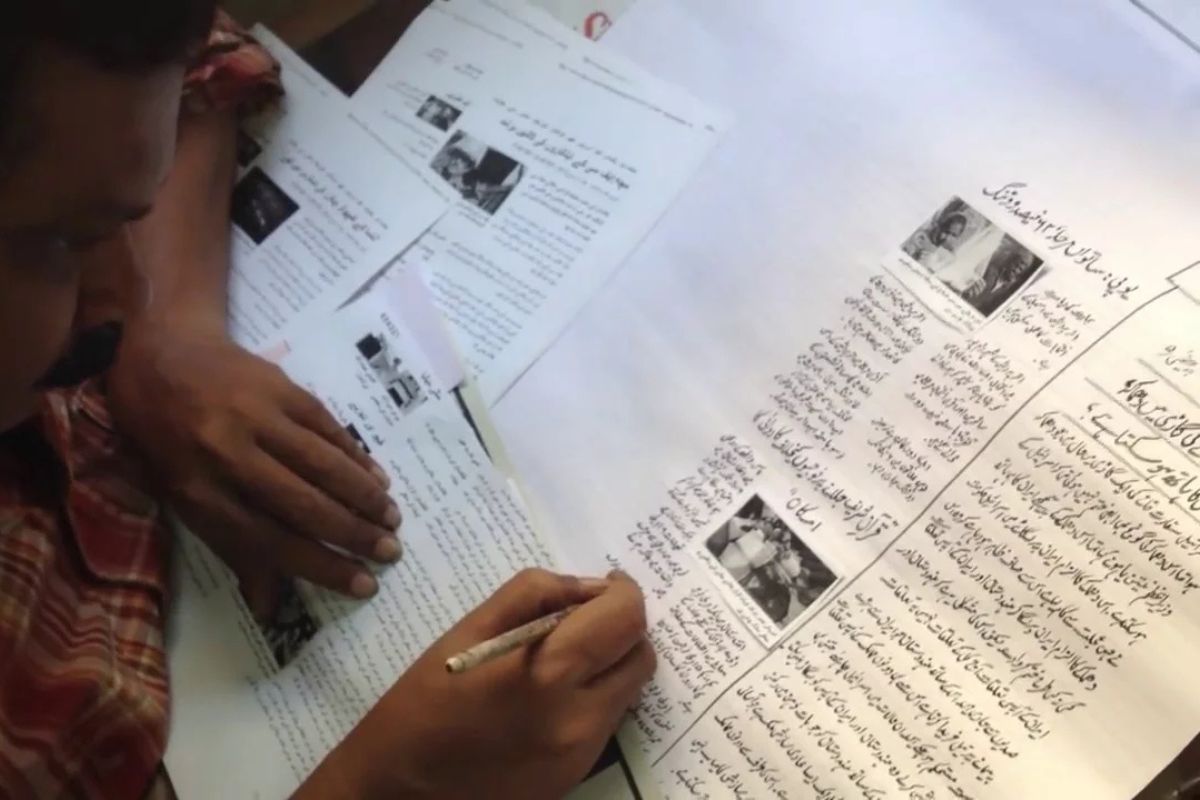
The office lacks computers entirely. Basic fans and lighting suffice. The front page carries national and international headlines with space for breaking developments. Page two contains editorials and global updates. Page three features Quranic verses and religious commentary. The back page covers local news, sports results, and advertisements.
Three Generations of Leadership
The Musalman remains a family enterprise. Syed Fazlullah, Azmathullah’s son, edited the paper from the 1950s until he died in 2008 at age 78. He spent his final years worrying about the craft’s future. His sons had pursued different careers, and few young people showed interest in learning calligraphy.
Syed Arifullah, Fazlullah’s youngest son and the founder’s grandson, took control in 2008. He held an MBA in marketing but returned to the family business out of a sense of duty. Under his leadership, the paper maintained its traditional methods while facing mounting pressures from digital media and declining Urdu literacy.
Three Generations of Editors
| Generation | Editor | Years Active | Notable Achievement |
| First | Syed Azmathullah | 1927-1950s | Founded paper, established handwritten format |
| Second | Syed Fazlullah | 1950s-2008 | Maintained operations through independence, partition |
| Third | Syed Arifullah | 2008-Present | Resisted digitization, preserved tradition |
The Team Behind the Pages
The core staff numbers fewer than a dozen people. Three reporters gather news, including Chinnaswamy Balasubramaniam, who has worked at the paper for over two decades. Correspondents in Delhi, Kolkata, and Hyderabad feed stories from those cities. Marketing manager Syed Gulam Murthuza has served for 35 years.
The three katibs form the heart of operations. Rahman Husseini joined the organisation as an accountant in 1980 and later became the chief calligrapher. Two women, Shabana and Khurshid, work alongside him. Their wages remain modest. Historical records show that the chief katib earned 2,500 rupees per month in 2007.
No katib has ever quit. They work until retirement or death. A few other institutions still employ traditional Urdu calligraphers. The office serves as more than a workplace. Poets visit to submit verses. Religious leaders stop by for discussions. Jawaharlal Nehru granted an interview during a 1960s visit to Chennai.
Circulation and Readership
The Musalman sells for 75 paise per copy, roughly one US cent. Annual subscriptions cost about 400 rupees. Despite this low price, the paper maintains financial stability through subscriber fees, newsstand sales, and modest advertising revenue. Distribution reaches beyond Tamil Nadu to Mumbai, Delhi, Kolkata, and smaller cities with Urdu-speaking populations. The evening publication schedule suits working readers who collect copies after office hours.
The publication maintains a steady regional presence across several key centres. In Tamil Nadu, it records an estimated circulation of 15,000 copies, primarily reaching the local Muslim community and Urdu scholars. Delhi accounts for around 2,000 copies, largely read by government employees and academics. Mumbai reflects a similar figure of 2,000, with readership concentrated among the business community and students. An additional 2,000 copies circulate across other cities, serving scattered subscribers and institutional libraries.
Readers phone daily with requests, particularly for specific hadiths or religious content. The paper receives approximately 20 such calls each day. This direct connection between publication and audience remains rare in modern journalism. Hindus make up a portion of the readership, particularly those who learned Urdu in school or multilingual households.
Challenges and Adaptations
Digital publishing transformed Indian journalism during the 1990s and 2000s. Desktop publishing software eliminated typesetting jobs. Online news sites reduced print circulation. The Musalman faced pressure to modernise.
Arifullah rejected these suggestions. He argued that digitisation would destroy the paper’s unique appeal. “If we change, we lose credibility,” he told interviewers. The handwritten format distinguishes The Musalman from competitors and justifies its existence in an oversaturated media market.
Recruiting new calligraphers presents difficulties. Young people prefer computer skills to penmanship. Low wages discourage applicants. The existing katibs age without clear successors. This succession problem poses a greater threat to long-term survival than any technological challenge.
Urdu literacy is declining steadily in South India. Tamil Nadu’s education system prioritises Tamil, English, and Hindi. Fewer children learn the Urdu script. Potential readership shrinks with each generation. The paper maintains current circulation but faces uncertain demographic futures. The publication maintains no active social media presence beyond a dormant Facebook page.
Cultural and Historical Significance
The Musalman preserves Urdu calligraphy when the art form faces extinction. Islamic tradition values beautiful script. Mosques display calligraphic verses. This newspaper continues that tradition in a secular, commercial context.
India’s Ministry of External Affairs featured the paper in a 2011 documentary titled “Preservation of a Dream.” International media outlets from Open Culture to Khaleej Times have covered its story. Google Arts & Culture archived copies. These recognitions acknowledge the publication’s role as a living museum piece.
The paper connects contemporary readers to pre-independence Muslim intellectual life. It represents an era when Urdu served as a lingua franca across India. Its persistence demonstrates one community’s determination to maintain linguistic identity despite political pressures.
Present Days
As of 2026, The Musalman continues to publish daily from its Chennai office. The staff remains stable. The handwritten process persists exactly as it has for nearly a century. Arifullah has vowed to continue his father’s life paper. He acknowledges uncertainty about succession. No confirmed heir exists.The paper stands alone. No other handwritten daily newspaper is published anywhere in the world. Similar publications in Pakistan and Bangladesh abandoned the practice decades ago.
This fragility makes the achievement more remarkable. Against economic logic, technological progress, and demographic trends, three calligraphers still gather each morning to handwrite the news. They work in a cramped office with basic equipment, earning modest wages, preserving a tradition that might die with them. For now, the pens move across paper. The newspaper publishes.
Also Read:Khan Market: Refugee Camp to Global Landmark
You can connect with DNN24 on Facebook, Twitter, and Instagram and subscribe to our YouTube channel.