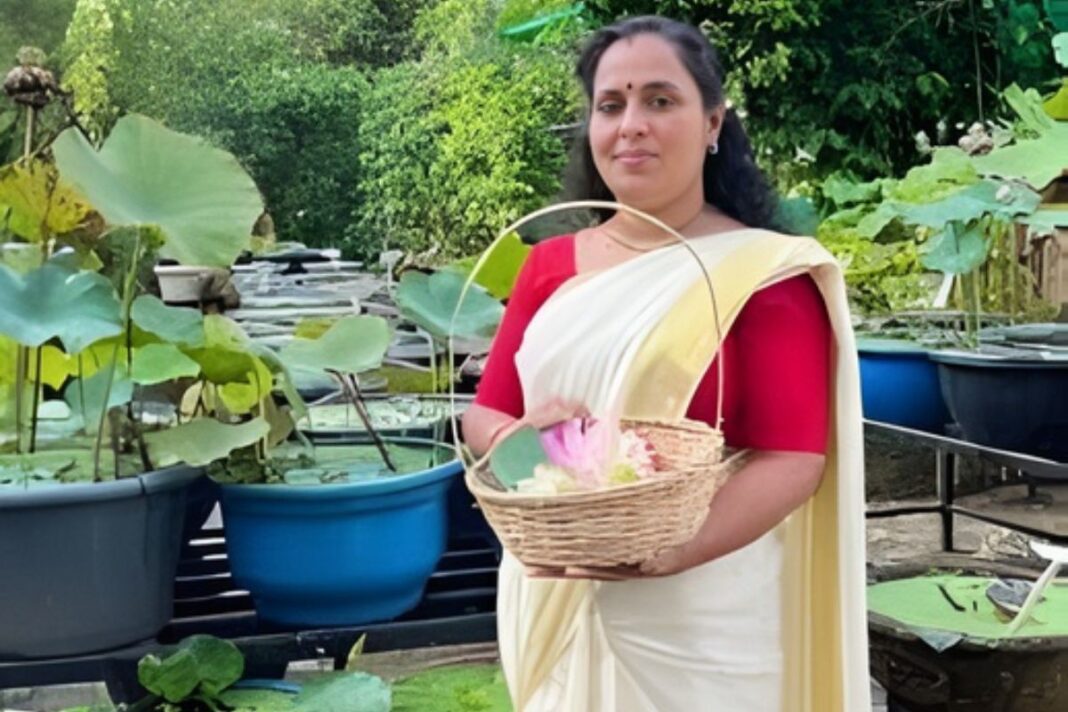

In Thrissur, Kerala, former primary school teacher Lathika Suthan has quietly built a thriving micro-enterprise by turning her lifelong love for aquatic flowers into a niche business that earns her up to ₹40,000 every month. From her home terrace and courtyard, she now grows nearly 100 varieties of lotus and around 80 varieties of water lilies, supplying rare and exotic plants to enthusiasts and institutions across the state.
From Classroom Teacher to Lotus Entrepreneur
Lathika’s relationship with gardening dates back to childhood, when tending to plants and watching them bloom became a source of deep joy. Even after she joined a government primary school in her early 20s, she continued maintaining a home garden, with lotus flowers always holding a special place in her heart. Over the years, she experimented with different ornamentals, but the elegance and symbolism of lotus and water lilies drew her back to aquatic plants.
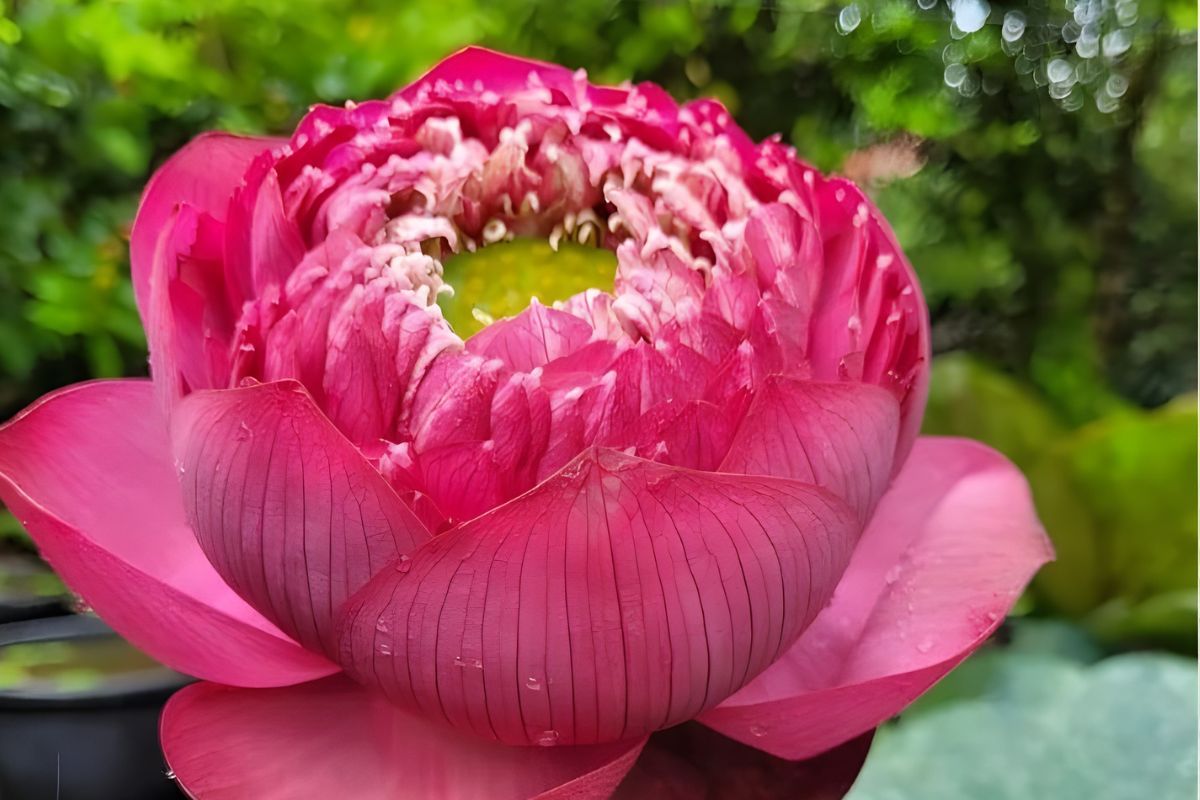
By 2018, her hobby had grown into a sizable personal collection, and she began to notice increasing curiosity from visitors and neighbours about the unusual varieties in her tanks and tubs. That year, she decided to formalise what had so far been a passion project. She started commercialising her lotus and water lily plants, gradually moving away from full-time teaching into plant entrepreneurship. This transition was not abrupt but evolved as she realised there was both emotional satisfaction and economic potential in focusing on rare aquatic species.
Building a Collection of Rare Lotus and Lilies
As she deepened her interest, Lathika began researching the global diversity of lotuses and water lilies and discovered that, although hundreds of varieties exist worldwide, only a handful were readily available in India. Many of the more exotic cultivars were imported from countries such as Thailand, Vietnam, and Japan, which inspired her to expand her own collection systematically. She started sourcing native and imported saplings and tubers from nurseries across India, often paying premium prices to acquire newly introduced varieties.
In the early phase, she sometimes spent as much as ₹10,000 to ₹20,000 per tuber for rare lotus cultivars, fully aware that these prices would fall once the varieties became more widely propagated. Today, she notes that the same kinds of tubers can often be purchased for around ₹250, illustrating how early adopters in plant-collecting circles effectively invest in novelty. Over time, this strategy allowed her to assemble an extraordinary assortment of almost 100 lotus varieties and 80 water lily types in her home garden in Thrissur.
Among her most talked-about specimens are the “Ancient Maple Leaf” lotus and the much-celebrated “1,000-petal lotus,” both considered rare and visually striking in aquatic gardening communities. These varieties are known for their hardiness and ornamental value, and Lathika says that the 1,000-petal lotus bloomed in Kerala for the first time in her own garden, adding to the allure surrounding her work.
Learning, Experimenting, and Refining Her Craft
To move beyond trial-and-error and gain a more systematic understanding of lotus and water lily cultivation, Lathika attended multiple workshops and training sessions organised by the agricultural department in Thrissur district. These programmes exposed her to best practices in aquatic plant management, propagation techniques, and nutrient requirements suited to local climatic conditions. She also actively sought guidance from experienced lotus growers and horticulture enthusiasts across India, using their advice as a base for her own experiments.
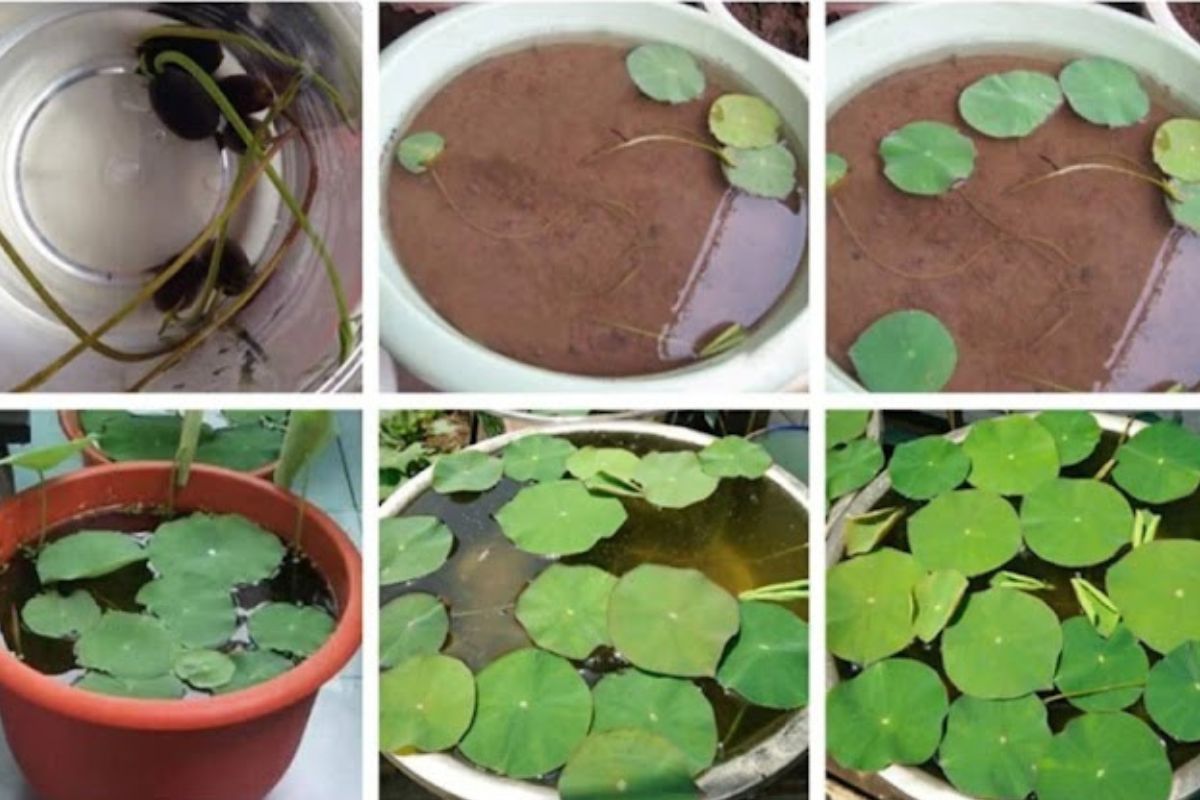
Back home, she applied this knowledge in a practical, iterative way, testing different soil mixes, container depths, and fertiliser combinations to understand what worked best for each variety. Over time, she refined simple, replicable methods that allowed her to grow and multiply lotuses and water lilies efficiently in limited space. Her home gradually transformed into a “dreamy” aquatic garden, with every corner dotted with tubs, drums, and containers brimming with lotus and lily leaves and buds.
While aquatic plants are sometimes perceived as demanding, Lathika maintains that, in many respects, they are easier to manage than typical ornamental or indoor plants. Once planted with the right medium and given adequate sunlight and water, lotus and water lilies tend to establish quickly and can flower profusely with relatively minimal day-to-day care. This insight became central to how she communicates with new customers, especially first-time gardeners intimidated by the idea of maintaining water plants.
Sustainable Gardening and Daily Routine
A distinctive aspect of Lathika’s practice is her emphasis on sustainable, low-chemical plant care. She strongly advocates the use of natural fertilisers, relying on easily available household and farm materials such as dried cow dung, used tea leaves, and powdered eggshells to feed her plants. Where necessary, she supplements these with small amounts of di-ammonium phosphate (DAP). Still, she stresses that sunlight, clean water, and a good growing medium matter more than heavy chemical use.
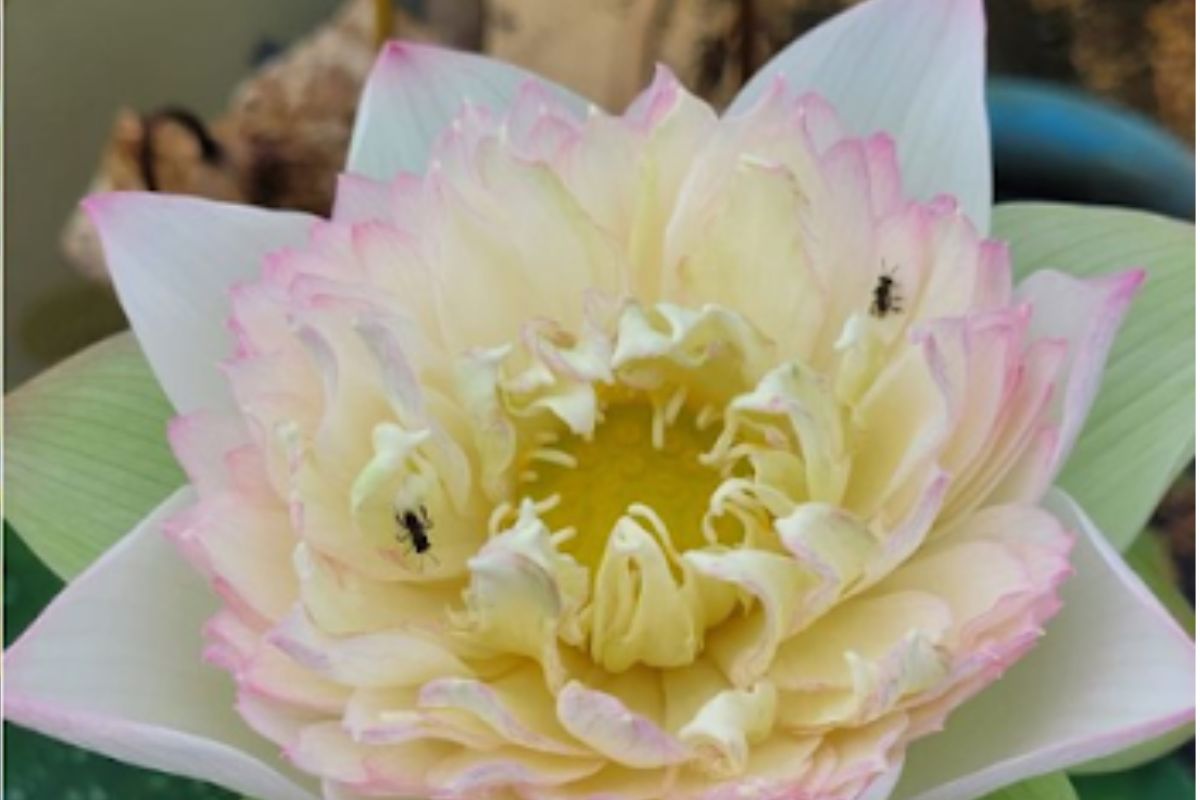
This approach not only reduces input costs but also aligns with the growing preference among home gardeners for organic or low-input methods. Beyond lotus and water lilies, she also grows orchids, begonias, aglaonemas, creepers, and other indoor plants, turning her home into a diverse green space rather than a single-species farm. The diversity helps spread risk, provides aesthetic variety, and gives her additional products to offer visitors who come looking for plants beyond aquatic species.
Lathika’s husband, Suthan Thozhuthumparambil, has become an important part of this routine. After working for years in Qatar, he retired and returned to Kerala, where he now assists her in running the day-to-day operations of the garden business. He has learned watering, repotting, and basic care techniques from her and describes their gardening sessions as shared time that brings them both satisfaction. His support also allows the business to handle larger orders and maintain a growing number of pots and tanks without compromising plant health.
Turning Passion into a ₹40,000-a-Month Business
As her collection expanded and word spread about her rare blooms, Lathika started receiving increasingly frequent enquiries from people who wanted to grow similar plants at home. Initially, she responded informally by sharing tubers and seedlings with a small circle of enthusiasts, but the steady demand prompted her to think of it as a structured business opportunity. She began propagating more plants specifically for sale and set up a system to regularly supply healthy seedlings and seeds.
Today, Lathika sells over 150 lotus seedlings and more than 100 water lily seeds each month, with orders coming from both individual home gardeners and institutional buyers. Hospitals, hotels, and resorts make up a major part of her customer base, using lotus and water lilies to enhance the ambience of courtyards, entryways, and water features. On average, her venture now generates up to ₹40,000 per month, a substantial supplementary income built entirely around her home garden.
Finding Fulfilment Beyond Profit
Despite the financial success, Lathika consistently emphasises that money is not her primary motivation. For her, each blooming flower offers a sense of contentment and calm that far outweighs the numbers in her monthly ledger. She describes the plants as a “respite” from daily stress, providing mental peace, purpose, and a tangible connection to nature within the confines of urban life.
In doing so, Lathika Suthan has emerged as a quiet symbol of how ordinary professionals can reimagine their careers around ecological hobbies, turning terrace gardens and backyard ponds into sources of income, learning, and everyday happiness.
Also Read:Project Ecosanitation Transforms Menstrual Health Across India
You can connect with DNN24 on Facebook, Twitter, and Instagram and subscribe to our YouTube channel.