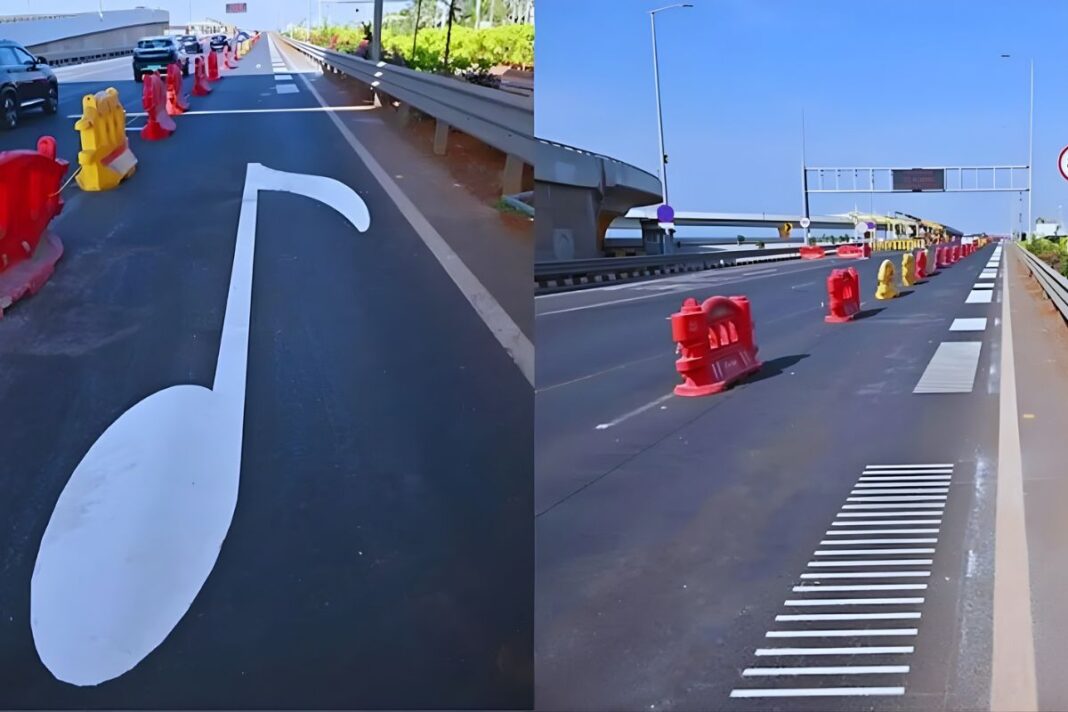

The rumble of traffic along Mumbai’s coastal corridor took an unexpected turn in February 2026. Drivers travelling northbound on the Dharmaveer Chhatrapati Sambhaji Maharaj Marg, a section of the city’s Coastal Musical Road, encountered something unusual at speeds between 60 and 80 kilometres per hour. The pavement itself appeared to sing A.R. Rahman’s “Jai Ho,” the Oscar-winning anthem from Slumdog Millionaire. No speakers broadcast the tune. No electronic devices triggered the sound. The music emerged from the interaction between tyres and carefully engineered grooves carved into a 500-meter stretch of asphalt.
The Brihanmumbai Municipal Corporation commissioned this installation, marking India’s first musical road. The project targets a practical problem: chronic speeding on a busy route connecting Nariman Point to Worli, an area dense with business activity and residential neighbourhoods. Engineers borrowed techniques refined internationally, calculating groove dimensions to match the rhythm and melody of the chosen song. Signboards appear 500 meters, 100 meters, and 60 meters before the musical section, instructing drivers to maintain the optimal velocity range. Inside the nearby tunnel, additional notices repeat the message.
Early responses suggest novelty encourages compliance. Videos circulating online capture surprised motorists smiling and exclaiming as their vehicles play the recognisable melody. Officials have not disclosed exact costs, though comparable traffic management installations in other countries run into millions of rupees. The investment reflects a broader strategy to reduce accidents through engagement rather than enforcement solely.
Vibration Physics and Acoustic Principles
The mechanics rely on a simple principle: tyres convert mechanical vibration into audible sound. Rumble strips, the grooves cut into the road surface, create this effect through precision spacing and depth. When a tyre rolls over a groove, it compresses briefly before rebounding. This action pushes air outward, generating sound waves. The frequency of these waves depends on two factors: the distance between grooves and the vehicle’s speed.
Frequency equals vehicle speed divided by groove spacing. At 70 kilometres per hour, grooves spaced five centimetres apart produce a frequency near 388 Hertz. This corresponds approximately to the musical note ‘F’. Closer spacing at higher speeds yields higher pitches. Wider gaps create lower tones. Depth influences volume rather than pitch. Shallow grooves produce softer sounds suited to light beats. Deeper cuts generate louder bass notes.
Asphalt provides an ideal medium for this acoustic engineering. Its rigidity ensures efficient vibration transfer from the tyre to the air. However, tyre characteristics introduce variation. Tread patterns, inflation pressure, and rubber composition all affect the resulting tone. Stiffer tyres generally produce louder sounds. Mumbai’s climate presents additional considerations. Heavy monsoon rains could dampen the effect or erode grooves over time. Engineers incorporated drainage features to channel water away from the musical section, preserving both sound quality and structural integrity.
Safety Outcomes and Noise Levels
It is early days for safety data, as the installation opened only recently. International precedents offer guidance. Studies of musical roads elsewhere report speed reductions of 15-30 per cent. Accident rates decline as drivers pay closer attention to their surroundings. Noise levels peak below thresholds considered harmful, similar to conventional rumble strips used worldwide since the 1950s to alert drowsy or distracted motorists.
Japan’s Accidental Discovery and Network Expansion
Japan pioneered the concept, though the discovery was accidental. In 2007, engineer Shizuo Shinoda noticed his bulldozer created melodic patterns when it gouged the ground at certain intervals. Shizuoka Prefecture soon installed roads near Mount Fuji that play folk songs like “Sakura Andon.” These installations stretch beyond 250 meters and contain more than 2,500 grooves. Vehicles travelling around 40 kilometres per hour trigger notes ranging from 130 to 440 hertz.
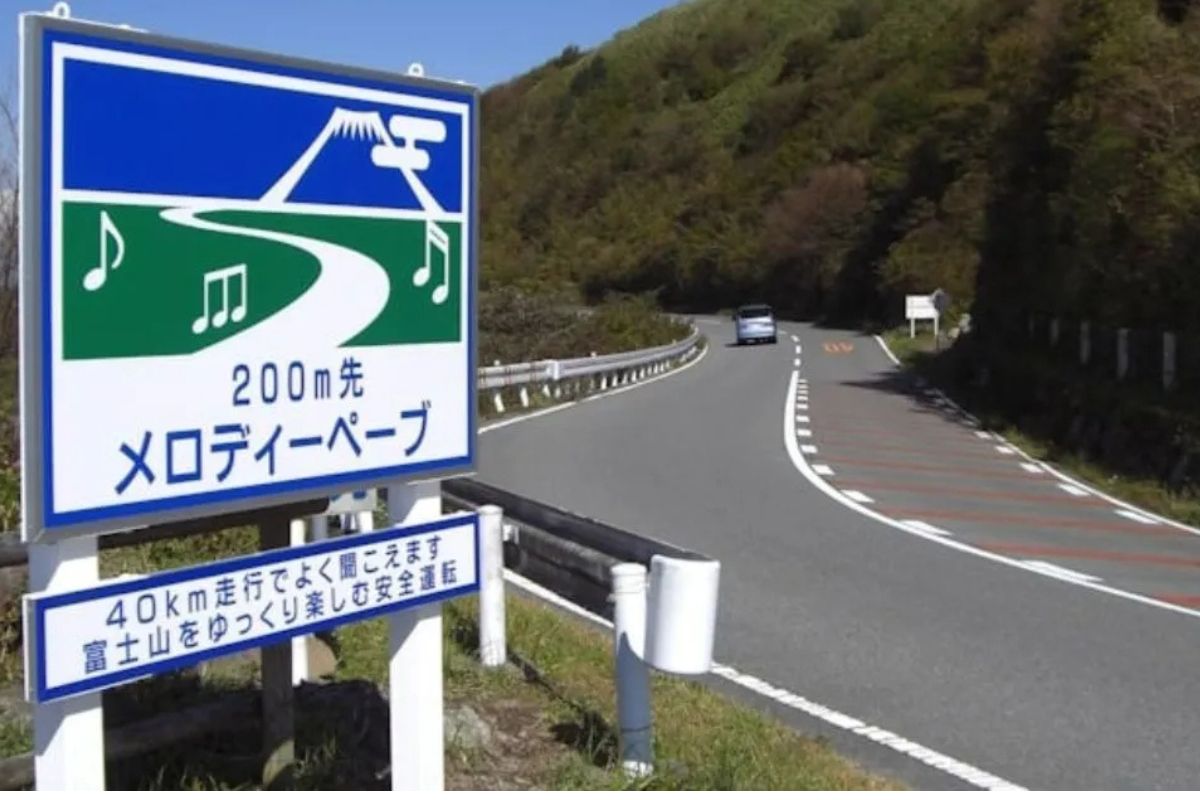
Early versions suffered washouts during rainy seasons. Engineers developed sealants to protect the grooves, and Japan now maintains over 50 musical roads. Locations include Hokkaido, featuring “Shiretoko Love Song,” and Gunma, playing “Memories of Summer.” Research indicates that these roads reduce speeding by 30 per cent on curves while attracting tourists seeking the experience.
South Korea’s Expressway Applications
South Korea built its first musical road after 2008, near airports where the tune “Mary Had a Little Lamb” greets travellers. Construction required four days. Five roads operated as of 2022. Kangwon Land features “Mountain Wind, River Wind.” The Osan to Chinhae route plays “Bicycle.” Tunnels between Inje and Yangyang broadcast “Twinkle Twinkle Little Star.” The Donghae Expressway selected “Cheer Up, Dad” to encourage drowsy drivers on long stretches. These installations accommodate thousands of vehicles daily at speeds of 35 to 50 kilometres per hour. One road was paved over in 2022, illustrating the challenges heavy traffic poses to groove longevity.
United Arab Emirates Tests Desert Conditions
The United Arab Emirates joined the movement in 2025 with a 750-meter section along Sheikh Khalifa Street in Fujairah. This installation plays Beethoven’s Ninth Symphony, marking the Arab world’s first musical road. Engineers coated the grooves to withstand desert heat and blowing sand. The location targets city entrances where awareness matters most. Ferrari World in Abu Dhabi operates a variant incorporating racing themes, blending tourism appeal with functional design. Speeding violations dropped by 18 per cent, proving the concept works even in extreme climates.
Hungary’s European Adaptation
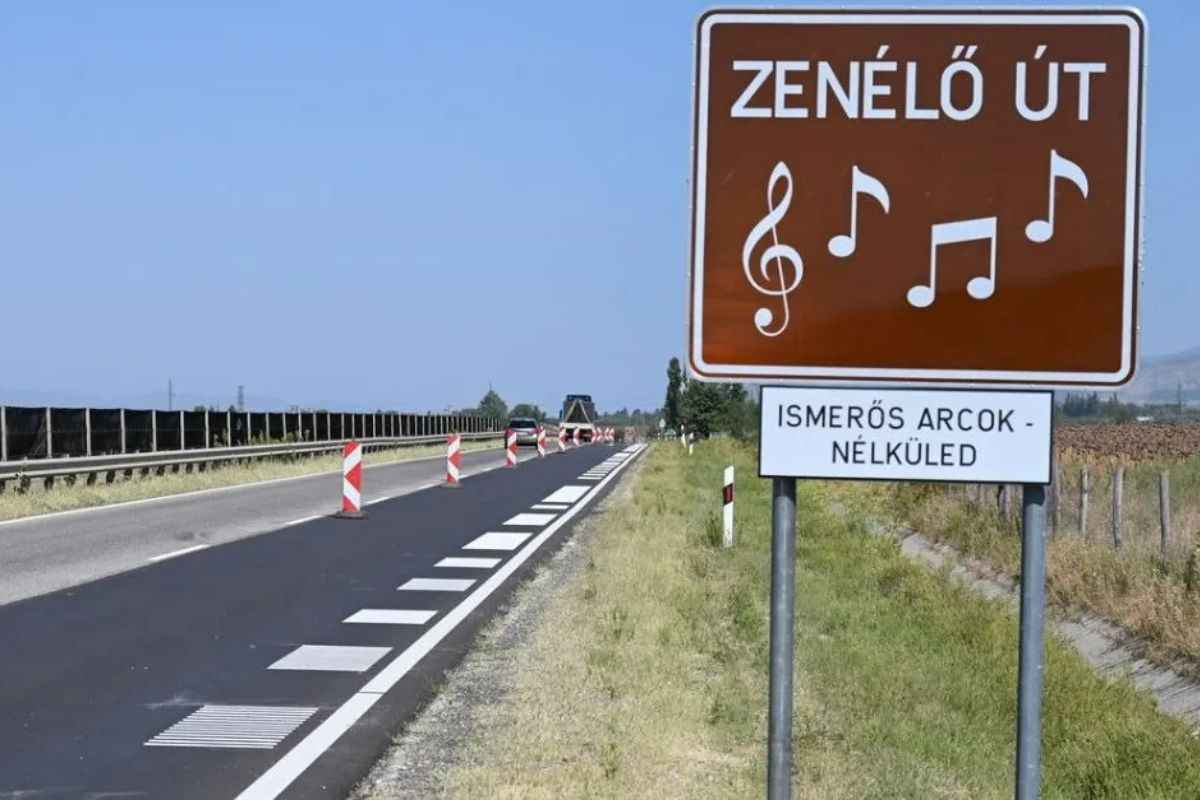
Hungary entered the field between 2005 and 2007, becoming the first European nation to adopt the technology. Road 67, connecting Kaposvár to the M7 motorway, plays “A 67-es út” by the band Republic. The grooves function like guitar strings plucked by passing wheels. In 2023, a project installed 513 meters of musical asphalt on Road 37 near Szerencs. The selection “The Grapes are Ripening” draws on children’s folk traditions. Highway 21 received a 550-meter section in 2024, featuring “Nélküled” by Ismerős Arcok. Harsh winters require repairs every two years, yet crash reductions of 15 per cent justify the maintenance expense.
Mumbai’s Position Among Global Projects
Mumbai’s 500-meter segment represents a modest beginning compared to Japan’s extensive network, yet it surpasses the UAE in ambition. Unlike Japan’s emphasis on tourism or South Korea’s focus on tunnel safety, Mumbai addresses urban traffic flow along a major commercial corridor. Hungarian technical collaboration informed the groove calculations, adapted to bitumen formulations that resist monsoon damage better than concrete alternatives. Challenges mirror those encountered globally: heavy trucks accelerate wear and tear, weather dampens sound quality, and the novelty might distract only some drivers. Police monitors traffic patterns to identify problems early.
Expansion Plans and Regional Variations
Future expansion appears likely. The BMC has expressed interest in additional musical roads. The National Highways Authority of India is studying pilot programs for intercity routes featuring regional music. Tamil Nadu officials are considering installations playing Carnatic ragas. Karnataka is exploring folk melodies tied to local identity. Technological refinements may allow integration with smartphone apps that recommend optimal speeds. Electric vehicles, with their quieter operation, might benefit from specially tuned grooves that compensate for reduced engine noise.
The road honours Chhatrapati Sambhaji Maharaj, a historical figure associated with resilience and innovation under difficult circumstances. The choice reflects the values Mumbai’s planners hope to embody: creativity applied to practical challenges. Infrastructure rarely generates affection, yet this project demonstrates that roads can express cultural identity while serving mundane purposes. Each groove represents both engineering calculation and artistic intent.
Commuters accustomed to potholes and congestion now encounter a road that responds to their presence. The experience lasts seconds, but those seconds transform a routine journey into something memorable. Whether the installation achieves its safety goals will become clear through data collection over the coming months. Early enthusiasm suggests drivers appreciate the gesture. In a city where infrastructure often frustrates, a singing road offers unexpected delight. The next time traffic permits 70 kilometres per hour, the asphalt celebrates.
Also Read:Project Ecosanitation Transforms Menstrual Health Across India
You can connect with DNN24 on Facebook, Twitter, and Instagram and subscribe to our YouTube channel.