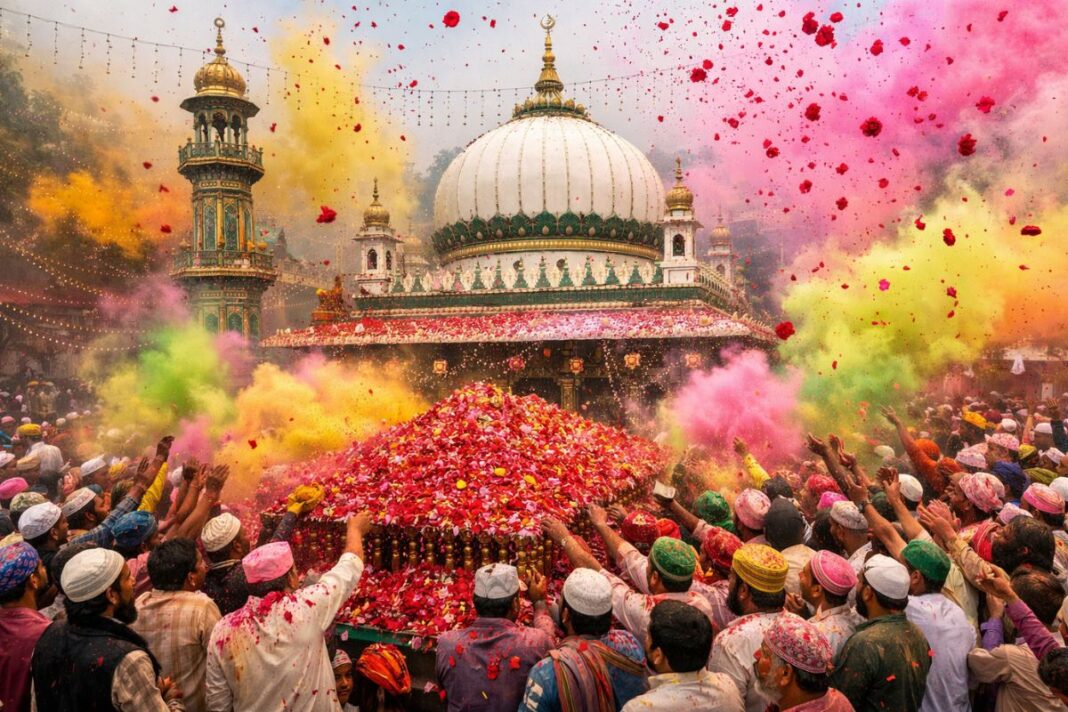

Most visitors to India’s Sufi shrines expect prayer and qawwali music, not clouds of colored powder. Yet every spring, thousands gather at the Dewa Sharif dargah in Uttar Pradesh to drench a saint’s tomb in gulal and rose petals, a tradition older than independent India.
This convergence of Hindu celebration and Sufi spirituality challenges assumptions about religious boundaries. At Dewa Sharif, devotees from different backgrounds preserve a fragile thread of pluralism in an increasingly divided society.
Holika Dahan and the Birth of a Tradition
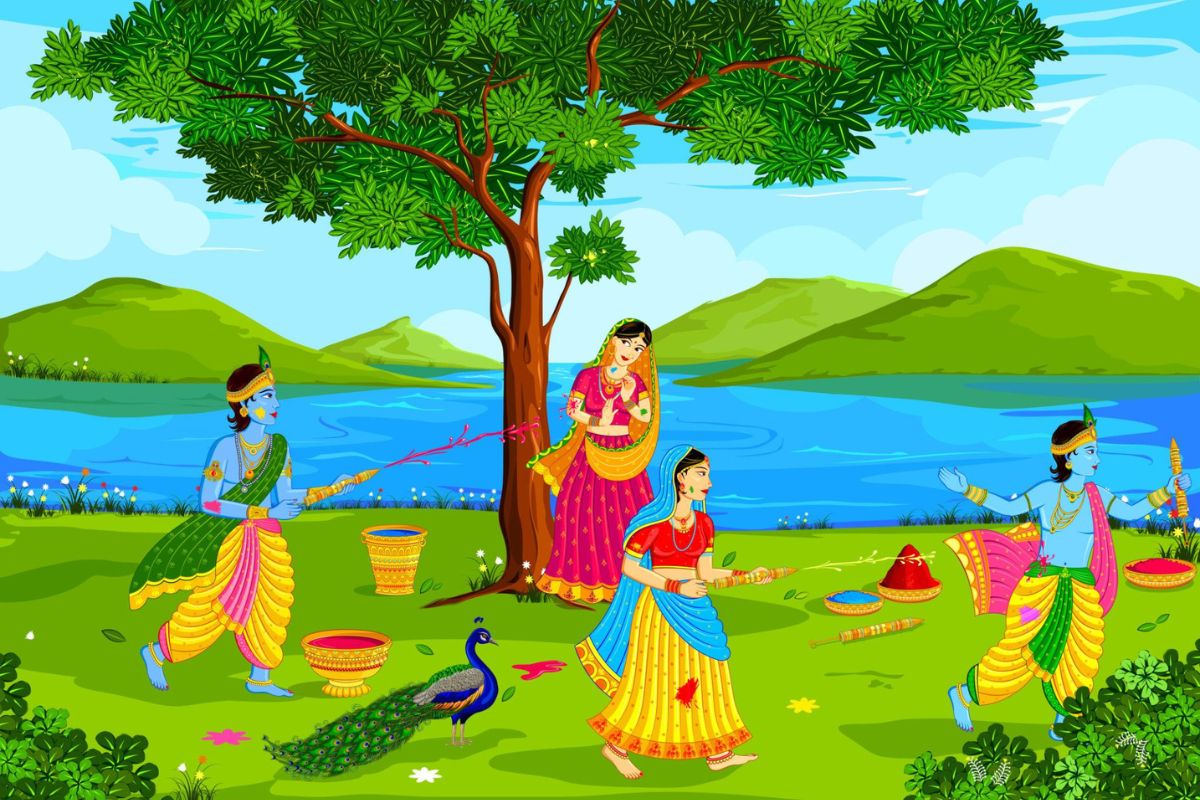
Holi dates back more than two millennia. The Purvamimamsa-Sutras of Jaimini and the Kathaka-Grhya-Sutras, both predating Christianity, contain the earliest written references to this springtime ritual. Originally called Holika, married women performed rites under the full moon to secure family prosperity. Over centuries, fertility ceremonies gave way to stories of good defeating evil, particularly the legend of Prahlad and the demoness Holika, and the playful colour battles between Krishna and Radha.
Historians trace its prominence among Aryan communities in eastern India, where it blended agricultural cycles with myth. The Holika Dahan bonfires mark the end of winter and the triumph of righteousness over darkness. These fires still burn in temple courtyards and village squares before dawn breaks on Holi morning.
The Saint Who Bridged Two Worlds
Haji Waris Ali Shah remains the figure behind the most remarkable Holi celebration at any Sufi shrine. Born in 1817 or 1819 in Dewa village, Barabanki district, he came from a Syed family claiming descent from Imam Husain. Orphaned young, he memorised the Quran by age seven. At sixteen, he joined the Chishtiyya-Qadiriyya Sufi order but adopted strikingly liberal views.
Waris Ali Shah welcomed Hindu followers without requiring conversion. His most famous declaration, “Jo pyar kare wo hamara hai,” translates to “Whoever loves is ours.” He travelled extensively, completing seventeen pilgrimages to Mecca and journeying through Iran, Russia, Germany, and France. He secured an audience with Queen Victoria in England and met Sultan Abdul Majid Khan. His disciples included prominent Hindus such as Thakur Pancham Singh and Raja Udyat Narayan Singh, as well as Muslim followers.
The saint frequently wore yellow robes and would participate when followers brought coloured powder to his feet during Holi. He coined the phrase “Jo Rab hai wahi Ram hai,” meaning God and Ram are one. This was not mere rhetoric. During the British colonial period, when religious divisions often erupted into violence, Waris Ali Shah built a community that celebrated together. He died on April 6, 1905. His death did not end the tradition he started.
A Shrine Built by Many Hands
The mausoleum at Dewa Sharif rose at the exact location where Waris Ali Shah passed away. Its architecture tells the story of its construction. Hindu parikrama paths for circumambulation encircle the tomb, while Persian minarets reach skyward. Hindu patrons contributed substantially to the building. Raja Udyat Narayan Singh donated the silver spire that tops the structure. Rulers from Kashmir provided silver doors. Thakur Parcham Singh paid for marble flooring and established a community kitchen.
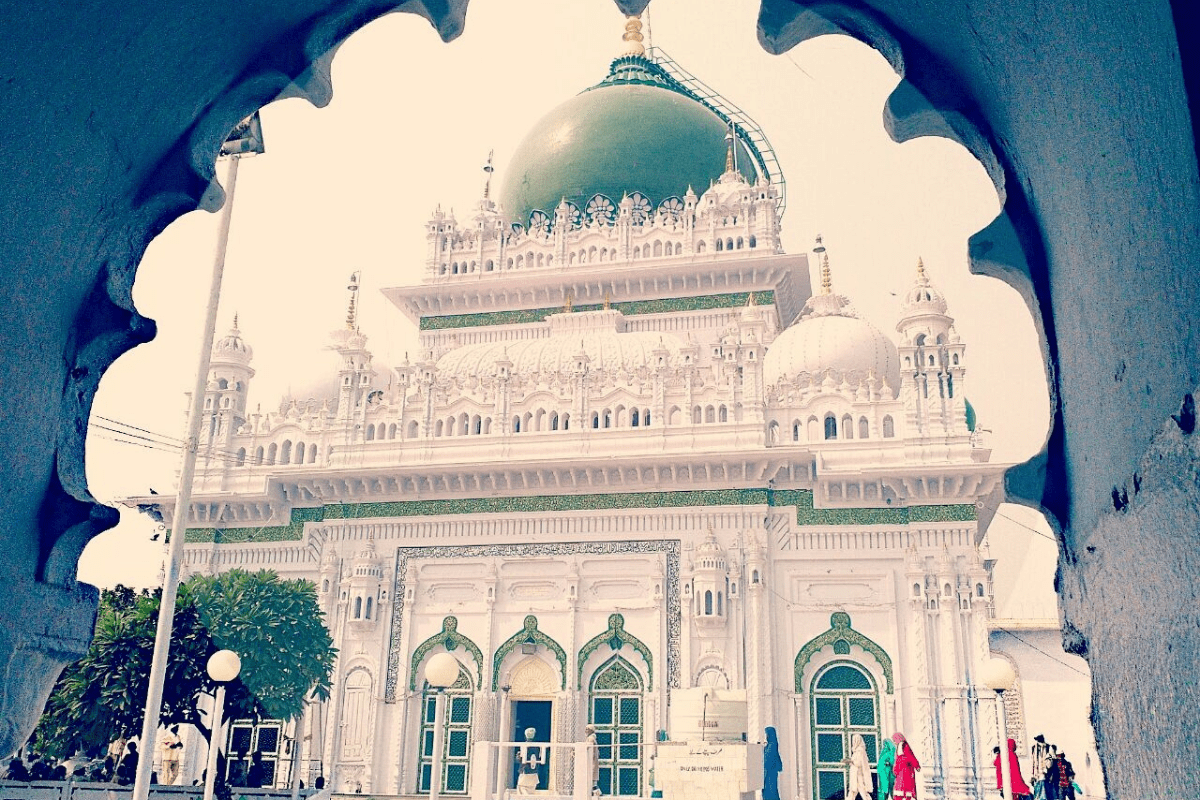
Babu Kanhaiya Lal Srivastava, a Hindu, laid the foundation stone in 1917 and served as the first secretary of the shrine’s trust. The shrine complex was formally established around 1920. Unlike many Sufi shrines managed by hereditary custodians, Dewa Sharif operates under a secular trust with representatives from different communities.
How Holi Happens at a Dargah
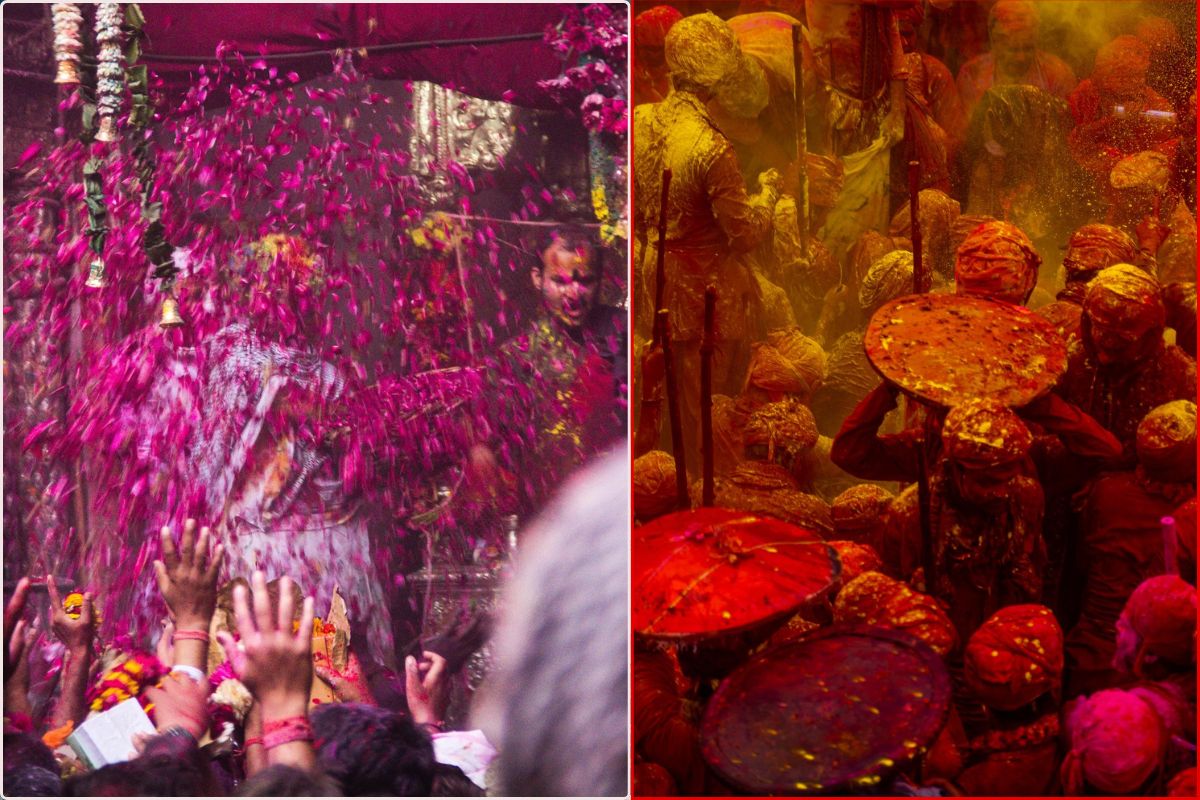
The Holi celebration at Dewa Sharif follows a distinct pattern. Priests dressed in yellow pitambar robes lead a procession through the town before returning to the dargah. Devotees shower the mausoleum with gulal, abeer, rose petals, and fresh flowers. Water remains absent out of respect for the sacred space.
Chants of “Ya Waris Ali Shah” mix with Hindu bhajans. Hindus see the saint as an embodiment of Krishna. Muslims revere him as a vessel of prophetic wisdom. The festivities peak after Holika Dahan. The community kitchen feeds thousands regardless of faith.
No precise record establishes when this tradition began. Evidence suggests the practice started during Waris Ali Shah’s lifetime, making it at least 120 years old. Current community leaders confirm its uninterrupted continuity.
Other Shrines, Different Approaches
Dewa Sharif stands alone as India’s only Sufi shrine with a formal annual Holi celebration. The Hazrat Nizamuddin Dargah in Delhi attracts interfaith crowds year-round. During Basant Panchami, devotees from both faiths offer yellow chadars and flower petals. This “yellow Holi” draws substantial crowds, and qawwali nights can bring 1,500 visitors.
At the Ajmer Sharif Dargah, Holi takes a quieter form. Devotees from various faiths gather around the shrine to play with colours. This version emphasises unity across boundaries. The dargah has long symbolised pluralism in Indian religious life.
Broader Sufi and Regional Practices
Sufi culture has historically shown openness to Holi, though formal shrine celebrations remain rare. Punjabi shrines recite Holi-themed kafi poetry by Bulleh Shah during the festival season, but these remain devotional performances rather than organised colour play. At Ajmer Sharif, Mughal-era syncretism persists. Pilgrims play Holi in areas surrounding the dargah during annual fairs, yet the shrine itself does not host the festival within its walls. Several shrines in Uttar Pradesh host informal interfaith gatherings during Holi. Dewa Sharif remains distinct as the only shrine with a structured, institutionalised Holi celebration occurring annually on shrine grounds.
Historical Roots of Syncretism
The willingness of Sufi saints to embrace Hindu festivals did not emerge recently. Medieval Sufi poetry and bhakti verses exhibit significant thematic and imagistic overlap. Saints like Nizamuddin Auliya and the Chishti order maintained that divine love transcended doctrinal differences. Shrines became spaces where people from different backgrounds could gather for festivals, music, and shared meals.
Mughal emperors participated in Holi celebrations, setting examples of royal syncretism. Colonial-era accounts mention joint celebrations of Holi, Diwali, and Eid in Indian villages, though British observers often misunderstood the theological underpinnings.
Contemporary Reality
In 2025, the Dewa Sharif celebration continued despite broader communal tensions in Uttar Pradesh. Crowds chanted “Ya Waris” as they threw coloured powder. Recent reports confirm peaceful Holi celebrations at the dargah, which now attracts visitors from across India and abroad.
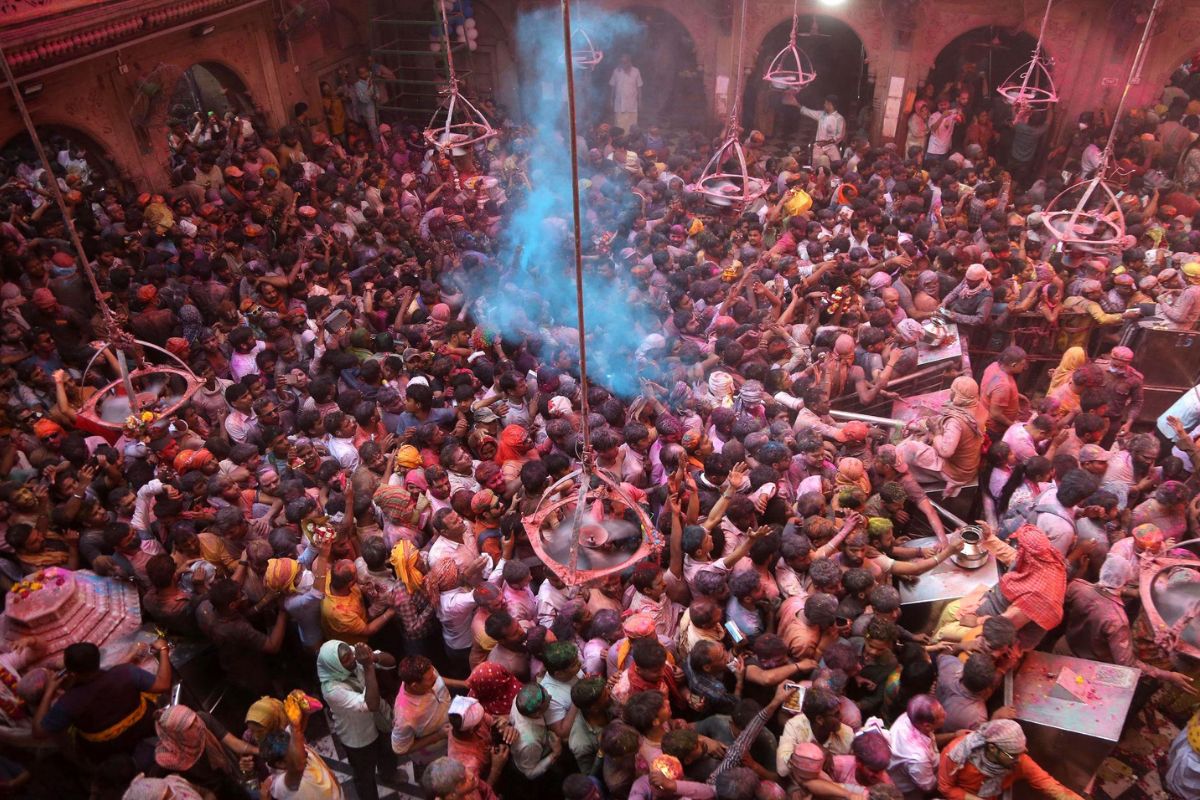
Polarisation threatens the fragile networks of interfaith cooperation that sustained these traditions. Yet Dewa Sharif continues operating as it has for more than a century. The Holi committee organises the annual event with the same rituals established generations ago. Political leaders, including Atal Bihari Vajpayee, V.P. Singh, and Zail Singh, visited during their careers, recognising its symbolic importance.
What the Festival Represents
Holi symbolises spring’s renewal, the victory of good over evil, and the temporary suspension of social hierarchies. At dargahs like Dewa Sharif, this historical convergence of Sufi and bhakti spirituality manifests, both emphasising love and devotion over ritual orthodoxy. This appeal beyond religious identity makes Holi one of India’s most visible emblems of pluralism.
From bonfires to clouds of colored powder, the festival unites groups that might otherwise remain separate. The tradition proves that festivals can outlive the divisions that threaten them. At Dewa Sharif, this truth remains visible every spring when yellow-robed priests lead processions, and thousands cover a saint’s tomb with rose petals, continuing what Haji Waris Ali Shah started more than a century ago.
Also Read:Keep Your Living Space Cool with indoor plants
You can connect with DNN24 on Facebook, Twitter, and Instagram and subscribe to our YouTube channel.