


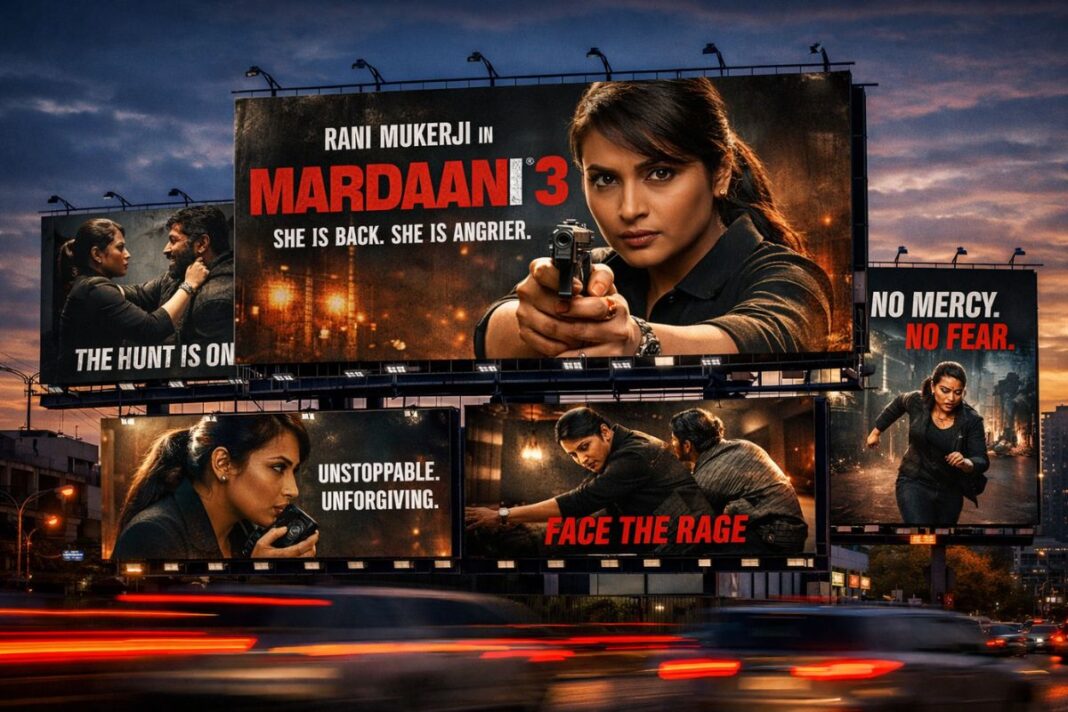

Sometimes a film does not just release. It arrives like a loud, uninvited knock at the door that you cannot ignore, cannot silence, and somehow cannot stop thinking about long after the sound fades. Mardaani 3 does not simply arrive in cinemas. It announces itself like a siren that nobody switched off, loud, persistent and impossible to walk away from. Every screen carries its face. Every feed holds its echo. Television interviews run back-to-back with airport spottings. Primetime panels debate its themes while inspirational quotes from the film drop each morning like clockwork, as if someone somewhere has set a timer and refuses to let the noise die down even for a single quiet hour.
There are those moody short reels where the lead actor walks in slow motion, eyes burning, promising justice and fire to anyone willing to watch for thirty seconds. Taken together, it feels less like film promotion and more like a persistent echo that follows you from your phone screen to your television set, from your office corridor gossip to your family chat group at midnight. For many ordinary viewers, this is the hard sell playing out in real time: a film insisting loudly that you look up, pay attention and care about what it has to say.
What makes this moment particularly charged is the subject sitting at the very centre of the franchise. Crimes against women. Missing daughters. The quiet, cold fear that lives somewhere in the background of everyday Indian life. The earlier films had already built a strong emotional bridge by showing a tireless woman police officer dismantling predators who hide in plain sight, men with money, men with connections, men who believe their position protects them from consequence.
Because of that history, the third film walks into a space already warmed by anger, empathy, and a certain earned trust that the series carries like a badge. When promotions push harder in such a space, they are not starting from zero. They are pressing directly on memories, on half-remembered news headlines, on private anxieties people carry without ever naming them in public. In that space, every poster and every sound bite does double duty. It sells a ticket and touches a nerve, sometimes more sharply than the makers may have originally intended.
From Soft Whispers To Shouting Matches
Hindi cinema did not always believe in this kind of aggressive persuasion. For a long time, a film’s publicity meant a few hand-painted posters, a radio spot on Sunday morning and perhaps a short interview tucked into a film magazine that smelled of fresh ink. People discovered new releases through word of mouth, neighbourhood hoardings, or a song blaring from a loudspeaker during festival season.
The star system did a great deal of the talking on its own. If a familiar name appeared on the poster, the crowd would show up without needing to be chased across every available platform. It was a slower, softer world where the gap between film and audience was filled by genuine curiosity rather than by relentless manufactured reminders.
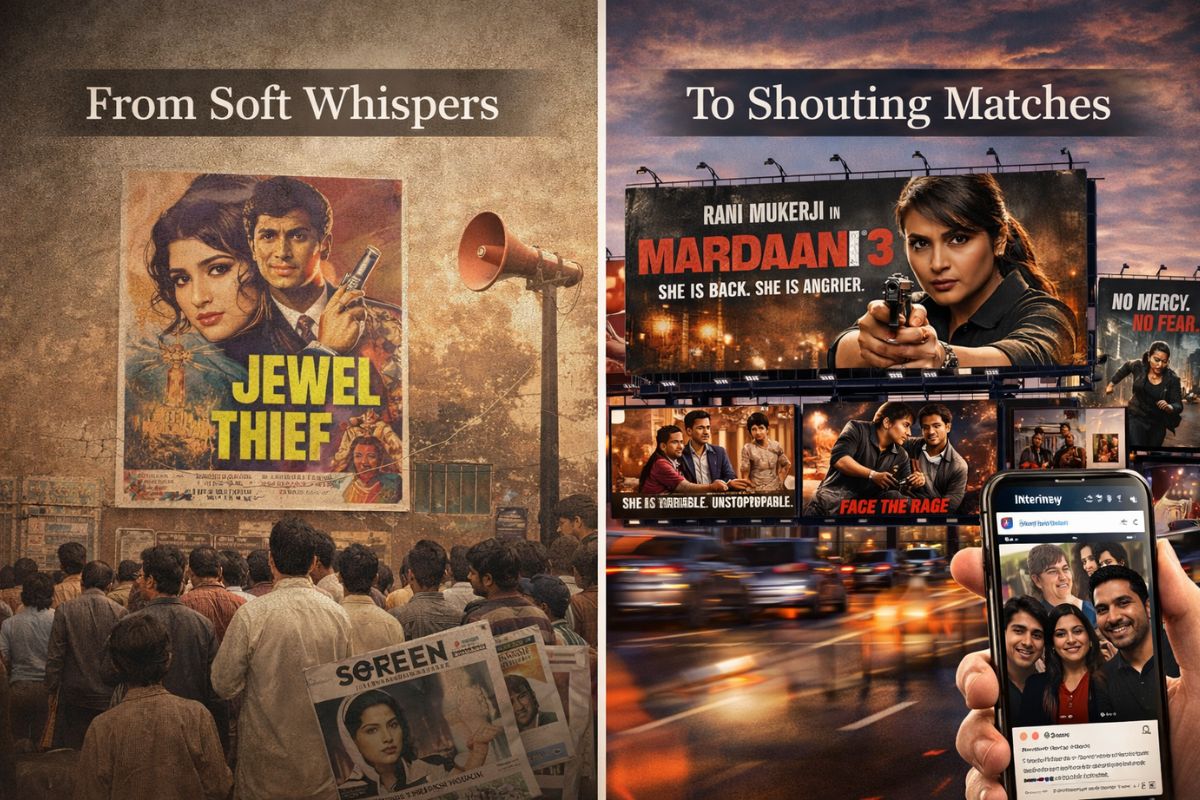
Then came the era of multiplexes, satellite television, and finally streaming services, and the entire game shifted on its axis. As more screens appeared and options multiplied, competition for human attention grew fierce in ways the old industry had never prepared for. Marketing itself became a parallel industry, running alongside the film rather than behind it. Large campaigns began to use city tours, reality show appearances, elaborate song launches staged like live concerts, and carefully managed controversies as standard tools to pull crowds toward ticket windows.
Some films learned to convert negative headlines into useful fuel, treating protests and moral debates as free publicity that no paid advertisement could buy. Social media then opened a direct channel into people’s pockets, where trending hashtags, memes shared at speed, and influencer posts could build enormous hype without a single traditional hoarding being pasted to a wall. The distance between a whisper and a shout had collapsed entirely, and the line separating information from pressure became thinner with every new release.
The New Face Of The Hard Sell
Into this ecosystem steps the new chapter of the cop saga, carrying a very modern, fully loaded toolkit. The lead actor, already widely celebrated for this particular fierce role, has been everywhere in the truest sense of that word. Moving from news studios to digital interview setups, from live audience sessions to surprise public appearances, speaking with equal ease about the character on screen and the cause that character represents.
In one of the earlier films from the same series, the campaign leaned on serious, considered conversations, featuring real women police officers and anchoring everything around a powerful social message that asked direct questions about how Indian society treats its victims. The third film stretches that instinct considerably further, blending awareness, public outrage and pure star power into a single, unbroken stream of content. The character appears to have stepped off the screen entirely and taken up patrol duty on your social media feed instead of a dark, rain-wet street.
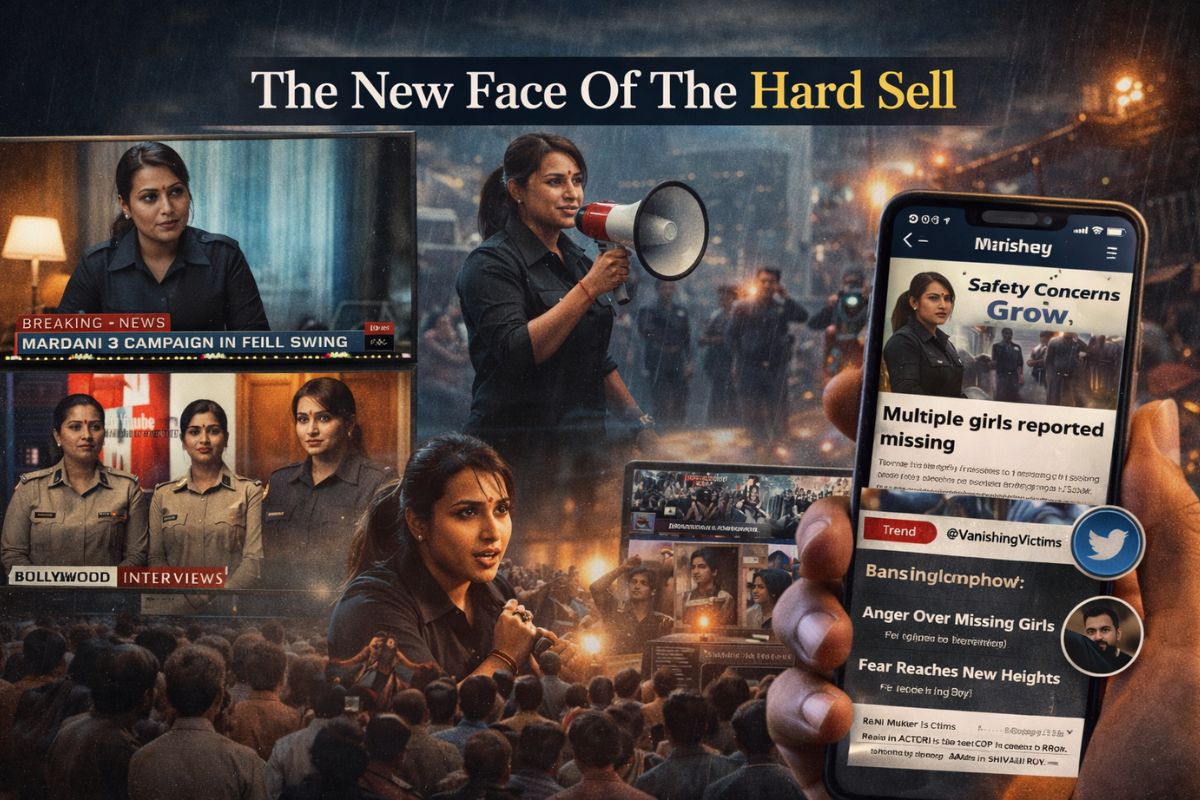
Alongside this very visible push, there have been more shadowed conversations occurring in the background. Quiet talk of paid posts, of coordinated story placements and of topics that trend in perfect rhythm with the film’s release calendar. Reports and observations have pointed to a wave of social media chatter about fear, about missing girls, and about rising public dread, appearing precisely when the film’s central theme needed emotional oxygen.
The production house has firmly denied using any real-world panic as a deliberate marketing instrument, stating that the campaign did not design, fund or direct those alarming messages that circulated online. And yet, for an ordinary person scrolling through their phone late at night, the effect can feel overwhelming. News, rumour, and film promotion run into one another until it becomes genuinely difficult to tell where reality ends and publicity begins. In that confusion sits the true heart of the hard sell. It is a form of marketing that does not simply ask for your attention. It wraps itself around the news of the day and walks inside wearing borrowed clothing.
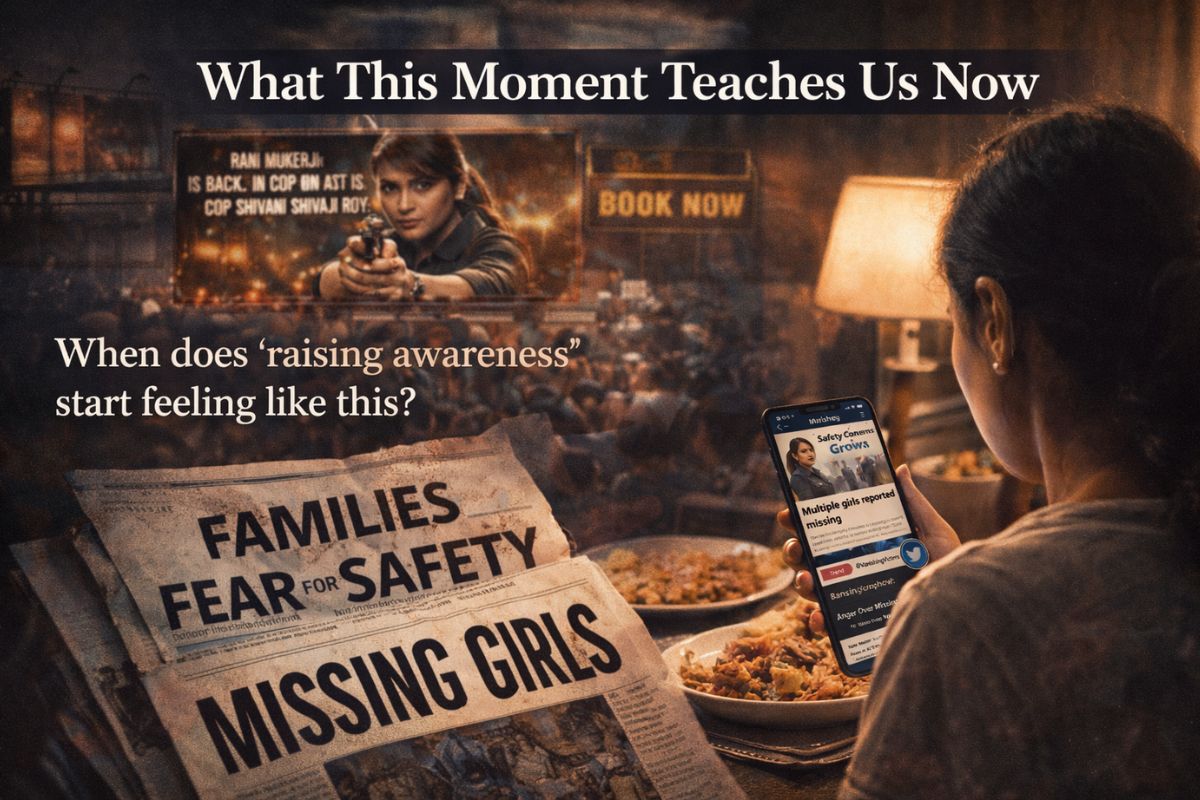
What This Moment Teaches Us Now
This campaign forces a difficult but entirely necessary question onto the table. How far should cinema go in pursuing our feelings before the pursuit tips into something reasonable people would call emotional overreach? On one side, a thriller built around violence against women cannot honestly be sold with empty glamour or cheerful song sequences. It needs urgency, honesty, and a public conversation that goes beyond opening-weekend box-office figures.
A film of this nature carries a responsibility that lighter entertainments do not. On the other side, when fear, grief and real missing-person reports seem to travel through the same digital roads as ticket booking links and promotional clips, ordinary audiences begin to worry that pain itself is being carefully packaged and sold back to them at a profit. The discomfort a viewer feels while scrolling through such content is not a weakness. It is evidence that their moral compass is still functioning exactly as it should.
For writers, marketers and serious film watchers, this entire episode functions as a live classroom without walls. It demonstrates how a franchise carrying a respected legacy can still find itself drawn into uncomfortable debates about paid panic, influencer arrangements and the ethics of public visibility. It is a reminder that aggressive publicity can build recall and fill seats.
Still, it can also raise real suspicion, particularly when the story on screen leans on the same fears that families discuss in hushed tones at their own dining tables. The future of responsible film marketing lies in a more delicate and considered balance. Campaigns that are bold without being manipulative. Emotional campaigns without being exploitative. Campaigns that are loud but still respectful of the wounds they choose to touch. In that possible future, the hard sell would not feel like an ambush. It would feel like a genuine invitation to think, to feel and to watch, without being quietly pushed into the theatre by the weight of someone else’s nightmare sold as news.
Also Read: Stories Behind the Making of Bollywood Legends
You can connect with DNN24 on Facebook, Twitter, and Instagram and subscribe to our YouTube channel.