

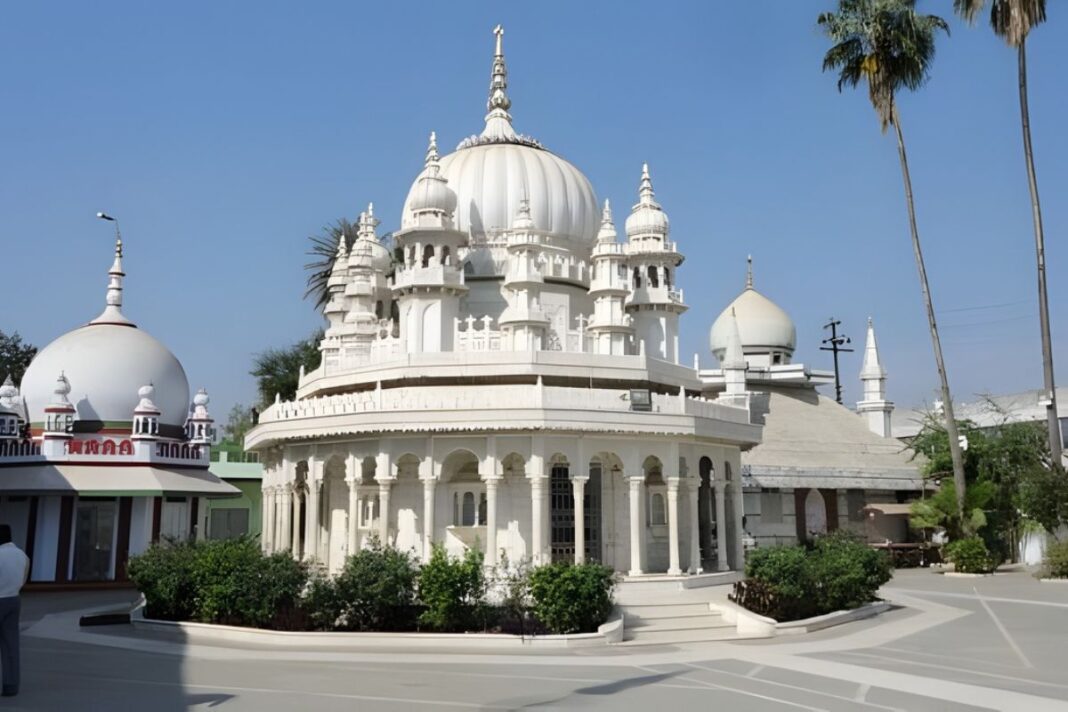

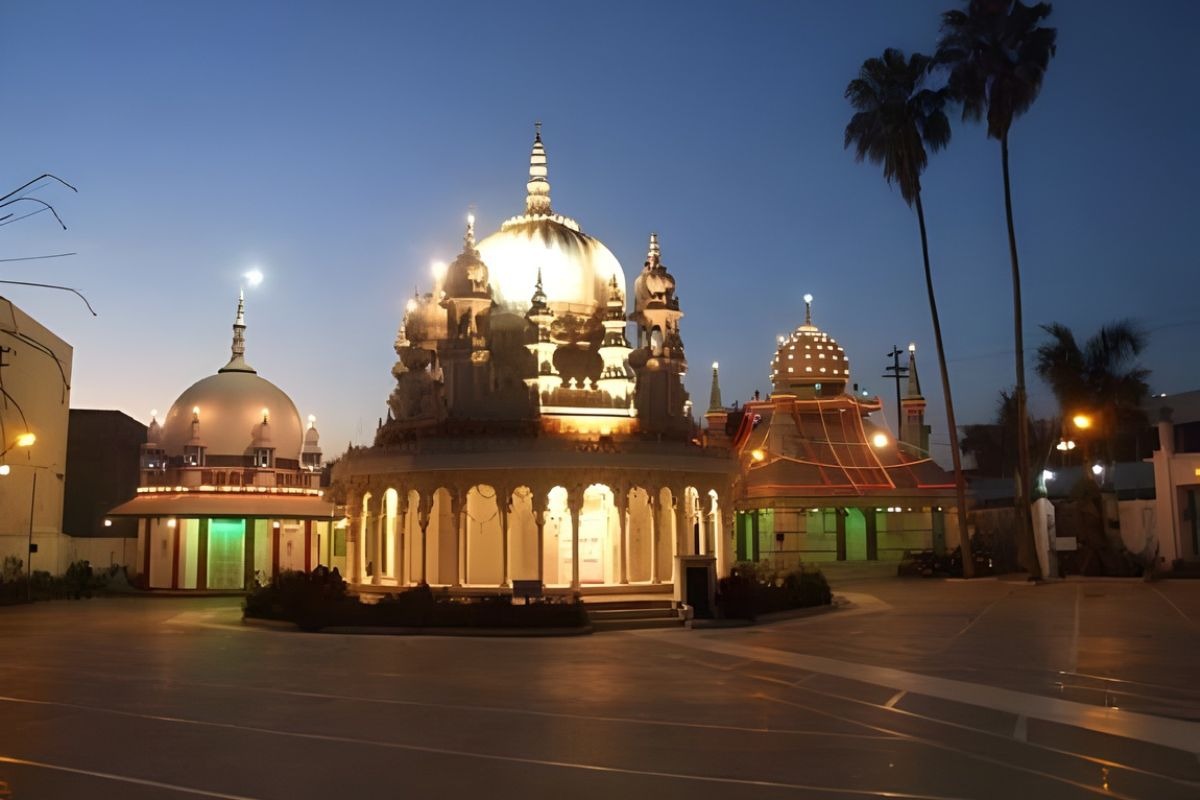
Agha Shah Dargah sits beside the old waters of Rani Talab, carrying two centuries of prayers in its stone walls, and the moment you step inside, the noise you brought with you begins to feel embarrassing.
Meerza Agha was born in the early years of the nineteenth century into a household of good standing and Persian learning. His family observed their faith with care. His upbringing was proper, his education thorough. Yet none of it satisfied the particular hunger that had taken root inside him from childhood. He was not restless in the ordinary way. He could not find peace in the outer world because he kept sensing that the real one lay somewhere else entirely.
Teachers came and went. Learned men offered him knowledge, and he received it with gratitude. Still, something remained missing. Then, one evening, everything shifted because of a dog and a piece of bread.
He had visited a wandering shaykh whose quiet manner had repeatedly drawn him. That particular evening, he overheard the shaykh’s family speaking softly about having nothing to eat. The boy rushed home, brought back what food he could carry, and returned with an open heart. On the way, a stray dog seized the food from his hands. He arrived at the cottage empty-handed and full of shame.
The shaykh looked at him without irritation. “This is Allah’s will,” the man said. That was all. Those four words broke something open in the young Meerza that no sermon had managed to touch. He returned at dawn to seek the shaykh again, but the cottage was gone. The family had vanished. No neighbour could account for them. Standing in that empty lane, he understood for the first time what surrender actually meant.
He left for Banda to sit at the feet of Shaykh Shah Maqsus Alam, selling his earrings to cover the cost of the road, teaching children along the way in exchange for meals, and sleeping beneath the open sky without complaint. In Banda, both his spiritual understanding and his general learning matured considerably. He was named successor. He later moved to Bareilly to complete his formation under Tajul-Aulia Shah Nizamuddin Hussain, and with permission duly granted, he established his khaneqah beside the waters of Rani Talab.
He married. He built a household. Yet his zikr never paused. Reports of quiet miracles gathered around him the way birds gather around old trees, without anyone quite explaining how it began. A woman was said to have been harmed by the intensity of his gaze during a moment of spiritual absorption; a word from him brought her relief. A note delivered from a distance was enough to heal Shirin Bai of a long illness.
On the seventeenth of August, 1917, his last breath arrived with the words “Il-Allah” on his lips. His successor, sitting far away, heard those words explode through his own consciousness like a sudden light. The two were separated by distance. The connection, evidently, was not.
Faith Practised with the Whole Body
The dargah he left behind became a living continuation of what he had practised in his own lifetime. Faith here is not confined to the mind or the tongue. It occupies the body, the schedule, the posture and the breath.
Morning begins with Quranic recitation. The tilawat draws people out of sleep and into awareness before the day has had a chance to scatter their attention. Fatiha follows, palms raised, words offered on behalf of the living and the dead alike. There is nothing hurried about it. Each surah is given its due weight.
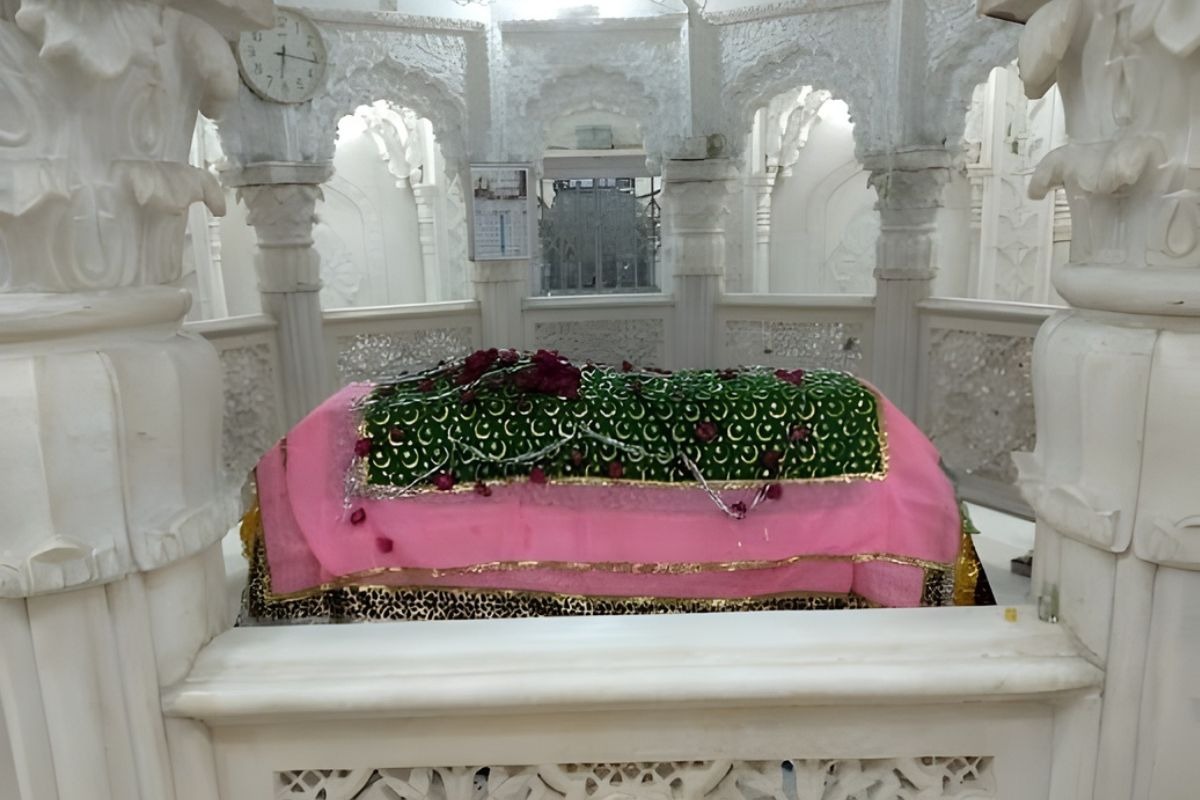
Evenings bring the salaam gatherings. Voices join in unison, calling upon the saint whose name these walls carry. Devotees drape chador offerings over the mazar, silks and cottons in colours that speak of gratitude and petition at once. The crowd thickens as night settles, but the pace does not quicken. This is one of the harder things to convey to someone who has not witnessed it: that a large crowd can be simultaneously fervent and unhurried.
The Urs, observed annually, transforms the surrounding lanes entirely. Lanterns go up. Qawwali singers arrive. For those who participate, the experience is not entertainment. The music works on the body in a way that a polished argument cannot. A person who came in carrying a knot of private grief sometimes leaves feeling that the knot has loosened, without being able to say precisely when or how.
Monthly observance of Khatme Khwajgane Suhrawardiya falls on the eleventh of the lunar calendar. Zikr circles form, bodies swaying in measured rhythm, the name of Allah repeated until the repetition becomes less an act of will and more a condition of being. The Chishti-Niazai and Qadiriya chains that run through this lineage bring their own character to the practice, a quality of patient insistence that resists both slackness and agitation.
What the Community Actually Does With All of This
The faith does not stay inside the rituals. It flows outward into the way people treat one another on the premises and, eventually, beyond them.
The khaneqah feeds those who arrive hungry. This has been the practice for generations, and it continues without making too much of itself. Khadims attend to visitors with a plainness of manner that feels like genuine regard rather than performance. Strangers who came as individuals find themselves falling into conversation during the wait, discovering shared concerns, and leaving with the phone number of someone who might be useful to them.
Urs gatherings draw people from considerable distances, from villages and cities alike, across lines of economic circumstance that ordinarily keep people apart. Shared meals on reed mats have a way of making caste and income feel less permanent than usual. A merchant and a wandering labourer have been known to sit together laughing over tea, held in common by nothing more elaborate than proximity and the warmth of the occasion.
The legacy of earlier successors, who used periods of communal tension to build bridges rather than walls, shaped a particular character in this place. Medical assistance was extended across communities. Youth found structure through sport, learning and collective zikr. Women formed their own circles, voices carrying an authority that was built from within rather than assigned from without.
Why Any of This Still Matters
The pace of modern life presses against attentiveness in every direction. Long hours, small screens, fractured attention and the persistent feeling that one is somehow behind. Against this, the dargah does not offer a cure or a programme. It offers a rhythm.
Young people who arrive distracted often leave steadier. Not because anything dramatic happened to them, but because they spent a few hours inside a structure that does not hurry. The discipline of a zikr session demands something real: that the mind stay where the body is, for a change.
The “Il-Allah” that burst from Agha Shah’s lips at the moment of his passing was not a final statement. Those who knew him understood it as a confirmation. What he had been pointing toward all along was present, as it had always been. The dargah carries that understanding quietly, as a good teacher does, not by holding it tightly, but by showing others how to hold it themselves.
Also Read:M Kothiyavi Rahi: Progressive Urdu Poet’s Enduring Legacy
You can connect with DNN24 on Facebook, Twitter, and Instagram and subscribe to our YouTube channel.