

With over a thousand households, Mattan village in South Kashmir’s Anantnag district is a shining example of communal harmony.
By early evening, the lawns of the Surya Temple begin to fill with people from different faiths. Some sit cross-legged on the grass in circles, while others gather under the chinar trees. They gossip, laugh, discuss daily life, and tease one another playfully. Conversations move from everyday worries to shared memories.
This is Mattan, a village in South Kashmir’s Anantnag district, where Hindus, Sikhs, and Muslims have lived together for generations with mutual respect and a shared sense of belonging.
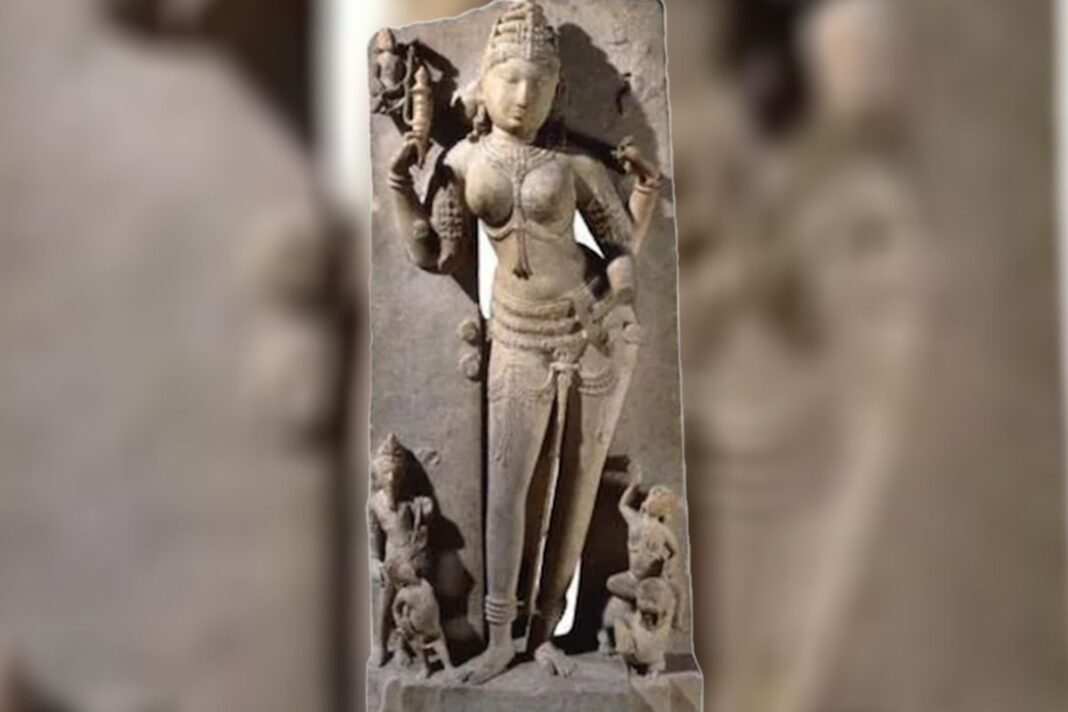
The village is known for its iconic religious complex that houses the Surya temple, the Vishnu and Devi temples, and the Gurdwara Guru Nanak Dev Ji Mattan Sahib. Just outside the complex stands the village’s grand mosque.
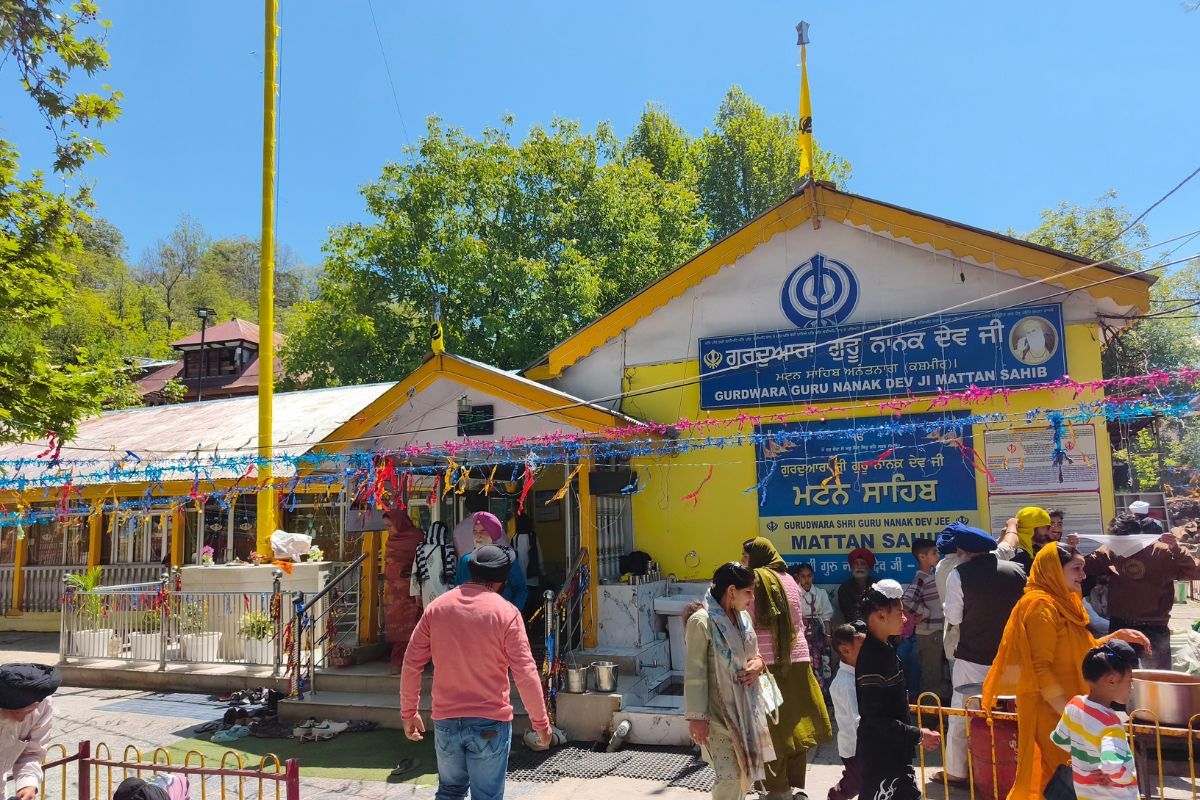
Mattan has around 80 Sikh families, about 200 Hindu families, and nearly 800 Muslim households. They share in good times and bad, in weddings and mourning, as well as in Eid, Holi, Diwali, and Baisakhi celebrations. It is a living example of the syncretic culture that has long defined Kashmir.
“In every festival, whether it is Baisakhi, Eid, Holi, or Diwali, we greet one another and celebrate together,” says Basant Kumar Khar, a Kashmiri Pandit resident. “We also stand by each other in times of grief, attend funerals, and share in each other’s weddings and celebrations.”
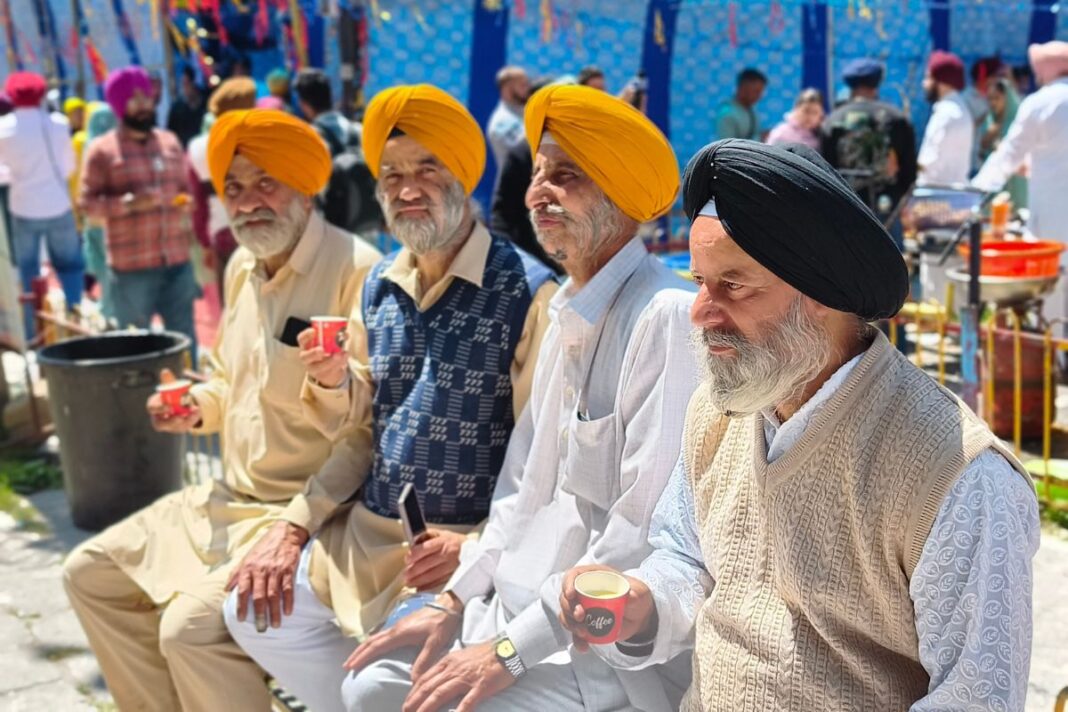
Walk through Mattan, and you see Sikhs, Muslims, and Hindus sitting together outside shops and along roadsides. Many run shops and stalls side by side, serving customers from every community.
“Our village shows how people from different religions can live peacefully while respecting each other’s beliefs,” says Ravijeet Singh, sitting with a mixed group outside the gurdwara. “We do not feel divided. We live like one community.”
Satnam Singh, the head granthi of the Mattan gurdwara, says the sense of unity in the village is rare, even beyond Kashmir. “We live as one. I have travelled to many places, but I have not seen this kind of closeness. There is real peace and respect here.”
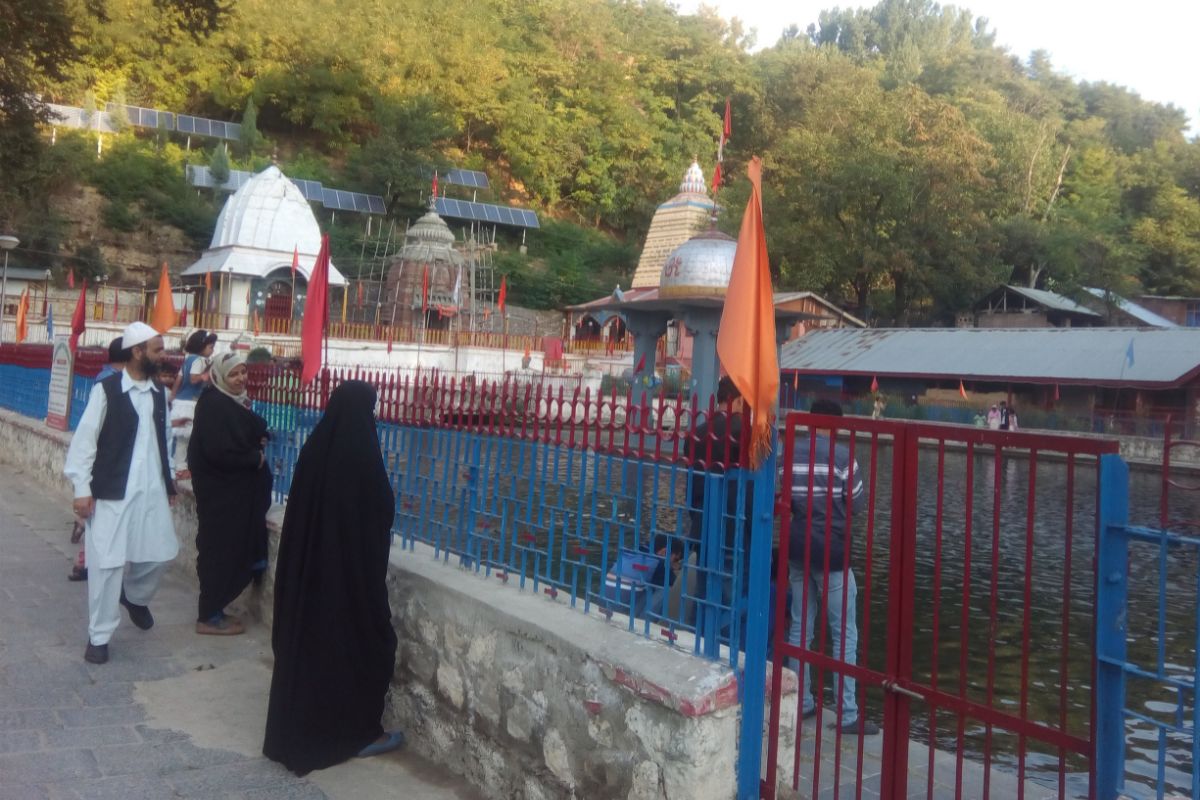
The respect for all religious traditions is evident here. Within the religious complex are two ponds, Vimal and Kamal, known for their sacred fish. The Surya temple stands at the centre of this landscape.
“Not only Hindus, but Muslims and Sikhs also visit the ponds and feed the fish,” says Basant Kumar Khar. “The place belongs to everyone.” He adds that the village is also known as Martand and Macchi Bhawan.
This tradition of coexistence has deep historical roots. According to historical accounts, Sikhism’s connection with Mattan dates back to Guru Nanak Dev Ji’s visit to Kashmir. During his stay, he is believed to have met Brahan Das, a respected Kashmiri Pandit scholar. Recognising Guru Nanak’s spiritual knowledge and wisdom, Brahan Das became his disciple. This association later contributed to the establishment of Sikh religious sites in Mattan.
“Sikhism has a rich history in Kashmir,” says Diljeet Singh, a resident. “Our religion teaches us to respect every faith and live peacefully with people from other communities.”
However, it has not always been smooth sailing. Before the 1990s, around 600 Hindu families lived in Mattan. Most of them left after Ravinder Kumar, a 37-year-old resident of Mattan who worked in the government Telecommunications Department, was killed by terrorists in Achabal, Anantnag, in March 1990.
Over the years, many families returned. Today, the village is home to around 200 Kashmiri Pandit families. Some returned to their own homes, while others live in rented accommodation or in buildings managed by the Martand Trust.
People across communities share a deep emotional attachment to Mattan. Even those who left Kashmir during the 1990s’ migration have kept their connection to the village alive and visit often.
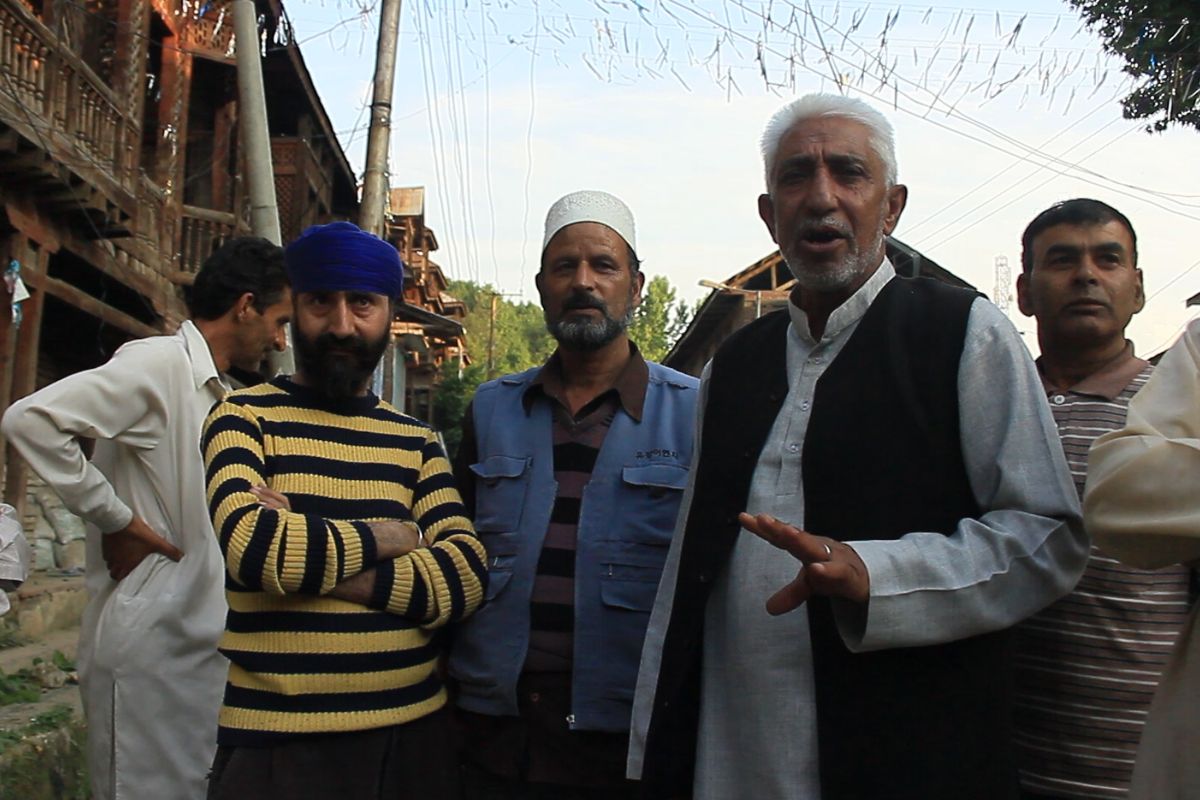
“Those who return to Kashmir prefer to stay in Mattan,” says Pandit Omkar Nath Khar, a retired teacher. “People of any community feel safe here.”
Omkar, who stayed back during the 1990s, now runs a grocery shop in the village. He remembers how neighbours from different communities celebrated his son’s wedding. In 2002, when his son got married, the main ceremony took place in Jammu, where the bride’s family lived.
“I could not invite all my neighbours there,” he says. “So, after bringing my daughter-in-law to Mattan, I organised another gathering at home. I invited my Muslim and Sikh neighbours. It felt important to celebrate with them.”
A few shops away, Ghulam Mohammad Bhat, a 60-year-old medical store owner, describes the village in simple terms. “This place shows how people should live together,” he says. “We sit together, eat together, and respect each other.”
Mattan offers a quiet lesson in co-existence. Its harmony is found not only in its history or religious sites but also in the everyday choices of people who continue to live together. For the people of Mattan, diversity is not a barrier. It is an inseparable part of their identity.
Also Read:Kashmir Dentist Dr Itinderpal Singh Bali Trains India in First Aid
You can connect with DNN24 on Facebook, Twitter, and Instagram and subscribe to our YouTube channel.