
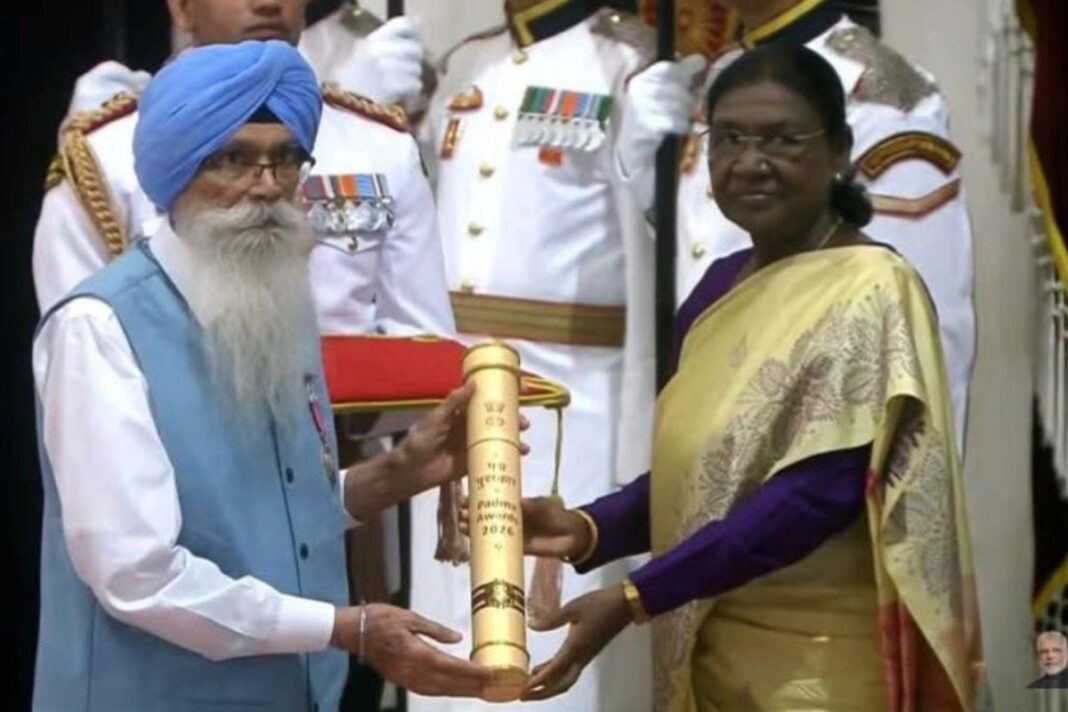

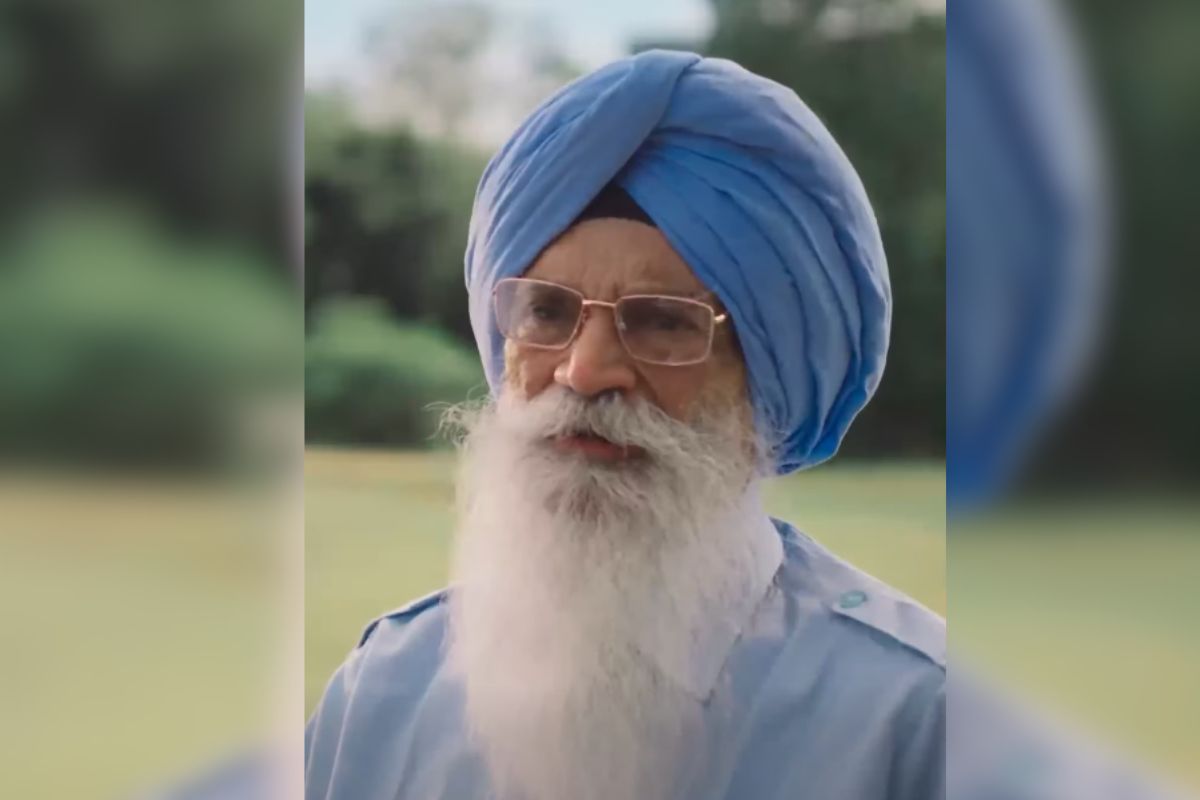
An eighty-eight-year-old man wakes before sunrise, climbs onto a cycle cart, and pedals toward a park he does not own to clean streets that are not his job. For almost thirty years, that has been the daily routine of Inderjit Singh Sidhu, and this year the President of India walked across a hall in Rashtrapati Bhavan to place the Padma Shri in his hands.
A retired officer takes up a new beat
Sidhu spent his working life as a Deputy Inspector General of Police in the Punjab cadre, a post that carried authority, a uniform, and the weight of command. He retired in 1996 and settled in Chandigarh, a city built on straight lines and open sectors. Most retired officers of his rank move into consultancy, security advisory roles, or quiet golf club mornings. Sidhu chose something else entirely. He picked up a broom.
For close to three decades now, residents of Sector 49 in Chandigarh have watched him arrive with his cart, bend down, sweep the pavement, and gather litter dropped by others and left to be forgotten. He does this without a department behind him, without a budget, and without cameras following his progress. It is, on paper, one of the most unremarkable tasks a person can perform. Sidhu turned it into a discipline that outlasted every excuse a person could offer for not doing it.
The neighbours did not always understand. Some assumed a retired police officer collecting plastic wrappers was doing it for show, or perhaps out of boredom. Sidhu rarely explained himself with speeches. His answer arrived each morning, in the form of a swept street, and it said something simple. Public space belongs to everyone, so its upkeep cannot belong to no one.
A Padma Shri for a man nobody had heard of
In 2026, the Government of India placed Sidhu’s name on the Padma Shri list under the category reserved for unsung heroes of social service. On June 23, President Droupadi Murmu conferred the award at Rashtrapati Bhavan. For a brief moment, a man known mainly to his own neighbourhood stood among scientists, artists, and public figures whose names appear in newspapers every week.
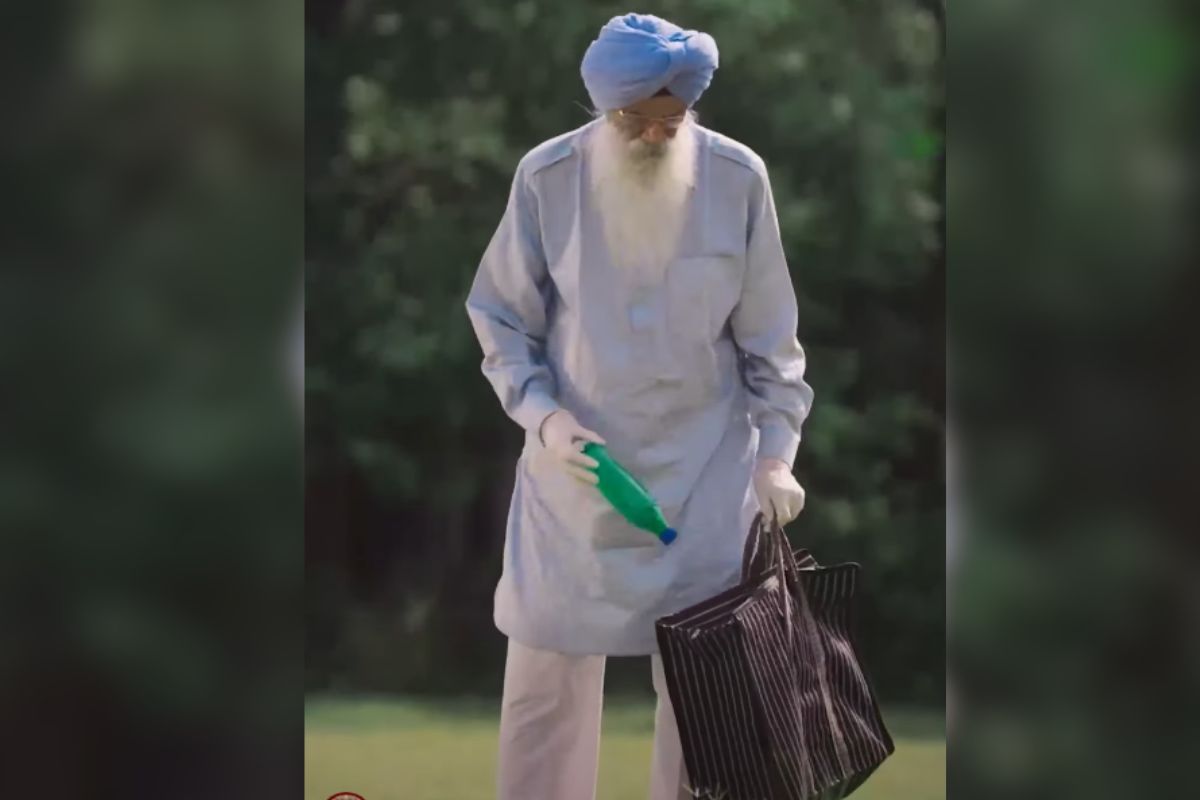
There was no viral campaign behind this honour, no single dramatic incident that thrust him into the spotlight. What earned him the recognition was consistency, repeated for years, mostly unnoticed, without institutional support or publicity. Sidhu did not build an app, chair a committee, or launch an initiative with a catchy name. He kept showing up. The award, in the end, celebrated the plainest possible form of service, the kind that asks for nothing and expects no applause.
Who really owns the street
Sidhu’s decades of sweeping raise a question that most of us avoid thinking about too closely. Who is a street actually meant for? In many Indian cities, public space is quietly claimed by commercial interests, gated colonies, and security barriers, leaving footpaths and parks closer to leftover land than to shared property. However, by law and by basic fairness, these spaces belong to children walking to school, vendors trying to earn a living, elderly residents out for a morning walk, and people with disabilities who need clear paths to move safely.
The courts have recognised this principle before. In the 2017 case of Rajive Raturi versus Union of India, the Supreme Court directed the government to make roads, public transport, and public spaces genuinely accessible to visually impaired citizens, including auditory traffic signals and clear information at bus stops. That ruling expanded the meaning of equality to include something as basic as walking down a street without danger.
Sidhu’s daily rounds are, in effect, a quiet enactment of that same idea. Each stretch of pavement he clears becomes safer for the child on a bicycle, easier for the elderly walker, more usable for the person who has no private courtyard to retreat into. His broom does not change policy, but it chips away, one morning at a time, at the gap between what public space should be and what it usually becomes.
Small acts, larger shifts
There is something almost defiant about choosing to work on a task most people consider beneath their attention. Sidhu’s routine confronts a common habit: citizens loudly complain about dirty streets while doing nothing to keep them clean. He never asked anyone to join him. He made it harder for his neighbours to look away.
Over the years, attitudes around him shifted. The scepticism faded into respect. Some residents began picking up their own litter rather than waiting for an older man to do it for them. Sidhu has spoken, without much drama, about hoping that his example might nudge others toward the same habit, one street or one park at a time. The Padma Shri did not create this idea. It simply gave it a wider audience.
What the honour says about us
National awards tend to reveal what a country has decided is worth celebrating at a given moment. Placing a man with a broom next to internationally recognised scientists and artists sends a fairly direct message: that courage does not always look dramatic, and that persistence in the face of general indifference deserves recognition too.
There is also something uncomfortable buried in this honour. If one retired police officer, well into his eighties, has felt compelled to spend decades cleaning up after his neighbours, it says something about how the rest of us treat the spaces we share. The award is not only a tribute to Sidhu. It is a quiet challenge to everyone else.
By most accounts, the recognition has not changed his mornings. He still rides out with his cart, still bends down for the same litter, still treats the work as unfinished business rather than a completed achievement. In an age when most attention fades within days, that steadiness carries its own kind of weight.
How the selection process finds people like him
The Padma Shri process has, over the past decade, opened itself up in ways that make stories like Sidhu’s possible. Nominations no longer depend on connections or influence. Any citizen or organisation can submit a name through the official portal, and self-nomination is also allowed. This change, introduced around 2016, was meant to break the older pattern where recognition flowed mainly through elite circles.
The emphasis now sits firmly on the nature of the work itself, not the nominee’s status or visibility. Each nomination requires a written account of roughly eight hundred words describing the person’s contribution and its impact, allowing a committee headed by the Cabinet Secretary to look past titles and judge the substance of what someone has actually done. Recommendations then move to the Prime Minister and finally to the President for approval.
Campaigns built around the idea of a “People’s Padma” now actively encourage citizens to nominate the quiet workers around them, the folk artists, teachers, healers, and civic volunteers who rarely make headlines. Sidhu’s award fits neatly into that shift. It shows a system slowly learning to notice the kind of service that asks for nothing in return, and to give it, at last, its due.
Also Read: Padma Shri Anke Gowda: The Bus Conductor Who Built a 20-Lakh-Book Free Library
You can connect with DNN24 on Facebook, Twitter, and Instagram and subscribe to our YouTube channel.