
What happens when a village decides that a tree, a riverbank, and a courtyard of bamboo poles can teach a child more than any imported textbook? In one corner of Manipur, a small experiment is answering that question, and the results are hard to ignore.
Under the Tree, Learning Begins
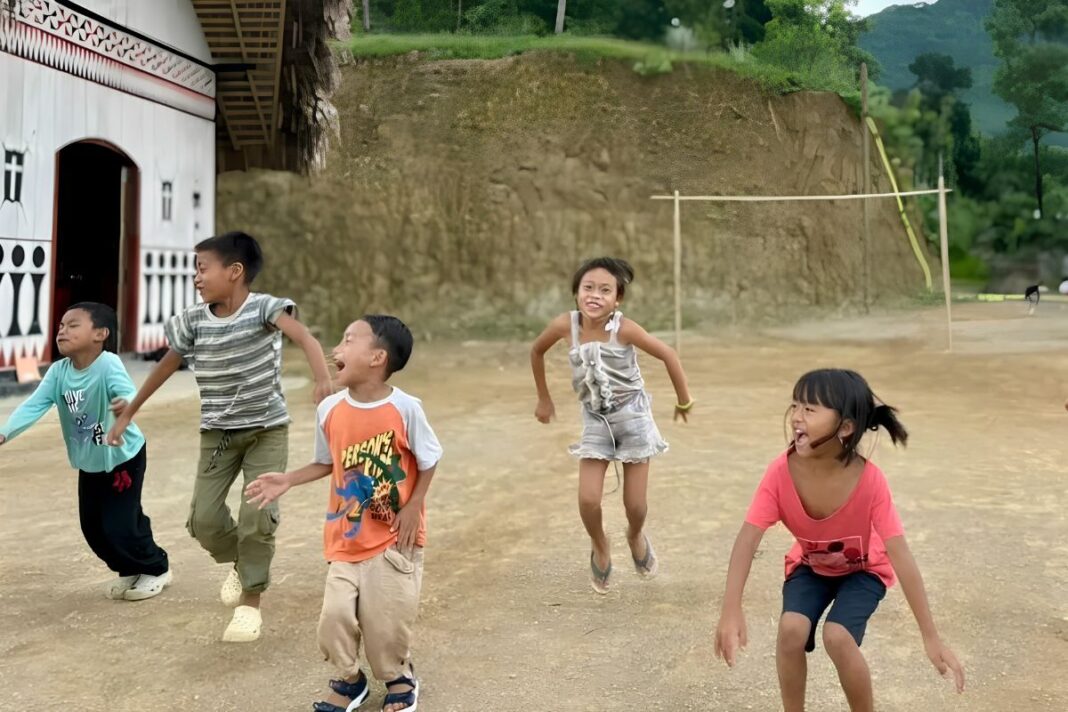
On most mornings in Bwanruang Taudaizaengh, a Rongmei village in the hills, children do not walk into a concrete building lined with desks. They gather beneath a village tree, measure their own shadows as the sun climbs, count fallen leaves to practise numbers, and listen to birds and insects to describe patterns in sound. There is no bell, no blackboard, often not even a proper desk. What there is instead is a quiet conviction that the land and the light are enough of a beginning.
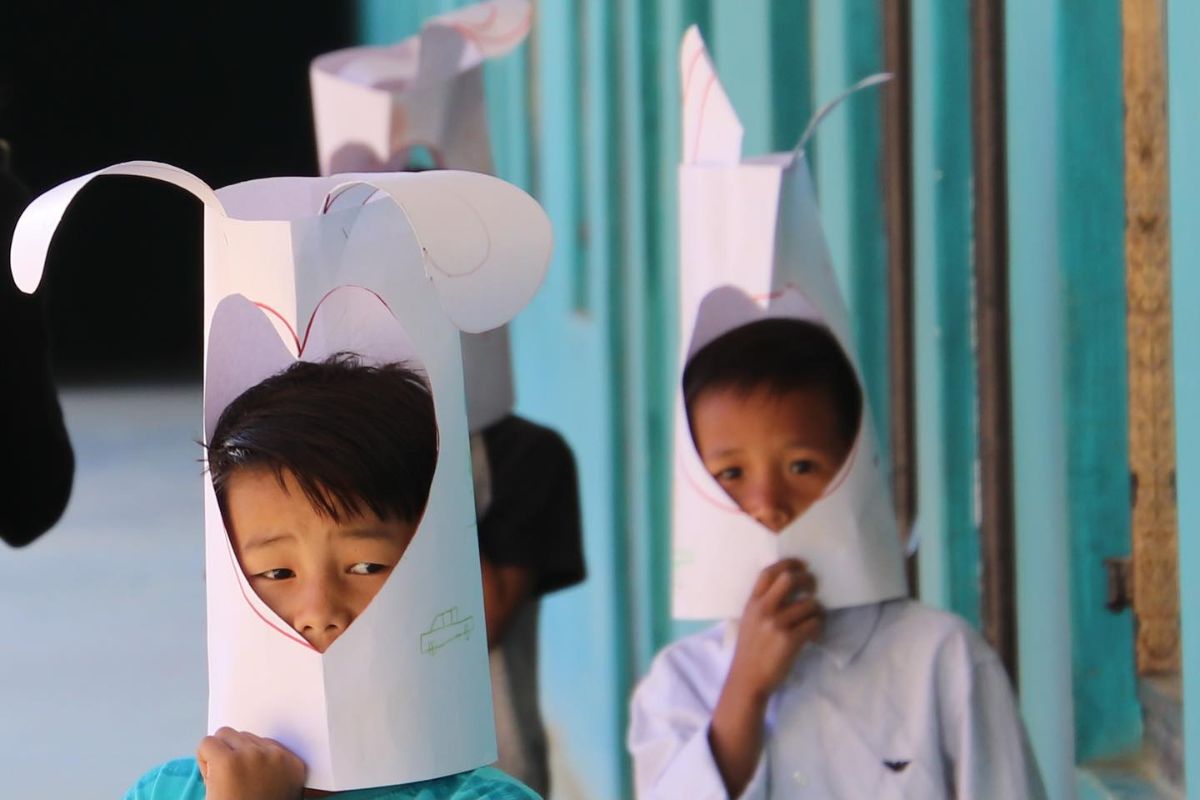
This is Khaangchu, a community-run learning space co-founded by Kabithui Rongmei and Ananya Mukherjee. Children here speak and think in Rongmei, the language they already know, rather than fumbling through one that feels borrowed. Education, in this setting, does not pull children away from their village. It helps them see that village more clearly.
Reviving a Forgotten Institution
The name Khaangchu comes from an older word, Khangchu, also known as Morung, the traditional youth dormitory of the Rongmei Nagas. For generations, it was where the young learned community values, oral history, and farming from elders who saw no line between life and learning. When formal schooling arrived around the 1980s, that older institution was quietly labelled primitive, and much of its knowledge slipped to the edges of memory.
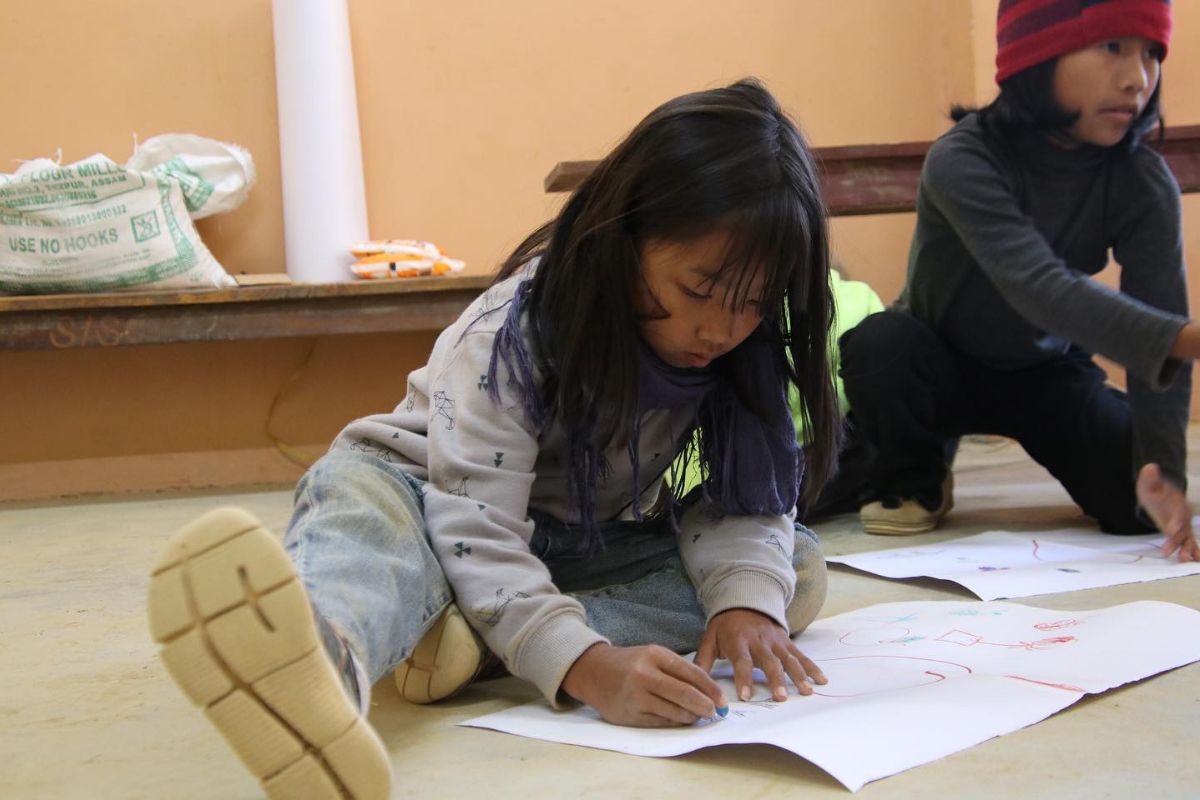
Classrooms are taught in English or a dominant regional language, and Rongmei history was removed from the syllabus. At the same time, the world outside the window- terraced fields, forest trails, clan stories told at the hearth- went unnamed. Research on mother-tongue education in Manipur’s hill districts confirms the cost. When the language spoken at home does not match the language used at school, children fall behind and lose confidence. The response, then, is simple in theory, even if it takes daily effort in practice. Bring back the spirit of the Khangchu, and build an education rooted in the community rather than imported from outside it.
The Whole Village as a Classroom
Khaangchu calls itself an alternative school, though that word barely covers what it does. The entire village becomes a place to learn. Children study the river’s bend to grasp basic mapping, count bamboo poles to practise multiplication, and watch changes in the soil to learn early lessons in ecology.
Rather than lift a generic syllabus off a shelf, the team builds a curriculum shaped by what the community actually needs. Traditional farming, forest knowledge and local governance sit at the centre of learning. A child might track rainfall to help a family decide when to sow, or document local plants while learning to read and write.
Instruction mostly happens in Rongmei, especially in the early years, a choice supported by studies from across Manipur and the wider Northeast. Children taught first in their mother tongue grasp new ideas faster and worry less about getting things wrong, since the classroom language matches the language of home. Other languages are layered in later, once that foundation is steady.
Attendance and a Sense of Belonging
Since it began in 2024, Khaangchu has recorded attendance above 98 percent, remarkable anywhere, let alone in a region where absenteeism is often treated as inevitable. Nobody achieved that through strict rules. It grew because the children feel they genuinely belong, and because the lessons connect to their own lives.
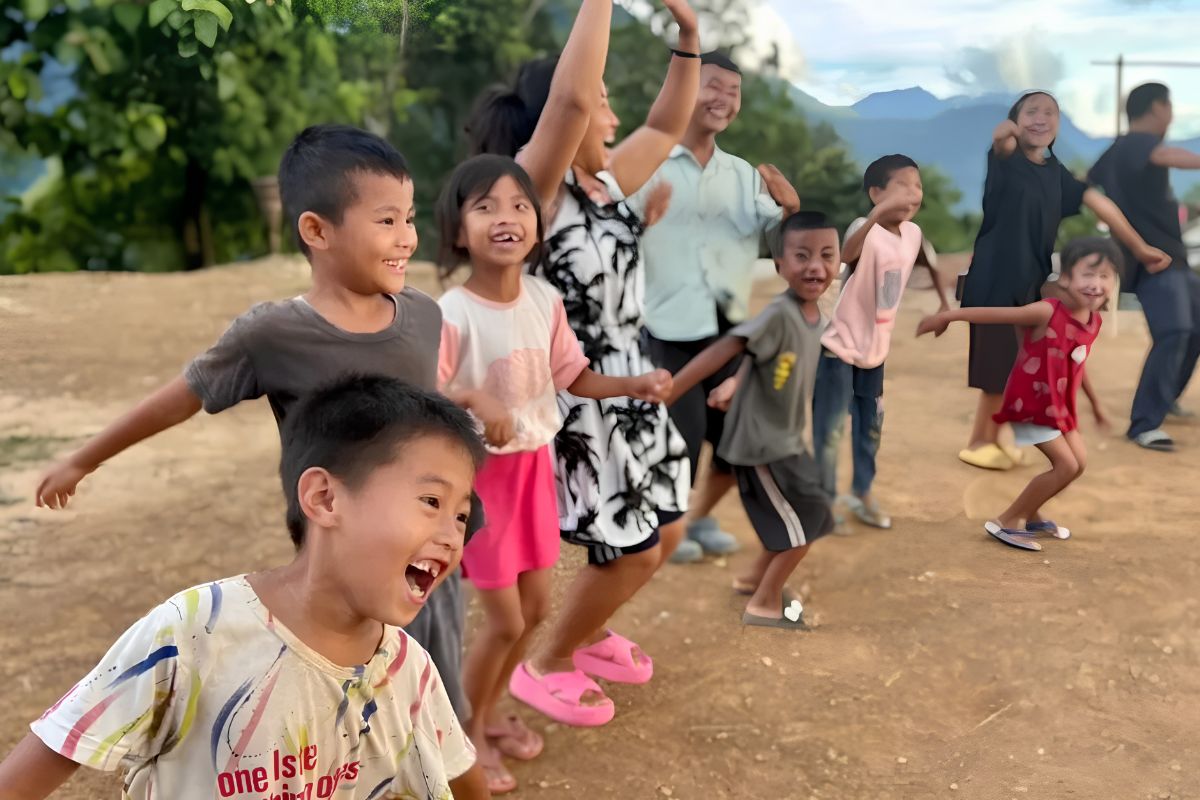
Six teachers, drawn from within the community, run the programme, turning the classroom into an extension of village life. More than 85 percent of parents take an active role in their children’s work, and when families are treated as partners, children feel a sense of emotional safety that is hard to build any other way.
Looking ahead to 2025, the team has set a demanding target: to bring every child up to grade level by year’s end. Full outcomes are still being measured, but early signs- steady attendance, participation, and community backing- point in a promising direction.
Farming, Livelihood and a Wider Vision
Khaangchu’s ambitions reach past the classroom. Alongside lessons held under trees, the initiative works with villagers on organic farming, making good use of the region’s natural resources without depleting them. Women’s collectives are involved in building dignified income, so economic stability grows alongside education rather than trailing behind it.
That pairing reflects a belief the founders hold firmly, that education cannot be separated from questions of livelihood and land. Children learning to read and write in Rongmei watch their elders test new farming techniques, growing up understanding that knowledge, local or scientific, is meant to serve more than an exam.
Support has come from Greenhub India and The Circle India, with partnerships involving the Nazaria Arts Collective and Canopy Collective, who bring film screenings and oral history work into an already rich curriculum.
Rethinking What Tribal Education Can Look Like
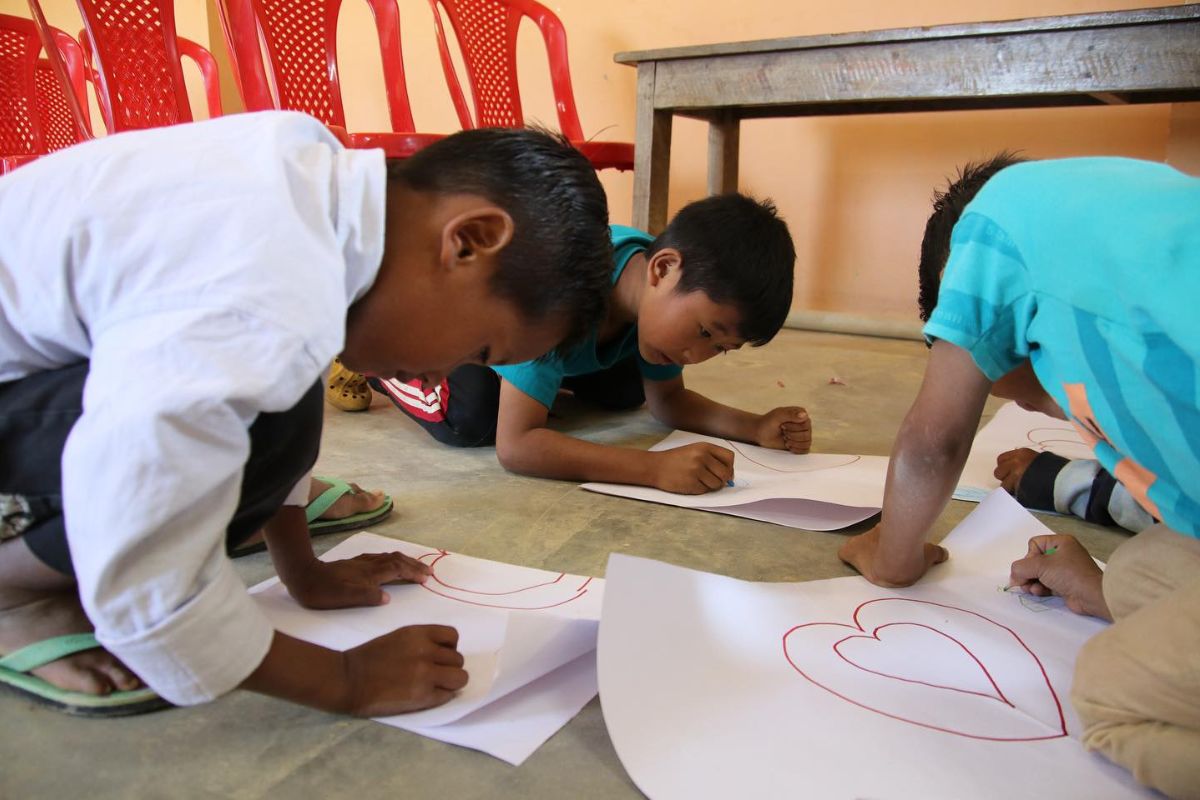
India’s National Education Policy of 2020 calls for mother-tongue instruction in the early grades, though turning that policy into daily practice remains difficult across tribal and rural India. Khaangchu offers a working example, modest in funding but rich in intellect and feeling. By handing curriculum decisions to local educators and families, it pushes back against the one-size-fits-all model that has dominated schooling for decades, showing that a child need not set aside her identity to receive a good education.
For a girl sitting beneath the tree, tracing her own shadow to understand how the sun moves, the effect is immediate and personal. School no longer asks her to leave her language or her landscape at the door. Her village becomes her first textbook, and the farmers, weavers and storytellers around her become its authors.
The Hard Part: Scaling Without Losing the Soul
Turning one thriving village programme into a wider movement is where the real difficulty begins. Scaling indigenous education demands growth without sacrificing the local character that makes it work. Remote communities often lack roads, steady electricity, and internet, so expanding a small school into a network becomes expensive fast, and chronic underfunding compounds the problem, since many initiatives survive on short-term grants rather than stable financing.
Recruiting teachers who speak the local language and are willing to live remotely is genuinely hard, and many schools rely on a small core of founders who risk burnout before a model can spread. These spaces also sit outside the formal school system, making it harder to earn certificates, and national curricula built around dominant languages overlook indigenous knowledge. As programmes seek recognition, they risk being pressured into standardised textbooks that undercut what made them work.
Decades of treating indigenous teaching as inferior to mainstream schooling leave a long shadow too. Persistent stereotypes about indigenous communities as somehow behind continue to shape funding decisions, often without anyone stating the bias outright.
Perhaps the trickiest balance lies in growth itself. These programmes work best when shaped by local elders and parents, but scaling across villages requires formal structures that risk diluting community voice and flattening distinct traditions into one template. Add in poverty and seasonal migration, and attendance can suffer just as programmes try to widen their reach.
None of this makes the challenge unsolvable. It means that funding, policy, language and power cannot be treated as afterthoughts. For indigenous education to grow without losing what makes it work, these questions belong at the centre of the design, not at its edges.
Also Read: How One Woman, Once Mocked for Saving a Bird, Now Built a 20,000-Woman Conservation Army
You can connect with DNN24 on Facebook, Twitter, and Instagram and subscribe to our YouTube channel.