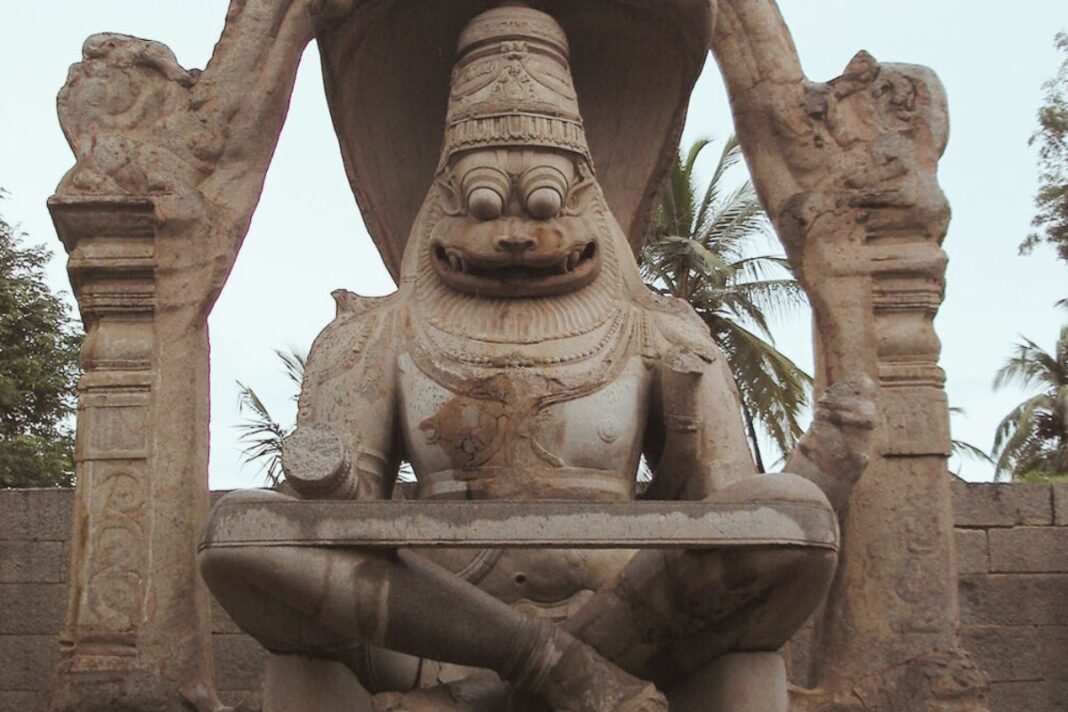

A city that once held half a million people now sits empty under the Karnataka sun, its temples still standing, its palaces still whispering, and its stone pillars still capable of playing music five centuries after the musicians vanished.
That city is Hampi. What remains there today is not a museum piece frozen behind glass. It is a working landscape of granite and memory, spread across the banks of the Tungabhadra River, where the Vijayanagara Empire once ruled and then, almost overnight, ceased to exist.
A Capital Built for the Ages
Hampi occupies the site of Vijayanagara, the City of Victory, founded around 1336 by Harihara I and Bukka Raya I of the Sangama dynasty. Over the next two centuries, under four ruling dynasties, the city grew into one of the largest urban centres on earth. Historians estimate its population reached close to 500,000 people at its height, a striking figure for an era when the entire planet held only a fraction of today’s population.
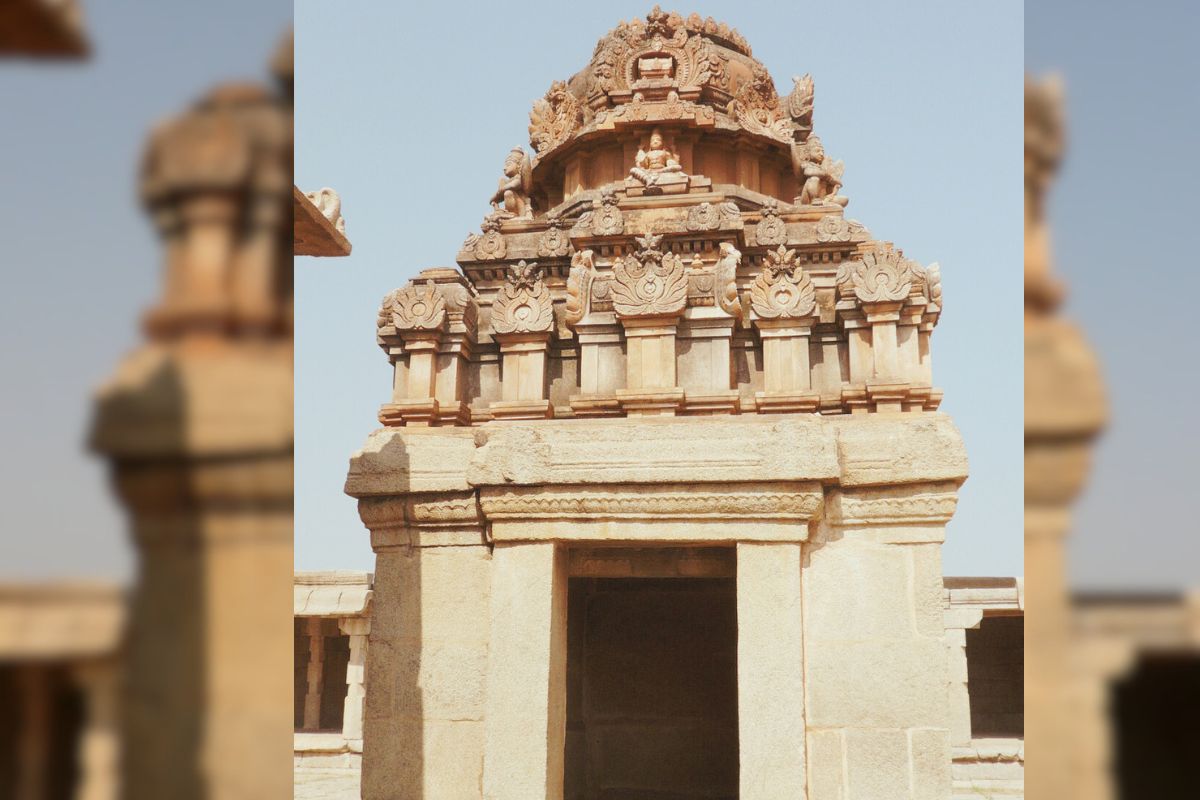
The empire’s founders chose their ground carefully. They built among granite hills and river plains, weaving fortifications, temples, and marketplaces into a single coordinated plan. The result was a capital that functioned as fortress, shrine, and trading post all at once. That combination gave Vijayanagara the strength to hold off invasions from the north for generations.
More Than Sixteen Hundred Stories in Stone
The Group of Monuments at Hampi covers a core protected zone of about 41.8 square kilometres, though the full World Heritage landscape extends to roughly 236.46 square kilometres. Within that space stand more than 1,600 surviving structures, among them temples, royal platforms, water tanks, gateways, and covered market halls.
UNESCO added the site to its World Heritage List in 1986, citing three separate criteria. The inscription recognises Hampi as a masterpiece of creative achievement, an exceptional record of a vanished cultural tradition, and a rare surviving example of a fully planned Hindu capital city. Few sites anywhere carry all three distinctions at once.
Where Worship Never Paused
Walk to the southern edge of the modern village, and you reach the Virupaksha Temple, dedicated to Shiva. Its origins predate the empire itself, with construction traced back to at least the 7th century. What makes it remarkable is not just its age but its continuity. Rituals have been held in its halls without interruption since Vijayanagara times, and pilgrims still gather there today.
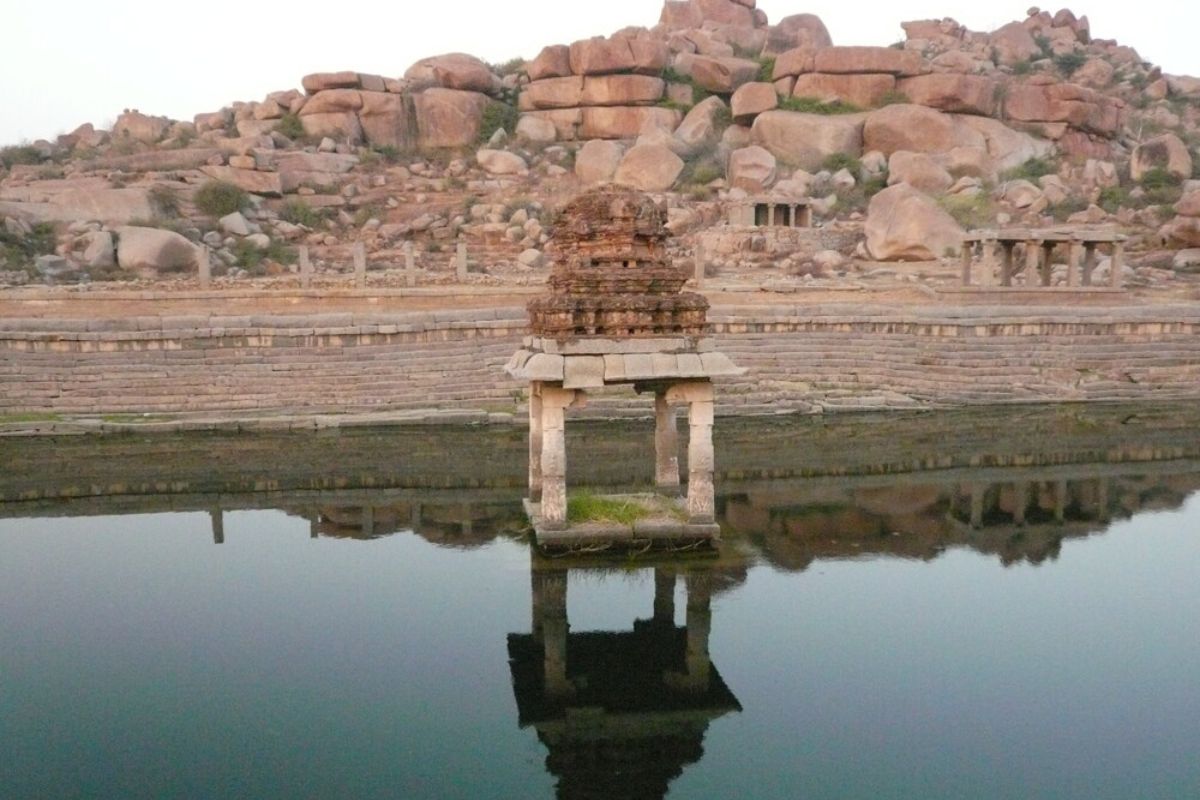
A short distance away, the Achyuta Raya Temple, the Krishna Temple, the Hazara Rama Temple, and the shrines scattered across Hemakuta Hill tell a similar story of devotion carried out in stone. Hemakuta’s own temples date from the 9th to the 14th centuries, meaning parts of Hampi’s sacred landscape existed long before the Vijayanagara rulers arrived.
The Chariot That Cannot Move and the Pillars That Sing
No structure at Hampi draws more curiosity than the Vittala Temple complex. Inside its courtyard stands a stone chariot, carved to resemble a temple vehicle used in festival processions, yet permanently fixed in place. It has become something close to a symbol for the entire site.
Inside the temple’s main hall, a set of slender granite columns is known locally as musical pillars. Struck gently, they are said to produce distinct tones, a feature that reflects an unusually refined grasp of acoustics and stone carving among Vijayanagara’s builders. Access to the pillars is now limited to protect them from wear, but their reputation has only grown with time.
Palaces Built for Ceremony and Everyday Life
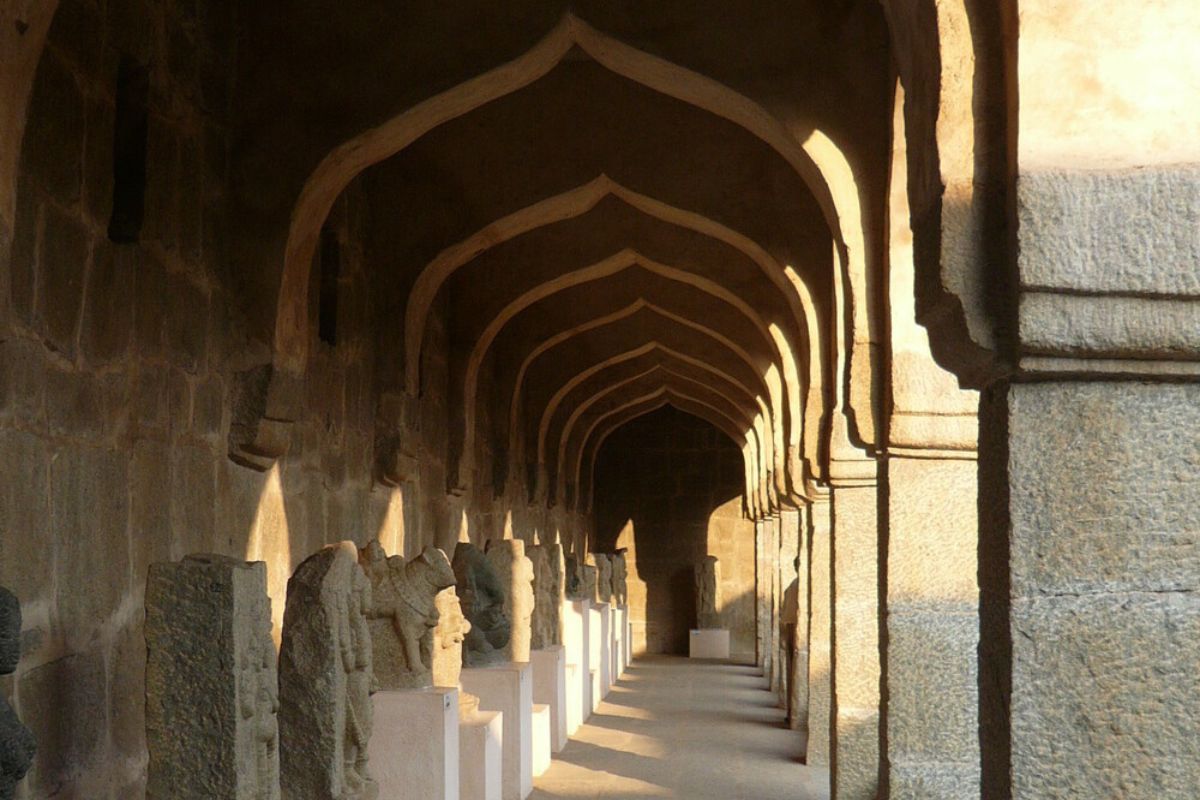
Move away from the temples and the mood of Hampi shifts. The Mahanavami Dibba, a large ceremonial platform, once hosted royal reviews, festivals, and the grand Dasara celebrations that marked the high point of the courtly calendar. Nearby, the Queen’s Bath combines arched corridors and viewing balconies in a style that blends Hindu design with clear Indo-Islamic touches.
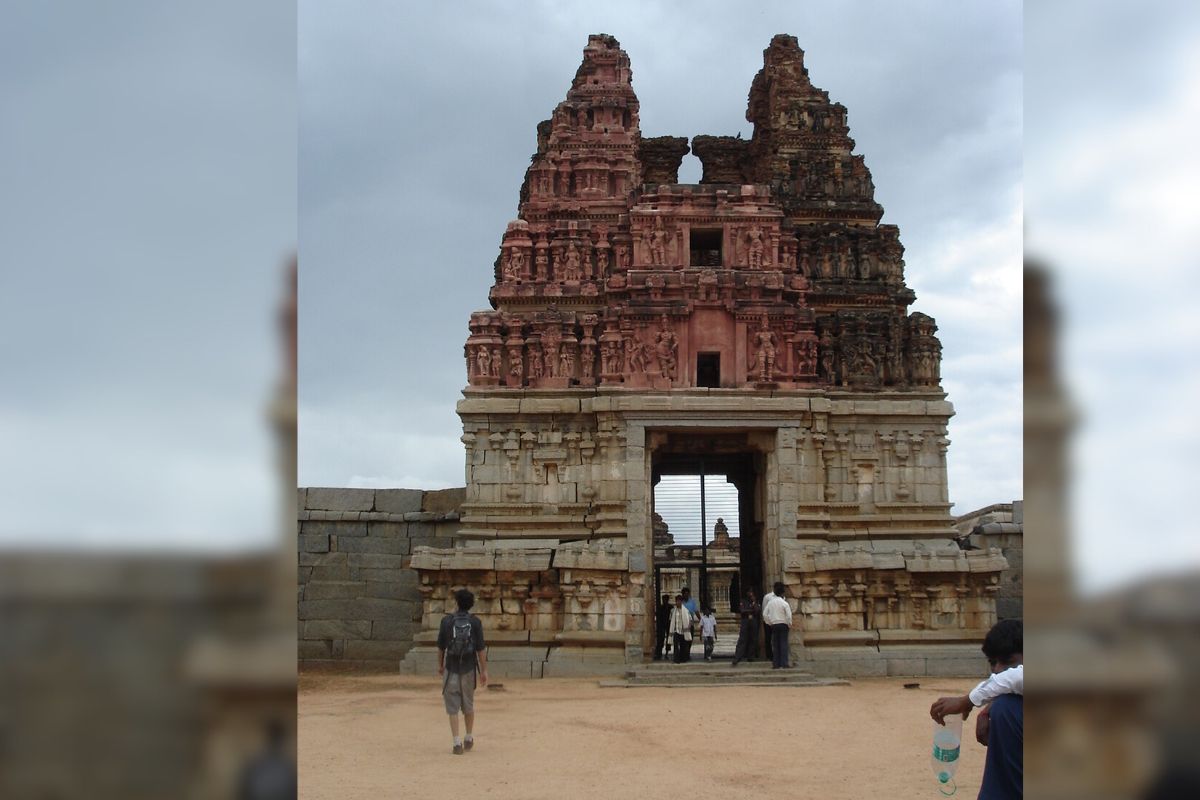
The Lotus Mahal continues that theme, with its arches shaped with a lightness rarely seen in the period’s stone architecture. Close by, the Elephant Stables line up in a row of domed chambers borrowed directly from Islamic building traditions. Taken together, these structures show a court willing to absorb outside influences and turn them into something distinctly its own.
An Economy Built on Trade and Water
Vijayanagara’s wealth did not come solely from conquest. Market streets such as Hampi Bazaar once stretched for long distances, lined with pillared halls where merchants sold gems, textiles, spices, and metalwork to buyers from across the Deccan and beyond. These markets were directly connected to temple complexes and residential quarters, binding commerce and ritual into a single daily rhythm.
Supporting all of it was a network of canals, tanks, and stepped wells that drew water from the Tungabhadra and seasonal streams. This system irrigated farmland and supplied the city’s households, and traces of it remain visible in the landscape today. Granaries and fortified gateways rounded out an economy built as much on planning as on prosperity.
The Battle That Ended an Empire
In 1565, the Battle of Talikota brought Vijayanagara’s dominance to a sudden close. Rival forces attacked the city, looted its palaces, and left large sections of the city in ruins. Sculptures were defaced, halls were emptied, and the capital that had stood for over two centuries was largely abandoned within a generation.
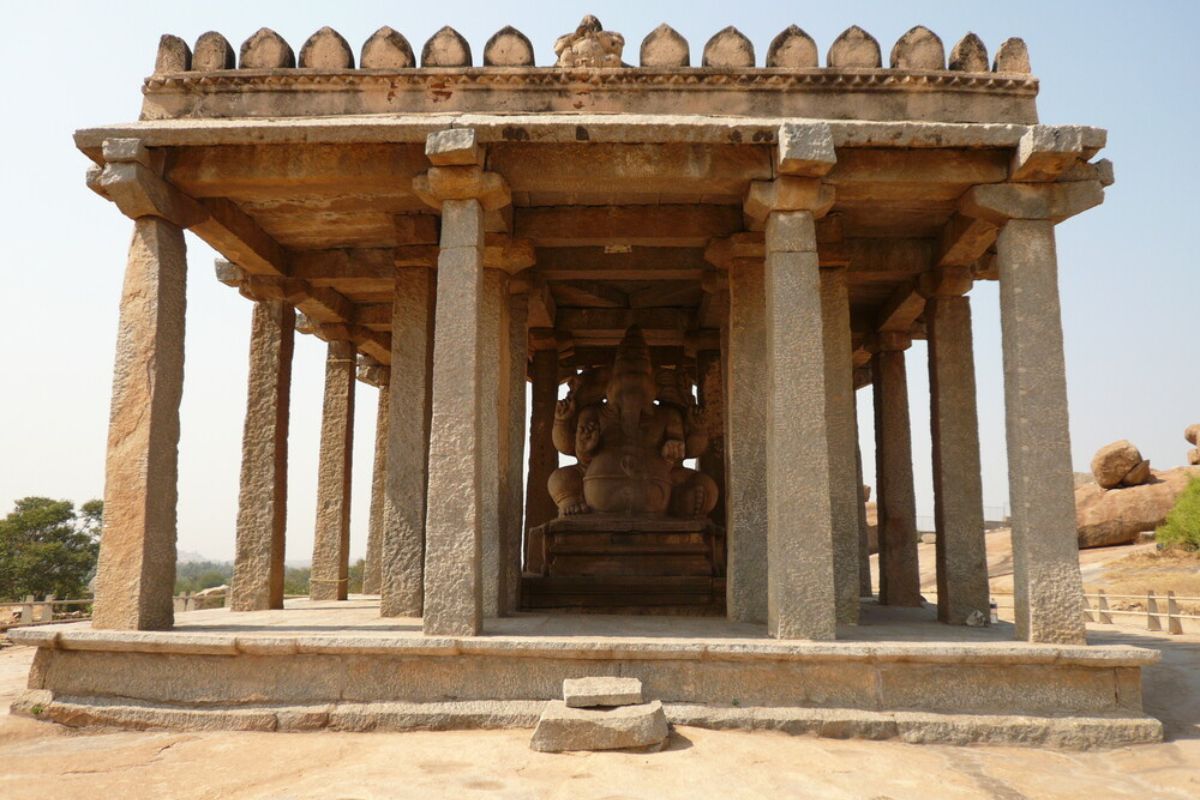
Even so, the site was never entirely deserted. Local families stayed on, farming the land between fallen columns and continuing worship at temples like Virupaksha. That quiet persistence kept a thread of continuity running through the centuries as Hampi’s grander structures sat exposed to the weather and the passage of time.
Conservation for a Living Landscape
Since its UNESCO listing in 1986, Hampi has drawn sustained attention from national and state heritage agencies. Of the monuments within the core area, 56 are formally listed as part of the World Heritage property; the Government of Karnataka protects 654, and several hundred more await formal recognition.
Managing a site this large means balancing conservation with tourism, agriculture, and the everyday needs of nearby communities. Officials work to stabilise structures, document inscriptions, and limit construction that might encroach on protected zones, all while allowing pilgrims and visitors to keep using the site as they always have.
What the Stones Still Carry
Hampi does not ask visitors to imagine a lost civilisation. It shows one directly, in broken gopurams, working temples, and platforms where kings once stood. The Vijayanagara Empire ended in 1565, but its architecture, irrigation systems, and worship practices never fully disappeared.
Anyone who walks through Hampi today moves through several histories at once: an empire’s rise, its sudden fall, and the quieter story of the people who never left. That layered record, carved into granite and still standing along the Tungabhadra, is what makes the Group of Monuments at Hampi one of the most complete windows into South India’s past that survives anywhere in the country.
Also Read: Tribal Village in Manipur Turned Trees Into Classrooms Where Children Learn Their Native Language
You can connect with DNN24 on Facebook, Twitter, and Instagram and subscribe to our YouTube channel.