
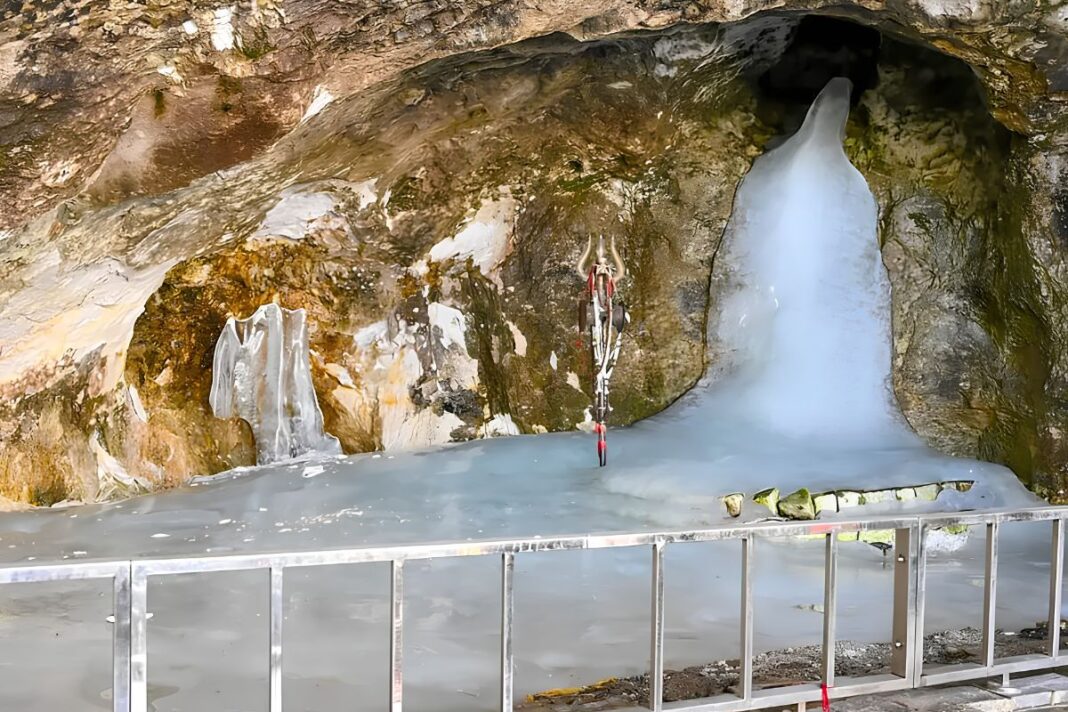

Every year, millions of devotees undertake the challenging pilgrimage to seek the blessings of Lord Shiva at the holy Amarnath Cave. However, just four days after the start of the 2026 Amarnath Yatra, the naturally formed ice Shivling, revered as Baba Barfani, had already melted by more than 90 percent. This is more than an unusual seasonal event. It is a warning about the fragile state of the Himalayan ecosystem and the growing impact of climate change and human activity.
The melting ice tells a story that concerns everyone who considers nature sacred. It raises an important question: if the snow itself disappears, how long will this natural wonder persist?
A Shrinking Lifespan of the Holy Ice Shivling
The lifespan of the Amarnath ice Shivling has changed significantly over the years.
- 2018: Melted in 29 days
- 2020: Lasted 38 days
- 2022: Melted in 28 days
- 2024: Disappeared in just one week
- 2026: More than 90 percent melted within four days of the pilgrimage
According to a BBC report, snowfall in the northwestern Himalayas has declined by nearly 25 percent over the past four to five years. When the source of snow continues to shrink, the formation of the naturally occurring ice Shivling becomes increasingly difficult.
What Do Experts Say?
Scientists believe that climate change is the primary reason for the rapid melting of the Shivling’s ice. Studies show that the Himalayas are warming at nearly twice the global average rate. Between 1980 and 2020, temperatures in the region increased by 0.2 to 0.3 degrees Celsius every decade.
Former Head of the Department of Geology at the University of Jammu, Professor G. M. Bhat, explains that Kashmir experienced below-normal snowfall during the previous winter. With limited snowfall, there is naturally less ice available to form and sustain the Shivling.
The International Centre for Integrated Mountain Development (ICIMOD) also reported that the 2024-25 winter saw the lowest snow persistence in the Himalayas in the past 23 years, underscoring the severity of the crisis.
The Himalayas Are Facing a Growing Environmental Crisis
Often called the “Third Pole” and “Asia’s Water Tower,” the Himalayas are undergoing rapid environmental changes with far-reaching consequences.
Rapid Glacier Loss
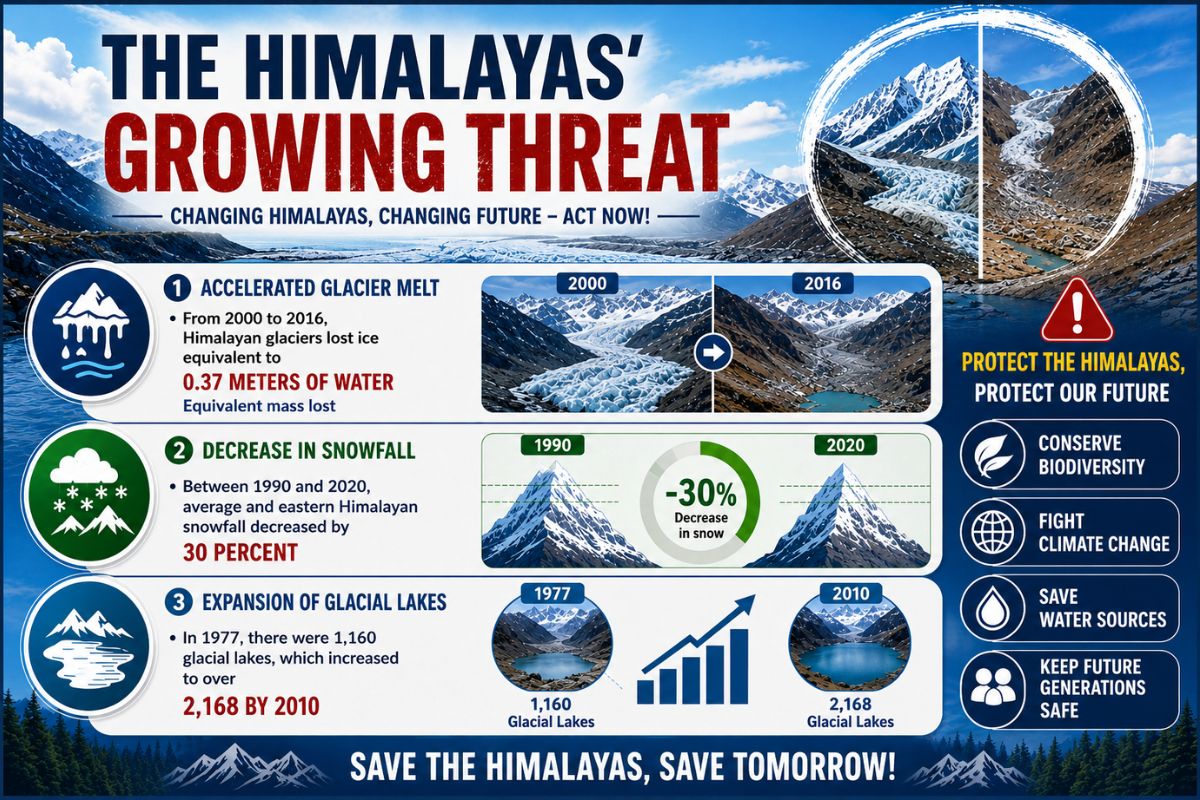
Between 2000 and 2016, Himalayan glaciers lost an average of 0.37 metres of water-equivalent mass per year, reflecting an alarming rate of glacier retreat.
Changing Snowfall Patterns
From 1990 to 2020, the central and eastern Himalayas lost nearly 30 percent of their snow cover, reducing the natural reserve that feeds glaciers and rivers.
Expansion of Glacial Lakes
The number of glacial lakes has increased dramatically, rising from 1,160 in 1977 to 2,168 by 2010. These expanding lakes increase the risk of devastating glacial lake outburst floods.
Experts estimate that up to 70 percent of Himalayan snow and ice could disappear by the end of this century, placing the water security of nearly two billion people at risk.
Our Pilgrimage: An Act of Devotion or an Environmental Burden?
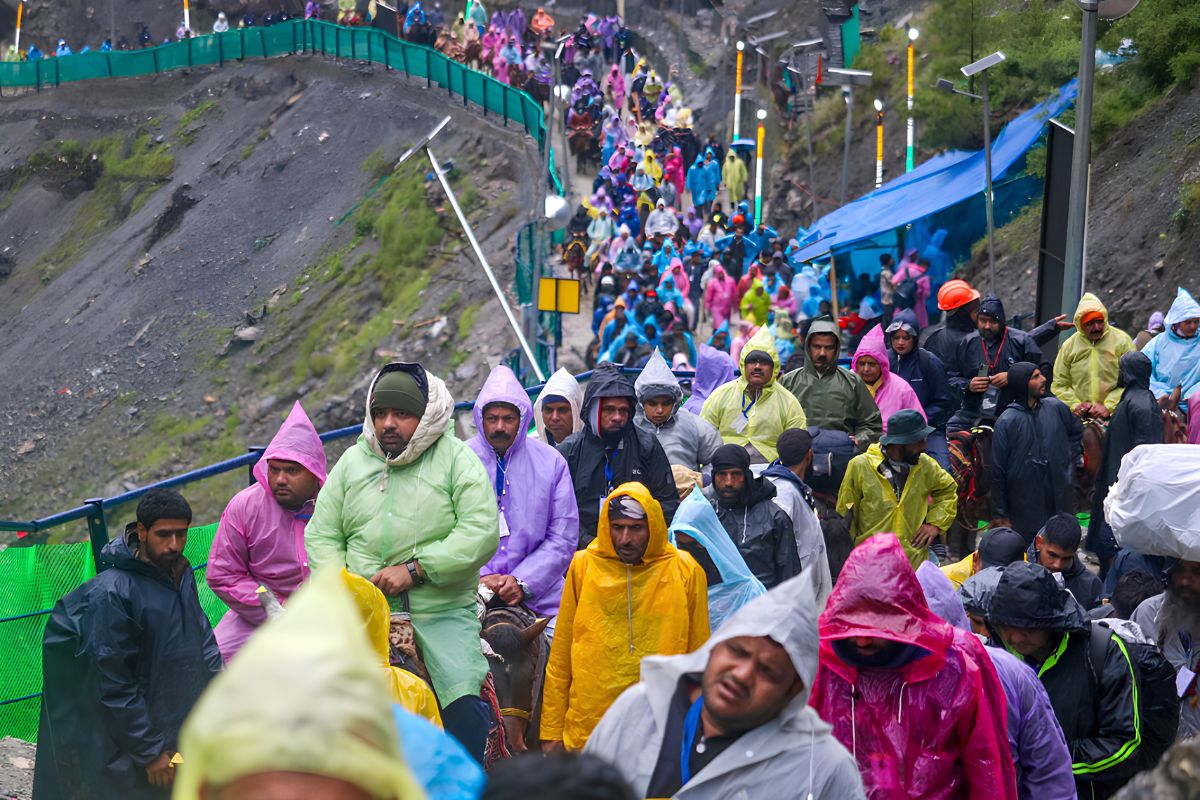
The Amarnath Yatra attracts between 350,000 and 500,000 pilgrims every year, with 8,000 to 15,000 people climbing the mountain daily during the pilgrimage season.
This raises an uncomfortable but necessary question. Are we visiting Baba Barfani as respectful guests, or are we placing an unsustainable burden on one of the world’s most fragile ecosystems?
Environmentalists argue that while climate change remains the biggest factor, increasing human activity is also contributing to the problem.
According to Kashmiri environmentalist Mushtaq Ahmad Khan, when thousands of pilgrims enter the confined cave every day, the combined effects of body heat, humidity, and carbon dioxide alter the cave’s delicate microclimate and accelerate the melting process.
The Growing Waste Problem
The environmental impact extends far beyond the cave itself.
Every year, the pilgrimage generates more than 500 tonnes of waste.

Plastic bottles, food wrappers, and packaging materials can remain in the environment for up to 500 years. Much of this waste eventually reaches glaciers, where it becomes trapped in ice before melting into rivers that support millions of people downstream.
Infrastructure development has also increased environmental pressure. Over the past two decades, pilgrimage routes have been widened, new roads have been built, and heavy-vehicle traffic has intensified, placing additional stress on the Himalayan landscape.
Finding the Balance Between Faith and Conservation
This discussion is not against the Amarnath Yatra or religious faith. Instead, it calls for a more sustainable way of preserving both spirituality and nature.
In 2025, the Shri Amarnath Shrine Board introduced several environmental measures as part of its Zero Waste Yatra initiative. These included the installation of 1,016 twin-bin waste stations and a ban on single-use plastics. While these efforts are encouraging, environmental experts believe much more needs to be done.
Every Pilgrim Has a Responsibility
Protecting the Himalayas requires collective action from pilgrims, authorities, and local communities.
- Do not litter. The Himalayas, its rivers, forests, and glaciers are part of our shared natural heritage.
- Avoid single-use plastics. Carry reusable cloth or jute bags instead.
- Follow environmental guidelines. Respect the rules issued by the Shrine Board throughout the pilgrimage.
- Respect the region’s carrying capacity. Avoid contributing to unnecessary overcrowding that places additional strain on the fragile ecosystem.
Faith Must Be Accompanied by Responsibility
Protecting the Himalayas is both an environmental duty and a spiritual responsibility. Governments, local communities, scientists, and pilgrims must work together to ensure that the Amarnath Yatra remains sustainable for future generations.
Climate change is no longer a distant concern. It has reached one of India’s most sacred pilgrimage sites. Comparisons between footage from 2015 and 2025 reveal a striking transformation. Once snow-covered paths now appear dry, rocky, and dust-laden.
If today’s pilgrims travel with greater environmental awareness, future generations will also have the opportunity to witness the natural miracle of Baba Barfani and experience the timeless spiritual beauty of the Amarnath Cave.
Sources
This article is based on information compiled from BBC, Press Information Bureau (PIB), ICIMOD, and other credible scientific and government sources.
Also Read: How India Came to the Aid of Former Citizen Nazneen During Her Airport Crisis
You can connect with DNN24 on Facebook, Twitter, and Instagram and subscribe to our YouTube channel.